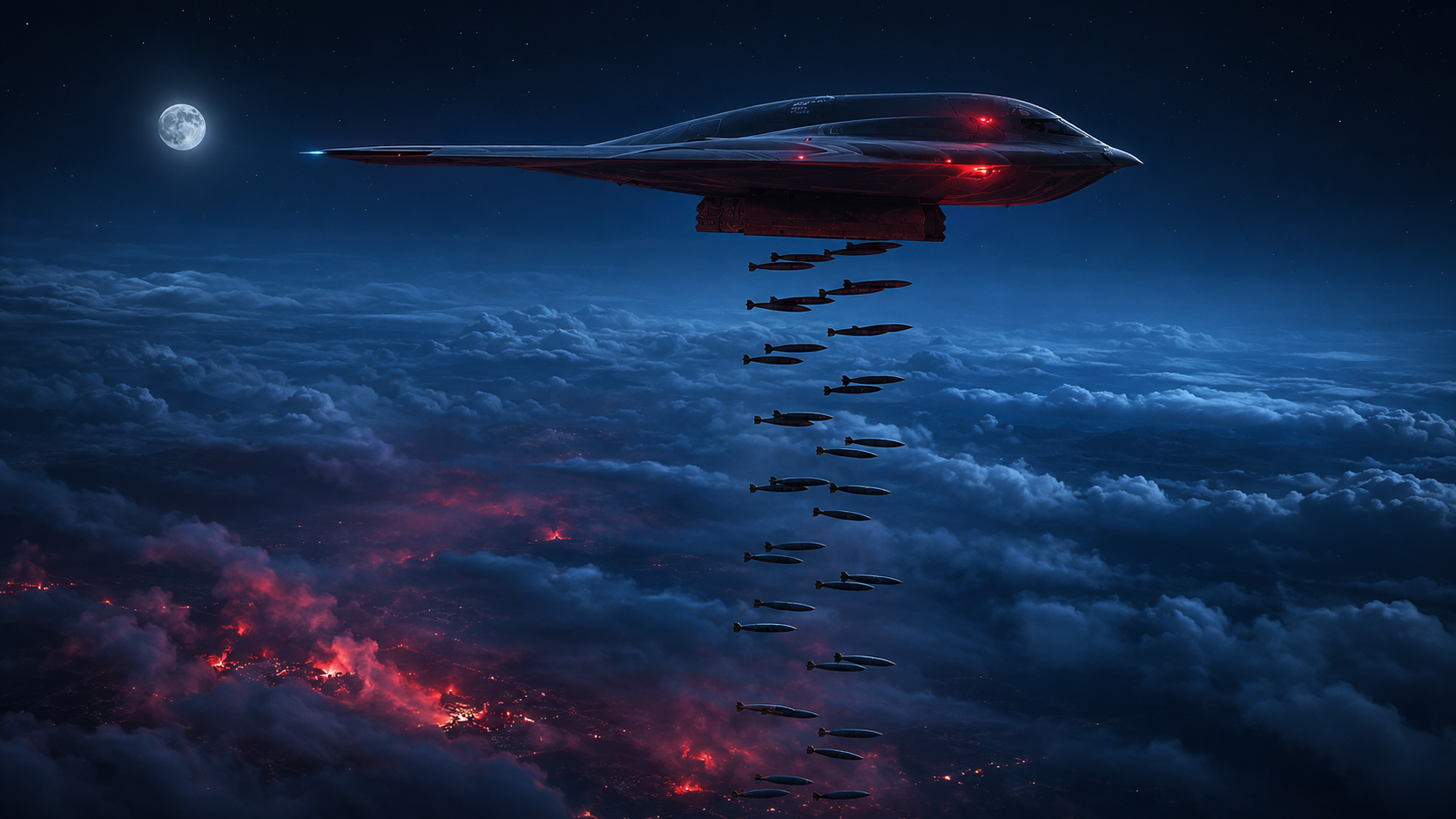
The most expensive aircraft on Earth stood silent behind him, but David knew its shadow had just exposed the biggest lie in the Air Force.
David had always believed machines could not lie.
People could.
Commanders could.
Friends could.
You May Also Like
But metal, wires, heat scars, pressure marks, burned circuits, and blackened panels always told the truth if someone had the courage to listen.
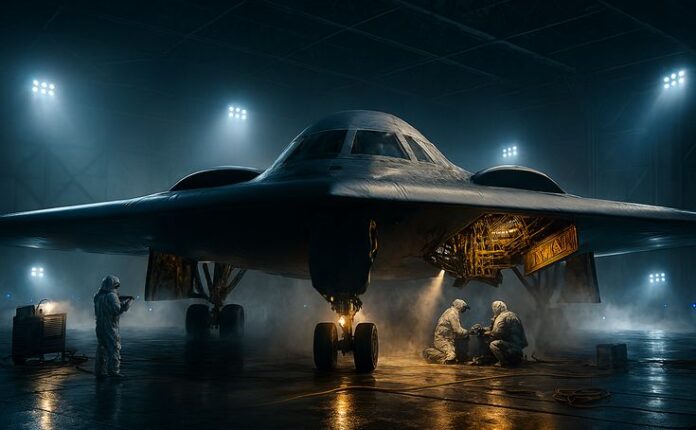
That belief was the only reason he stood inside Hangar 17 at Whiteman Air Force Base at 2:14 in the morning, staring at the most expensive aircraft ever built.
The Northrop Grumman B-2 Spirit sat in front of him like a black ghost carved out of the night itself. Its tailless flying-wing body stretched across the polished concrete floor, silent, smooth, and terrifying. Under the hangar lights, its dark skin did not shine like normal metal. It swallowed light.
David could smell hydraulic fluid, cold steel, burned dust, and rainwater dripping from the open hangar doors behind him.
Beside him stood James.
James had been his best friend for twelve years. Same academy program. Same first assignment. Same dream.
But tonight, James would not look him in the eye.
David whispered, “You brought me here for a reason.”
James swallowed hard. “I brought you here because you were the only one stubborn enough not to stop digging.”
David stared at the B-2. “You said my brother’s crash report was false.”
James closed his eyes.
“Say it,” David demanded.
James opened them slowly. “Your brother did not make a mistake.”
The words hit David like a fist to the chest.
For six months, the Air Force had told him that Captain Aaron Vale, his older brother, had died because of pilot error during a classified systems test involving the B-2 Spirit. They said Aaron lost control. They said he ignored procedure. They said his final seconds were confusion and panic.
David had buried his brother under an American flag while officers stood beside the grave with clean uniforms and dirty secrets.
His mother had cried until her voice disappeared.
His father had sat in the front row like a statue, gripping Aaron’s folded flag with both hands.
And David had believed the report because believing it hurt less than suspecting betrayal.
He turned toward James.
“Who changed the report?”
James’s jaw tightened. “General Marcus Cain.”
David’s breathing stopped.
General Cain was not just another officer. He was the man scheduled to stand before Congress in three days and announce a new classified modernization program for the B-2 fleet. He was polished, respected, powerful, and untouchable.
David stepped closer to James. “Why?”
James looked toward the aircraft. “Because the test failed.”
David frowned. “What test?”
James lowered his voice. “A hidden sensor suite. Not official. Not approved. Not on any public contract. Cain wanted to prove the B-2 could carry a secret battlefield control system. Something that could link drones, satellites, and strike aircraft from deep inside enemy territory.”
David’s hands curled into fists. “Aaron was flying it?”
“He didn’t know the full truth.”
David’s voice shook. “Don’t protect them.”
“I’m not.”
“Then tell me everything.”
James looked broken.
“The system overloaded mid-flight,” he said. “It fed false navigation data into the cockpit. Aaron reported it. Cain ordered the tower to keep him airborne.”
David stared at him, unable to speak.
James continued, “Aaron requested emergency landing clearance. Cain denied it.”
The hangar seemed to tilt.
David heard the rain behind him.
Drop.
Drop.
Drop.
“You’re lying,” David whispered.
“I wish I was.”
David grabbed James by the collar and shoved him against a tool cabinet. Metal drawers rattled. A wrench clattered to the floor.
“You were in the control room that night.”
James did not fight back.
David’s eyes burned. “You heard my brother ask for help?”
James’s lips trembled. “Yes.”
“And you did nothing?”
“I was a captain, David.”
“He was dying!”
“I know!”
James’s voice cracked so sharply it echoed through the hangar.
David released him and stepped back, breathing hard.
James wiped his face with one hand. “I hear his voice every night.”
David pointed toward the B-2. “Why bring me here now?”
James reached into his jacket and pulled out a small black data drive.
“Because the aircraft remembers,” he said.
David stared at the drive.
James held it out. “Aaron copied the raw system logs to an emergency maintenance partition before impact. Everyone thought it burned with the wreckage. But one section survived. It was transferred into this aircraft during part migration.”
“THE WARTHOG REFUSES TO DIE – “WHY IS THE US AIR FORCE CUTTING HALF ITS A-10 FLEET — BUT REFUSING TO KILL IT ENTIRELY?”
David looked at the B-2 again.
The black aircraft stood silent, enormous, and patient.
David whispered, “His final recording is inside this plane?”
James nodded. “And Cain knows I found it.”
Before David could answer, the hangar doors began to move.
A deep mechanical groan rolled through the building.
David spun around.
The massive doors slid shut.
James turned pale. “No.”
The lights flickered once.
Then the security locks slammed into place.
A voice came from the overhead speakers.
“Step away from the aircraft.”
David knew that voice.
General Marcus Cain.
James whispered, “He’s here.”
David looked up at the speaker. “General Cain. Funny time for an inspection.”
Cain’s voice was calm. Almost bored.
“Mr. Vale, you are trespassing on restricted military property.”
David laughed once, cold and bitter. “My brother died on restricted military property. I guess this runs in the family.”
James grabbed David’s arm. “Don’t provoke him.”
David pulled away. “No. I’ve been quiet for six months.”
The side door opened.
General Cain walked in with six armed security personnel behind him.
He wore his uniform like armor. Silver hair. Sharp eyes. Calm face. A man who had learned that fear worked best when delivered softly.
He stopped twenty feet away from them.
“David,” Cain said. “Your brother was a hero. Do not destroy his legacy with conspiracy.”
David stepped forward. “You already destroyed it when you called him incompetent.”
Cain’s eyes moved to James. “Major Whitmore. I gave you a chance to correct your mistake.”
James stood straighter, but his hands shook. “No, sir. You gave me a chance to help bury a murder.”
The security officers shifted.
Cain’s face hardened.
“Careful,” he said.
David pointed at the B-2. “You denied Aaron landing clearance.”
Cain looked at him for a long second. “Your brother was unstable.”
David’s jaw tightened.
Cain continued, “Grief can make families imagine things.”
David smiled without warmth. “You practiced that line in a mirror?”
One of the guards stepped forward. Cain raised a hand and stopped him.
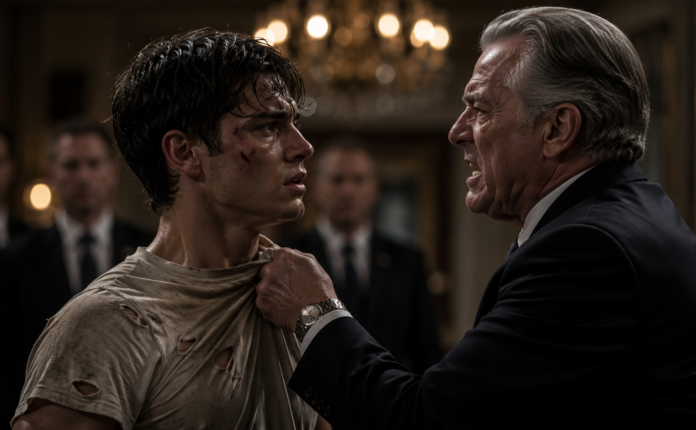
Cain spoke gently. “David, you are a talented civilian engineer with access to sensitive maintenance data. That access can disappear. Your career can disappear. Your father’s military pension can become complicated. Your mother’s medical benefits can become delayed by review.”
David froze.
James whispered, “Sir, don’t.”
Cain ignored him.
“Walk away,” Cain said. “Let your brother remain a hero.”
David’s voice dropped. “My brother is already a hero. You’re the one trying to remain one.”
For the first time, Cain’s eyes flashed.
“You think you understand war because you read diagrams and repair aircraft skin?” Cain said. “The world is not saved by soft men who cry over recordings. It is saved by people willing to carry secrets.”
David took one step closer.
“No,” he said. “It’s destroyed by people who confuse secrets with sin.”
Cain stared at him.
Then he turned to security. “Detain them.”
James moved first.
He grabbed David and shoved him behind a maintenance lift as the guards rushed forward.
“Run!” James shouted.
David ducked as two guards lunged around the lift. James slammed a heavy tool case into one man’s knees. The guard crashed down with a shout. Another grabbed James from behind.
David saw the data drive fall from James’s hand and skid across the floor toward the B-2.
“No!” James yelled.
David dove for it.
A guard tackled him from the side. His shoulder hit the concrete hard. Pain flashed white through his arm. The data drive lay inches from his fingertips.
The guard twisted his wrist behind his back.
David gasped.
Cain walked slowly toward him.
“You are exactly like your brother,” Cain said. “Brave at the wrong moment.”
David looked past Cain.
James was pinned against the wall, blood at the corner of his mouth.
David reached with his free hand.
His fingers touched the drive.
Cain noticed.
“Take it from him.”
David rolled hard, slammed his elbow into the guard’s ribs, and grabbed the drive. He scrambled under the B-2’s wing as boots thundered after him.
Under the aircraft, the world changed.
The huge black wing curved above him like a night sky lowered to the earth. He could hear his own breath, the ticking of cooling systems, the distant hum of electricity.
He crawled toward an open maintenance access panel James had prepared.
“David!” James shouted. “Port-side diagnostic bay!”
David jammed the drive into the slot.
The system blinked red.
ACCESS DENIED.
Cain’s voice echoed closer. “It’s over.”
David’s hands shook over the keypad.
He remembered Aaron teaching him when they were boys, taking apart radios in their garage.
“Machines don’t lie, Davey. But they don’t speak unless you ask the right question.”
David whispered, “Come on, Aaron. Speak.”
He entered Aaron’s old academy call sign.
NIGHT VALE.
The screen blinked.
ACCESS GRANTED.
The aircraft’s internal system came alive.
Cain stopped walking.
His face changed.
David saw it.
Fear.
A recording file appeared.
AARON VALE: FINAL TELEMETRY AUDIO.
David hit play.
Static filled the hangar.
Then his brother’s voice.
Calm.
Breathless.
Alive.
“This is Captain Aaron Vale. I am declaring an emergency. Navigation data conflict. Flight control response unstable. Request immediate return clearance.”
David’s throat closed.
A tower voice answered.
“Spirit Two-Seven, maintain current test profile.”
Aaron replied, “Negative. Aircraft is feeding false data. I have conflicting altitude and heading. Request return now.”
Another voice entered.
General Cain.
“Spirit Two-Seven, you will continue.”
James shut his eyes.
Cain shouted, “Shut it off!”
No one moved.
Aaron’s voice became sharper.
“General Cain, this system is unsafe. I have not been briefed on its authority level. I am disengaging.”
Cain’s recorded voice snapped back.
“You will not disengage. You will complete the test.”
Aaron breathed hard. “Sir, I have civilians in the projected failure zone if this aircraft drops.”
Cain said, “Then keep it in the air.”
Aaron’s next words were softer.
“Tell my family I tried to bring her home.”
David covered his mouth.
The recording continued.
A warning alarm screamed in the background.
Aaron shouted, “Manual override not responding. I repeat, manual override—”
Static.
Then one final sentence, broken by noise.
“David… if this survives… don’t let them call it my mistake.”
The hangar fell into absolute silence.
Even the guards stopped moving.
David slowly crawled out from under the wing, holding the drive in one hand.
His face was wet, but his eyes were steady.
Cain pointed at him. “That recording is classified.”
David stood up. “No. That recording is evidence.”
Cain turned to the guards. “Arrest him.”
But no one moved.
One young security sergeant looked at Cain, then at David, then back at Cain.
“Sir,” the sergeant said quietly, “is that true?”
Cain’s nostrils flared. “You follow orders.”
The sergeant’s voice trembled. “Not illegal ones, sir.”
Cain stepped toward him. “You have no idea what you’re involved in.”
James pulled free from the guard holding him.
“Yes, he does,” James said. “We all do now.”
Cain looked around the hangar.
His control was slipping.
Then his expression changed again.
Cold calculation returned.
“You think a recording in a locked hangar matters?” Cain asked. “By morning, this facility will be sealed. The drive will vanish. You two will be charged. The story will die here.”
David’s heart pounded.
Because Cain was right.
A truth hidden in a hangar was still hidden.
Then James smiled faintly through the blood on his lip.
Cain saw it. “What?”
James looked at David. “I told you I was done being a coward.”
David frowned.
James lifted his eyes toward the ceiling cameras.
Cain turned slowly.
James said, “This hangar is connected to the congressional inspection feed.”
Cain’s face drained of color.
David whispered, “What did you do?”
James replied, “I routed the internal security stream to the official review channel thirty minutes ago.”
Cain stepped back. “No.”
James’s voice grew stronger. “Every word. Every threat. Every second of Aaron’s recording.”
David stared at him.
“You made it public?”
James shook his head. “Not public.”
A loud knock thundered against the hangar’s side personnel door.
Then another.
Then voices.
“Open this door by order of the Inspector General!”
James looked at Cain.
“I made it official.”
Cain lunged for him, but the young sergeant stepped between them.
“Sir,” the sergeant said, voice shaking but firm, “stand down.”
Cain stared at the young man as if he were looking at a ghost.
Then the emergency override activated.
The side door opened.
Men and women in suits entered first. Behind them came military police, senior officers, and two congressional staffers with pale faces and phones pressed to their ears.\
“IS THE AGE OF THE PILOTED FIGHTER JET COMING TO AN END?”
A woman in a dark blue suit walked straight toward Cain.
“General Marcus Cain,” she said, “you are relieved of command pending investigation.”
Cain’s mouth opened, but no words came.
David looked at James.
James looked back with tears in his eyes.
“I’m sorry,” James whispered.
David’s anger rose again, hot and sharp.
“For what?” David asked. “For waiting six months? For listening to my mother cry? For letting them call Aaron reckless?”
James flinched.
“Yes,” he said. “For all of it.”
David stepped close to him.
James did not move.
David’s voice shook. “Why didn’t you tell me sooner?”
James stared at the floor. “Because I was afraid.”
David waited.
James forced himself to continue. “Cain told me I would lose everything. My rank. My pension. My family housing. He said my wife would be dragged into court. He said my little girl would grow up visiting her father behind glass.”
David’s face softened, just a little.
James looked up. “And I believed him.”
David’s eyes burned.
“My brother died afraid,” David said. “But he still told the truth.”
James nodded, tears sliding down his face. “I know.”
For a moment, they stood beneath the shadow of the B-2 Spirit, two men surrounded by power, money, secrecy, and grief.
Then David said, “Aaron wouldn’t have hated you.”
James’s lips trembled.
David continued, “But he would have expected you to finish this.”
James wiped his face. “Then let’s finish it.”
The next morning, the base looked different.
The sky was pale gray. Rain clouds hung low over the runway. The B-2 Spirit had been moved outside for the scheduled congressional inspection, its black flying-wing shape resting on the tarmac like a secret too large to hide.
Reporters waited behind barriers.
Officers stood in tight clusters.
Airmen whispered.
No one laughed.
No one relaxed.
General Cain was gone from the platform.
In his place stood the Inspector General, the base commander, James, and David.
David had not slept. His shoulder ached. His suit jacket felt too tight. His eyes were swollen from crying in a bathroom stall where no one could see him.
James stood beside him in uniform, bruised but unbowed.
A reporter shouted, “Mr. Vale! Is it true your brother was blamed for a crash caused by an unauthorized system?”
David looked at the microphones.
For six months, he had dreamed of this moment.
Now that it had arrived, he felt no joy.
Only weight.
The Inspector General stepped forward.
“Today,” she said, “we confirm that new evidence has emerged regarding the death of Captain Aaron Vale. That evidence contradicts the original accident report. A full criminal and congressional investigation has begun.”
The crowd erupted.
Questions flew from every direction.
David barely heard them.
He was looking at the B-2.
The aircraft stood behind him, silent and massive. The world called it invisible. A $2 billion ghost. A flying wing designed to cross oceans, defeat radar, and deliver power anywhere on Earth.
But today, it had done something even greater.
It had carried the truth home.
James leaned toward David.
“Are you ready?”
David swallowed.
“No.”
James nodded. “Say it anyway.”
David stepped to the microphone.
The noise faded.
He gripped the sides of the podium until his knuckles turned white.
“My brother, Captain Aaron Vale, was not reckless,” David said. “He was not confused. He was not weak.”
His voice cracked.
He stopped.
The crowd waited.
David took a breath.
“He knew something was wrong. He asked to land. He tried to protect people on the ground. He tried to save the aircraft. And when powerful men ordered him to stay silent, he left behind the truth.”
A reporter asked, “Who are you accusing?”
David looked directly into the nearest camera.
“I am not accusing anyone today,” he said. “The recording already did that.”
The airfield went silent.
David continued.
“For months, my family carried shame that did not belong to us. My mother blamed herself for raising a son who supposedly ignored orders. My father stopped wearing his service medals because he thought the institution he loved had rejected his child.”
His voice grew stronger.
“But truth has a sound. Sometimes it sounds like a pilot in his final seconds. Sometimes it sounds like a friend finally choosing courage over fear. Sometimes it sounds like a locked hangar door opening.”
James lowered his head.
David turned slightly and looked at him.
“And sometimes,” David said, “truth comes from the person who failed you, but came back before it was too late.”
James’s eyes filled.
David faced the cameras again.
“My brother’s name will be cleared. The people who buried the truth will answer for it. And every man and woman who serves inside classified walls deserves to know this: secrecy should protect a nation, not criminals.”
The reporters exploded again.
But David stepped back.
He did not need to say more.
Behind him, the B-2 Spirit seemed to absorb the morning light. Its black body, built to disappear, now stood at the center of everything.
James came beside him.
“David,” he said quietly.
David looked at him.
James held out Aaron’s old flight patch. It was worn at the edges, dark blue and silver, with Aaron’s call sign stitched across the bottom.
“THE GHOST THAT COST BILLIONS”
NIGHT VALE.
“I kept it,” James said. “I didn’t deserve to.”
David stared at the patch.
For a second, anger returned.
Then grief.
Then something heavier than both.
He took the patch.
“My mother should have this.”
James nodded. “Yes.”
David turned to leave, but James spoke again.
“Do you forgive me?”
David stopped.
The question hung between them like a live wire.
The easy answer was no.
The honest answer was not yet.
David looked back at the B-2, then at James.
“I don’t know,” he said. “But today, you told the truth. That’s where forgiveness starts.”
James nodded slowly, accepting the mercy and the wound together.
Across the runway, a group of airmen began to clap.
One clap.
Then another.
Then dozens.
Then hundreds.
The sound grew until it rolled across the base like thunder.
David looked toward the crowd and saw officers, mechanics, pilots, security personnel, and civilians standing together.
Some had tears in their eyes.
Some looked ashamed.
Some looked free.
The Inspector General stepped back to the microphone.
“The original report naming Captain Aaron Vale as responsible for the crash is officially suspended pending correction. His actions are now under review for posthumous commendation.”
David closed his eyes.
For the first time in six months, he could breathe.
His phone buzzed in his pocket.
A message from his mother.
I heard him, David.
Then another.
Bring your brother home.
David pressed the phone against his chest.
James stood silently beside him.
The B-2 Spirit waited behind them, no longer just a machine of war, no longer just a symbol of stealth, money, and power.
It had become a witness.
And in front of the cameras, in front of the officers, in front of the nation, the truth Aaron Vale died protecting was no longer buried inside classified walls.
It was exposed publicly.




One Comment on “The B-2 Spirit Was Worth $2 Billion—But the Truth Hidden Inside It Cost Even More”