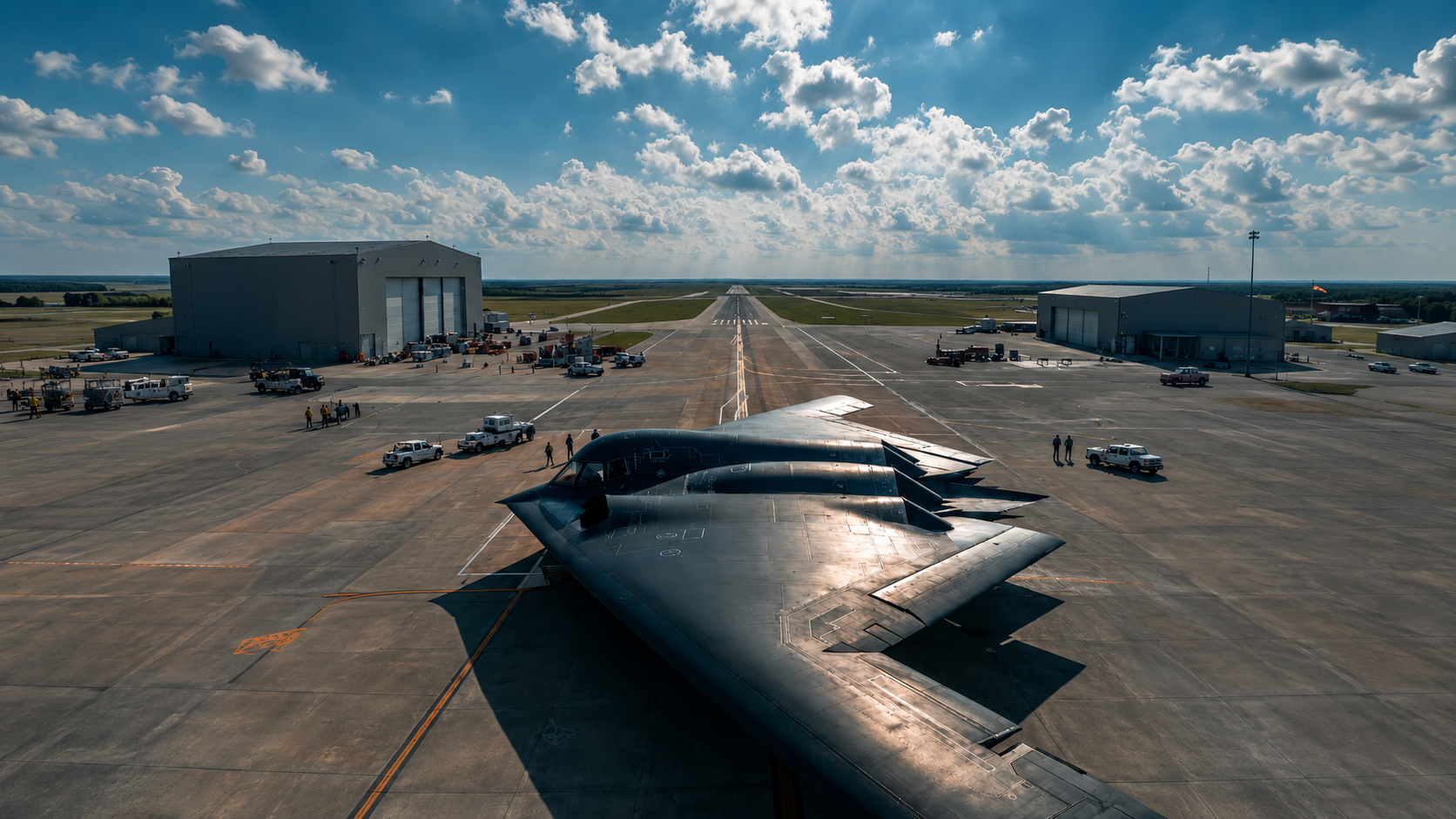
The Black Wing That Changed Modern Air Power
When people see the B-2 Spirit flying overhead, they usually stop and stare.
It does not look like a normal aircraft. It has no traditional tail. It does not have the familiar shape of a fighter jet or old-school bomber. Instead, it looks like a black wing moving silently across the sky — smooth, mysterious, and almost unreal.
That is why the B-2 Spirit is one of the most famous aircraft in the world.
Known widely as the Stealth Bomber, the B-2 was designed for one of the most difficult missions in modern warfare: flying deep into heavily defended enemy airspace and striking targets that are supposed to be protected.
You May Also Like


It is not just a bomber. It is a strategic weapon. It is a message of power. It is a flying symbol of American military technology.
But what makes the B-2 so special?
The answer is not only its weapons. It is not only its long range. It is not only its futuristic shape. The real power of the B-2 comes from the way all of those features work together.
The B-2 Spirit combines stealth, global reach, precision strike capability, and heavy payload capacity in one aircraft. That combination is what makes it one of the most feared bombers ever built.
What Does “Stealth Bomber” Really Mean?
Many people hear the word “stealth” and imagine something invisible.
But stealth does not mean magic. It does not mean the B-2 disappears from the sky. It does not mean a person standing on the ground could never see it with their eyes.
In military aviation, stealth means something more technical and more dangerous.
It means the aircraft is designed to make it extremely difficult for enemy radar and sensors to detect, track, target, and shoot it down.
That difference is important.
A modern air-defense system does not only need to notice an aircraft for one second. It must detect it, track it, identify it, lock onto it, guide missiles toward it, and keep that track long enough to destroy it.
The B-2 is designed to break that chain.
Its shape, materials, coatings, engine placement, and mission planning all help reduce the signals that enemy systems depend on. Instead of giving radar a strong, clear return, the B-2 is designed to scatter, absorb, and reduce those signals.
That is why the B-2 is called low-observable.
It is not truly invisible. It is harder to find, harder to follow, and harder to kill.
In war, that difference can decide the outcome of a mission.
The Flying-Wing Shape: Why the B-2 Looks So Strange
The B-2’s most recognizable feature is its flying-wing design.
Unlike traditional bombers, the B-2 has no vertical tail. Its body and wings blend together into one smooth shape. From above, it looks like a giant black boomerang. From the front, it looks thin, sharp, and almost silent.
This shape is not for style.
It is part of the aircraft’s stealth design.
Traditional aircraft have many surfaces that can reflect radar energy back toward the enemy. Tails, sharp corners, engine openings, and right angles can all create strong radar reflections. The B-2 reduces many of those features by using a smooth, tailless flying-wing structure.
The result is an aircraft that does not behave like a normal target on radar.
The B-2’s curved shape helps deflect radar energy away from the radar receiver. Its special coatings help absorb some radar energy instead of sending it back. Its engines are buried inside the wing structure to reduce radar and heat signatures.
Every line of the B-2 has a purpose.
It is not simply flying through the air. It is shaped to hide within the air.
Radar-Absorbing Materials: The Skin of a Ghost
One of the most important parts of the B-2’s stealth ability is its use of radar-absorbing materials.
These materials are often described as special coatings or composite surfaces designed to reduce radar reflections. When radar waves hit a normal aircraft, some of that energy bounces back to the radar system. That return signal helps the enemy detect and track the aircraft.
The B-2 was designed to reduce that return.
Instead of acting like a bright mirror to radar, the aircraft’s surface helps absorb and weaken radar energy. Combined with its unusual shape, this makes the B-2 much harder to detect than a conventional bomber.
Many details of the B-2’s stealth materials remain classified. That secrecy is part of the aircraft’s power. The public knows the general idea, but not the full formula.
That is one reason the B-2 still feels mysterious.
People can see the aircraft. They can watch it fly. They can photograph it at airshows. But the deeper technology behind its stealth remains hidden.
The B-2’s skin is not just paint.
It is part of the weapon system.
Heat and Noise Reduction: Hiding From More Than Radar
Stealth is not only about radar.
Modern militaries use many ways to detect aircraft. Radar is one method, but there are also infrared sensors, acoustic sensors, visual tracking systems, electronic detection systems, and other technologies.
That is why the B-2 was designed to reduce more than one kind of signature.
Its engines are buried inside the wings, helping reduce visibility and noise. Its exhaust is shaped and shielded to reduce heat signature. This matters because heat-seeking sensors and missiles can use infrared energy to locate aircraft.
A normal jet engine produces a powerful heat trail. The B-2 was designed to make that trail harder to detect.
The aircraft also has a smooth, dark appearance that helps reduce visual detection, especially during certain mission conditions. Even its sound profile matters. A bomber that is harder to hear gives defenders less warning.
This is what makes the B-2 so advanced.
It is not hiding from one sensor.
It is designed to reduce its presence across multiple detection systems.
Why the B-2 Was Built
The B-2 Spirit was built for a serious strategic mission.
During the Cold War, the United States needed an aircraft that could penetrate advanced enemy air defenses and deliver nuclear or conventional weapons if necessary. The mission was not simply to fly far. It was to fly far, survive, and strike high-value targets.
That required a new kind of bomber.
Older bombers relied on altitude, speed, electronic warfare, or escort aircraft to survive. But as air-defense systems improved, those methods became more dangerous. Enemy radar, surface-to-air missiles, and fighter aircraft became more capable.
The B-2 offered a different answer.
Instead of trying to outrun every threat, it would try to avoid being detected and targeted in the first place.
That idea changed strategic bombing.
The B-2 was not built to be loud and obvious. It was built to be quiet, secretive, and difficult to stop.
Its mission was to reach the targets an enemy believed were safe.
Global Reach: A Bomber That Can Cross Continents
One of the B-2’s most powerful features is its range.
The aircraft can fly thousands of miles without refueling, and with aerial refueling, it can travel even farther. This allows it to launch from secure bases and strike targets across the world.
That gives the United States a major strategic advantage.
A country does not need to place the B-2 next to a conflict zone for it to matter. It can take off from the United States, fly across oceans, reach a target, and return.
That kind of reach changes the way enemies think.
They cannot only watch nearby bases. They cannot assume distance will protect them. They cannot feel safe simply because they are far from American territory.
The B-2 turns distance into a smaller problem.
This global reach is one of the reasons the aircraft remains so important. It gives commanders options in moments of crisis. It allows military power to appear far from home. It gives the United States a way to respond without always depending on bases close to the battlefield.
A bomber that can cross the world is more than an aircraft.
It is a strategic signal.
Massive Payload: The Heavy Strike Power Behind the Stealth
Stealth would not matter as much if the B-2 could not deliver serious firepower.
But the B-2 can carry a massive payload.
It is capable of carrying both conventional and nuclear weapons, giving it a rare place in America’s strategic arsenal. It can deliver precision-guided bombs against military targets, command centers, air-defense sites, hardened facilities, and other high-value locations.
That combination of stealth and payload is what makes the B-2 so feared.
Some aircraft are stealthy but carry smaller weapons. Some bombers carry heavy payloads but are easier to detect. The B-2 brings both together.
It can enter dangerous airspace and deliver a powerful strike.
This is why the B-2 is often described as a “first night” aircraft. In a major conflict, the opening hours are critical. Enemy radar systems, missile batteries, command centers, and communication networks must be attacked quickly before they can organize a strong defense.
The B-2 is built for that kind of mission.
It can help open the door for other aircraft by striking the most dangerous targets first.
Conventional and Nuclear Missions
The B-2 Spirit is a dual-capable bomber, meaning it can carry conventional weapons and nuclear weapons.
This makes it part of America’s nuclear deterrent.
Deterrence is not only about using weapons. It is about preventing war by making enemies understand that an attack would bring a powerful response. The B-2 contributes to that message because it can reach distant targets and penetrate sophisticated defenses.
Its nuclear role gives it strategic importance.
Its conventional role gives it battlefield flexibility.
That combination means the B-2 can be used in different kinds of missions, from high-end military conflicts to strategic deterrence operations.
This is one reason the aircraft remains relevant even decades after it first entered service. It is not a single-purpose machine. It is a multi-role strategic bomber with a unique ability to reach protected targets.
Why Enemy Air Defenses Fear the B-2
The B-2 creates a major problem for enemy air-defense commanders.
Air defense depends on confidence. Radar operators must know what they are seeing. Missile crews must know where to aim. Commanders must know which targets to protect and when to respond.
The B-2 attacks that confidence.
If defenders cannot clearly detect or track the aircraft, they cannot respond effectively. If they are unsure where it is coming from, they must spread their defenses thin. If they activate radar too early, they may reveal their own positions. If they wait too long, the B-2 may already be near the target.
This uncertainty is one of the aircraft’s greatest weapons.
The B-2 does not only threaten physical targets. It threatens the enemy’s decision-making process.
A commander who does not know where the bomber is cannot relax.
A radar network that cannot clearly track the aircraft cannot fully protect the battlefield.
A bunker that was built to feel safe may suddenly become vulnerable.
That psychological effect is part of what makes the B-2 so terrifying.
“First In” Capability: Opening the Door for Others
In military operations, some aircraft are sent after enemy defenses have been weakened.
The B-2 is different.
It is designed to be useful when defenses are still strong.
That is why it is often associated with the first phase of a conflict. Its job may include striking radar sites, command centers, air-defense control nodes, military headquarters, and deeply protected targets.
By attacking those targets early, the B-2 can help reduce the threat to other aircraft.
In simple terms, it can help break open the battlefield.
Once enemy defenses are weakened, other aircraft can operate with less risk. Fighter jets, bombers, drones, surveillance aircraft, and support aircraft may have more freedom to move.
The B-2 is not only a bomber that drops weapons.
It can be part of a larger campaign to blind, confuse, and weaken an enemy’s entire defense network.
The Human Skill Behind the Machine
The B-2 may look futuristic, but it still depends on people.
Pilots train for long and demanding missions. Flying a B-2 is not like flying a short combat patrol. Missions can involve many hours in the air, complex navigation, aerial refueling, electronic systems management, weapons employment, and strict timing.
Behind the pilots are maintenance crews, engineers, mission planners, weapons specialists, intelligence teams, and support personnel.
The aircraft’s stealth coating and systems require careful maintenance. The mission planning must be precise. The timing must be disciplined. The aircraft must be prepared correctly before it ever leaves the ground.
A machine this advanced cannot succeed alone.
The B-2’s power comes from the combination of technology and human skill.
That is important to remember. The aircraft may be called a ghost, but it is operated and maintained by real people working under pressure.
Why the B-2 Still Looks Ahead of Its Time
Even today, the B-2 looks futuristic.
Many aircraft from the same era look old compared with modern designs. But the B-2 still looks like it belongs to tomorrow. Its smooth black flying-wing shape continues to inspire fear, curiosity, and respect.
That is because the aircraft was built around ideas that remain important today.
Stealth still matters.
Range still matters.
Precision still matters.
Payload still matters.
Survivability still matters.
Modern warfare is becoming more dangerous, not less. Air-defense systems are improving. Radar networks are becoming more advanced. Missiles are becoming faster and more accurate. Countries are building deeper bunkers and stronger command systems.
That means the mission the B-2 was built for still exists.
The world has changed, but the need to reach heavily defended targets has not disappeared.
B-2 Spirit vs. Traditional Bombers
To understand why the B-2 is special, compare it with older bomber designs.
Traditional bombers often depend on altitude, speed, electronic jamming, escort fighters, or large formations for protection. They may carry huge payloads, but they can also be easier to detect and track.
The B-2 follows another path.
It does not need to look aggressive to be dangerous. It does not need to roar into battle in a massive formation. It does not need to fly like a fighter jet.
Its strength is quiet penetration.
It is designed to fly into places where normal aircraft may face extreme risk. It is designed to reach targets without giving the enemy a clear warning. It is designed to make defense difficult before the first weapon is even released.
That is what separates it from traditional bombers.
It is not just about how much it can carry.
It is about whether it can survive long enough to deliver it.
The Symbol of American Air Power
The B-2 Spirit has become more than an aircraft.
It is a symbol.
When the B-2 appears in the sky, people immediately recognize it. At airshows, flyovers, military events, and global operations, its shape sends a message. It represents advanced technology, strategic reach, and the ability to project power across the world.
For allies, it is a sign of protection and military strength.
For adversaries, it is a warning.
The B-2 reminds the world that some aircraft are not built for ordinary missions. Some aircraft are built for the most difficult missions — the ones that require secrecy, precision, range, and overwhelming force.
That is why the B-2 remains one of the most respected bombers in history.
It is rare.
It is expensive.
It is complex.
But it is also one of the most capable aircraft ever built.
The Future of Stealth Bombers
The B-2 Spirit is not the end of stealth bomber development.
The United States is already moving into a new generation of stealth bomber technology with the B-21 Raider. The B-21 is expected to build on lessons learned from the B-2 while bringing new systems, modern sensors, improved maintainability, and future-ready design.
But the B-2 remains important.
It proved that a stealth strategic bomber could exist. It showed that a flying-wing aircraft could combine long range, heavy payload, and low-observable technology. It changed how nations think about air defense and strategic strike.
The B-21 may represent the future, but the B-2 opened the door.
Without the B-2, modern stealth bomber history would look very different.
Why the B-2 Is Still Feared
The B-2 Spirit is feared because it attacks the strongest parts of an enemy’s defense.
It does not only threaten front-line troops. It threatens the command centers behind them. It threatens bunkers, radar sites, air-defense headquarters, missile facilities, and leadership targets.
It can fly far.
It can carry a heavy payload.
It can strike with precision.
It can operate in dangerous airspace.
And it can do all of this while making detection and tracking extremely difficult.
That is the heart of the B-2’s power.
It is not only a bomber. It is a system built to create uncertainty, fear, and strategic pressure.
An enemy may never know exactly when it is coming.
That is why the B-2’s silence is so frightening.
Final Thought: The Bomber That Turns the Sky Into a Shadow
The B-2 Spirit is one of the most famous military aircraft ever built because it changed the meaning of air power.
It proved that the most dangerous aircraft is not always the fastest, loudest, or most visible. Sometimes, the most dangerous aircraft is the one that arrives quietly, strikes precisely, and leaves before the enemy fully understands what happened.
The B-2 is called the Stealth Bomber because everything about it is designed to reduce detection and increase survivability. Its flying-wing shape, radar-absorbing materials, buried engines, reduced heat signature, long range, and massive payload all work together for one mission:
To reach the target.
That is why the B-2 Spirit remains a legend.
It is not just a machine. It is a shadow with wings.
It is not just an aircraft. It is a warning.
It is not just a bomber. It is one of the most powerful symbols of modern military aviation.
And even in a world of new weapons, new sensors, and new threats, the B-2 still carries one terrifying message:
You may not see it coming — but it can still reach you.