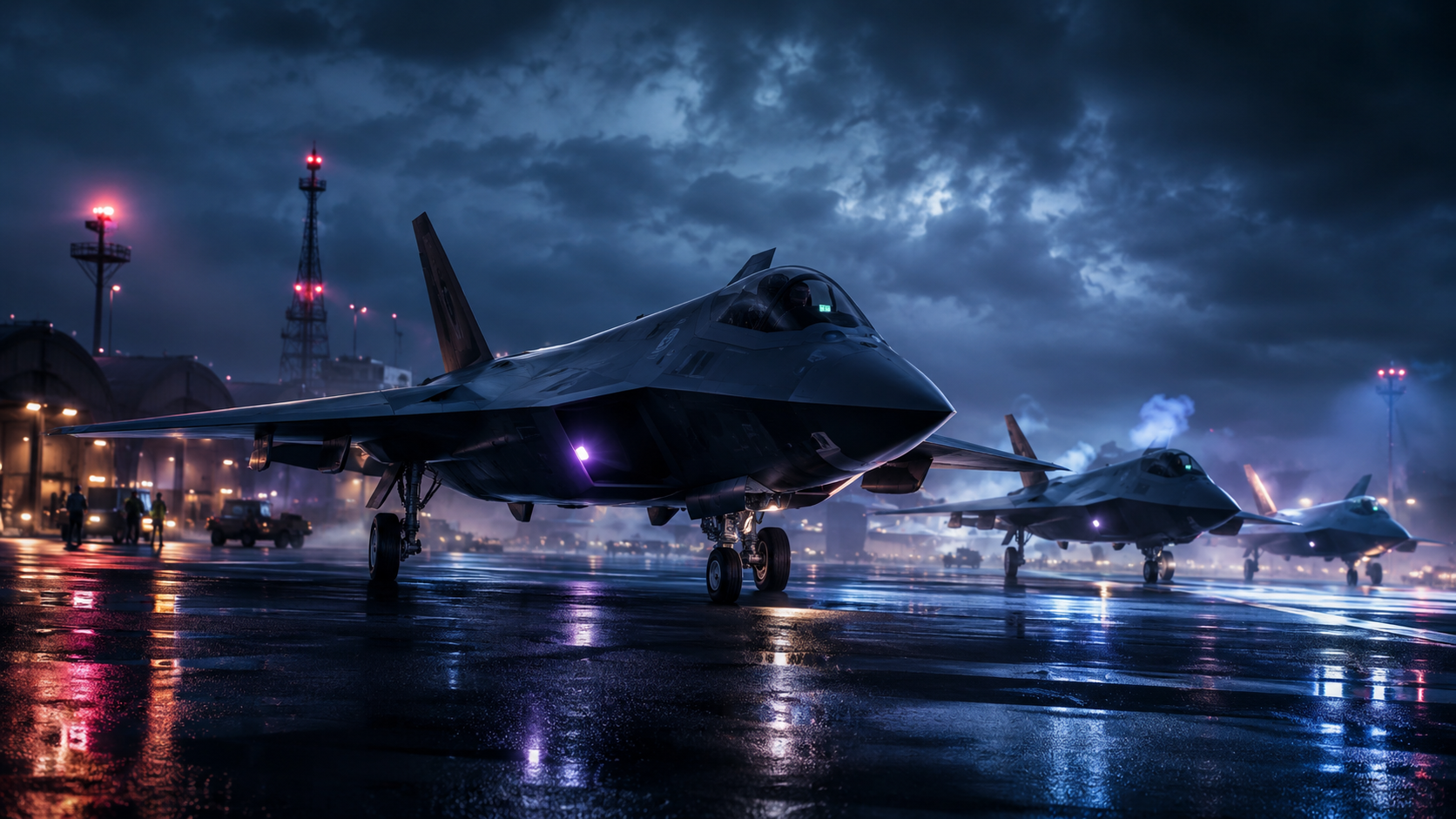
An artist’s rendition of next-generation fighter jets being developed by Japan, Britain and Italy (Provided by the Defense Ministry)
Canada is poised to join the Global Combat Air Program (GCAP) as an observer, a move that would grant it access to a next-generation fighter jet project led by Japan, Britain and Italy, officials revealed.
The observer status will allow for the sharing of certain confidential project information.
Although Canada does not currently intend to participate in the aircraft’s development, it is reportedly considering an eventual purchase.
You May Also Like


A FOOT IN THE DOOR
The observer role is designed as a pathway for future partnership.
According to the policy, the role allows a nation to obtain information from the three core countries to consider deeper involvement later, which could include manufacturing, procurement or even joining the development phase, depending on conditions.
The three partner nations plan to hold a defense ministers’ meeting in Britain as early as July to formally announce Canada’s participation.
A decision on whether Ottawa will purchase the jet would come later.
“Canada will decide after (joining as an observer),” a Japanese government official said.
The topic was on the agenda of a March 6 meeting between Defense Minister Shinjiro Koizumi and Canada’s minister of national defense, David McGuinty, who was in Japan with Prime Minister Mark Carney.
The move reflects strengthening security cooperation between Tokyo and Ottawa, which signed a defense equipment and technology transfer agreement in January.
LINING UP FOR GCAP
Japan, eager to deploy the new fighter by 2035, has been reluctant to add more full partners to the development team over fears of delays.
It does, however, have high hopes for expanding its sales market.
Interest in GCAP is growing, a Defense Ministry official said, noting that the three founding members have been in contact with Singapore, Australia, India and Saudi Arabia.
European nations like Germany, Sweden and Poland have also reportedly expressed interest.
“Countries are lining up for this,” one Defense Ministry source said.
The B-2 Spirit Was Worth $2 Billion—But the
Truth Hidden Inside It Cost Even More
THE TRUMP EFFECT
The growing attention on GCAP comes amid shifts in other next-generation fighter projects.
The Future Combat Air System (FCAS), a joint effort by France, Germany and Spain, has reportedly been hampered by disagreements between Paris and Berlin.
Meanwhile, concrete discussions with allies have not progressed for the F-47 fighter, announced by the U.S. Trump administration.
A view is growing within the Japanese government that as U.S. President Donald Trump brandishes his tariff measures, nations are questioning the reliability of the United States as a partner.
One Defense Ministry official attributed the high interest in GCAP to “a backlash against the Trump administration.”
Canada’s relationship with the United States deteriorated rapidly under the second Trump administration over tariff negotiations and other issues, prompting Carney to call for a move away from dependency on Washington.
“Amid its strained relations with the U.S., it may also be a way of striking a balance,” an official from the Japanese Prime Minister’s Office said of Canada’s interest in GCAP.
Boeing F-47: America’s Sixth-Generation Fighter Rises to Redefine Air Dominance
CLOCK IS TICKING
Despite the potential benefits of new partners, Tokyo is concerned that if more countries join the development process and gain a say, it could create stagnation and jeopardize the essential 2035 deployment target.
Adding a new full partner would require amending the treaty for the GCAP International Government Organization (GIGO), the body created to manage the project.
To prevent delays, Japan’s position is to develop the initial aircraft with just the three founding nations.
However, the 2035 deployment target is already in doubt.
The signing of public-private contracts, originally set for late 2025, is now expected this summer or later due to circumstances in Britain, leading some industry insiders to believe the aircraft deployment could slip to 2040 or beyond.
The complexities of adding partners were highlighted by Saudi Arabia’s potential participation.
Initially, Riyadh sought formal partnership under the GIGO treaty, but Japan raised concerns about development delays and information security.
Saudi Arabia subsequently decided to purchase F-35s from the United States, and, according to a senior official at the Defense Ministry, “Saudi Arabia’s interest has waned.”
This difference in urgency over the deployment timeline—with Japan pushing for 2035 while Britain and Italy are seen as less committed—is expected to lead to difficult negotiations ahead.




2 Comments on “Canada to join GCAP fighter jet program as an observer”