Is the B-2 Spirit a Masterpiece, a Mistake, or the Last Great Shadow of the Cold War?
Main Characters
Professor Adrian Vale
A brilliant defense economist, aerospace strategist, and harsh critic of ultra-expensive military programs. He does not hate the B-2 Spirit. In fact, he admires it deeply. But that is exactly what frightens him. To him, the B-2 is a beautiful warning: a weapon so advanced, so rare, and so expensive that it risks becoming too precious to use.
Professor Miriam Sato
A professor of strategic airpower, stealth technology, and nuclear deterrence. She believes the B-2 is not merely an aircraft. It is a strategic message. It exists to make enemies doubt their defenses, fear hidden reach, and understand that no target is truly safe. To her, the B-2’s cost is enormous because its mission is enormous.
Moderator: Elena Cross
A sharp and fearless host at the Global Airpower and Strategy Forum. She knows how to turn a technical argument into a battle of ideas.
PROLOGUE: THE SHADOW ON THE SCREEN
The lights in the auditorium faded slowly.
You May Also Like

At first, the massive screen behind the stage showed nothing but black.
Then a shape emerged.
No tail.
No vertical stabilizer.
No visible missiles.
No bombs hanging under its wings.
No fighter-like aggression.
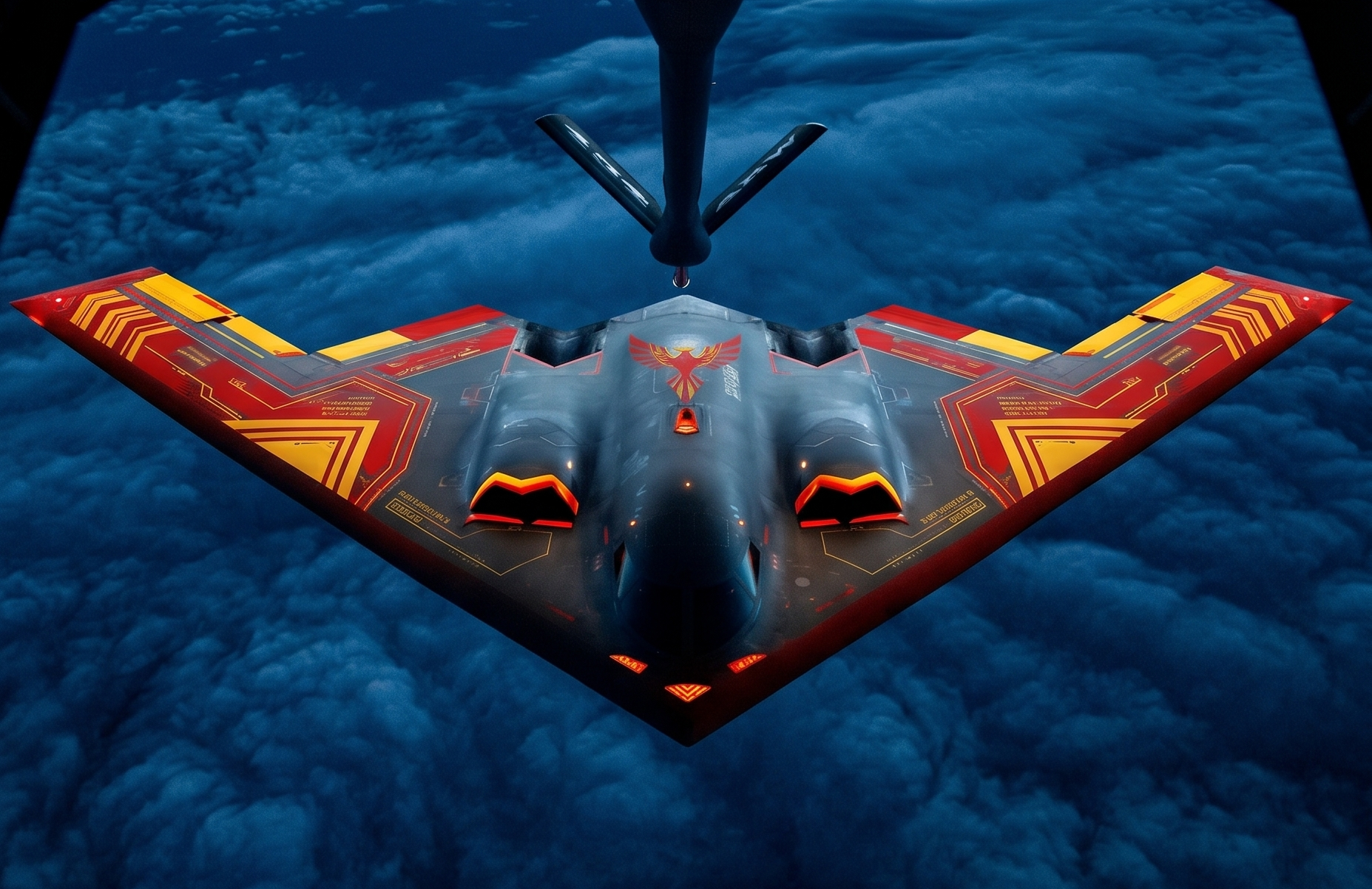
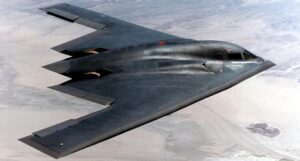
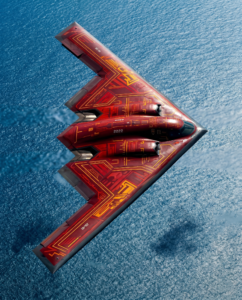
Just a smooth black flying wing, wide and silent, as if someone had cut a piece of night from the sky and taught it to fly.
The audience fell quiet.
It was the B-2 Spirit.
Some aircraft look fast.
Some aircraft look powerful.
Some aircraft look heroic.
The B-2 looked different.
It looked secret.
It looked expensive.
It looked like something a nation builds when it wants the world to know that even the most protected place on Earth may not be safe.
Above the image, white letters appeared:
“B-2 SPIRIT: MASTERPIECE, MISTAKE, OR WARNING?”
The auditorium was packed with pilots, defense journalists, military students, engineers, historians, and political analysts. In the front row sat retired bomber crews. In the back sat young drone engineers who believed the future belonged to unmanned machines.
At the center of the stage sat two professors.
Professor Adrian Vale looked up at the B-2 with the expression of a man staring at a beautiful problem.
Professor Miriam Sato looked at it like someone studying a sleeping dragon.
Moderator Elena Cross stepped forward.
Elena Cross:
Ladies and gentlemen, welcome to the Global Airpower and Strategy Forum. Tonight we discuss one of the rarest and most expensive aircraft ever built: the B-2 Spirit stealth bomber. It has been called an engineering miracle, a budgetary nightmare, a nuclear deterrent, a global strike platform, and a ghost of the Cold War. Only a tiny number were built. Its cost became legendary. Its mission remains serious enough to make presidents hesitate before using it.
She paused.
Elena Cross:
So tonight, we ask a dangerous question: did America build the ultimate stealth bomber, or did it build a machine so expensive that even victory feels fragile?
The audience leaned forward.
Elena Cross:
Professor Vale. Professor Sato. The stage is yours.
PART ONE: THE PRICE OF A GHOST
Scene One: The Number That Haunts Every Debate
Professor Vale:
Let us begin with the number everyone remembers.
He turned toward the screen.
Professor Vale:
Around $2.1 billion per aircraft in 1997 dollars when total program cost is averaged across the small fleet.
A low murmur moved through the hall.
Professor Vale:
That is not the price of an aircraft. That is the price of a national obsession.
Professor Sato:
Or the price of a capability that almost no other aircraft can provide.
Vale:
Miriam, you are already trying to soften the shock.
Sato:
No. I am trying to explain the shock.
Vale:
Explain it, then.
Sato:
The commonly cited cost includes development, testing, procurement, and program expenses spread across only twenty-one aircraft. It is not the same as saying each individual aircraft was simply bought at that price like a car from a showroom.
Vale:
A very strange showroom.
Sato:
Agreed.
A ripple of laughter moved through the audience.
Sato:
But the point matters. When a planned fleet shrinks dramatically, the average cost per aircraft explodes. Research and development does not disappear just because fewer aircraft are produced. It gets divided among fewer tails.
Vale:
That is true. But the public is still right to ask: if a weapon becomes that expensive, does it remain a weapon, or does it become a sacred object?
Sato:
That is a dramatic question.
Vale:
It is also a necessary one.
Sato:
Then here is my answer: the B-2 is a weapon, not a sacred object. But it is a weapon designed for rare and extreme missions. You do not judge it by the standards of a patrol aircraft or a cheap drone.
Vale:
Convenient.
Sato:
Accurate.
Vale:
Every expensive military program says the same thing: “Do not judge us like ordinary weapons. We are special.”
Sato:
Some are not special. The B-2 is.
Vale:
Because it is stealthy?
Sato:
Not only stealthy. That is the mistake casual critics make. The B-2 is not unique merely because it is stealthy. It is unique because it combines stealth, intercontinental range, heavy payload, high-altitude operation, and nuclear/conventional strike capability in one aircraft.
Vale:
I admit that combination is rare.
Sato:
Rare is too small a word.
Vale:
Fine. Extraordinary.
Sato:
Better.
Vale:
But extraordinary things can still be mistakes.
Sato:
And expensive things can still be necessary.
Scene Two: Too Precious to Lose?
Elena Cross:
Professor Vale, you have often used the phrase “too precious to lose.” What do you mean by that?
Vale:
I mean that the B-2 created a paradox. It was built to penetrate dangerous airspace. But because only twenty-one were built, every aircraft became strategically irreplaceable. Losing one would not be like losing a normal aircraft. It would be a national shock.
Sato:
That is partly true.
Vale:
Only partly?
Sato:
Yes. Losing any strategic aircraft is serious. But the fact that a weapon is valuable does not mean it is unusable. Aircraft carriers are valuable. Ballistic missile submarines are valuable. Satellites are valuable. We do not call them useless because they are precious.
Vale:
No, but we protect them obsessively. That changes how they are used.
Sato:
As it should.
Vale:
Then you accept my point. Extreme cost creates extreme caution.
Sato:
Caution is not the same as paralysis.
Vale:
But it can become paralysis.
Sato:
Only under bad leadership.
Vale:
Bad leadership is not rare.
The audience murmured again.
Sato:
Fair.
Vale:
If a president hesitates to use a weapon because losing it would be politically catastrophic, then that weapon’s cost has affected strategy.
Sato:
Yes. But if the existence of that weapon makes an enemy hesitate to start a war, then its cost has also affected strategy.
Vale paused.
Vale:
That is your deterrence argument.
Sato:
It is the heart of the bomber argument.
Vale:
Say it plainly.
Sato:
Very well. The B-2 does not have to drop bombs to matter. It matters because adversaries must plan as if it could. It forces them to spend money on defenses, hide assets, harden facilities, move command centers, and doubt their own protection. A weapon that creates doubt inside an enemy’s command structure has strategic value before it ever leaves the runway.
Vale:
That is powerful.
Sato:
Yes.
Vale:
Also dangerous.
Sato:
Power usually is.
Scene Three: The Flying Wing and the Shape of Secrecy
The screen zoomed closer to the aircraft.
The B-2’s flying-wing shape filled the room.
Elena Cross:
Let us talk about the design. Why does the B-2 look so different from ordinary aircraft?
Sato:
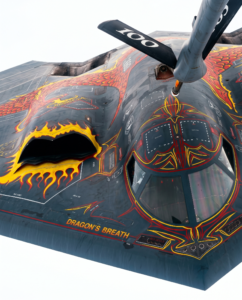
Because ordinary aircraft were not good enough for its mission. The B-2’s shape is part of its stealth. It has no conventional tail. Its surfaces are designed to reduce radar reflections. Its engines are buried. Its weapons are carried internally. It is built to make detection, tracking, and engagement as difficult as possible.
Vale:
A flying wing is not only an aesthetic choice. It is a radar problem turned into a shape.
Sato:
Exactly.
Vale:
That is actually beautiful.
Sato:
Careful. You sound like you admire it.
Vale:
I do admire it. That is what worries me.
Sato:
You distrust your own admiration?
Vale:
Always. Especially around expensive machines.
Sato:
Why?
Vale:
Because admiration can become worship. Worship makes people stop asking whether a weapon is still worth its cost.
Sato:
And suspicion can become blindness. Blindness makes people ignore capabilities that cannot be replaced easily.
Vale:
Then perhaps we are both useful tonight.
Sato:
A rare event.
The audience laughed.
Scene Four: The Aircraft That Carries More Than Bombs
Elena Cross:
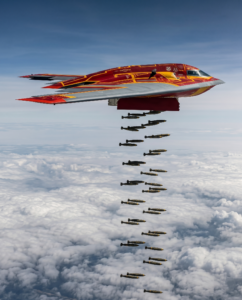
The B-2 can carry more than 40,000 pounds of weapons and is capable of both conventional and nuclear missions. Why is that combination important?
Sato:
Because it makes the aircraft strategically flexible. It can be used for conventional strikes against hardened or heavily defended targets, but it is also part of America’s nuclear deterrent. That dual role is not just technical. It is political.
Vale:
Political in what sense?
Sato:
A bomber can be seen. It can be deployed. It can be flown as a signal. It can be recalled. A ballistic missile, once launched, cannot be called back. That makes bombers different from missiles.
Vale:
So the bomber gives leaders a weapon that is terrible but still controllable.
Sato:
Yes. In crisis management, controllability matters.
Vale:
But controllability can also tempt leaders to use force.
Sato:
True. Every flexible weapon carries that risk.
Vale:
Then the B-2 is both stabilizing and destabilizing.
Sato:
Potentially.
Vale:
That is not comforting.
Sato:
Strategic weapons are not supposed to be comforting. They are supposed to be understood.
Scene Five: The First Clash
Vale:
Here is my first major claim: the B-2 is a masterpiece of engineering and a warning of procurement failure.
Sato:
And here is mine: the B-2 is expensive not because it is wasteful, but because the mission it was built for is exceptionally hard.
Vale:
A mission can be hard and still produce a flawed acquisition outcome.
Sato:
Agreed.
Vale:
Then you admit the program had problems.
Sato:
Of course. Only a fool would deny that.
Vale:
Good.
Sato:
But only another fool would conclude that program problems equal strategic uselessness.
Vale:
That was aimed at me.
Sato:
Softly.
Vale:
You are becoming rude.
Sato:
Academically rude.
Vale:
The worst kind.
PART TWO: THE BOMBER IN THE AGE OF DRONES, MISSILES, AND AI
The screen changed.
The B-2 now appeared beside drone swarms, hypersonic weapons, satellites, cyber maps, and a shadowy image of the newer B-21 Raider.
The new question appeared:
“CAN A CREWED STEALTH BOMBER SURVIVE THE FUTURE?”
Scene One: The Drone Generation Attacks
Elena Cross:
Professor Vale, critics say the B-2 belongs to a different era. Today we have drones, long-range missiles, cyber operations, satellites, artificial intelligence, and unmanned aircraft. Why risk a crewed bomber at all?
Vale:
Exactly. That is the question the next generation is asking. If drones can be produced cheaply, if missiles can strike from distance, if cyber weapons can disable systems silently, and if satellites can identify targets, why send two human beings in a multi-billion-dollar aircraft into danger?
Sato:
Because none of those tools fully replaces what the B-2 does.
Vale:
That sounds like institutional poetry.
Sato:
No. It is operational reality.
Vale:
Then answer clearly. What does the B-2 do that thousands of drones cannot?
Sato:
Reach defended strategic targets at intercontinental range while carrying heavy payloads and preserving stealth.
Vale:
Some drones may eventually do that.
Sato:
Eventually is a very large country where many arguments go to hide.
Vale:
Good line.
Sato:
Thank you.
Vale:
But the trend is obvious. War is becoming distributed. The future favors many cheap systems over a few exquisite ones.
Sato:
Sometimes.
Vale:
More often every year.
Sato:
Perhaps. But distribution is not magic. A thousand small systems cannot equal one heavy bomber if they cannot reach the target, cannot carry the weapon, cannot survive jamming, or cannot coordinate under attack.
Vale:
You are right technically, but strategically the trend still favors mass.
Sato:
Mass matters. Access matters too.
Vale:
And you think the B-2 provides access.
Sato:
That is the point of stealth.
Vale:
Stealth is not invisibility.
Sato:
Correct. It is delay. It is confusion. It is reduced detection range. It is a smaller engagement window. It is an enemy radar operator seeing too little, too late.
Vale:
Poetic again.
Sato:
Physics can be poetic.
Scene Two: Missiles Versus Bombers
Elena Cross:
Let us compare bombers and missiles. Why not simply use long-range missiles instead of a B-2?
Vale:
Exactly. Missiles do not need pilots. They do not require a stealth bomber to survive the return trip. They can be launched from ships, submarines, aircraft, or ground systems.
Sato:
And once launched, many cannot be recalled.
Vale:
You keep returning to recall.
Sato:
Because it matters. A bomber is a political instrument before it is a kinetic instrument. You can launch it during a crisis, let the enemy see preparation, alter its mission, hold it at a distance, or call it back. A missile is often a decision already made.
Vale:
Missiles are faster.
Sato:
Yes.
Vale:
Sometimes speed is survival.
Sato:
And sometimes speed is escalation.
Vale:
So you argue that the bomber is slower but wiser?
Sato:
Not wiser. More controllable.
Vale:
A machine is not wise. Leaders are wise or foolish.
Sato:
Exactly. The bomber gives leaders more time to be either.
The audience reacted with a mixture of laughter and unease.
Vale:
That is not reassuring.
Sato:
Truth rarely is.
Scene Three: The Bunker Under the Mountain
The screen shifted to a stylized image of a fortified underground complex.
Elena Cross:
The B-2 is often discussed in relation to deeply buried or hardened targets. Why is that so important?
Sato:
Because some targets are not simply far away. They are buried under rock, reinforced with concrete, surrounded by air defenses, and protected by geography. Striking those targets may require extremely heavy bunker-buster weapons.
Vale:
This is where the B-2’s case becomes strongest. A small drone cannot carry that kind of weapon. A fighter cannot carry it. Many bombers cannot deliver it stealthily.
Sato:
Exactly. The B-2’s ability to carry very heavy weapons, including extremely large penetrator bombs, gives it a niche no ordinary aircraft can fill.
Vale:
But again, niche.
Sato:
Yes. But some niches decide history.
Vale:
That line sounds like it belongs on a war college wall.
Sato:
It should.
Vale:
A niche weapon can be justified if the niche is important enough.
Sato:
Now you are arguing my side.
Vale:
No. I am strengthening the debate before destroying you later.
Sato:
Ambitious.
Vale:
Necessary.
Scene Four: The Human Crew Problem
Elena Cross:
The B-2 has a crew of two: pilot and mission commander. In a future moving toward autonomy, should strategic bombers remain crewed?
Vale:
My answer is increasingly no. If a mission is dangerous enough to require stealth, why place humans inside the aircraft? An unmanned bomber could fly longer, risk more, and avoid the political disaster of captured or killed crew.
Sato:
Technically attractive. Strategically complicated.
Vale:
Everything is complicated when people defend old systems.
Sato:
No. This complication is real. A nuclear-capable unmanned bomber raises serious command-and-control questions. Who authorizes release? What happens if communications are jammed? How does an adversary interpret an unmanned stealth aircraft approaching its territory? What if the platform malfunctions? What if it is spoofed or hacked?
Vale:
A crewed aircraft can also malfunction.
Sato:
Yes, but human presence can provide judgment, authentication, and responsibility during a mission.
Vale:
Or human error.
Sato:
Both.
Vale:
You are defending humans as if they are flawless.
Sato:
No. I am defending humans because they are accountable.
Vale:
Machines can have logs.
Sato:
Logs are not conscience.
That line hung in the air.
Vale:
You have a talent for making engineering feel moral.
Sato:
Engineering is moral when it carries nuclear weapons.
Scene Five: The “Golden Ghost” Problem
Vale:
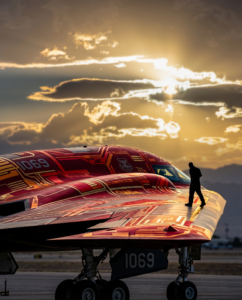
Let me introduce a phrase: the golden ghost problem.
Sato:
That sounds like something you invented to annoy acquisition officers.
Vale:
Correct.
Sato:
Proceed.
Vale:
A golden ghost is a platform that is stealthy, expensive, rare, and strategically admired. Everyone respects it. Everyone fears losing it. Everyone includes it in war plans. But because it is so few in number and so expensive, it risks becoming more useful as a symbol than as a practical tool.
Sato:
A clever phrase. But does it apply to the B-2?
Vale:
Partly.
Sato:
Only partly?
Vale:
Yes. I am fair.
Sato:
Occasionally.
Vale:
The B-2 has real capability. But the tiny fleet creates fragility. If maintenance problems ground several aircraft, if a runway is threatened, if tankers are unavailable, if a mission requires repeated sorties, the small number matters.
Sato:
That is fair. Low-density assets create planning challenges.
Vale:
And yet strategic culture loves them because they look decisive.
Sato:
Sometimes they are decisive.
Vale:
Sometimes they are PowerPoint kings.
Sato:
And sometimes cheap mass becomes battlefield confetti.
Vale:
You are enjoying this.
Sato:
Immensely.
Scene Six: The Future Is Not Cheap
Vale:
The future should avoid B-2-style cost spirals. More drones. More distributed systems. More affordable stealth. More modular weapons. More mass.
Sato:
Yes.
Vale blinked.
Vale:
You agree?
Sato:
Of course. The B-2 should not be copied blindly. The B-21 must learn from it. More maintainable. More numerous. More integrated with networks and unmanned systems. Less exotic in cost.
Vale:
Then why are we fighting?
Sato:
Because you treat the B-2 as a warning against the concept. I treat it as a warning about execution.
Vale:
That is actually the cleanest difference between us.
Sato:
Good. We found the battlefield.
PART THREE: THE LAST SHADOW BEFORE THE RAIDER
The screen changed again.
Three aircraft silhouettes appeared.
The old but enduring B-52 Stratofortress.
The rare and secretive B-2 Spirit.
The emerging B-21 Raider.
Above them:
“WHAT DID THE B-2 TEACH THE FUTURE?”
Scene One: Masterpiece, Relic, or Warning?
Elena Cross:
We now reach the final part. I want one word from each of you. Is the B-2 a masterpiece, a relic, or a warning?
Vale:
Warning.
Sato:
Masterpiece.
Elena Cross:
And if you had to choose a second word?
Vale:
Masterpiece.
Sato:
Warning.
The audience laughed and applauded.
Vale:
That is the problem with the B-2. Both words are true.
Sato:
Yes. It is a masterpiece that warns us.
Vale:
And a warning that dazzles us.
Sato:
Exactly.
Vale:
It teaches that technology can solve impossible problems, but also that solving impossible problems can become financially dangerous.
Sato:
It teaches that airpower is not only about aircraft count. Sometimes one aircraft with the right access, payload, and timing can achieve what many others cannot.
Vale:
And it teaches that if you build too few, every aircraft becomes a jewel.
Sato:
Agreed.
Vale:
Jewels are terrible tools.
Sato:
Unless the lock requires a diamond.
Vale:
That metaphor is ridiculous.
Sato:
But memorable.
Scene Two: The B-21 Inherits the Ghost
Elena Cross:
Let us speak of the B-21 Raider. What must it learn from the B-2?
Vale:
First: do not become a golden ghost. Build enough aircraft. Keep costs controlled. Design for maintenance. Design for upgrades. Do not let secrecy become an excuse for inefficiency. Do not build a platform so rare that every sortie feels like a national gamble.
Sato:
I agree. The B-21 must be more sustainable. It must be built in larger numbers. It must operate as part of a network: satellites, drones, cyber systems, tankers, stand-off weapons, decoys, electronic warfare, and allied platforms.
Vale:
But should it still be crewed?
Sato:
For now, yes.
Vale:
For now?
Sato:
Eventually, strategic bombers may become optionally manned or unmanned. But nuclear command-and-control, crisis signaling, and political trust make full autonomy difficult.
Vale:
So the future bomber may carry ghosts of two kinds: stealth and human judgment.
Sato:
That is surprisingly poetic.
Vale:
I am evolving.
Sato:
Slowly.
Scene Three: The Harshest Question
Elena Cross stepped away from the podium and moved closer to the professors.
Elena Cross:
I have a question neither of you received in advance.
The auditorium quieted.
Elena Cross:
Imagine you are advising a president. Intelligence indicates a deeply buried facility that may soon become impossible to neutralize. The target is protected by advanced defenses. Missiles may not be enough. Drones cannot carry the required weapon. The B-2 may be the only credible option. But the mission is risky. Would you recommend using it?
Sato looked at Vale.
Vale looked at the screen.
For the first time all evening, he did not answer quickly.
Vale:
If the intelligence were strong, the objective lawful, the strategic need urgent, and no better option existed — yes.
A murmur spread through the hall.
Sato:
That is the entire case for the B-2.
Vale:
No. It is the case for rare capability.
Sato:
And the B-2 is that rare capability.
Vale:
Sometimes.
Sato:
Sometimes is enough when the moment matters.
Vale:
That is the most dangerous argument in defense policy.
Sato:
And sometimes the most necessary.
Scene Four: The Public’s Question
A young student in the audience stood during the question period.
Student:
Professor Vale, Professor Sato, I am not a military expert. I understand drones are cheaper and missiles are faster. But when I look at the B-2, I feel both amazed and disturbed. How should ordinary people think about such a machine?
Vale leaned toward his microphone.
Vale:
With suspicion.
Sato leaned toward hers.
Sato:
With seriousness.
The student looked confused.
Vale continued.
Vale:
Be suspicious of beauty in weapons. Be suspicious of language that turns destruction into elegance. The B-2 is an incredible achievement, but it exists to deliver violence at global range. Citizens should never let mystery or patriotism prevent hard questions about cost, necessity, legality, and consequences.
Sato nodded.
Sato:
And take it seriously because weapons like the B-2 also exist within deterrence. Their purpose may be to prevent enemies from believing they can act without consequence. The paradox is painful: a machine built for devastating force may help prevent greater war by making aggression look unwinnable.
The student sat slowly.
Vale:
That paradox should never become comfortable.
Sato:
Agreed.
Scene Five: The Final Crossfire
Elena Cross:
We are nearing the end. Each of you may ask the other three rapid questions. Professor Vale, begin.
Vale:
Miriam, is the B-2 too expensive?
Sato:
Yes.
The audience gasped slightly.
Vale:
Is it too rare?
Sato:
Yes.
Vale:
Would you build the same program again exactly as it happened?
Sato:
No.
Vale smiled.
Vale:
Then I win.
Sato:
Not even close.
The audience laughed.
Sato:
My turn. Adrian, is the B-2 technologically extraordinary?
Vale:
Yes.
Sato:
Does it provide a capability most aircraft cannot?
Vale:
Yes.
Sato:
In a crisis where only the B-2 could credibly perform the mission, would you use it?
Vale sighed.
Vale:
Yes.
Sato smiled.
Sato:
Then I win.
The applause was immediate.
Vale:
This is why debates are dangerous. Both sides can bleed and still claim victory.
Sato:
That is because reality is rude.
Scene Six: Final Statements
Professor Vale’s Final Statement
Vale:
The B-2 Spirit is one of the greatest aircraft ever built. Let no one misunderstand me. Its stealth, range, payload, and strategic flexibility are extraordinary. It is a machine that forced adversaries to rethink defense and gave national leaders options few platforms could provide.
He paused.
Vale:
But greatness does not erase danger. The B-2 also shows how military ambition can become financially fragile. A tiny fleet spreads enormous cost across too few aircraft. Each bomber becomes irreplaceable. Each accident matters. Each maintenance problem matters. Each mission becomes heavy with political and economic weight.
He looked at the audience.
Vale:
So my message is this: admire the B-2, but do not worship it. Learn from it, but do not repeat its mistakes. The future needs stealth, range, and payload — yes. But it also needs numbers, resilience, affordability, and the courage to admit that even masterpieces can become warnings.
Professor Sato’s Final Statement
Sato:
The B-2 Spirit is expensive because it was built to answer an expensive question: can a nation reach the targets its enemies most want to protect?
She let the question hang.
Sato:
That question is not obsolete. Drones have not erased it. Missiles have not erased it. Cyber warfare has not erased it. Artificial intelligence has not erased it. As long as adversaries build hardened facilities, advanced defenses, and strategic weapons, nations will seek ways to penetrate, deter, and respond.
She turned toward Vale.
Sato:
Yes, the B-2 is rare. Yes, its cost is troubling. Yes, the next generation must be more sustainable. But expensive does not mean foolish. Rare does not mean irrelevant. And old does not mean obsolete when the mission remains alive.
She looked toward the giant image of the bomber.
Sato:
The B-2 is not just a machine. It is a question flying in darkness: what is the price of reach, and what is the cost of not having it?
EPILOGUE: AFTER THE AUDIENCE LEAVES
The debate ended.
The applause lasted longer than expected.
Then the crowd slowly thinned. Journalists left first, already writing headlines. Students remained in small groups, arguing. A retired bomber pilot stood alone near the stage for a long moment, looking at the image of the B-2 as if remembering a sound no one else had heard.
Finally, the auditorium emptied.
Only Vale and Sato remained beneath the fading screen.
The B-2 still hovered above them in silence.
Vale:
You admitted it was too expensive.
Sato:
Because it was.
Vale:
And too rare.
Sato:
Yes.
Vale:
You are a strange defender.
Sato:
The best defense begins with honesty.
Vale:
Do you think the B-21 will fix the mistake?
Sato:
It must.
Vale:
That is not an answer.
Sato:
It is the only answer history gives us before the test arrives.
Vale looked up at the dark flying wing.
Vale:
I still think the B-2 is a golden ghost.
Sato:
Maybe.
Vale:
Only maybe?
Sato:
A ghost frightens people because it may appear where it should not. That is not always useless.
Vale:
You are impossible.
Sato:
You are predictable.
Vale:
Harsh.
Sato:
Accurate.
They stood together in silence.
After a moment, Vale spoke again.
Vale:
Do you ever wonder what it feels like to fly one?
Sato:
No.
Vale:
Really?
Sato:
I wonder what it feels like to authorize one.
Vale did not answer.
That sentence changed the room.
The aircraft on the screen no longer looked like an engineering marvel.
It looked like a decision.
A decision with engines.
A decision with a crew.
A decision with nuclear history behind it and uncertain wars ahead.
Vale:
That may be the true cost.
Sato:
What?
Vale:
Not the money. Not the maintenance. Not even the rarity.
Sato:
Then what?
Vale:
The burden of having an option no one else has.
Sato looked at him quietly.
Sato:
And the burden of needing it one day.
The lights faded.
The screen went black.
No aircraft remained.
Only a question.
FINAL CLOSING REFLECTION
The B-2 Spirit is one of the most fascinating military aircraft ever created because it refuses to fit into a simple category.
It is not just expensive.
It is strategically expensive.
It is not just rare.
It is rare because its mission is rare.
It is not just stealthy.
It combines stealth with global range, heavy payload, nuclear capability, conventional strike, and psychological power.
Critics are right to worry about it.
A tiny fleet creates fragility.
A huge cost creates political pressure.
A beautiful machine can become protected by myth.
A rare aircraft can become too precious.
But defenders are also right.
Some targets are too far.
Some defenses are too strong.
Some facilities are too buried.
Some crises demand options that missiles, drones, and fighters cannot fully replace.
That is why the B-2 remains powerful in the imagination.
It is not the fastest aircraft.
It is not the newest aircraft.
It is not the cheapest aircraft.
It is not the most numerous aircraft.
But it is one of the few aircraft that can make an enemy look at a hardened, hidden, heavily defended target and still wonder:
“Can they reach us?”
And that question is the B-2’s real weapon.
The B-2 is a masterpiece.
The B-2 is a warning.
The B-2 is a ghost.
And in the future, when the B-21 Raider takes its place, the world will discover whether America learned the lesson of the Spirit:
A ghost in the sky can change history.
But only if it does not cost so much that history can barely afford to use it.