There are military images that immediately stop people from scrolling.
A fighter jet breaking the sound barrier.
A submarine surfacing through dark water.
A Marine standing in the dust beside an armored vehicle.
A Navy SEAL team moving silently in full gear beside the ocean.
But few images feel as bold as this:
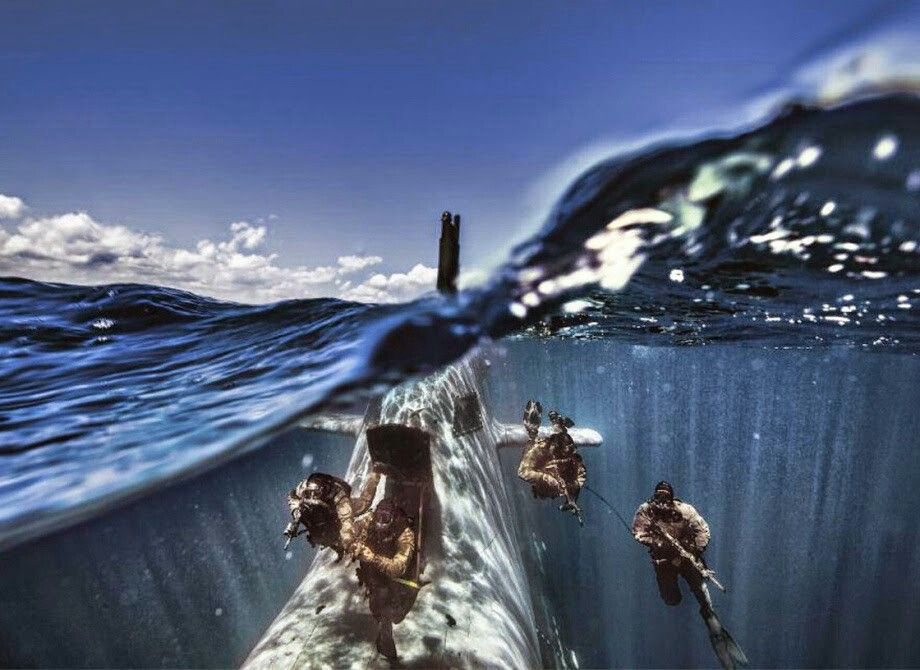
A group of Navy SEALs riding on the outside of a submarine.
You May Also Like
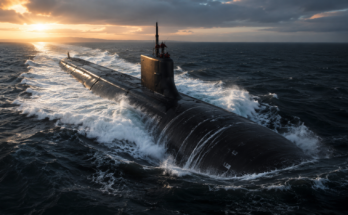
It looks unreal.
It looks dangerous.
It looks like something from a movie.
But it represents a real part of Naval Special Warfare’s identity: operating from the sea, using surprise, endurance, teamwork, and precision to reach places other forces cannot easily go.
This is the world that SEAL Team 1 helped define.
SEAL Team 1 is one of the original teams in the U.S. Navy’s elite Sea, Air, and Land force. Based in the West Coast Naval Special Warfare community centered around Coronado, California, the team carries a legacy tied to the early days of the SEALs, the Vietnam War, maritime special operations, and the continuing evolution of America’s most famous special operators.
To the public, “Navy SEAL” often means strength, toughness, secrecy, and elite combat skill.
But SEAL Team 1 represents something deeper.
It represents the moment the Navy realized that future wars would not be fought only by ships, aircraft, and large formations. Some missions would require small teams moving through water, jungle, air, darkness, and enemy territory with almost no margin for error.
That is why SEAL Team 1 matters.
It is not just a unit name.
It is part of the foundation of modern American special operations.
What Does “SEAL” Really Mean?
The word SEAL is famous, but many people forget what it actually means.
SEAL stands for Sea, Air, and Land.
That name explains the mission.
A SEAL must be able to operate from the ocean, insert from the air, and fight on land. Unlike conventional forces designed mainly for one domain, SEALs are built for transitions.
They may start from a ship.
Move by submarine.
Swim underwater.
Launch from a small boat.
Parachute from an aircraft.
Move through jungle, desert, mountain, city, or coastline.
And then leave the same way they came — quietly.
That is why Naval Special Warfare is different.
The sea is not just a place SEALs cross. It is part of their identity.
Their roots come from earlier Navy combat swimmers, scouts, raiders, and Underwater Demolition Teams that cleared beaches, conducted reconnaissance, and supported amphibious operations in World War II and Korea.
The SEALs were created to build on that heritage and prepare for a different kind of conflict — one involving unconventional warfare, small teams, covert movement, and missions that could not always be solved by large conventional units.
SEAL Team 1 was born from that vision.
The Birth of the SEAL Teams
The origins of the Navy SEALs reach back to World War II, when naval demolition units and Underwater Demolition Teams proved essential during amphibious landings.
Before Marines and soldiers could storm a beach, someone had to understand the beach.
Were there obstacles?
Were there mines?
Was the water deep enough?
Could landing craft reach the shore?
Were enemy defenses hidden along the coast?
That dangerous work fell to naval combat demolition units and UDT swimmers. These men moved ahead of the main force, often under enemy threat, to clear obstacles and gather information.
They became known for courage, physical endurance, and waterborne skill.
After World War II and Korea, the Navy began to see that these skills could be used for more than beach clearing. The Cold War created new threats: insurgencies, river warfare, coastal raids, clandestine missions, and small wars in places where large forces were not always the right answer.
In the early 1960s, under the broader push for unconventional warfare capability, the Navy established its first SEAL teams.
SEAL Team 1 was created on the West Coast.
SEAL Team 2 was created on the East Coast.
Together, they became the beginning of a new era in naval special operations.
Why SEAL Team 1 Was Different
SEAL Team 1 was not created to be a normal Navy unit.
It was designed for missions that required flexibility, secrecy, and extreme skill.
The team’s early focus reflected the Cold War world and the growing conflict in Southeast Asia. Unlike conventional naval forces that operated mainly from ships and bases, SEALs were expected to move in small groups, work with foreign partners, gather intelligence, conduct raids, and operate in rivers, coastal areas, and jungle terrain.
That made SEAL Team 1 especially important during the Vietnam era.
Vietnam was not a traditional battlefield of clear front lines. It included jungles, swamps, rivers, villages, coastlines, and hidden supply networks. The enemy often moved through waterways and used terrain that made conventional operations difficult.
That environment demanded operators who could move quietly, fight in small teams, and operate in places where ordinary forces struggled.
SEAL Team 1 became part of that story.
SEAL Team 1 in Vietnam
Vietnam helped shape the reputation of the Navy SEALs.
SEAL Team 1 deployed personnel to Vietnam during the early years of SEAL involvement and became closely associated with the kind of missions that would define the community: reconnaissance, direct action, advising partner forces, and operating in difficult riverine and coastal environments.
Small SEAL elements worked in places where stealth and local knowledge mattered. They operated in jungles, swamps, canals, rivers, and coastal regions. They supported South Vietnamese forces, trained local maritime commandos, and conducted missions against enemy networks.
Vietnam was brutal.
The heat was intense.
The terrain was unforgiving.
The enemy knew the land.
The waterways were dangerous.
The missions were often small, close, and personal.
SEALs gained a reputation for being highly effective, but that reputation came at a price. The war demanded constant courage, adaptability, and sacrifice.
The Vietnam experience helped build the SEAL image that still exists today: elite maritime commandos who can operate where others cannot, often in small teams and under extreme pressure.
For SEAL Team 1, Vietnam was not just a chapter.
It was part of the unit’s identity.
Coronado: The West Coast Home of Naval Special Warfare
To understand SEAL Team 1, you must understand Coronado.
Naval Amphibious Base Coronado in California is one of the most important places in Navy SEAL history. Its beaches, training areas, and facilities have shaped generations of Naval Special Warfare operators.
Coronado is more than a base.
It is a symbol.
For many people who dream of becoming SEALs, Coronado represents the beginning of the hardest journey of their lives. It is where candidates face some of the most physically and mentally demanding military training in the world.
The ocean is always there.
Cold water.
Soft sand.
Long runs.
Team punishment.
Exhaustion.
Discipline.
Failure.
Resilience.
The point is not simply to make people tired. The point is to reveal who can keep thinking, keep leading, keep helping teammates, and keep moving when the body wants to stop.
SEAL Team 1 belongs to this West Coast tradition.
It is tied to the Pacific, to maritime operations, to the Navy’s forward-looking special warfare role, and to a community that sees the sea not as a barrier, but as a path.
Riding Outside a Submarine: Why the Image Matters
The phrase “a SEAL team riding on the outside of a submarine” sounds almost unbelievable.
But it captures something real about Naval Special Warfare.
Submarines and SEALs have a long relationship. Submarines can move quietly through the ocean, hidden from sight. SEALs can use the sea to approach places where ordinary forces cannot easily go. Together, they create a powerful combination: stealth beneath the waves and special operators trained to move from the water to the target area.
Public Navy releases have shown Naval Special Warfare operators training with submarines, small craft, and maritime platforms. These images are carefully controlled and do not reveal classified methods, but they show the broad concept: SEALs must be able to integrate with the fleet.
That matters because modern war is increasingly about access.
Can you reach the area?
Can you get close without being detected?
Can you gather information?
Can you support the fleet?
Can you create options for commanders?
Can you leave before the enemy understands what happened?
Submarine-linked special operations are part of that larger idea.
The visual is dramatic because it shows danger and skill. But the deeper meaning is professional: SEALs must be able to work with ships, submarines, aircraft, small boats, and joint forces.
They are not separate from the Navy.
They extend what the Navy can do.
Maritime Special Operations: The SEAL Advantage
Every military branch has elite forces.
The Army has Green Berets and Rangers.
The Air Force has special tactics airmen.
The Marine Corps has Raiders.
The Navy has SEALs.
What makes SEALs distinct is their maritime identity.
They are trained to operate from and around water in ways most forces are not. That includes swimming, diving, small boats, coastal movement, underwater approaches, and ship-related missions.
But maritime special operations are not only about swimming.
They are about access.
Most of the world’s population lives near coastlines. Many important military targets, ports, bridges, ships, oil facilities, undersea cables, and strategic chokepoints are connected to the sea. A force that can move from sea to land gives commanders options.
That is the SEAL advantage.
They can approach from unexpected directions.
They can support naval campaigns.
They can conduct reconnaissance in littoral areas.
They can work with submarines and surface ships.
They can train with allied maritime forces.
They can help open the door for larger operations.
SEAL Team 1’s heritage is tied directly to this mission.
Direct Action and Special Reconnaissance
Two of the most important mission areas associated with Navy SEALs are direct action and special reconnaissance.
Direct action refers to short-duration strikes or offensive operations against specific targets. These missions require speed, precision, intelligence, and surprise.
Special reconnaissance focuses on gathering information in dangerous or denied areas. These missions may require operators to remain hidden, observe enemy activity, identify targets, and report critical details back to commanders.
Both missions demand discipline.
Direct action is not just “storming a building.”
Reconnaissance is not just “watching something.”
Both require planning, intelligence, communications, rehearsals, physical endurance, and the ability to make decisions under stress.
The public often sees SEALs through the lens of raids and high-profile missions. But reconnaissance is just as important. Sometimes the most valuable mission is not firing a shot. It is seeing something the enemy does not want seen and reporting it accurately.
That quiet work is a major part of the special operations world.
Counterterrorism and Modern Missions
After September 11, 2001, Navy SEALs became central to the global war on terrorism.
The public became more familiar with SEALs through Afghanistan, Iraq, and other operations around the world. Their missions included reconnaissance, raids, partner-force training, hostage-related operations, and support to broader special operations campaigns.
However, it is important to understand that not every SEAL mission is public, and not every SEAL team’s activities are disclosed. The most sensitive operations remain classified.
That secrecy is part of the job.
Public stories often show only a small piece of what Naval Special Warfare does. Behind the headlines are years of training, planning, intelligence work, language study, cultural preparation, and coordination with other units.
SEAL Team 1, like other SEAL teams, exists inside that larger system.
Its operators are not only warriors. They are planners, teammates, problem-solvers, and representatives of U.S. military power in some of the most sensitive environments in the world.
The Training Mindset
People often ask what makes a SEAL different.
The answer is not simply strength.
Many people are strong.
Many people can run.
Many people can swim.
Many people can shoot.
The difference is the mindset under pressure.
SEAL training is designed to test whether someone can keep functioning when cold, tired, uncomfortable, and mentally stressed. It tests teamwork as much as individual toughness.
A SEAL who cannot work with others is not useful.
The mission depends on trust.
One operator must trust another in the water, in the air, on a mountain, inside a building, during a night movement, or under fire. That trust is built through shared hardship and high standards.
This is why the SEAL community values discipline, humility, and accountability. Public culture may focus on toughness and heroism, but inside a team, reliability matters more than ego.
The mission comes first.
The teammate comes second.
Self comes last.
That idea is central to why small teams can operate under extreme pressure.
The Role of Technology
Modern Navy SEALs are often imagined as men with rifles and dive gear.
But modern special operations are also deeply technological.
Communications.
Night vision.
Navigation.
Sensors.
Drones.
Cyber support.
Precision weapons.
Submarine systems.
Small boats.
Intelligence networks.
Medical equipment.
Satellite links.
A modern SEAL team must operate inside a world of advanced technology while still relying on old human skills: endurance, judgment, courage, and teamwork.
That combination is what makes Naval Special Warfare so powerful.
Technology helps operators see, move, communicate, and survive. But technology alone does not complete the mission. People still have to make decisions in darkness, cold water, bad weather, and uncertain environments.
The best special operators are not only physically capable.
They are adaptable.
Working With Allies
SEAL Team 1’s region and history connect strongly with the Pacific and Southeast Asia.
The United States has long worked with allies and partners in that part of the world, including maritime forces from countries such as the Philippines, Thailand, Indonesia, Japan, South Korea, Australia, and others.
Modern Naval Special Warfare often trains with partner forces to build interoperability. That means learning how to communicate, move, plan, and operate together before a crisis happens.
This is especially important in the Indo-Pacific.
The region is full of islands, coastlines, straits, ports, and contested waters. Maritime special operations are highly relevant there. In a crisis, small teams may help with reconnaissance, rescue, maritime security, advising, or other missions that support the broader force.
The point is not only combat.
It is partnership.
When elite units train together, they build trust. And in a crisis, trust saves time.
Why SEAL Team 1 Still Captures Public Imagination
The public is fascinated by Navy SEALs because they represent something extreme.
They go where normal people cannot.
They train beyond ordinary limits.
They operate in secrecy.
They work in small teams.
They take on missions with high risk and high consequences.
But the fascination can also become unrealistic.
Movies and social media often turn SEALs into action characters. Real life is different. The work is slower, harder, more disciplined, and more demanding than the public usually sees.
A photo of SEALs on a submarine may look like a cool moment. But behind that moment are years of swimming, diving, navigation, submarine familiarization, safety procedures, communication training, physical conditioning, and trust.
The image is powerful because the preparation behind it is real.
That is what makes it more impressive than fiction.
The Balance Between Legend and Reality
SEAL Team 1’s story sits between legend and reality.
The legend is the elite operator moving through darkness.
The reality is years of training and discipline.
The legend is the daring submarine image.
The reality is controlled training, safety, interoperability, and repetition.
The legend is the raid.
The reality is intelligence, planning, rehearsals, communications, logistics, and teamwork.
The legend is individual toughness.
The reality is team trust.
That is why a fact-based look at SEAL Team 1 is more powerful than exaggerated hype. The real story is already impressive.
There is no need to invent anything.
The truth is enough.
SEAL Team 1 is part of the original SEAL heritage. It grew from the Navy’s maritime commando tradition. It contributed to the Vietnam-era reputation of the SEALs. It remains tied to the West Coast Naval Special Warfare community. And it represents the Navy’s ability to place elite operators in the air, on land, and especially from the sea.
The Human Cost
Every elite military unit carries a cost.
Training injuries happen.
Deployments strain families.
Combat leaves scars.
Some operators do not come home.
The public often sees the cool images, but the community remembers the names.
Naval Special Warfare has lost men in training and combat. Its history includes courage, success, sacrifice, and grief. That is part of the story too.
Respecting SEAL Team 1 means more than admiring the toughness. It means understanding the burden carried by the operators, their families, their teammates, and the wider Navy community.
The trident is not just a badge.
It is a symbol of responsibility.
Why the Submarine Image Works So Well
The viral idea of “You may be cool, but you’ll never be a SEAL team riding on the outside of a submarine cool” works because it captures the public imagination instantly.
It says everything in one picture.
The ocean.
The submarine.
The danger.
The silence.
The elite team.
The mystery.
The mission no one fully sees.
It feels like the edge of what humans can do.
But the best way to understand that image is not as a stunt. It is a glimpse of a real military concept: naval special operations integrated with the fleet.
The Navy does not exist only to sail ships. It exists to project power, protect sea lanes, deter enemies, and give national leaders options.
SEALs are one of those options.
When a submarine can carry special operators close to a denied area, the Navy gains reach. When SEALs can move from that environment to gather information or support a mission, commanders gain flexibility.
That is the serious meaning behind the cool image.
Conclusion: The Original Spirit of Naval Special Warfare
SEAL Team 1 represents one of the original roots of the Navy SEAL community.
Its story begins in the era when the Navy was transforming lessons from World War II and Korea into a new kind of special operations force. It grew through the hard years of Vietnam. It became part of the West Coast Naval Special Warfare identity at Coronado. And it continues to symbolize the maritime character that makes SEALs different from every other special operations force.
The public may remember the dramatic images.
SEALs in the water.
SEALs jumping from aircraft.
SEALs moving through darkness.
SEALs training with submarines.
But behind those images is a deeper story of discipline, sacrifice, teamwork, and professional excellence.
SEAL Team 1 is not legendary because it looks cool.
It is legendary because it helped define what modern Navy special operations could become.
Sea.
Air.
Land.
Three words.
One mission.
A legacy built in silence.
And yes — riding on the outside of a submarine is still very, very cool.
Suggested Hashtags
#SEALTeam1 #NavySEALs #USNavy #NavalSpecialWarfare #SpecialOperations #MilitaryNews #MilitaryHistory #Coronado #SeaAirLand #SubmarineOperations #USMilitary #EliteForces #DefenseNews #MilitaryTraining #SpecialReconnaissance #DirectAction #MaritimeOperations #AmericanWarriors #MilitaryLife #Warriors