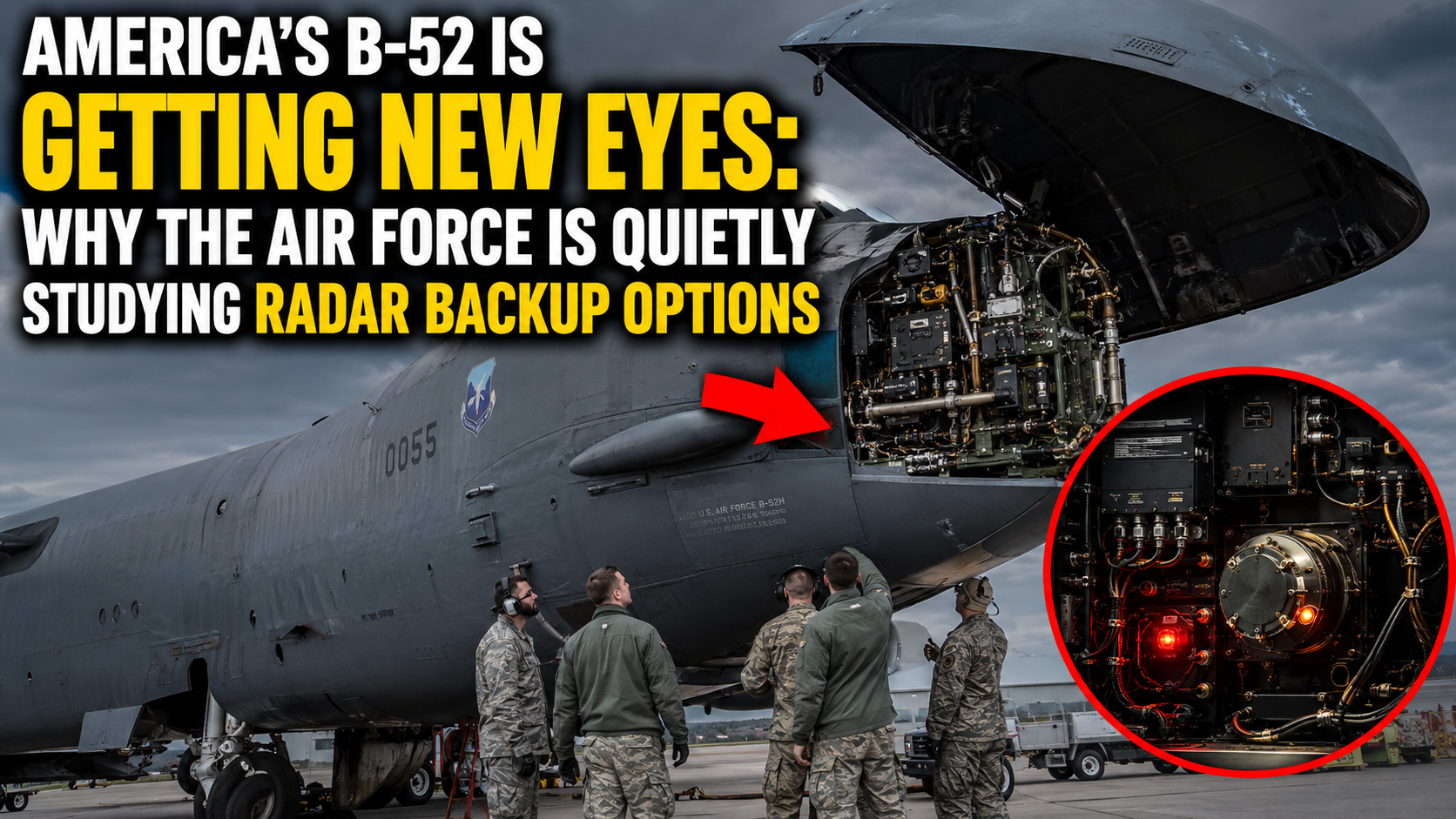
The B-52 Stratofortress is one of the most famous bombers in American military history. It first entered service during the Cold War, outlived generations of aircraft, and continues to fly missions around the world today. But if the U.S. Air Force wants this legendary bomber to remain useful into the 2050s, it cannot keep relying on yesterday’s technology.
That is why the Air Force has been pushing forward with the B-52 Radar Modernization Program, also known as RMP. The goal is simple in theory but difficult in reality: remove the bomber’s old mechanically scanned radar and replace it with a modern Active Electronically Scanned Array radar, or AESA. This new radar is expected to give the B-52 better navigation, improved targeting, stronger reliability, and better awareness in dangerous airspace.
But now, a new question has appeared around the program.
The Air Force office responsible for the B-52 radar upgrade recently asked industry for information about possible alternative radar options. The request focuses on modified off-the-shelf multi-mode radars that could potentially fit the B-52. At the same time, the service has made it clear that the existing plan has not officially changed. For now, the Air Force still says it intends to move forward with the Raytheon-developed AN/APQ-188 Bomber Modernized Radar System.
You May Also Like

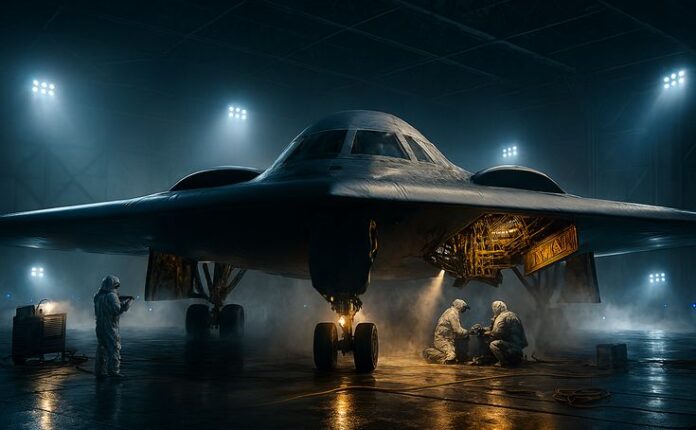
So why is the Air Force asking about other radar options?
The answer may be a mix of caution, cost pressure, technical risk, and the reality of modernizing one of the oldest combat aircraft still flying.
A Cold War Bomber Being Rebuilt for the 21st Century
The B-52H fleet is not a small modernization project. The Air Force currently has 76 B-52H bombers, and the service wants to keep them flying for decades. These aircraft are expected to remain a core part of America’s long-range strike force even as the new B-21 Raider enters service.
The future upgraded version of the B-52 is expected to be called the B-52J. That future aircraft will not just receive a new radar. It is also planned to receive new Rolls-Royce F130 engines, upgraded avionics, improved communications, new cockpit systems, and other changes designed to keep the bomber relevant in modern warfare.
The radar upgrade is one of the most important parts of that transformation.
The B-52’s current AN/APQ-166 radar is a Cold War-era system. It is mechanically scanned, aging, and increasingly difficult to sustain. Older radar systems like this are harder to maintain because parts become rare, technology becomes obsolete, and reliability decreases over time. For a bomber expected to fly nuclear and conventional missions into the 2050s, that is a major problem.
The replacement radar, the AN/APQ-188, is built around proven AESA technology. It draws from radar systems already used on aircraft such as the U.S. Navy’s F/A-18E/F Super Hornet, the EA-18G Growler, and Air Force F-15E and F-15EX fighters. That means the Air Force is not trying to invent an entirely new radar from scratch. Instead, the plan is to adapt existing fighter radar technology for the much larger B-52 bomber.
On paper, this makes sense. Using existing technology can reduce risk and speed up development. But adapting a radar designed for fighter aircraft into the nose of a huge strategic bomber is still a complex engineering challenge.
Why AESA Radar Matters So Much
AESA radar is a major step forward from older mechanically scanned radar. Instead of physically moving a radar dish to scan an area, an AESA uses many small transmit-and-receive modules to steer radar energy electronically. This allows the radar to scan faster, track more targets, and perform multiple tasks with greater flexibility.
For the B-52, this matters in several ways.
First, a modern AESA radar can improve target detection and identification. This is important for long-range strike missions, especially when the bomber is using standoff weapons launched from far outside heavily defended airspace.
Second, the radar can improve ground mapping. With high-resolution mapping, aircrews can better identify locations, navigate in difficult weather, and support precision targeting.
Third, the radar can help track moving surface and air targets. This gives the B-52 better awareness of what is happening around it and below it. In modern warfare, where threats can move quickly and electronic warfare can confuse older systems, better awareness can be the difference between success and failure.
Fourth, a modern radar can improve reliability and reduce maintenance costs. The B-52’s existing radar is old and increasingly difficult to support. A modern system should be easier to maintain and more compatible with future upgrades.
In simple terms, the B-52 is not just getting “new eyes.” It is getting the kind of digital sensor upgrade that could reshape how the bomber finds targets, supports missions, and survives in contested environments.
The Current Plan: Raytheon’s AN/APQ-188
The current radar plan goes back several years. In 2019, Boeing selected Raytheon, now part of RTX, to provide the radar for the B-52 Radar Modernization Program. Raytheon delivered the first AN/APQ-188 radar to Boeing in 2023.
The system is based heavily on existing AESA radar technology. The AN/APG-79, used on the F/A-18E/F Super Hornet and EA-18G Growler, is one of the key radar families connected to the design. The AN/APG-82, used on F-15E Strike Eagles and F-15EX Eagle II aircraft, also contributes technology to the effort.
This gives the B-52 program an advantage: the radar is not a completely unproven idea. The technology has a foundation in operational aircraft. But even proven technology can become difficult when installed on a very different platform.
A fighter jet and a B-52 are not the same. The B-52’s nose shape, radome design, power systems, cooling needs, mission software, cockpit integration, and nuclear certification requirements all make the job more complicated.
That is where the program has faced trouble.
Delays, Technical Challenges, and Cost Growth
The B-52 radar upgrade has not been moving as smoothly as originally hoped. Public oversight reports have pointed to schedule delays, aircraft integration problems, radome design issues, software work, and testing challenges.
One major issue involves the radome — the protective nose structure through which the radar must operate. A radar may perform well on its own, but once it is placed behind a radome, performance can be affected. The shape and material of the radome matter greatly. If the final design changes, engineers must test and understand how it affects radar performance.
The Pentagon’s test office has warned that the program needs to fully characterize radar performance with the final radome design before the Air Force can be confident in how the system will perform operationally.
The schedule has also shifted. Developmental and integrated flight testing are planned for Fiscal Year 2026, while initial operational test and evaluation is expected around Fiscal Year 2028. Exact timing remains uncertain because of technical and schedule risks.
Cost has also become a major concern. Earlier estimates placed the program at more than $2.3 billion, but later reports showed the price had climbed. A 2025 acquisition report also identified significant unit-cost growth in the B-52 Radar Modernization Program, including a Nunn-McCurdy breach. In defense acquisition language, that is a serious warning sign that a program’s cost has grown beyond certain thresholds and must receive additional review.
The reasons include integration challenges, delays, supply chain problems, lab testing delays, hardware issues, software development problems, and changes related to the radome.
None of this means the radar upgrade is dead. But it does show that the Air Force is dealing with a difficult modernization effort.
Why the Air Force Is Asking About Alternatives
The new industry notice does not mean the Air Force has canceled the AN/APQ-188 plan. The service has said there is currently no planned change to the B-52 Radar Modernization Program.
However, the notice is still important.
The Air Force asked industry to identify parties that could produce a modified off-the-shelf multi-mode radar compatible with the B-52. The notice was described as market research, not a formal solicitation. In other words, the Air Force is not yet asking companies to submit final bids for a replacement radar. It is gathering information.
That may sound routine, but in defense programs, market research can reveal what options exist if the current path becomes too expensive, too slow, or too risky.
It could also help the Air Force understand whether another radar supplier could provide a faster or cheaper option. It may also give senior acquisition officials more information before making decisions about production and long-term funding.
The Air Force’s message is basically this: the current plan remains in place, but the service wants to know what else is available.
That is smart acquisition strategy, especially when a critical program is facing cost and schedule pressure.
What Other Radar Options Could Exist?
There are several AESA radar systems on the global market that could, at least in theory, be studied as alternatives or reference points. One of the most notable is Northrop Grumman’s AN/APG-83 Scalable Agile Beam Radar, also known as SABR. This radar is already used as an upgrade for F-16 fighters and has been promoted as a relatively affordable and scalable AESA option.
Other international radar systems, such as Israel’s EL/M-2032 family or Leonardo’s Vixen radar series, have also been used or offered for various aircraft modernization programs.
However, identifying an available radar is not the same as integrating it into a B-52.
Any alternative would still need to fit the aircraft, work with its systems, satisfy military performance needs, support nuclear and conventional missions, meet cybersecurity requirements, integrate with software, and pass testing. A new radar choice could also create new delays and costs.
That is why changing direction at this stage would not be easy.
The Air Force may simply be protecting itself by learning what the market can offer, rather than preparing to immediately abandon the current Raytheon radar.
The B-52J Timeline Is Already Under Pressure
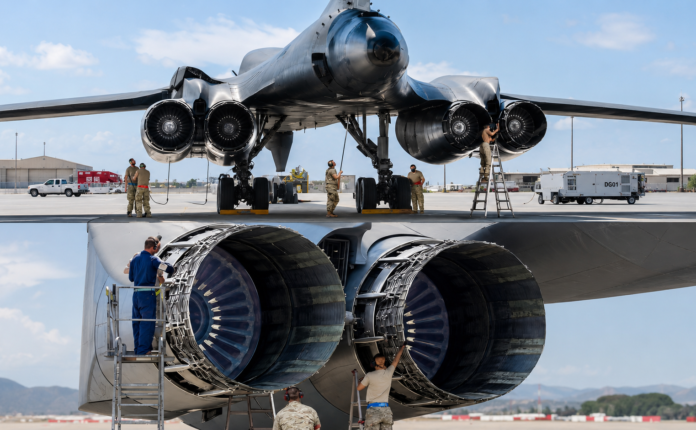
The radar upgrade is only one part of the larger B-52J transformation. The bomber’s engine replacement effort has also faced delays and cost growth. That program will replace the B-52’s aging TF33 engines with new Rolls-Royce F130 engines.
The new engines are expected to improve fuel efficiency, reduce maintenance demands, and extend the bomber’s unrefueled range. But engine integration is also complex. New engines affect airflow, pylons, cockpit displays, electrical systems, maintenance procedures, and testing timelines.
Because both the radar and engine upgrades are essential to the future B-52J, delays in either area can affect the overall modernization schedule.
This is why the radar question matters so much. The B-52 is not being upgraded for a small role. It is being rebuilt to remain part of America’s bomber force for decades, flying alongside the B-21 Raider and supporting both nuclear deterrence and conventional strike missions.
If the radar upgrade slips, the B-52J timeline becomes even more difficult.
Why the B-52 Still Matters
Some people may wonder why the Air Force is spending billions of dollars upgrading an aircraft that first flew in the 1950s. The answer is simple: the B-52 still does things few aircraft can do.
It can carry a large weapons load. It can fly long distances. It can launch standoff weapons from outside enemy air defense zones. It can support nuclear deterrence. It can be used for conventional strikes, maritime missions, close air support, mining, and strategic signaling.
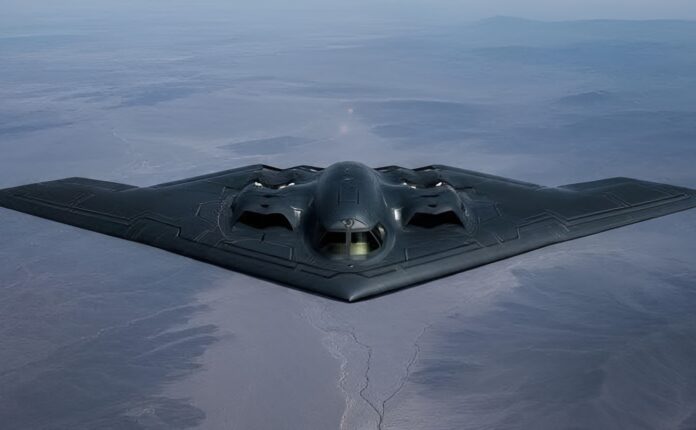
The B-52 is not stealthy like the B-2 or B-21. It is not designed to sneak deep into the most dangerous airspace alone. But when paired with long-range weapons, modern communications, and upgraded sensors, it remains extremely useful.
That is the logic behind the B-52J. The Air Force does not need the B-52 to become a stealth bomber. It needs the B-52 to become a smarter, more reliable, more connected weapons platform.
The new radar is central to that vision.
A Backup Plan or a Warning Sign?
The big question now is whether the Air Force’s request for alternative radar information is just normal market research or a quiet sign of concern.
The official answer is clear: there is no planned change to the B-52 Radar Modernization Program. The AN/APQ-188 remains the current radar path.
But the practical reality is also clear: when a program faces delays, integration problems, and rising costs, responsible acquisition officials want options. They want to know what industry can provide. They want to understand whether a faster, cheaper, or less risky alternative exists.
That does not mean the current radar will be replaced. It means the Air Force is watching the program closely.
For the B-52, the stakes are high. This bomber is expected to serve into the 2050s, which would make it one of the longest-serving combat aircraft in history. But staying relevant for that long requires more than strong wings and powerful engines. It requires modern sensors, reliable systems, and the ability to fight in a battlefield filled with electronic warfare, advanced missiles, and fast-moving threats.
The B-52’s future depends on modernization.
The radar upgrade is not just a technical improvement. It is one of the key pieces that could determine whether this Cold War icon can truly survive and remain effective in the next era of air warfare.
For now, the Air Force says the plan has not changed. The AN/APQ-188 is still the chosen radar. Testing is moving forward. A radar-modified B-52 has already reached Edwards Air Force Base for continued work.
But the search for information about alternatives shows one thing clearly: the Air Force is not taking the future of the B-52 for granted.
The old bomber may still have decades left to fly, but its future will depend on whether these upgrades can arrive on time, at a cost the Air Force can manage, and with the performance modern war demands.