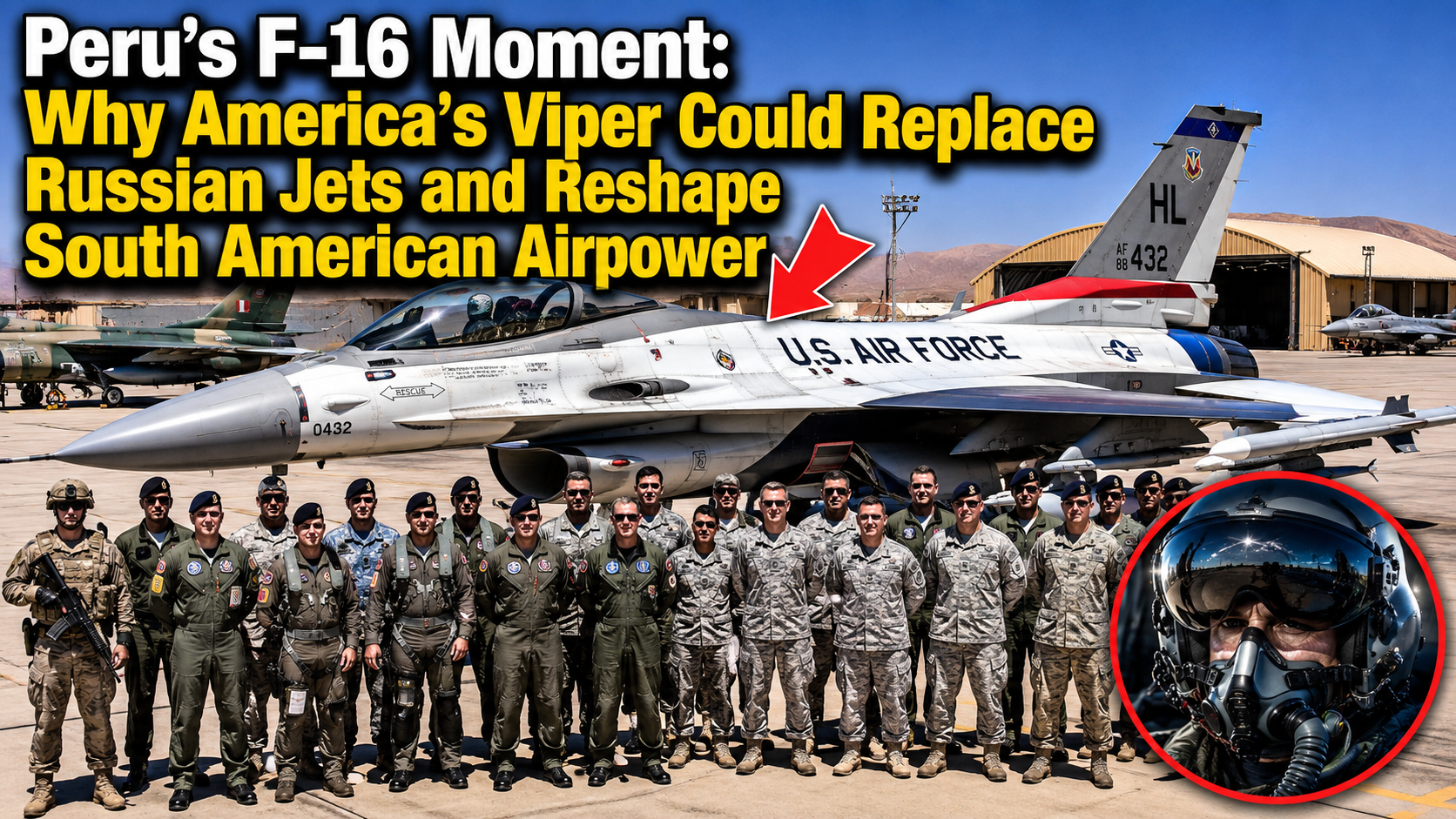
Peru may be preparing for one of the biggest fighter-jet changes in its modern military history.
For decades, the Peruvian Air Force has operated a mixed fleet of combat aircraft, including French Mirage 2000s, Russian MiG-29s, Russian Su-25s, and aging A-37 attack jets. These aircraft tell the story of Peru’s past defense choices: a country that looked to Europe and Russia for much of its combat aviation power.
But that era may be changing.
The United States has approved a possible Foreign Military Sale of 12 new F-16C/D Block 70 fighter jets to Peru, a package valued at around $3.42 billion. The package includes 10 single-seat F-16C Block 70 aircraft and two two-seat F-16D Block 70 aircraft, along with missiles, radars, targeting pods, electronic warfare equipment, engines, training, spare parts, and support.
You May Also Like

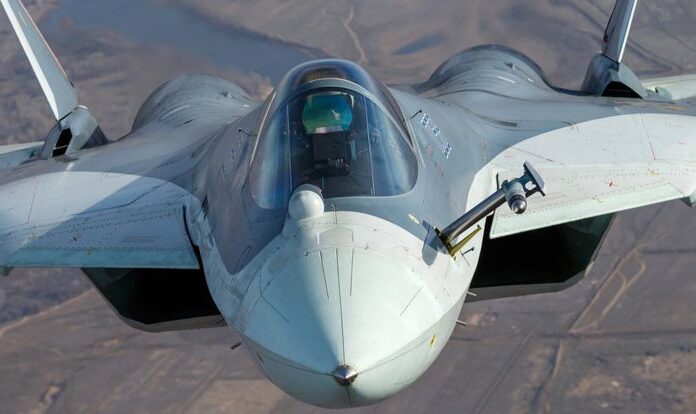

If the deal moves forward fully, Peru would become another South American country to operate the F-16, joining a growing regional group of users of the famous American fighter. More importantly, it would mark a major shift away from Russian-made combat aircraft at a time when Moscow’s arms industry is under heavy pressure from the war in Ukraine, sanctions, spare-parts shortages, and a shrinking global export market.
This is not just a story about 12 fighter jets.
It is a story about Peru’s future air defense, America’s growing defense influence in Latin America, Russia’s weakening arms-export position, and the continued success of the F-16 — a fighter that first flew decades ago but remains one of the most popular combat aircraft in the world.
A Big Step Toward a New Fighter Fleet
The U.S. State Department approved the possible sale of F-16 aircraft to Peru through the Foreign Military Sales process. Under this system, the United States government approves a potential defense sale and notifies Congress, but the announcement does not automatically mean the final contract is completed exactly as described.
That detail is important. A DSCA announcement is a major step, but it is not the same as final delivery. Prices, weapons, support packages, schedules, and final quantities can change during negotiations.
Still, this approval matters because it shows that Washington is ready to provide Peru with the most advanced production version of the F-16.
The Block 70 version is not an old leftover fighter. It is the newest-build F-16, fitted with modern avionics, advanced radar, improved cockpit systems, better survivability equipment, and a longer service life. In many ways, the F-16 Block 70 is the classic F-16 redesigned for the modern battlefield.
For Peru, this would be a major leap.
The country’s current combat aircraft fleet is old, complicated, and increasingly difficult to maintain. The Mirage 2000s were delivered in the 1980s. The MiG-29s and Su-25s came from the Russian/Soviet design family and have become harder to support. The A-37 Dragonfly is even older and far less capable in modern air combat.
A new F-16 fleet would give Peru a modern multirole fighter able to defend airspace, support ground forces, conduct precision strikes, and operate more closely with U.S. and allied forces.
What Peru Would Receive
The approved package centers on 12 F-16 Block 70 aircraft: 10 F-16C single-seat fighters and two F-16D two-seat fighters. Two-seat versions are especially useful for training, conversion, and some mission types where a second crew member can help manage sensors, weapons, or complex operations.
The package also includes AIM-120C-8 AMRAAM air-to-air missiles and AIM-9X Block II Sidewinder missiles. These are modern weapons that would significantly improve Peru’s air-to-air combat capability.
The AIM-120 AMRAAM gives the fighter beyond-visual-range engagement capability, meaning it can attack airborne threats from long distances. The AIM-9X is a highly agile short-range missile designed for close-range air combat, especially when paired with modern targeting systems.
The package also includes the Northrop Grumman AN/APG-83 AESA radar. This is one of the most important parts of the deal.
An AESA radar gives the F-16 far better detection, tracking, mapping, and targeting performance compared with older mechanically scanned radars. It can help the pilot find aircraft, track multiple targets, improve situational awareness, and support precision air-to-ground missions. For a country modernizing an aging air force, this radar is a major upgrade.
The proposed package also includes infrared search and track systems, electronic warfare equipment such as Viper Shield or an equivalent system, and AN/AAQ-28 Litening targeting pods. These additions matter because modern fighter combat is not just about the aircraft itself. It is about sensors, electronic protection, weapons, communication, and the ability to find and strike targets accurately.
In simple terms, Peru would not only be buying new jets. It would be buying a full combat system.
Why Peru Needs New Fighters
The Peruvian Air Force has been operating a fighter fleet that reflects several different eras and suppliers. That creates major problems.
A mixed fleet can be expensive to maintain. Different aircraft need different spare parts, different technicians, different weapons, different training systems, and different supply chains. When some of those aircraft come from Russia and others from France or the United States, the complexity becomes even greater.
The Russian-made MiG-29 Fulcrum and Su-25 Frogfoot once gave Peru important capabilities. The MiG-29 offered strong air combat performance, while the Su-25 was designed as a rugged ground-attack aircraft. But both types are now aging, and Russian aircraft support has become more difficult since Moscow’s full-scale invasion of Ukraine.
The war has placed huge pressure on Russia’s defense industry. Russia needs weapons, aircraft parts, missiles, and military production for its own war effort. At the same time, sanctions have made it harder for Russian companies to access certain high-tech components. Foreign customers who once relied on Moscow are now asking whether Russia can still deliver reliable support, spare parts, upgrades, and long-term service.
For Peru, this is not just politics. It is practical military readiness.
A fighter jet is only useful if it can fly. If spare parts are unavailable, maintenance becomes slow, expensive, and uncertain. If upgrades are difficult, the aircraft falls behind modern threats. If the supplier is internationally isolated, the customer faces long-term risk.
That is one reason Peru’s possible shift toward the F-16 is so important.
A Move Away From Russia
Peru has not always been a close political or military partner of Russia, but it has used Russian combat aircraft for many years. That made its air force unusual compared with some other countries in the region.
Now, the F-16 approval suggests Peru may be moving more firmly into the Western defense ecosystem.
This reflects a broader trend. Russia’s arms exports have suffered sharply since the Ukraine war began. France has overtaken Russia as the world’s second-largest arms exporter in some recent measurements, while Russian exports have dropped significantly. Many countries that once considered Russian aircraft are now looking at American, European, South Korean, Turkish, or Chinese options instead.
The reasons are clear. Buyers want dependable supply chains. They want upgrades. They want weapons integration. They want political stability in the relationship. They want aircraft that can be supported for decades.
The F-16 offers all of that.
It is used by many countries around the world. It has a huge support network. It has a long history of upgrades. It can carry a wide range of weapons. It can be integrated into Western training, logistics, and operational systems.
That gives the F-16 a major advantage over Russian aircraft in today’s market.
Why the F-16 Still Keeps Winning
The F-16 is not a new aircraft design. Its history goes back decades. But the reason it keeps winning export deals is simple: it has evolved.
The F-16 Block 70 is not the same fighter that entered service during the Cold War. It has a modern AESA radar, updated mission computers, improved cockpit displays, advanced electronic warfare systems, modern weapons compatibility, and extended structural life.
For many countries, the F-16 Block 70 offers a powerful balance: it is modern enough for serious air defense and strike missions, but less expensive and less politically complicated than some fifth-generation aircraft.
Not every country needs or can afford the F-35. Not every country wants the maintenance burden of a stealth fighter. But many countries still need a reliable multirole aircraft that can defend airspace, strike targets, work with allies, and remain useful for decades.
That is where the F-16 continues to shine.
For Peru, the F-16 would also bring closer defense cooperation with the United States. Training, maintenance, weapons support, pilot education, and future upgrades could all strengthen Peru’s long-term military relationship with Washington.
Peru Had Other Options
The F-16 was not the only aircraft Peru considered.
Other possible candidates included France’s Dassault Rafale F4, Sweden’s Saab Gripen E/F, and possibly South Korea’s KF-21 Boramae. Earlier discussions also included Russian aircraft such as the MiG-35 and Su-30, while the Chinese J-10 was also rumored at one point.
Each aircraft has strengths.
The Rafale is a highly capable twin-engine fighter with strong combat experience, advanced sensors, and powerful weapons. It has done very well in export markets, especially as France’s defense industry has gained more global influence.
The Gripen is known for lower operating costs, modern avionics, and suitability for countries that want an efficient fighter with flexible maintenance needs. Brazil already operates the Gripen E in South America, which could have made it attractive for regional cooperation.
The KF-21 is newer and more future-focused, but it is still a developing program compared with the mature F-16.
The Russian options likely suffered from the same problems affecting Moscow’s broader arms industry: sanctions, war production demands, uncertain support, and reputational damage from battlefield performance in Ukraine.
In the end, the F-16’s combination of proven performance, modern upgrades, U.S. support, and global user base appears to have made it a very strong choice.
South America’s Growing F-16 Club
For a long time, Venezuela was the only South American country operating the F-16. That changed when Chile became an F-16 operator. Argentina has also moved into the F-16 world through secondhand aircraft.
If Peru completes the acquisition, it would expand the F-16’s South American presence further.
That matters strategically. When countries in the same region operate similar aircraft, they can share lessons, training concepts, logistics experience, and sometimes even maintenance knowledge. It also makes it easier for the United States to build defense partnerships across the region.
For Lockheed Martin, this is another example of how the F-16 continues to remain relevant even after decades of production. The company’s Greenville, South Carolina, production line continues to build new Block 70/72 aircraft for international customers, and the F-16V upgrade package remains popular among countries that already operate older F-16s.
The fighter’s global footprint is one of its greatest strengths.
A Political and Financial Challenge
Buying fighter jets is never only a military decision. It is also a political and financial decision.
Peru has faced economic pressure, social unrest, and political instability in recent years. A fighter purchase worth billions of dollars can become controversial, especially in a country where many citizens may want more investment in domestic priorities.
That is one reason the fighter program has faced uncertainty and debate.
Reports in 2026 said Peru made a first payment toward the F-16 deal, even as political disagreements created tension inside the government. That shows how complicated the process can be. A defense ministry may want to move quickly, while political leaders may worry about timing, cost, public reaction, or whether a transitional government should make such a major decision.
Still, from a military perspective, Peru’s air force modernization need is real.
Old jets cannot remain effective forever. Training becomes harder. Maintenance becomes more expensive. Operational readiness declines. Pilots need modern aircraft to prepare for modern threats. A country with a large territory, long coastline, important airspace, and security responsibilities cannot ignore its air defense capability forever.
The F-16 decision, therefore, is not just about prestige. It is about whether Peru wants a modern fighter force for the next 30 to 40 years.
What the F-16 Could Do for Peru
The F-16 Block 70 would give Peru several important capabilities.
It would improve airspace defense. With modern radar and beyond-visual-range missiles, the F-16 can detect and engage threats more effectively than Peru’s aging aircraft.
It would support border security. Peru has a large and complex geography, including mountains, jungle, coastline, and remote regions. A modern fighter fleet gives the country more tools to monitor and respond to security challenges.
It would strengthen counter-narcotics and counterterrorism operations. The DSCA notice specifically mentioned Peru’s ability to support ground forces in these types of missions. With targeting pods and precision weapons, the F-16 can support operations against armed groups, illegal networks, or hostile targets when required.
It would improve interoperability with the United States and other partner nations. This is one of the biggest long-term benefits. Aircraft are not just machines; they are part of a training, logistics, doctrine, and alliance network. Buying the F-16 could bring Peru deeper into that network.
It would simplify future modernization. Instead of struggling to support multiple old aircraft types from different countries, Peru could gradually move toward a more standardized, Western-supported fighter fleet.
Why This Deal Matters Beyond Peru
This potential F-16 sale is also a message to the wider defense market.
Russia’s old export model is weakening. Countries that once considered Russian fighters are now looking elsewhere. The Ukraine war has made buyers more cautious about depending on Moscow. Sanctions, battlefield losses, production strain, and spare-parts problems have damaged Russia’s position.
At the same time, Western fighter makers are competing hard.
Dassault’s Rafale has become one of the world’s most successful modern fighters on the export market. Saab continues to promote the Gripen as a cost-effective and flexible solution. South Korea is trying to grow its aerospace industry with aircraft such as the FA-50 and KF-21. The United States continues to offer both the F-35 and the F-16, depending on a country’s needs and budget.
For many middle-power air forces, the F-16 Block 70 sits in a very attractive position. It is modern, proven, available, and supported by a massive global ecosystem.
Peru’s decision could therefore influence other countries watching the same question: should they keep older Russian or European aircraft alive, or move to a modern Western multirole fighter?
The Bigger Picture: A New Era for the Peruvian Air Force
If Peru completes the F-16 acquisition, it will not instantly transform the entire air force overnight. A dozen fighters is only the first step. Peru is thought to eventually want around 24 new fighters, meaning this deal could be the beginning of a larger modernization path.
Training pilots will take time. Building maintenance infrastructure will take time. Integrating weapons, command systems, and tactics will take time. But once the aircraft enter service, the Peruvian Air Force would have a much stronger foundation for future operations.
The symbolic value would also be huge.
Peru would be moving away from an aging Cold War-style fleet and toward a modern Western fighter ecosystem. It would be choosing a combat aircraft with deep U.S. support and a large international user base. It would be reducing dependence on Russian equipment at a time when Russian support is increasingly uncertain.
That is why this story matters.
It is not simply about replacing old jets. It is about Peru choosing what kind of air force it wants for the future.
Conclusion: Peru’s Fighter Future Is Taking Shape
The F-16 has been called old by some critics, but the Block 70 version proves that the platform is still very much alive. With AESA radar, modern weapons, improved avionics, advanced electronic warfare, and long-term support, the F-16 remains one of the most practical fighter choices in the world.
For Peru, the aircraft could solve several problems at once. It could replace aging Mirage, MiG, Su-25, and A-37 aircraft. It could strengthen national air defense. It could support counterterrorism and counternarcotics missions. It could deepen military ties with the United States. And it could move Peru away from Russian-made aircraft at a moment when Russia’s defense export industry is under serious pressure.
The deal is still politically and financially sensitive. Fighter acquisitions are never simple, especially in a country facing internal challenges. But the direction is becoming clearer.
Peru’s future fighter may not come from Moscow or Paris. It may come from Lockheed Martin’s F-16 production line in the United States.
And if that happens, Peru’s air force will enter a new era — one where the American Viper becomes the symbol of a major shift in South American airpower.