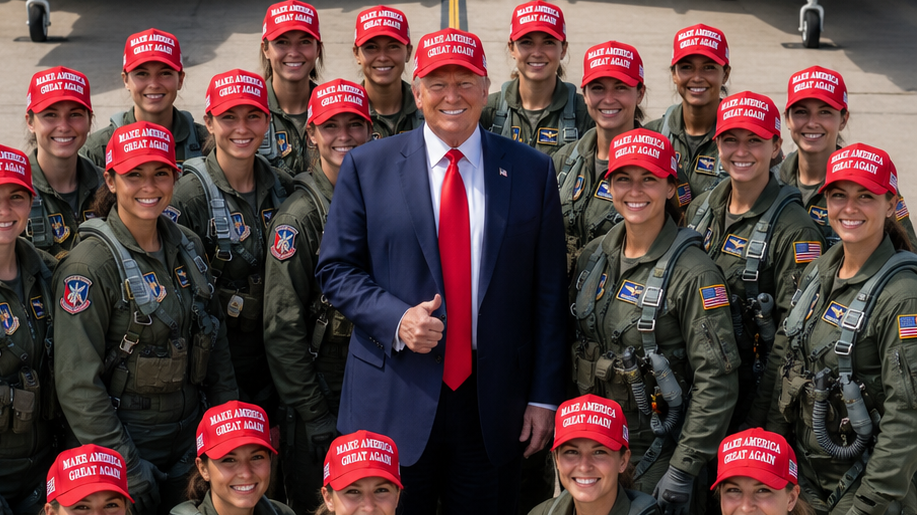
For generations, the cockpit was treated like a locked door. Men called it tradition. Women called it a challenge. But when the first women stepped toward military aircraft, they were not asking the sky for permission—they were proving the sky had been waiting for them all along.
WINGS OF COURAGE
A Long Three-Part Debate Story About Women Military Pilots
Main Characters
Professor Dr. Evelyn Hart
A brilliant aerospace historian and aviation scientist. She believes women military pilots are not exceptions; they are proof that courage, intelligence, discipline, and leadership have no gender.
Professor Dr. Marcus Reed
A military sociologist and professor of combat leadership. He supports women pilots, but challenges romantic storytelling. He believes progress must be celebrated honestly, not turned into shallow inspiration.
Captain Sofia “Falcon” Reyes
A young U.S. Air Force fighter pilot. Calm, sharp, disciplined, and honest about the pressure women face in elite aviation.
You May Also Like


Commander Grace Holloway
A retired U.S. Navy aviator, one of the older generation of women who entered aviation when the door was barely open.
Cadet Lily Monroe
A seventeen-year-old student who dreams of becoming a military pilot, but is afraid she may not be strong enough.
Chief Elena Torres
A senior aircraft maintainer who has launched hundreds of aircraft and believes every pilot’s success begins on the ground.
PART I — THE DOOR TO THE SKY
The auditorium was full before the debate began.
Cadets filled the first ten rows, their uniforms neat, their notebooks open. Veterans stood along the back wall with arms folded and faces unreadable. Aviation students whispered to one another, pointing at the giant screen above the stage.
On the screen was a simple image:
A woman in a flight suit standing beside a fighter jet at sunrise.
Her helmet rested under one arm.
The aircraft behind her looked powerful, but her face looked even stronger.
Above the image were the words:
WOMEN MILITARY PILOTS: BREAKING TRADITION OR REDEFINING EXCELLENCE?
Professor Evelyn Hart stepped onto the stage first.
She did not rush. She stood at the center, looked at the cadets, then looked up at the screen.
Finally, she said:
“Once, the cockpit was treated like a throne built for men.”
The room became quiet.
“Not because the aircraft demanded it. Not because the sky demanded it. Not because courage demanded it. But because tradition had a loud voice, and truth was forced to wait outside the hangar.”
Professor Marcus Reed sat across from her, leaning slightly forward.
“That is a beautiful opening,” he said.
Evelyn turned to him.
“And you are about to tell me beauty is not enough.”
Marcus smiled.
“You know me too well.”
“I know your method. You admire progress, then attack the way people describe it.”
“Because false inspiration is still false.”
“And empty criticism is still empty.”
The cadets murmured with interest.
Marcus nodded.
“Good. Then we begin properly.”
The moderator, Colonel James Arlen, stood between them.
“Tonight we ask whether the rise of women military pilots is a victory of equality, a test of military standards, or a sign of a larger transformation in American airpower.”
Evelyn leaned toward her microphone.
“It is all three.”
Marcus replied, “And perhaps more complicated than all three.”
The First Exchange
Marcus turned to Evelyn.
“Professor Hart, let me begin with the obvious question. Why does this subject move people so deeply?”
Evelyn answered immediately.
“Because flight has always been symbolic.”
“Symbolic of what?”
“Freedom. Power. Mastery. Escape. Courage. National defense. Human ambition.”
“And military flight?”
“That is even heavier. A military pilot does not simply fly. A military pilot carries responsibility, danger, command, and trust.”
Marcus nodded.
“So when women became military pilots, what changed?”
Evelyn replied, “The nation was forced to admit that courage had been underestimated.”
“Underestimated in women?”
“Yes.”
“Or misunderstood altogether?”
Evelyn paused.
Then she smiled.
“Both.”
Marcus leaned back.
“That was honest.”
“I try.”
He pointed at the image on the screen.
“But is the story really that simple? Women were excluded, women fought, women entered, and now we celebrate?”
“No,” Evelyn said. “That is the children’s-book version. The real version is harder.”
“Tell us the real version.”
Evelyn stepped forward.
“The real version is that women entered spaces where people watched them differently. A man could be nervous and still be seen as a nervous pilot. A woman could be nervous and be seen as evidence that women did not belong. A man could fail and remain an individual. A woman could fail and become an argument.”
The room went still.
Marcus said quietly, “That is the burden of being first.”
“Yes,” Evelyn said. “The first woman in a room does not simply enter the room. She carries the weight of everyone who was told the room was not for them.”
The Statistics and the Soul
Marcus picked up a folder.
“Let us use numbers. Your source material says that in 2023, the U.S. Air Force had 708 female rated pilots out of 10,964 total rated pilots. Women represented 6.5% of all Air Force pilots. Only 103 were female fighter pilots.”
Evelyn nodded.
“Yes.”
Marcus looked at the audience.
“That is progress, but it is not equality.”
“No,” Evelyn agreed. “It is progress with distance still to climb.”
“Then should we celebrate?”
“Yes.”
“Should we be satisfied?”
“No.”
“Should we call it a revolution?”
“Perhaps a slow one.”
Marcus smiled.
“A slow revolution?”
“Many real revolutions are slow. They happen one flight physical, one training slot, one instructor evaluation, one command decision, one young woman watching another woman fly.”
Marcus asked, “But do numbers inspire people?”
“They can.”
“How?”
“Because a number can tell a girl she is not imagining a future that does not exist.”
Marcus said, “And what can numbers hide?”
Evelyn answered, “Loneliness. Pressure. Bias. Sacrifice. Attrition. The private cost of being public proof.”
The auditorium grew quieter.
Marcus looked impressed.
“That is why I enjoy debating you.”
“Because I make your objections sound poetic?”
“Because you refuse easy answers.”
Cadet Lily Speaks
A hand rose in the third row.
Colonel Arlen nodded.
“Cadet Monroe.”
A young cadet stood. She was seventeen, maybe eighteen, with nervous hands and steady eyes.
“My name is Lily Monroe,” she said. “I want to become a military pilot.”
A few people smiled.
Lily continued.
“But when people say women pilots are inspiring, I feel proud and scared at the same time.”
Evelyn softened.
“Why scared?”
“Because it feels like if I fail, I won’t just fail for myself.”
Marcus leaned forward.
“You feel you would fail for all women?”
Lily nodded.
“Yes, sir.”
The room became painfully quiet.
Evelyn walked to the edge of the stage.
“Lily, may I answer you not as a professor, but as a person?”
“Yes, ma’am.”
“You do not owe the world perfection.”
Lily looked down.
Evelyn continued.
“You owe the aircraft preparation. You owe your instructors effort. You owe your teammates honesty. You owe the mission discipline. But you do not owe history a flawless performance.”
Marcus added, “And you must reject two lies.”
Lily looked at him.
“What lies?”
“The first lie is that you cannot succeed because you are a woman.”
Lily nodded.
“And the second?”
“The second lie is more dangerous: that if you struggle, the first lie was true.”
Lily’s eyes filled.
Evelyn said, “Struggle does not mean you do not belong. Struggle means you are being shaped.”
Marcus said, “And if someone uses your struggle against every woman, that reveals their weakness, not yours.”
Lily sat down slowly.
The applause was not loud at first. It began softly, then grew until the whole auditorium joined.
The Question of Tradition
Marcus turned back to Evelyn.
“Let me defend tradition for a moment.”
Evelyn raised an eyebrow.
“I expected nothing less.”
“Tradition is not always evil. It preserves lessons, standards, rituals, memory, and identity.”
“Agreed.”
“So when women entered military aviation, some people feared tradition was being destroyed.”
Evelyn crossed her arms.
“Or exposed.”
“Explain.”
“Some traditions are wisdom. Others are prejudice wearing a uniform.”
The audience reacted.
Marcus smiled.
“That line will travel.”
“It should.”
He asked, “How do we tell the difference?”
Evelyn answered, “A wise tradition improves performance, honor, and responsibility. A false tradition protects comfort and exclusion.”
Marcus nodded.
“So tradition must be tested.”
“Yes.”
“By what?”
“By mission. By evidence. By fairness. By whether it helps the service or merely protects the pride of those already inside.”
Marcus looked toward the veterans at the back.
“And if a tradition fails that test?”
Evelyn answered, “Then it should be retired with ceremony if necessary, but retired nonetheless.”
PART II — THE PRICE OF WINGS
The lights dimmed.
The screen changed to a close-up of pilot wings pinned to a uniform.
They shone under white light.
Professor Marcus Reed stood.
“Now we must talk about what inspirational speeches often avoid.”
Evelyn nodded.
“The cost.”
“Yes. The cost.”
The side door opened.
Captain Sofia “Falcon” Reyes walked onto the stage.
The room erupted with applause.
She wore a flight suit. Her helmet was tucked under her left arm. Her face was calm, not theatrical. She did not wave like a celebrity. She nodded once, like someone acknowledging a formation.
Colonel Arlen smiled.
“Captain Reyes, thank you for joining us.”
Sofia looked at Marcus and Evelyn.
“I heard professors were arguing about pilots, so I came to defend reality.”
The audience laughed.
Marcus said, “Reality is welcome here.”
Evelyn smiled. “Most of the time.”
Sofia stood between them.
Marcus began.
“Captain Reyes, what is the most misunderstood thing about becoming a military pilot?”
Sofia answered without hesitation.
“That earning wings is not a moment. It is a thousand corrections.”
Evelyn leaned forward.
“Explain that.”
“People imagine the big moments. The first solo. The winging ceremony. The first fighter assignment. But the real story is smaller. It is studying aircraft systems at midnight. It is being told your radio call was weak. It is missing a maneuver and having to watch it replayed in debrief. It is learning not to defend your ego when your instructor is trying to save your life.”
Marcus asked, “Was training harder physically or mentally?”
Sofia smiled.
“Yes.”
The audience laughed.
She continued.
“Physical training matters. G-forces matter. Fatigue matters. But the mental side is relentless. The aircraft moves fast, but your brain must move faster. You are always behind unless you learn to think ahead.”
Evelyn asked, “And emotionally?”
Sofia looked down for a moment.
“Emotionally, the hardest part was believing I could belong without becoming someone else.”
The Debrief
Marcus asked, “You once said the hardest part of training was the debrief. Why?”
Sofia exhaled.
“Because the debrief has no mercy.”
Lily listened intensely from the third row.
Sofia continued.
“After a flight, you sit down and examine everything. Every decision. Every mistake. Every missed radio call. Every second you hesitated. You cannot hide behind intention.”
Evelyn asked, “Did that feel cruel?”
“At first.”
“And later?”
“Later I understood that truth is not cruelty when the purpose is survival.”
Marcus nodded.
“That is a powerful aviation principle.”
Sofia said, “In the air, ego is dangerous. If you cannot admit mistakes on the ground, you will repeat them in the sky.”
Evelyn asked, “Did you ever cry after a debrief?”
Sofia smiled faintly.
“Yes.”
The room became very quiet.
Marcus asked gently, “Why admit that?”
“Because cadets need to know strength is not the absence of tears.”
Evelyn nodded.
Sofia continued.
“I cried, then I studied. I cried, then I improved. I cried, then I showed up again. Tears did not disqualify me. Quitting would have.”
Lily wrote something in her notebook.
The Standards Debate
Marcus turned to Evelyn.
“Let us enter dangerous territory.”
Evelyn smiled.
“You live there.”
“Do women pilots lower standards?”
A sharp silence fell over the auditorium.
Sofia’s expression did not change.
Evelyn answered clearly.
“No.”
Marcus said, “That was fast.”
“Because the answer is clear. Women who meet standards do not lower them. Institutions lower standards when they become dishonest.”
Marcus nodded.
“But standards must be real.”
“Yes.”
“Mission-relevant.”
“Yes.”
“Fairly measured.”
“Yes.”
“Not symbolic.”
“Yes.”
Sofia added, “And not secretly designed around assumptions that do not matter.”
Marcus turned to her.
“Example?”
Sofia said, “If a standard measures something essential to the aircraft or mission, keep it. If it measures tradition more than performance, question it.”
Evelyn said, “That is the correct distinction.”
Marcus asked, “What happens if standards are lowered for politics?”
Sofia answered, “Everyone suffers. The pilot suffers. The unit suffers. The mission suffers. And women suffer most because people will use it as proof we did not earn our place.”
Evelyn looked at Marcus.
“And what happens if standards are unfairly distorted to keep women out?”
Marcus replied, “The military loses talent.”
Sofia said, “And talent is too expensive to waste.”
Commander Grace Holloway Enters
From the front row, an older woman stood slowly.
The room turned.
She wore a dark suit with a small Navy aviation pin on her lapel.
Commander Grace Holloway.
Retired.
Silver hair. Calm eyes. A voice like polished steel.
Evelyn smiled.
“Commander Holloway, would you join us?”
Grace walked to the stage, and the audience rose in respect.
She waited for them to sit.
“I remember when women in naval aviation were treated like an experiment,” Grace said.
Marcus asked, “Did people say that openly?”
Grace smiled dryly.
“Some did. Some were smart enough to smile while thinking it.”
Sofia’s jaw tightened.
Grace noticed.
“Do not be angry too long, Captain. Anger is useful fuel, but a poor flight plan.”
Sofia smiled.
“Yes, ma’am.”
Evelyn asked, “What was the hardest part for your generation?”
Grace answered, “Being watched.”
Marcus said, “Watched how?”
“Watched when we succeeded. Watched when we failed. Watched when we spoke. Watched when we were silent. Watched when we were confident. Watched when we were tired. Every ordinary human moment felt like evidence in someone else’s argument.”
The room was silent.
Grace continued.
“When a man was quiet, he was focused. When I was quiet, someone wondered if I lacked confidence. When a man was assertive, he was decisive. When I was assertive, someone called it attitude.”
Evelyn closed her eyes briefly.
Marcus asked, “How did you endure that?”
Grace replied, “At first, by being angry. Later, by being excellent. Finally, by being free.”
Lily whispered, “Free?”
Grace looked toward her.
“Yes, cadet. Free from needing every skeptic to approve before doing the work.”
Back-to-Back Questions With Grace
Marcus asked, “Commander, did you ever feel welcome?”
Grace answered, “Sometimes.”
Evelyn asked, “Did you ever feel alone?”
“Many times.”
Sofia asked, “Did you ever want to quit?”
Grace smiled.
“More times than I admitted.”
Lily asked, “Why didn’t you?”
Grace looked at the young cadet.
“Because every time I wanted to quit, I imagined the next woman arriving and finding the door closed again.”
Lily swallowed.
Grace continued.
“I did not stay because I never hurt. I stayed because leaving would have hurt differently.”
Marcus said softly, “That is a sentence with history inside it.”
Grace nodded.
“History is heavy. But it is not impossible to carry if others eventually help.”
Evelyn asked, “Do you think today’s women pilots have it easier?”
Grace said, “Yes. And no.”
Marcus smiled.
“That sounds like a professor’s answer.”
“It is a pilot’s answer,” Grace replied. “Weather changes by altitude.”
The audience laughed.
Grace continued.
“The door is more open now. There are more mentors. More examples. More proof. But pressure remains. The young women today may not be the first, but they are still often few.”
Sofia nodded.
“Few enough to be noticed.”
Grace said, “Exactly.”
Chief Torres and the Ground Truth
A voice came from the side aisle.
“Professors, pilots are not the only people in this story.”
Everyone turned.
Chief Elena Torres stood with her arms crossed. She wore a maintainer’s uniform, sleeves rolled, boots scuffed, face serious.
Colonel Arlen smiled.
“Chief Torres, I wondered when you would interrupt.”
“I waited politely. It was difficult.”
The room laughed.
Chief Torres walked to the stage.
“May I?”
Evelyn gestured.
“Please.”
Chief Torres faced the audience.
“Every pilot who looks heroic in a photo had maintainers who lost sleep making sure the aircraft was safe.”
Sofia pointed at her.
“That is absolutely true.”
Chief Torres continued.
“You want to talk about women in military aviation? Good. Talk about pilots. But also talk about the women turning wrenches, loading systems, inspecting engines, troubleshooting electronics, launching jets, recovering aircraft, and telling pilots, ‘Not yet, this aircraft is not ready.’”
Marcus nodded.
“Excellent point.”
Chief Torres looked at Sofia.
“A good pilot respects the maintainer.”
Sofia said, “A smart pilot fears disappointing the maintainer.”
Chief Torres grinned.
“She learns fast.”
The audience laughed.
Evelyn asked, “Chief, what do maintainers see that the public misses?”
“The routine. People see the takeoff. We see the leak at 0200. People see the pilot salute. We see the checklist. People see the aircraft climb. We see the crew that made it possible.”
Marcus asked, “And women pilots?”
Chief Torres replied, “Same rule. If she respects the aircraft, studies hard, listens well, and does not act like the jet belongs to her alone, she earns respect. If she does not, she gets corrected.”
Sofia laughed.
“That is painfully accurate.”
Chief Torres continued.
“The aircraft does not care about gender. The aircraft cares whether the work was done right. Maintenance teaches humility faster than speeches.”
Evelyn smiled.
“That may be the most practical wisdom of the night.”
PART III — THE SKY BELONGS TO THOSE WHO EARN IT
The final part began with the lights dimmed almost completely.
The screen showed a runway at dawn.
Fog rested low on the ground.
Runway lights glowed like stars.
Evelyn stood at center stage with Marcus on one side, Sofia and Grace on the other, and Chief Torres standing slightly behind them with the quiet authority of someone who did not need a spotlight.
Evelyn spoke first.
“Aviation begins before sunrise.”
The room was still.
“Before applause. Before history. Before photos. Before speeches. It begins when someone studies while tired, trains while afraid, listens while corrected, and returns after failure.”
Marcus added, “And military aviation begins when that person accepts responsibility not only for herself, but for others.”
Sofia said, “For wingmen.”
Grace said, “For crews.”
Chief Torres said, “For the aircraft.”
Evelyn said, “For the mission.”
Marcus said, “For the nation.”
Lily watched from the third row, unable to look away.
The Deep Debate: Symbol or Professional?
Marcus turned to Evelyn.
“Here is my concern. When we talk about women pilots, we often turn them into symbols. Is that fair?”
Evelyn answered, “No. But it may be unavoidable for a time.”
“Why?”
“Because when a group has been excluded, the first visible members become signs of change.”
Marcus asked, “But what is the danger?”
“The danger is that the symbol swallows the person.”
Sofia said, “That happens.”
Marcus turned to her.
“How?”
Sofia replied, “People call you inspiring when what you need is honest feedback. They put you on a panel when what you need is flight hours. They celebrate you publicly but may not always understand what you need professionally.”
Grace nodded.
“Being admired is not the same as being supported.”
Chief Torres added, “A poster does not fix bad gear.”
The audience reacted strongly.
Marcus said, “That is the exact issue.”
Evelyn nodded.
“Yes. Representation matters. But representation without support becomes decoration.”
Sofia said, “And we did not train this hard to become decoration.”
Lily’s Biggest Fear
Lily stood again.
Her voice trembled less this time.
“Can I ask one more question?”
Evelyn smiled.
“Yes.”
Lily looked at Sofia.
“What if I make it, and people still think I only got there because I’m a woman?”
Sofia did not answer immediately.
She walked down from the stage and stood in the aisle closer to Lily.
“They might.”
Lily looked frightened.
Sofia continued.
“Some people will believe what protects their insecurity. You cannot build your life around convincing them.”
“But what do I do?”
“You do the work.”
“What if the work is not enough for them?”
“Then they were never judging the work.”
Lily absorbed that.
Grace added from the stage, “Do not hand your peace to people committed to misunderstanding you.”
Marcus said, “But also do not become closed to correction. That is the balance.”
Evelyn nodded.
“Yes. Reject prejudice, but accept critique.”
Sofia looked at Lily.
“Exactly. Learn the difference between someone sharpening you and someone shrinking you.”
Lily whispered, “How do I know?”
Sofia answered, “A person sharpening you points toward the mission. A person shrinking you points toward your identity as a weapon.”
The room went silent.
Chief Torres said, “That one is worth remembering.”
The Question of Combat
Marcus stepped forward.
“Let us address another difficult question. Should women fly combat missions?”
Evelyn looked almost amused.
“They already do.”
“Yes,” Marcus said. “But should they?”
Sofia’s expression sharpened.
“Ask the real question.”
Marcus looked at her.
“What is the real question?”
“Can the pilot perform the mission?”
Marcus nodded.
“That is the clean answer.”
Sofia said, “It is the only answer that matters in the cockpit.”
Grace added, “The enemy does not care what argument happened in your country. The aircraft does not care. The weather does not care. Your wingman cares whether you are competent.”
Evelyn said, “And competence is measurable.”
Marcus asked, “What about unit cohesion?”
Chief Torres scoffed softly.
Everyone looked at her.
She said, “Unit cohesion is not destroyed by women. It is destroyed by poor leadership.”
The audience reacted with applause.
Chief Torres continued.
“A unit can handle diversity if leadership is clear, standards are fair, and discipline is real. What destroys a unit is favoritism, harassment, resentment, double standards, and commanders pretending problems do not exist.”
Marcus smiled.
“That was direct.”
Chief Torres replied, “Maintenance teaches direct communication.”
Sofia laughed.
The Future of Military Aviation
Evelyn turned to Marcus.
“What does the future look like?”
Marcus answered, “More automation. More drones. More artificial intelligence. More sensor fusion. More long-range weapons. More networked aircraft. Faster decisions.”
Evelyn asked, “And where do women fit?”
Marcus replied, “Everywhere talent fits.”
Sofia said, “That answer should be normal.”
Grace said, “One day it will be.”
Lily asked, “Will pilots still matter if aircraft become more automated?”
Marcus answered, “Yes, but the role may change.”
“How?”
“Pilots may become more like mission commanders, sensor managers, decision-makers, and leaders of human-machine teams.”
Evelyn added, “The future pilot may not only be judged by stick-and-rudder skill, but by judgment inside complex systems.”
Sofia nodded.
“That is already happening.”
Chief Torres said, “And aircraft will still need people who understand them deeply.”
Marcus asked, “Even if unmanned?”
Chief Torres gave him a look.
“Especially if unmanned. Machines do not maintain themselves just because someone calls them advanced.”
The crowd laughed.
The Historical Mirror
Evelyn returned to the center.
“I want everyone here to imagine a young woman in 1973 entering naval flight training.”
The screen changed to a simple image of an old training aircraft.
Evelyn continued.
“She knows she will be watched. She knows some people expect failure. She knows there are no guarantees that success will bring acceptance. Yet she goes.”
Grace closed her eyes.
Evelyn said, “Now imagine a young woman today walking toward an F-35, a helicopter, a tanker, or a transport aircraft. She has more examples than the woman in 1973, but she still carries questions. Will I be respected? Will I be judged fairly? Will I be allowed to fail, learn, and grow like everyone else?”
Marcus said, “That is the bridge between generations.”
Evelyn nodded.
“The first generation opened the door. The next generation must make sure it stays open for ordinary excellence, not only extraordinary exceptions.”
Sofia asked, “Ordinary excellence?”
“Yes,” Evelyn said. “A future where a woman pilot does not have to be treated as a miracle to be respected.”
Grace smiled.
“That is belonging.”
Rapid-Fire Debate
Colonel Arlen stepped forward.
“We will now have a rapid-fire exchange. Short questions. Honest answers.”
The audience leaned forward.
Marcus faced Evelyn.
“Is the rise of women pilots complete?”
Evelyn: “No.”
“Is it real?”
Evelyn: “Yes.”
“Is representation enough?”
Evelyn: “No.”
“Do standards matter?”
Evelyn: “Absolutely.”
“Can tradition be valuable?”
Evelyn: “Yes.”
“Can tradition be wrong?”
Evelyn: “Often.”
Evelyn faced Marcus.
“Should more women be recruited into aviation?”
Marcus: “Yes.”
“Why?”
Marcus: “Because talent is too valuable to waste.”
“Should women be praised differently than men?”
Marcus: “No. Respected equally, supported honestly.”
“Should the military pretend bias is gone?”
Marcus: “Never.”
“Should women pilots be treated as symbols forever?”
Marcus: “No. The goal is professional normalcy.”
“Professional normalcy?”
Marcus: “A future where excellence is noticed before gender.”
Sofia faced Grace.
“Commander, what should my generation remember?”
Grace: “You are not the first, so do not feel alone. You are not the last, so do not become selfish.”
Grace faced Sofia.
“What should my generation learn from yours?”
Sofia: “That gratitude for the past does not mean silence about the present.”
Chief Torres faced both professors.
“What should academics remember?”
Evelyn: “That real people live inside our theories.”
Marcus: “That institutions are changed by policy, but also by daily behavior.”
Lily stood, voice clear.
“What should future pilots remember?”
Sofia turned to her.
“That confidence is earned after work, not before it.”
Grace added, “And humility keeps you alive.”
Chief Torres added, “And checklists are not optional.”
The room burst into laughter and applause.
Final Speeches
Professor Evelyn Hart
“Women military pilots are not side characters in aviation history. They are proof that history often begins by excluding the very people who later expand it. Their rise tells us that courage has no gender, discipline has no gender, intelligence has no gender, and the sky has no memory of old prejudice. The cockpit belongs to those who earn it.”
Professor Marcus Reed
“Progress must be celebrated, but never simplified. Women pilots have earned their wings, but institutions must do more than point to them with pride. They must recruit fairly, train seriously, evaluate honestly, mentor consistently, equip properly, and retain talent wisely. Equality is not a poster. Equality is a system that works even when nobody is taking pictures.”
Captain Sofia Reyes
“When I fly, I do not ask the aircraft to believe in me. I prepare until I believe in myself. I do not fly to prove women can do it. That has already been proven. I fly because the mission requires skill, and I have trained to bring that skill. To every girl watching: do not dream of easy wings. Dream of earned wings.”
Commander Grace Holloway
“The first women who entered aviation did not walk through open doors. They pushed. They endured. They were watched, tested, doubted, and sometimes underestimated. But they flew anyway. The best way to honor them is not to freeze them in history. It is to build a future where women pilots are no longer surprising—only respected.”
Chief Elena Torres
“No aircraft launches on inspiration alone. It launches because people did the work. Pilots, maintainers, instructors, planners, medics, and families all carry the mission. So if you want to honor women in aviation, honor the work. The wrench. The checklist. The study. The correction. The discipline. That is where wings begin.”
Final Emotional Ending
The debate ended, but Cadet Lily Monroe did not leave.
The auditorium emptied slowly. Cadets gathered in small groups, talking with unusual seriousness. Veterans shook hands with professors. Students took photos near the stage.
Lily remained in the third row, staring at the screen.
The runway image still glowed.
Captain Sofia Reyes noticed her and walked over.
“You stayed,” Sofia said.
Lily nodded.
“I didn’t want the picture to disappear.”
Sofia looked at the screen.
“Runways do that to people.”
Lily smiled faintly.
“Do you think I can really become a pilot?”
Sofia sat beside her.
“I think you can become a person who gives herself a real chance.”
“That is not the same as yes.”
“No,” Sofia said. “It is better than yes.”
Lily frowned.
“How?”
“A simple yes can make it sound like destiny. It is not destiny. It is work. You will need grades, fitness, medical qualification, discipline, leadership, resilience, and timing. Some things you control. Some things you do not.”
Lily looked down.
“That sounds scary.”
“It is.”
“Then why do it?”
Sofia smiled.
“Because some dreams are worth respecting enough to work for.”
Lily looked at the helmet in Sofia’s hand.
“Is it heavy?”
Sofia handed it to her.
Lily held it carefully.
“It is heavier than I thought.”
Sofia nodded.
“So are wings.”
Lily looked up.
“Do you still get scared?”
“Yes.”
“Before flying?”
“Sometimes.”
“During flying?”
“Sometimes.”
“After?”
“Sometimes.”
Lily looked surprised.
“Then what makes you brave?”
Sofia answered, “I do not wait to stop being afraid before doing what I trained to do.”
Commander Grace Holloway approached quietly.
“And remember this,” Grace said. “Fear is not the enemy of courage. Fear is the place courage begins.”
Chief Torres walked over too.
“And if you become a pilot, listen to your maintainers.”
Lily laughed.
“Yes, Chief.”
Chief Torres pointed gently.
“I mean it. A good pilot knows the aircraft is a team effort.”
Professor Evelyn Hart and Professor Marcus Reed joined them near the aisle.
Evelyn looked at Lily.
“What will you remember from tonight?”
Lily thought for a long moment.
“That I don’t have to be perfect.”
Marcus nodded.
“Good.”
“That doubt is weather.”
Sofia smiled.
“Very good.”
“That the cockpit belongs to those who earn it.”
Evelyn smiled.
“Yes.”
Lily looked at the runway on the screen.
“And that if the sky is open, I still have to climb.”
Grace placed a hand on her shoulder.
“That is the beginning of wisdom.”
Lily handed the helmet back to Sofia.
“Captain Reyes?”
“Yes?”
“When you fly next time, will you think of girls like me?”
Sofia looked at the helmet, then back at Lily.
“I already do.”
Lily’s eyes filled.
Sofia continued.
“But more importantly, one day someone may look at you and ask the same thing.”
Lily whispered, “I hope so.”
The runway image faded from the screen.
But Lily did not feel like it vanished.
It had moved somewhere else.
Into her chest.
Into her future.
Into the quiet place where dreams stop being fantasies and become commitments.
Outside, night had fallen over the academy.
Above the buildings, a few stars appeared.
Professor Reed looked up through the glass doors.
“The sky looks different after a debate like that.”
Professor Hart smiled.
“No. We look at it differently.”
Captain Reyes zipped her flight jacket.
Chief Torres checked her watch.
Commander Holloway stood tall, her old wings catching the hallway light.
And Cadet Lily Monroe walked out last.
Not as a pilot.
Not yet.
But as someone who finally understood the truth:
The sky does not open for those who merely wish.
It opens for those who prepare, endure, rise, and earn their wings.