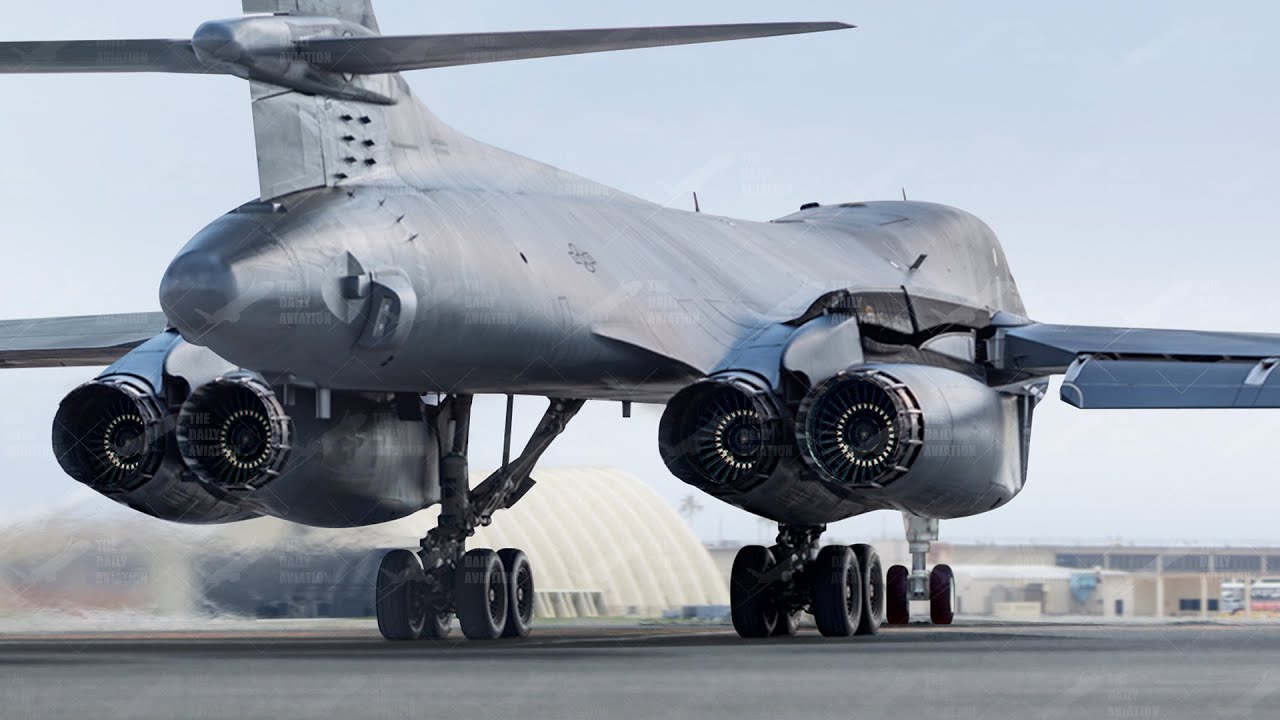
In an age dominated by artificial intelligence, stealth drones, hypersonic missiles, and sixth-generation fighter jets, many believed America’s aging bombers and attack aircraft were approaching the end of their story.
They were wrong.
As tensions surrounding the Iran conflict reshape global military strategy and the United States unveils a staggering US$1.5 trillion defense budget, some of the most iconic aircraft in American military history are being pulled back from the edge of retirement. Aircraft once considered obsolete are now being revived, upgraded, and prepared for a new era of warfare.
The message from the U.S. Air Force is becoming unmistakably clear:
You May Also Like

The future of war may belong to advanced technology — but America still trusts its legendary war machines when the stakes become existential.
From the resurrection of the B-1B Lancer bomber from the Arizona desert, to the extended life of the stealthy B-2 Spirit, to the continued survival of the beloved A-10 Warthog, and the astonishing century-long future of the B-52 Stratofortress, the United States is rewriting the rules of military aviation.
These aircraft were supposed to fade into history.
Instead, they are returning as symbols of endurance, power, and strategic necessity.
A Bomber Resurrected From the Desert
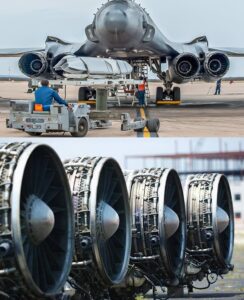
One of the most astonishing developments came when the U.S. Air Force officially brought a retired B-1B Lancer back to active service.
Not repaired.
Not upgraded.
Revived.
The aircraft, serial number 86-0115, had spent years resting in the Arizona “boneyard” at Davis-Monthan Air Force Base, where retired aircraft are stored under the brutal desert sun. Most planes sent there never fly again.
But this bomber was different.
Placed in specialized Type 2000 storage, the aircraft had been carefully preserved in case America ever needed it again during wartime emergencies, combat losses, or strategic shortages.
That day has now arrived.
After nearly two years of intense restoration work led by the Oklahoma City Air Logistics Complex at Tinker Air Force Base, the bomber returned to the skies.
More than 200 Airmen and civilian technicians worked around the clock. Over 500 components were replaced. Systems were rebuilt. Structural repairs were completed. Functional test flights were conducted over Oklahoma.
And finally, after passing every combat-readiness requirement, the aircraft officially returned to active service under a new name:
“Apocalypse.”
The name feels symbolic.
Not only because of growing global instability, but because it represents the return of an aircraft many believed was already dead.
For veteran technician Jason “JJ” Justice, who worked on the bomber for over three decades, the moment carried emotional weight.
“To see it come back and still support the warfighter is a great feeling.”
His words reveal something deeper than engineering success.
They reveal the philosophy now driving American airpower:
Never discard a weapon system that still terrifies your enemies.
Why The B-1B Lancer Still Matters
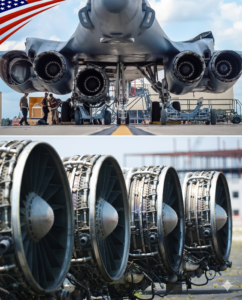
The B-1B Lancer remains one of the most dangerous bombers ever built.
Nicknamed “The Bone,” the aircraft combines long-range strike capability, supersonic speed, and enormous weapons capacity into one terrifying platform.
Originally designed during the Cold War as a successor to the B-52, the B-1 program nearly died before President Ronald Reagan revived it in the 1980s. The improved B-1B entered service in 1986 and quickly became one of America’s most feared strategic bombers.
Even today, decades later, few aircraft can match what the B-1B does best:
Delivering overwhelming firepower across enormous distances at incredible speed.
The bomber can carry some of the heaviest conventional payloads in the U.S. arsenal. In modern warfare — especially in Middle Eastern conflicts or Indo-Pacific operations — that matters enormously.
Recent combat operations reportedly demonstrated exactly why the aircraft remains indispensable. During Operation Epic Fury linked to the Iran conflict, the B-1B proved its ability to deliver devastating strike capability quickly and efficiently.
At a time when America faces potential multi-theater conflicts involving Iran, China, Russia, and emerging drone warfare, military planners are rediscovering an uncomfortable truth:
There is still no true replacement for raw payload capacity.
Stealth matters.
AI matters.
Drones matter.
But sometimes commanders still need massive airborne firepower capable of crushing hardened targets thousands of miles away.
The B-1B delivers exactly that.
The Hypersonic Future Of An Old Bomber
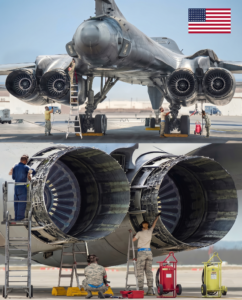
What makes the B-1B’s survival even more remarkable is that the aircraft is no longer merely a relic of the Cold War.
It may become a launch platform for the future of warfare itself.
Recently, images emerged showing a B-1B armed with the AGM-183 ARRW hypersonic missile — a weapon designed to travel at speeds exceeding Mach 5.
That changes everything.
Suddenly, an aircraft designed decades ago becomes a carrier for next-generation strategic weapons capable of penetrating enemy defenses faster than almost anything on Earth.
The Air Force is also exploring improved versions of hypersonic systems and entirely new air-launched ballistic missiles.
And the B-1B could become central to those missions.
This is the paradox reshaping modern warfare:
Old platforms survive because they can evolve.
The airframe may be decades old, but the weapons it carries are becoming futuristic.
America is discovering that replacing proven bombers is far harder than expected. Building a next-generation stealth aircraft like the B-21 Raider requires immense time, money, engineering, and industrial capacity.
Until enough B-21s arrive, the USAF cannot afford to lose the bombers it already has.
That reality has forced military leaders to rethink retirement plans entirely.
The B-2 Spirit Refuses To Disappear
The same logic now applies to the legendary B-2 Spirit stealth bomber.
For years, many analysts believed the B-2 would quietly disappear once the B-21 Raider entered service.
Instead, the Air Force has announced plans to keep the B-2 flying far longer than originally expected.
The Pentagon has allocated more than US$1.35 billion over the next five years to sustain and modernize the stealth bomber fleet.
That decision reflects the extraordinary importance of the B-2 in modern strategic warfare.
Even after decades in service, the B-2 remains one of the most sophisticated aircraft ever created. Its stealth design still allows it to penetrate heavily defended airspace and strike strategic targets deep inside enemy territory.
Very few nations on Earth possess anything remotely comparable.
And in potential future conflicts involving advanced air defense systems — especially against near-peer rivals — stealth bombers become essential.
The Iran conflict appears to have accelerated that realization.
Combat operations demonstrated that stealth, long-range strike capability, and flexible payload options remain critical for modern warfare.
The B-2 may be aging.
But its mission is not.
The A-10 Warthog: The Plane Soldiers Refuse To Let Die
Perhaps no aircraft represents military stubbornness more than the A-10 Thunderbolt II, better known worldwide as the Warthog.
For decades, the Air Force tried repeatedly to retire it.
And for decades, soldiers, Marines, pilots, and battlefield commanders resisted fiercely.
Why?
Because the A-10 does something drones and high-tech fighters still struggle to replicate:
It protects troops at terrifyingly close range.
Built around its devastating GAU-8 Avenger cannon, the A-10 was designed to survive direct combat while destroying tanks, armored vehicles, and enemy positions.
Its appearance is brutal.
Its sound is unforgettable.
Its battlefield reputation is legendary.
Despite plans to retire multiple squadrons, the Air Force is now backing away from those cuts.
The reason is simple:
Modern warfare continues proving that close air support still matters.
In conflicts where troops fight in difficult terrain, urban environments, or contested frontlines, commanders still trust the A-10’s survivability and precision.
While stealth jets dominate headlines, the Warthog remains beloved by the people actually fighting on the ground.
And in war, battlefield trust matters more than political trends.
The B-52: America’s 100-Year Bomber
Then there is the most astonishing story of all.
The B-52 Stratofortress.
An aircraft that first entered service in 1955 may remain operational into the 2060s.
That means the bomber could serve for more than 100 years.
No combat aircraft in history has achieved anything remotely comparable.
And yet the United States is investing heavily to ensure exactly that happens.
Under the Commercial Engine Replacement Program, the B-52 fleet will receive new Rolls-Royce F130 engines, transforming the aircraft into the upgraded B-52J configuration.
These new engines will dramatically improve fuel efficiency, reliability, electrical power generation, and operational capability.
The modernization effort represents far more than maintenance.
It is a declaration of confidence.
The Air Force believes the B-52 still offers strategic value in an era dominated by stealth technology and unmanned systems.
Why?
Because no aircraft combines range, payload, reliability, and adaptability quite like the Stratofortress.
The B-52 has already survived the Cold War, Vietnam, Desert Storm, Afghanistan, Iraq, Syria, and the rise of drone warfare.
Now it is preparing to survive the age of artificial intelligence as well.
That is not merely engineering success.
It is strategic immortality.
Why America Is Keeping Its Old War Machines Alive
The revival of these aircraft reveals something profound about modern warfare.
For years, defense experts assumed advanced technology would rapidly replace older systems.
But reality has proven far more complicated.
Next-generation aircraft programs face delays, enormous costs, production limitations, and operational uncertainties.
Meanwhile, geopolitical tensions are rising faster than expected.
The United States now faces simultaneous threats across multiple regions:
- Iran in the Middle East
- China in the Indo-Pacific
- Russia in Eastern Europe
- Expanding drone and missile warfare globally
In this environment, America cannot afford capability gaps.
And so, instead of replacing legacy systems immediately, the Pentagon is choosing a hybrid strategy:
Build the future while preserving the past.
It is not nostalgia.
It is necessity.
These aircraft continue surviving because they still provide something uniquely valuable:
- Massive firepower
- Long-range strike capability
- Battlefield reliability
- Psychological deterrence
- Operational flexibility
- Proven combat performance
The truth is uncomfortable for those who predicted rapid military transformation:
Technology evolves faster than trust.
And when nations prepare for major war, they still rely on weapons systems with decades of proven performance.
The Real Lesson Behind America’s Aging Bombers
There is a deeper lesson hidden behind these aircraft.
Strength is not always about replacing the old with the new.
Sometimes true strength comes from adaptation.
The B-1B was reborn.
The B-2 was extended.
The A-10 survived.
The B-52 may outlive generations of pilots.
These machines endure because they were built not only with engineering brilliance, but with strategic vision.
They remind us that in both warfare and life, resilience often matters more than novelty.
The world may obsess over what is new.
But history repeatedly shows that what survives is what truly shapes the future.
And today, amid global instability and rising conflict, America’s legendary bombers are proving one final truth:
Some weapons become too important to retire.




Wonderful blog! I found it while searching on Yahoo News.
Do you have any suggestions on how to get listed in Yahoo
News? I’ve been trying for a while but I never seem to get there!
Manny thanks
Thank for your love and support!