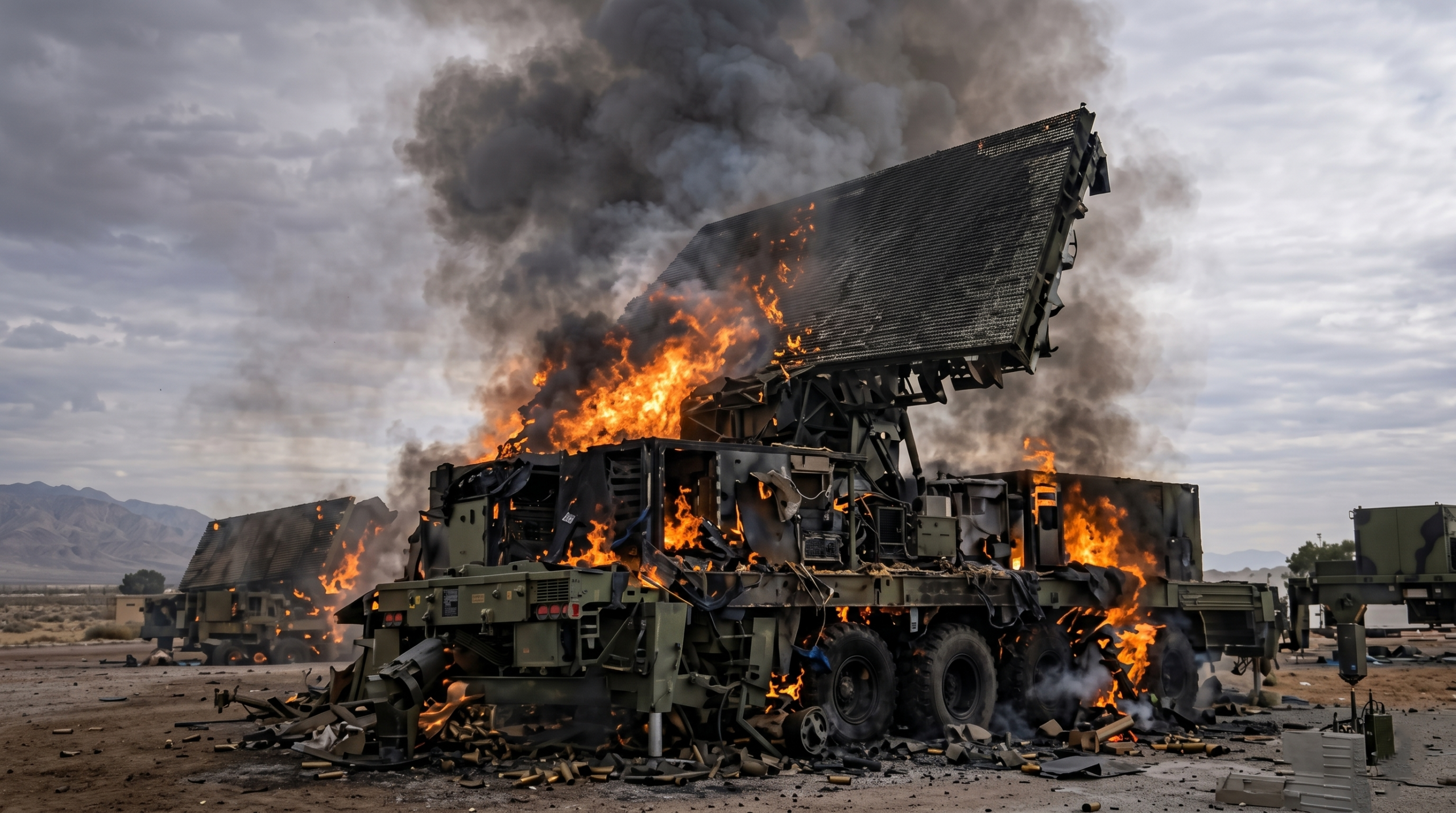
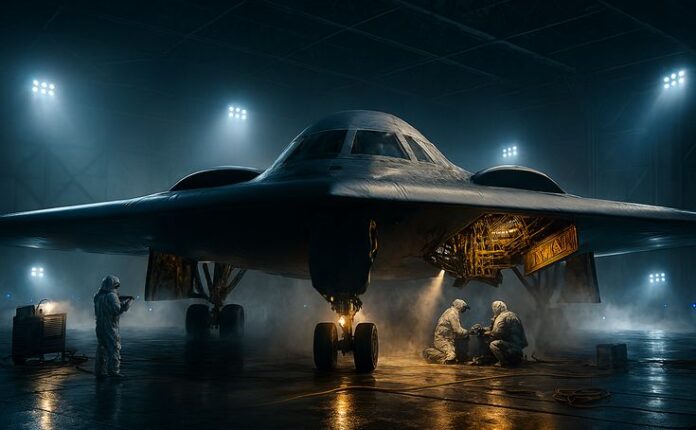
For decades, stealth aircraft gave the United States and Israel a decisive advantage in modern warfare. Fighters like the Lockheed Martin F-35 Lightning II and bombers such as the Northrop Grumman B-2 Spirit were designed to penetrate heavily defended airspace, strike critical targets, and disappear before defenders could react.
But that era may be entering a new and far more dangerous phase.
Reports that China has supplied Iran with the YLC-8B Radar suggest a significant shift in the strategic balance of the Middle East. With a reported detection range of up to 700 kilometers and specialized anti-stealth capabilities, the YLC-8B could give Tehran a much longer warning window against incoming aircraft, including some of the most advanced stealth platforms ever built.
If these reports are accurate, the message is unmistakable: the skies over Iran are becoming harder to enter unseen.
You May Also Like



A Strategic Gift with Global Consequences

The alleged transfer of the YLC-8B is more than a military sale. It represents a strategic statement by Beijing.
China appears increasingly willing to provide high-end defense technology to Iran, strengthening a partner that sits at the center of one of the world’s most volatile regions. For Tehran, the radar offers something priceless: time.
In modern warfare, time means survival.
Every extra minute of warning allows commanders to:
- Disperse aircraft and missile units
- Activate surface-to-air missile batteries
- Coordinate interceptors
- Launch decoys and electronic countermeasures
- Harden critical facilities
Even if stealth aircraft remain difficult to engage directly, earlier detection can dramatically reduce the element of surprise.
What Makes the YLC-8B So Important?
The YLC-8B was developed by China’s Nanjing Research Institute of Electronics Technology, one of the country’s leading radar designers.
Unlike many Western fire-control radars that operate in high-frequency bands, the YLC-8B uses ultra-high-frequency (UHF) wavelengths.
These longer wavelengths interact differently with stealth aircraft.
Aircraft such as the F-35 and B-2 are optimized to minimize reflections from higher-frequency radars. UHF radars cannot provide precise targeting by themselves, but they can detect the presence and approximate location of low-observable aircraft at much greater ranges.
In simple terms:
Stealth reduces visibility. It does not make an aircraft invisible.
The Power of a 700-Kilometer Warning Window

A radar with a 700-kilometer reach would dramatically expand Iran’s early-warning coverage.
That means Iranian commanders could identify unusual activity far from their borders and begin preparing before hostile aircraft approach weapon-release range.
This changes the psychology of warfare.
Instead of reacting at the last moment, defenders gain the ability to anticipate and prepare.
And when a nation knows an attack is coming, the cost of that attack rises sharply.
Mobility: The Radar That Refuses to Stay Still
One of the YLC-8B’s most valuable attributes is mobility.
The system is mounted on transport vehicles and can be deployed or repositioned rapidly.
This creates a major challenge for suppression campaigns.
By moving frequently, the radar becomes much harder to locate and destroy.
For U.S. and Israeli planners, this means:
- More reconnaissance missions
- Greater use of electronic warfare
- Additional stand-off weapons
- Higher operational complexity
The radar itself becomes a strategic chess piece, forcing adversaries to commit more resources before the first bomb is dropped.
Iran’s Layered Shield
Iran already fields sophisticated systems such as the Russian S-300PMU-2 Favorit and the domestically developed Bavar-373.
The YLC-8B would serve as a long-range sensor feeding those systems with early-warning data.
Together, these components form a layered network:
- Long-range radar detects the threat.
- Command centers analyze and assign targets.
- Engagement radars refine tracking.
- Missile batteries launch interceptors.
The result is a more resilient and coordinated air-defense architecture.
China and Iran: A Strategic Partnership Deepens

The radar transfer highlights the growing strategic partnership between China and Iran.
China gains:
- Greater influence in the Middle East
- Protection of critical energy routes
- Real-world operational data on its technology
- A partner that challenges U.S. regional dominance
Iran gains:
- Advanced military technology
- Improved deterrence
- Greater confidence in defending critical infrastructure
- Enhanced strategic autonomy
This relationship reflects a broader shift toward a more multipolar world, where technology transfers reshape regional balances without direct military intervention.
What This Means for the F-35 and B-2

The F-35 and B-2 remain among the most capable aircraft ever built.
Their stealth characteristics, electronic warfare systems, and advanced mission planning still provide formidable advantages.
But they would face a more demanding environment.
Earlier detection means:
- Less tactical surprise
- More defensive preparation
- Increased pressure on support assets
- Higher mission complexity
This does not render stealth obsolete.
It means stealth is no longer a guarantee of uncontested access.
The New Reality: Detection vs. Invisibility
Military history is a constant competition between those who seek to hide and those who seek to find.
Armor led to bigger guns.
Stealth led to anti-stealth sensors.
Now artificial intelligence, networked radars, and data fusion are reshaping the battlefield once again.
The central lesson is timeless:
No technological advantage lasts forever.
Success belongs to those who adapt faster.
Strategic Implications for the Middle East
If Iran integrates the YLC-8B effectively, the consequences could be significant:
- U.S. and Israeli strike plans become more complex.
- Regional powers may accelerate radar and missile acquisitions.
- Electronic warfare and cyber operations become even more important.
- Deterrence calculations shift across the region.
The Middle East could enter a new era where no side assumes easy access to contested airspace.
Final Analysis: A Warning to the World
The reported deployment of China’s YLC-8B radar in Iran does not mean stealth aircraft are suddenly vulnerable to routine shootdowns.
It does mean the technological race is intensifying.
The age when stealth alone guaranteed surprise is fading.
The future of airpower will belong not only to the fastest aircraft or the most advanced bombers, but to the nations that can detect, interpret, and act on information first.
If these reports are accurate, China has given Iran more than a radar.
It has given Tehran a strategic instrument of confidence.
And it has sent a clear message to Washington and Jerusalem:
The skies over Iran are no longer assumed to be invisible.