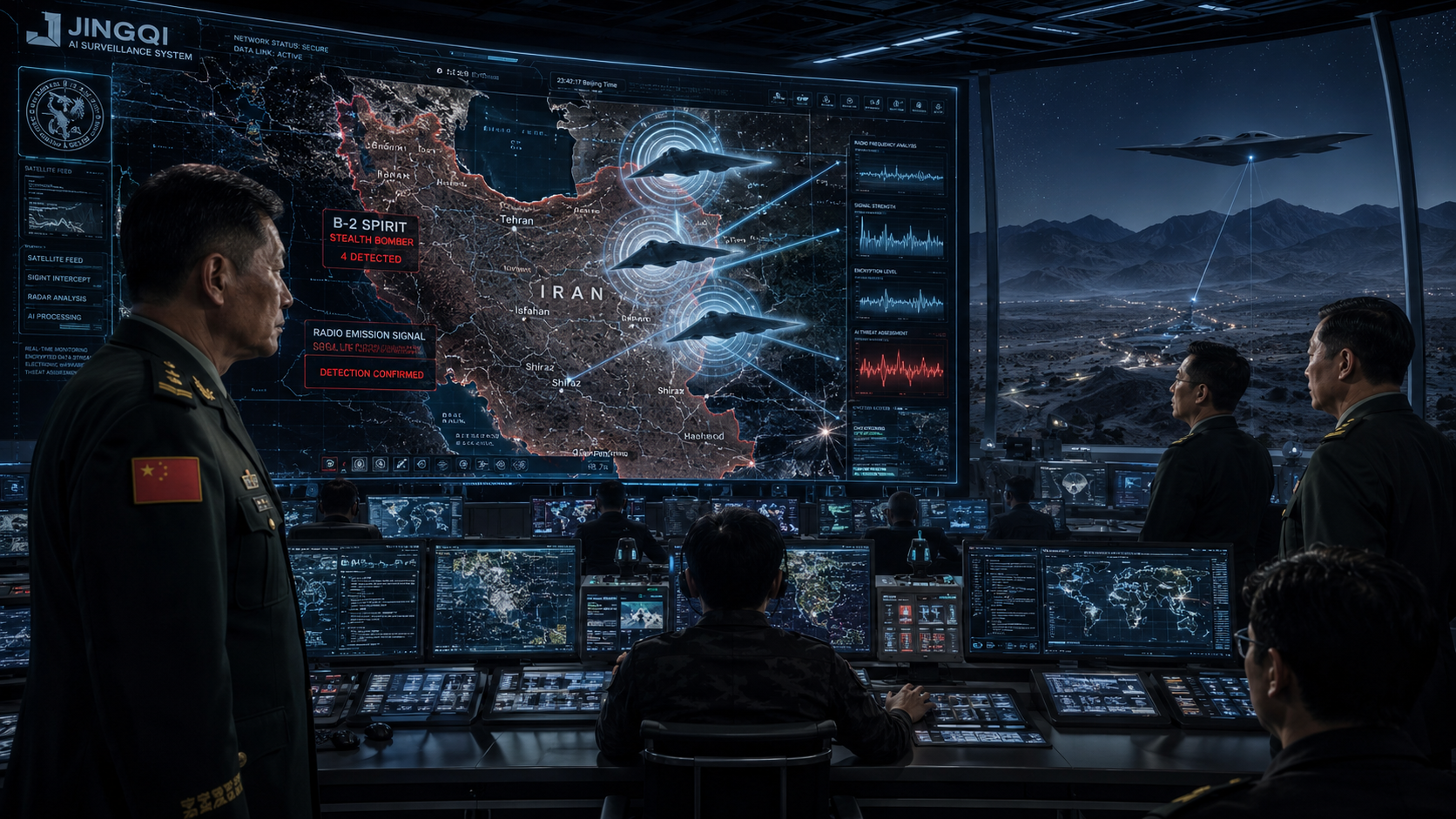
The Explosive Secret Debate Between the World’s Greatest Military Science Analyst and the World’s Most Advanced Technology Strategist After China Claimed Its AI Tracked America’s B-2 Stealth Bombers
The underground chamber was silent except for the low mechanical hum of quantum processors running beneath the floor.
Walls of transparent digital glass surrounded the room, displaying rotating satellite feeds, radar simulations, thermal imaging maps, cyber intelligence patterns, and live orbital tracking systems covering nearly every region of Earth.
At the center floated a massive holographic projection of the Northrop Grumman B-2 Spirit.
Dark.
You May Also Like
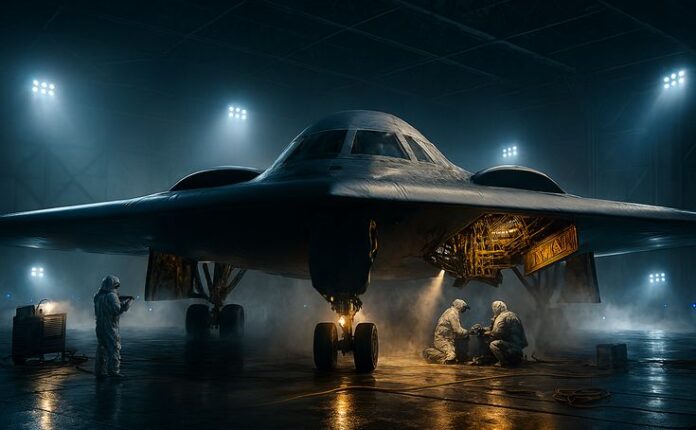
Ghost-like.
Almost unreal.
For decades the B-2 had symbolized America’s greatest military advantage — invisibility itself.
But tonight, that symbol stood suspended above the room like a question humanity no longer knew how to answer.
Beneath the glowing aircraft projection stood two men.
One was considered the world’s leading military science analyst — a strategist who had spent forty years studying stealth doctrine, nuclear deterrence, aerospace warfare, and the evolution of global combat systems.
The other was regarded as one of the world’s most advanced technology analysts — a pioneer in artificial intelligence battlefield systems, quantum surveillance networks, machine-learning prediction architecture, and autonomous military intelligence.
Both men stared silently at the rotating bomber.
Finally, the Military Analyst spoke first.
“So this is the aircraft the world believed could disappear.”
The Technology Strategist nodded slowly.
“And now China claims their AI system saw its shadow.”
The Military Analyst narrowed his eyes.
“Not radar detection.”
“No.”
“Not missile lock.”
“No.”
“Then explain precisely what happened.”
The Technology Strategist touched the holographic controls.
Instantly the room transformed.
Thousands of glowing information streams exploded outward across the world map.
Satellite movements.
Refueling patterns.
Military cargo flights.
Encrypted communication bursts.
Airbase logistics.
Thermal anomalies.
Signal interception nodes.
Commercial satellite imaging.
Aviation movement patterns.
Open-source intelligence flows.
Civilian infrastructure fluctuations.
The Strategist pointed toward the endless network.
“China claims its Jingqi AI system reconstructed the mission through informational correlation.”
The Military Analyst folded his arms.
“So the aircraft itself remained stealthy…”
“Yes.”
“But the operation became visible.”
“Exactly.”
The Analyst stared silently for several moments.
Then he quietly whispered:
“That changes military history.”
The Strategist slowly walked around the holographic bomber.
“You know what most civilians misunderstand about stealth technology?”
The Analyst remained quiet.
“They imagine invisibility like science fiction.”
He pointed toward the B-2.
“But stealth was never magic.”
The Analyst nodded slowly.
“It was mathematics.”
The Strategist smiled faintly.
“Yes.”
He expanded the bomber’s radar profile simulations.
“Stealth minimizes radar reflection. It reduces detection probability. It compresses enemy reaction time.”
The Analyst interrupted.
“But it does not erase existence.”
“Correct.”
The Strategist enlarged the digital world network again.
“And now humanity has entered a surveillance age where existence itself leaves patterns.”
The room darkened slightly as the AI network intensified around them.
The Military Analyst slowly sat down beneath the floating aircraft.
“You realize how profound this is strategically.”
The Strategist nodded.
“For decades America dominated airpower because stealth created uncertainty.”
The Analyst pointed upward toward the bomber.
“Enemy air defenses could not respond effectively if they couldn’t see the aircraft.”
“Exactly.”
The Strategist activated another simulation.
“But artificial intelligence changes the battlefield.”
The holographic map transformed into a living web of data points connecting across continents.
“AI doesn’t think like traditional military systems.”
The Analyst looked up carefully.
“Explain.”
The Strategist pointed toward the network.
“Radar searches directly for aircraft.”
He paused.
“AI searches for consequences.”
The Analyst narrowed his eyes.
“Consequences?”
“Yes.”
The Strategist enlarged a military logistics simulation.
“A B-2 mission creates invisible ripples.”
Refueling aircraft reposition.
Satellite coverage shifts.
Logistics flights increase.
Maintenance patterns change.
Communication traffic spikes.
Military satellites adjust observation windows.
Supply chains move differently.
The Strategist continued quietly.
“Individually, none of these signals reveal much.”
The Analyst nodded slowly.
“But collectively…”
“They expose intent.”
The room became silent again.
The Military Analyst leaned back deeply.
“So this is no longer radar warfare.”
“No.”
The Strategist answered softly.
“This is ecosystem warfare.”
That sentence lingered heavily in the chamber.
The holographic B-2 rotated silently above them while streams of information wrapped around it like glowing neural pathways.
The Analyst suddenly stood again.
“You know what terrifies military planners most about this development?”
The Strategist remained quiet.
“The collapse of strategic invisibility.”
He pointed toward the aircraft.
“For seventy years advanced military doctrine assumed some assets could remain effectively hidden.”
He turned sharply.
“But AI thrives by connecting fragments humans cannot.”
The Strategist nodded slowly.
“And the number of fragments now surrounding every military operation is astronomical.”
The Analyst walked toward another holographic display showing Earth from orbit.
Thousands of satellites glowed around the planet.
Commercial systems.
Military constellations.
Infrared tracking arrays.
Synthetic aperture radar satellites.
Communications relays.
Civilian imaging platforms.
Private aerospace surveillance networks.
The Analyst stared upward.
“Human civilization accidentally built a planetary sensor web.”
The Strategist quietly replied:
“And artificial intelligence became the nervous system connecting it.”
Silence consumed the room.
Then the Analyst suddenly asked:
“So can China actually destroy stealth bombers now?”
The Strategist answered instantly.
“No.”
The Analyst watched carefully.
“Explain thoroughly.”
The Strategist enlarged the B-2 again.
“Detection is not targeting.”
He pointed toward the aircraft.
“The reported operation over Iran still succeeded.”
The Analyst nodded.
“The bombers struck their targets.”
“Yes.”
“They returned safely.”
“Yes.”
“So tactically, the aircraft still dominated.”
“Correct.”
The Strategist paused carefully.
“But strategically, China achieved something else.”
The Analyst’s expression hardened slightly.
“They challenged the mythology.”
The Strategist smiled faintly.
“Exactly.”
He activated another display showing global news headlines.
“For decades, stealth represented untouchability.”
The holographic headlines shifted across the room.
Invisible bomber.
Undetectable aircraft.
Air superiority.
Strategic dominance.
The Strategist looked directly at the Analyst.
“Now China is signaling something extremely important.”
The Analyst crossed his arms.
“What exactly?”
The Strategist spoke slowly.
“Your aircraft may evade radar…”
The room became silent.
“…but they do not escape our algorithms.”
The Analyst stared silently for several seconds.
Then he quietly whispered:
“That sentence alone changes military psychology worldwide.”
The Strategist nodded slowly.
“And psychological warfare matters enormously.”
The Analyst walked toward another screen displaying future combat simulations.
Drone swarms.
Autonomous submarines.
AI-directed missile defense systems.
Quantum communication grids.
Self-learning battlefield algorithms.
Machine-guided orbital surveillance.
“This isn’t about the B-2 anymore,” he said quietly.
“No.”
“It’s about the transformation of warfare itself.”
“Exactly.”
The Strategist folded his hands together.
“The future battlefield belongs to whoever processes information fastest.”
The Analyst nodded slowly.
“Not necessarily whoever builds the biggest weapons.”
“Yes.”
The Analyst suddenly stopped walking.
“You know what’s truly dangerous?”
The Strategist waited.
“That military systems are evolving faster than political systems.”
The Strategist gave a grim smile.
“Technology accelerates faster than human wisdom.”
The room darkened further while the AI simulations intensified around them.
Then the Analyst quietly asked:
“What happens when AI moves from detection… to prediction?”
The Strategist answered immediately.
“That’s already beginning.”
The Analyst narrowed his eyes.
“Meaning?”
The Strategist activated another display.
Future conflict prediction models appeared instantly.
Probabilities.
Behavioral forecasts.
Military movement anticipation.
Strategic escalation simulations.
AI-generated geopolitical projections.
The Strategist spoke softly.
“Artificial intelligence no longer only analyzes reality.”
He paused carefully.
“It increasingly predicts it.”
The Analyst slowly sat down again.
“That compresses decision-making.”
“Yes.”
The Strategist pointed toward automated battle simulations.
“In older wars, commanders had time.”
Radar detected aircraft.
Analysts interpreted signals.
Generals debated responses.
Political leaders made decisions.
The Strategist shook his head slowly.
“AI destroys delay.”
The Analyst looked deeply troubled now.
“So wars may accelerate beyond human thinking speed.”
“That is the fear.”
Silence returned again.
Then the Analyst suddenly asked:
“Do you realize what humanity is approaching?”
The Strategist looked toward the floating B-2.
“A civilization where invisibility itself may become impossible.”
The Analyst nodded slowly.
“And once invisibility disappears…”
“Strategic stability changes.”
The Analyst stood again beneath the giant bomber projection.
“For generations, stealth preserved deterrence.”
He pointed upward.
“The enemy could never fully know where these aircraft were.”
The Strategist nodded.
“But AI reduces uncertainty.”
The Analyst’s voice became heavier.
“And uncertainty was the foundation of military balance.”
The room became completely silent.
Finally the Strategist quietly said:
“We are entering an era where the most powerful weapon may not be the bomber…”
He looked toward the endless AI network surrounding the room.
“…but the intelligence system capable of revealing what others believe is hidden.”
The Analyst slowly exhaled.
“You know what history may say about this moment?”
The Strategist looked toward him carefully.
“They’ll think this was about China detecting a stealth bomber.”
He paused.
“But the real story is much larger.”
The holographic Earth rotated slowly above the chamber now.
Covered in surveillance grids.
Data streams.
Orbital systems.
Algorithmic intelligence layers.
The Analyst whispered quietly:
“This may be the moment humanity realized the invisible was becoming mathematically visible.”
The Strategist stared upward at the glowing B-2.
“And once AI learns how to see patterns…”
He paused.
“…even shadows become evidence.”
For several long moments neither man moved.
The room remained illuminated only by the ghostly shape of the stealth bomber floating silently above the digital Earth.
A machine once designed to disappear completely.
Now surrounded by billions of invisible informational fingerprints stretching across the planet itself.
And somewhere inside the endless noise of signals, satellites, algorithms, and artificial intelligence…
The future of warfare was already rewriting itself in silence.