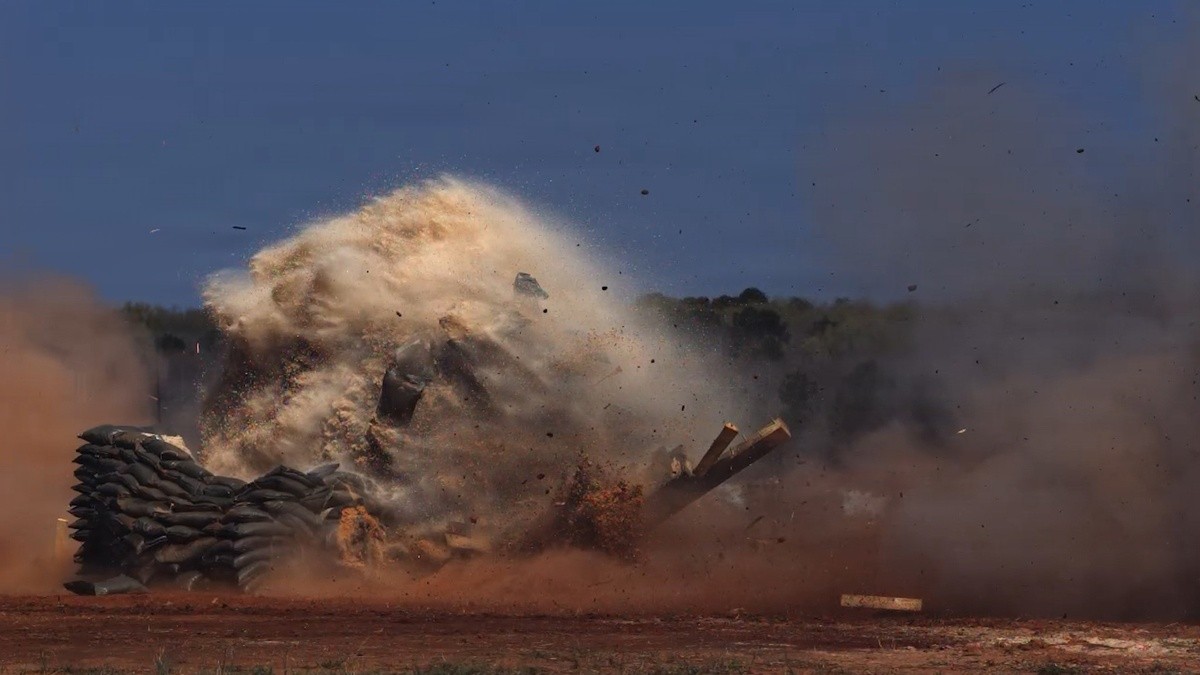
For generations, destroying hardened bunkers, command centers, and underground weapons depots required massive aircraft, expensive precision-guided bombs, and carefully planned strike packages.
Today, that equation is changing.
In a breakthrough that could redefine the future of warfare, the United States Army has successfully tested a compact air-delivered bunker-busting warhead designed to be carried by a small unmanned aerial system.
The weapon is called BRAKER — the Bunker Rupture and Kinetic Explosive Round.
You May Also Like

Its name is simple.
Its implication is profound.
A target that once required a strategic bomber may one day be destroyed by a low-cost drone.
That is not merely a technological advancement.
It is a revolution.
From Massive Bombers to Small Drones

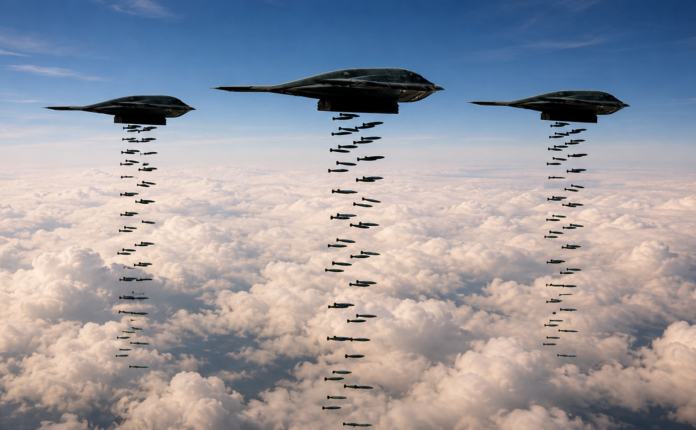
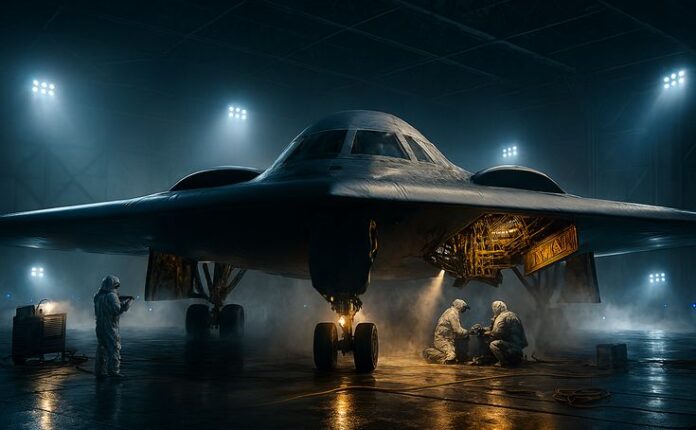
Traditional bunker-busting weapons such as the GBU-28 and the GBU-57 Massive Ordnance Penetrator are powerful but costly and require major aircraft like the Northrop Grumman B-2 Spirit.
BRAKER changes this paradigm.
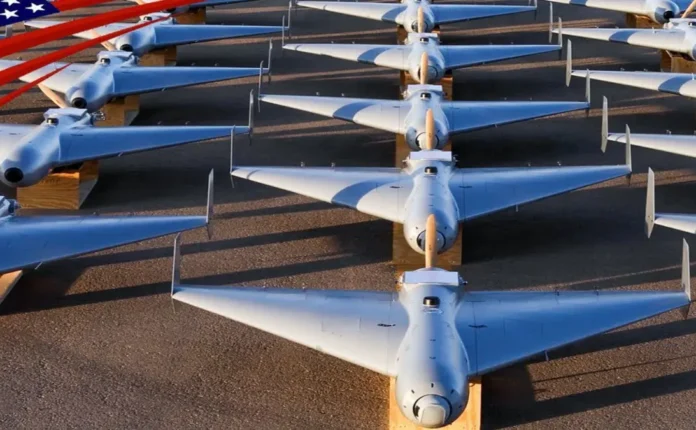
Instead of relying on billion-dollar bombers, the Army is demonstrating that hardened targets may be attacked by small, expendable drones carrying precision-designed warheads.
This shift reduces cost, shortens response time, and allows commanders to deploy overwhelming lethality with unprecedented flexibility.
A Two-Week Sprint from Concept to Live Fire

At Picatinny Arsenal in New Jersey, engineers moved from concept to live-fire testing in only two weeks.
That timeline is extraordinary.
In the past, developing and validating a new munition could take months or years.
BRAKER demonstrates a new model of military innovation:
- Rapid design
- Additive manufacturing
- Explosive integration
- Safety certification
- Live-fire validation
The successful demonstration at Redstone Arsenal showed how quickly the Army can transform an urgent battlefield need into a real combat capability.
What Is BRAKER?

BRAKER stands for Bunker Rupture and Kinetic Explosive Round.
It is a lightweight warhead designed to be delivered by a small one-way attack drone.
Its mission is straightforward but strategically important:
- Penetrate hardened structures.
- Detonate inside.
- Destroy protected assets and personnel.
By combining kinetic impact with explosive force, BRAKER is optimized to attack bunkers, command posts, storage sites, and fortified positions.
In essence, it gives small drones the power to strike targets once reserved for much larger and more expensive systems.
The Technology Behind the Breakthrough

The project was led by the U.S. Army Combat Capabilities Development Command Armaments Center and Project Manager Close Combat Systems.
A critical enabler is the Picatinny Common Lethality Integration Kit (CLIK), which provides a safe and standardized method to mount lethal payloads on unmanned aircraft.
Think of CLIK as a universal adapter for armed drones.
It allows the Army and industry partners to integrate different warheads onto different drones much faster than traditional custom-built approaches.
This modular architecture may become one of the most important foundations of future drone warfare.
The Power of 3D Printing

The rapid development of BRAKER was made possible through additive manufacturing.
Using advanced 3D printing, engineers were able to:
- Design and refine components rapidly
- Manufacture housings in days
- Test multiple iterations
- Reduce production costs
This approach compresses innovation cycles dramatically.
Instead of waiting months for specialized tooling, engineers can design, print, assemble, and test within days.
The battlefield is evolving faster than ever, and 3D printing enables the Army to evolve with it.
Why BRAKER Matters
The significance of BRAKER goes far beyond a single warhead.
It represents a new way of thinking about military power.
Low Cost, High Impact
A small expendable drone carrying a specialized warhead can threaten hardened targets at a fraction of the cost of traditional strike missions.
Rapid Development
The Army can now turn ideas into operational systems in weeks.
Scalable Architecture
Modular payload kits enable fast adaptation to new threats.
Tactical Flexibility
Small drones can reach targets that may be difficult or risky for manned aircraft.
Operational Surprise
Distributed swarms can overwhelm defenses from multiple directions.
A New Threat to Hardened Targets
Military planners have long relied on bunkers and underground facilities to protect critical assets.
These include:
- Command centers
- Ammunition depots
- Communications nodes
- Missile launch facilities
- Leadership shelters
BRAKER directly challenges this assumption.
When even small drones can deliver penetrating warheads, hardened infrastructure becomes more vulnerable.
Protection is no longer guaranteed by concrete and steel alone.
The Democratization of Precision Strike
The most transformative aspect of BRAKER is its potential to democratize advanced strike capability.
Historically, bunker-busting attacks required elite air forces and expensive aircraft.
Now, compact precision warheads can be integrated with small unmanned systems.
This trend suggests that the future of warfare will favor:
- Speed over bureaucracy
- Modularity over bespoke design
- Mass over individual platform cost
- Adaptability over fixed doctrine
The strategic implications are enormous.
Lessons from Recent Conflicts
Recent wars in Ukraine, the Middle East, and elsewhere have shown that inexpensive drones can destroy tanks, artillery, and air-defense systems.
BRAKER extends this logic to hardened targets.
It reflects a key lesson of modern conflict:
The most disruptive weapons are not always the largest.
They are often the smartest, fastest to field, and easiest to scale.
A Message to America’s Adversaries
The BRAKER test sends a clear message.
The United States can still innovate at remarkable speed.
When confronted with emerging threats, U.S. engineers and soldiers can design, build, and test new weapons in weeks rather than years.
That agility is itself a strategic weapon.
Adversaries must now assume that any battlefield advantage they gain could be countered faster than ever before.
A Message to America’s Allies
For allies, BRAKER demonstrates that the United States remains committed to maintaining technological superiority.
It also highlights opportunities for defense-industrial collaboration in areas such as:
- Drone manufacturing
- Warhead integration
- Sensor fusion
- Counter-fortification systems
Innovation at this pace strengthens deterrence and reassures partners around the world.
The Human Achievement Behind the Weapon
At the center of BRAKER is a remarkable story of engineering excellence.
Scientists, explosive experts, technicians, and soldiers collaborated under intense timelines to turn a concept into a functioning weapon.
As Col. Vincent Morris noted, the team moved from concept to live fire in two weeks.
That accomplishment reflects more than technical skill.
It reflects determination, creativity, and a relentless commitment to giving warfighters every possible advantage.
The Future Battlefield
Tomorrow’s battlefield will be defined by systems that are:
- Autonomous
- Affordable
- Modular
- Rapidly produced
- Highly lethal
Weapons like BRAKER will allow small units to strike hardened targets with unprecedented precision and speed.
The distinction between tactical and strategic strike capability will continue to blur.
A backpack-sized system may one day deliver effects once associated with strategic bombers.
Final Analysis: Small Weapon, Strategic Revolution
BRAKER is more than a new warhead.
It is proof that military innovation no longer belongs only to massive defense programs measured in decades.
It belongs to agile teams that can identify a problem, build a solution, and deliver results at the speed of modern conflict.
A compact drone carrying BRAKER may appear modest.
But its strategic significance is immense.
It represents the convergence of additive manufacturing, modular design, unmanned systems, and precision lethality.
In that convergence lies the future of warfare.
America’s next great military advantage may not arrive with the roar of a bomber.
It may come silently, from a small drone carrying a breakthrough called BRAKER.