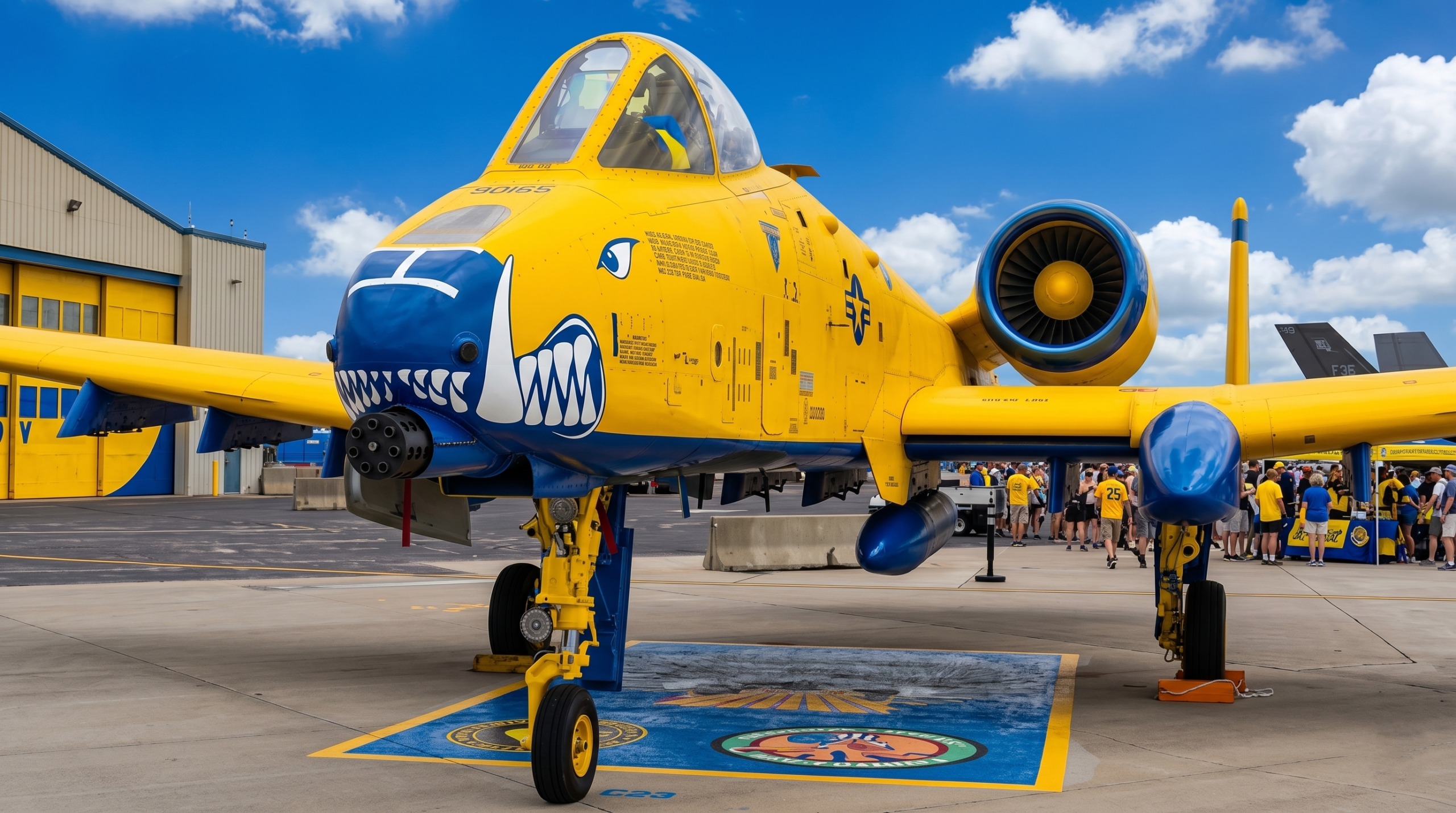
The A-10 Warthog: Why America’s Most Battle-Hardened Aircraft Refuses to Die
For more than half a century, the Fairchild Republic A-10 Thunderbolt II — better known as the “Warthog” — has terrified enemies, protected soldiers, and survived battles that would destroy almost any other aircraft in the sky.
It is not the fastest jet.
It is not stealthy.
It is not elegant.
But when troops on the ground are surrounded, under fire, and desperate for help, few sounds in warfare inspire more confidence than the roar of an A-10 diving toward the battlefield.
The A-10 is more than a machine. It is a symbol of survival, loyalty, and raw combat power.
You May Also Like
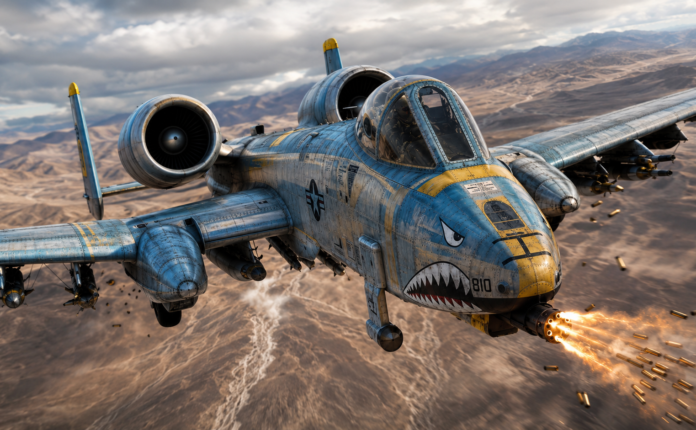
Built for One Purpose: Protect the Soldier on the Ground
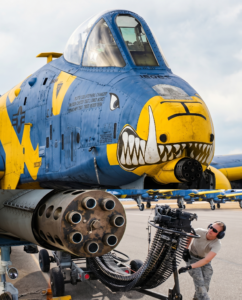
The A-10 was born during the darkest years of the Cold War, when U.S. military planners feared massive Soviet armored assaults across Europe. America needed an aircraft capable of stopping endless columns of enemy tanks while flying low and dangerously close to the battlefield.
Most fighter jets were designed to dominate the skies.
The A-10 was designed to save lives on the ground.
In the aftermath of the Vietnam War, military leaders understood something critical: ground troops needed an aircraft dedicated entirely to close air support — an aircraft willing to stay in the fight even under heavy enemy fire.
That mission shaped every inch of the Warthog.
When the aircraft officially entered service in 1977, it looked unlike anything else in the U.S. Air Force inventory. It was ugly, bulky, loud, and brutally practical. Yet that strange design would eventually make it one of the most respected combat aircraft in modern military history.
The Cannon That Became Legendary
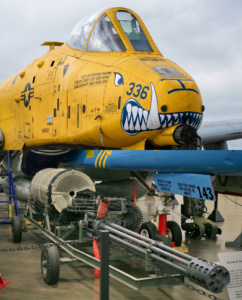
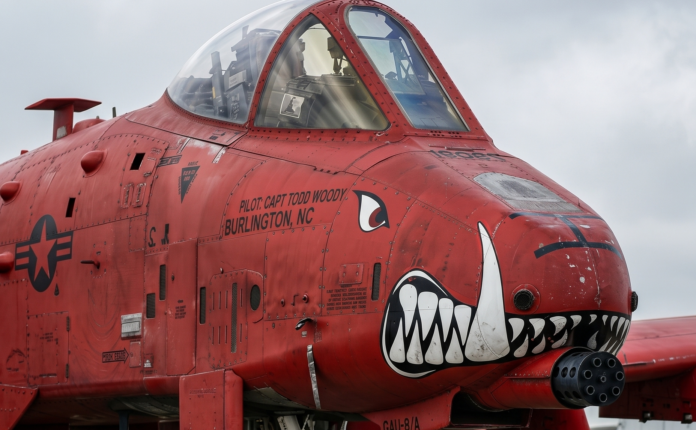
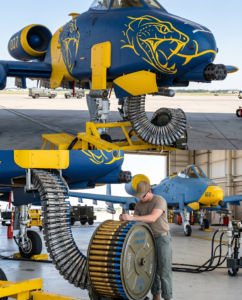
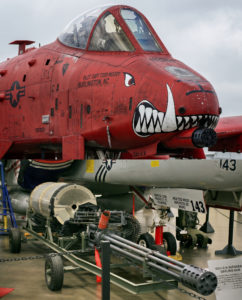
At the heart of the A-10 sits one of the most terrifying weapons ever mounted on an aircraft: the GAU-8 Avenger 30mm rotary cannon.
The gun is so enormous that the aircraft was practically built around it.
This cannon can fire nearly 4,000 armor-piercing rounds per minute, shredding tanks, armored vehicles, bunkers, and enemy positions with devastating force. When fired, the sound is unforgettable — a violent mechanical growl that has become legendary among both soldiers and enemies.
But the true power of the GAU-8 is not just destruction.
It is precision.
The A-10 can attack enemy positions dangerously close to friendly troops, delivering devastating firepower while minimizing risk to forces on the ground. In chaotic combat environments where every second matters, that precision has saved countless lives.
The Flying Tank
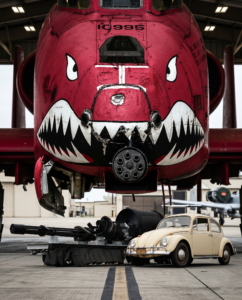
The A-10 is often called a “flying tank,” and for good reason.
Unlike sleek modern fighters that rely heavily on stealth and electronics, the Warthog was built to absorb punishment and keep flying.
Its pilot sits inside a titanium armored shell often referred to as a “bathtub,” designed to withstand anti-aircraft fire and battlefield explosions. The aircraft has redundant hydraulic and flight systems, meaning even if one system is destroyed, another can keep the aircraft operational.
Its engines are mounted high above the fuselage to reduce vulnerability to missiles and ground fire. Its landing gear is rugged enough to operate from rough airstrips near the front lines. Even with major structural damage, the aircraft has repeatedly managed to bring its pilots home alive.
Throughout its combat history, A-10s have returned to base with missing wings, shattered control surfaces, damaged engines, and holes ripped through the fuselage.
Yet they still landed.
That resilience became legendary among pilots and infantry alike.
The Heroism of Kim Campbell
One of the most famous examples of the A-10’s survivability came during the Iraq War.
In 2003, A-10 pilot Kim Campbell was hit by intense anti-aircraft fire while flying over Baghdad. Her aircraft suffered catastrophic damage, including the complete loss of its hydraulic systems.
Most aircraft would have been doomed.
But the A-10 had been designed for moments exactly like this.
Using only manual controls — something almost unheard of in modern combat aviation — Campbell managed to fly the crippled aircraft back to base and land safely.
Her survival was not luck alone. It was proof of the aircraft’s extraordinary engineering philosophy: keep the pilot alive and keep supporting the troops no matter what.
Stories like hers helped transform the A-10 from a military aircraft into a legend.
The Aircraft That Dominated Modern Battlefields
The A-10 proved its value repeatedly across decades of war.
During Gulf War, Warthogs devastated Iraqi armored formations, artillery sites, and supply convoys. The aircraft destroyed hundreds of tanks and military vehicles while operating in some of the most dangerous combat environments imaginable.
Its success was overwhelming.
Ground troops trusted it. Pilots respected it. Enemies feared it.
In Afghanistan and Iraq, the A-10 again became indispensable. Unlike high-speed fighters that often passed over battle zones quickly, the Warthog could remain overhead for extended periods, watching over soldiers and responding instantly when danger appeared.
Its ability to fly low and slow gave pilots unmatched battlefield awareness. Troops under attack often described the emotional relief of hearing an A-10 arrive overhead.
For many soldiers, the Warthog was not just air support.
It was survival.
Why Pilots and Troops Still Love It
Despite being over 50 years old, the A-10 remains deeply respected because it performs a mission few aircraft can replicate.
Modern stealth fighters like the Lockheed Martin F-35 Lightning II are technologically advanced and capable across many missions. But many military experts argue that no aircraft matches the A-10’s combination of endurance, survivability, visibility, precision firepower, and psychological presence over the battlefield.
The A-10 was built around human realities of war.
Ground troops do not care about stealth when they are pinned down under enemy fire. They care about immediate, accurate, relentless support.
That is what the Warthog delivers.
Its pilots also form an unusually strong emotional connection to the aircraft. Flying an A-10 means accepting dangerous missions at low altitude while staying close to friendly troops in chaotic combat zones. The bond between pilot, aircraft, and soldiers becomes intensely personal.
The A-10 does not simply fight wars.
It protects people.
The Battle Over Retirement
For years, the U.S. Air Force has debated retiring the A-10 in favor of newer aircraft. Supporters of retirement argue that modern warfare increasingly demands stealth, networked systems, and multi-role flexibility.
But opposition to retiring the Warthog remains fierce.
Many soldiers, military analysts, and lawmakers believe removing the A-10 would leave a dangerous gap in America’s close air support capabilities. The aircraft’s combat record and unique strengths continue to make it difficult to replace.
As a result, the Air Force has repeatedly upgraded the A-10 with modern avionics, targeting systems, communications equipment, and structural improvements.
Even in the age of drones, artificial intelligence, and stealth fighters, the Warthog continues to prove its relevance.
More Than an Aircraft
At airshows across America, few aircraft attract as much admiration as the A-10 Warthog. Crowds gather not because it is beautiful, but because it represents something rare in modern warfare: toughness, reliability, and absolute devotion to the mission.
The Warthog was never designed to impress people.
It was designed to survive hell.
And for more than 50 years, it has done exactly that.
The A-10’s legacy is ultimately not about technology alone. It is about the pilots who flew it into danger, the engineers who built it to endure impossible punishment, and the soldiers whose lives were saved because the Warthog arrived when they needed it most.
That is why the A-10 remains beloved.
Not because it is perfect.
But because when war becomes brutal and survival hangs by a thread, the Warthog keeps coming.