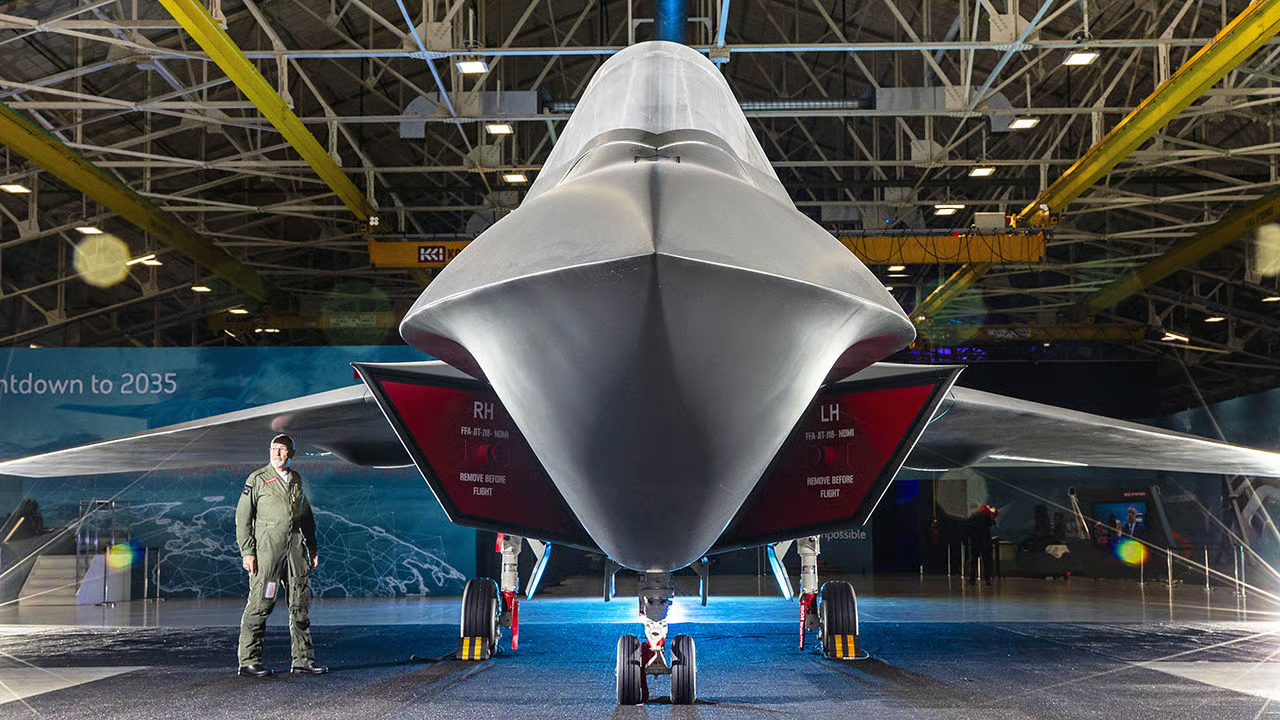
As tensions rise across the Indo-Pacific, a new question is quietly reshaping the future of American airpower:
Can America’s current fighters truly dominate the vast Pacific battlefield against a rapidly modernizing China?
For years, the United States believed its unmatched fleet of fifth-generation stealth aircraft — especially the Lockheed Martin F-35 Lightning II and Lockheed Martin F-22 Raptor — would guarantee air superiority for decades. Today, however, military planners are confronting a new reality. China is no longer merely catching up. It is building a military specifically designed to challenge American dominance in the Pacific.
And increasingly, defense thinkers — including innovators inspired by the technological philosophy of Elon Musk — are questioning whether the future of warfare belongs to massive manned fighter programs at all.
You May Also Like


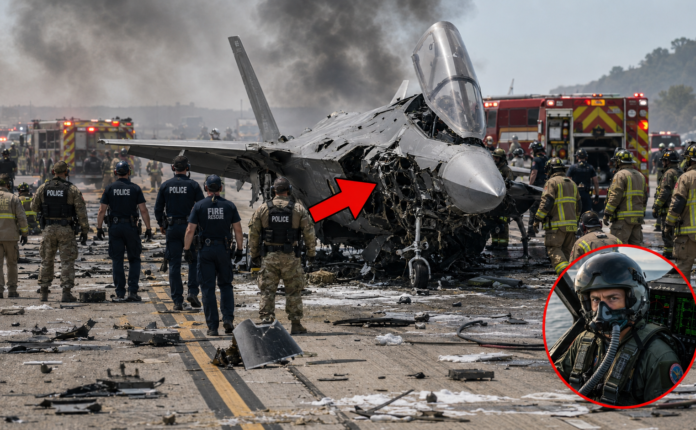
The debate surrounding America’s sixth-generation fighter, known as NGAD (Next Generation Air Dominance), is now becoming one of the most important military discussions of the 21st century.
The Pacific Is Unlike Any Battlefield on Earth
The greatest challenge facing the United States Air Force is not simply China’s growing military power.
It is geography.
The Pacific Ocean is enormous beyond comprehension. Distances between bases, islands, and combat zones stretch for thousands of miles. Aircraft designed during the Cold War and post-Cold War eras were largely optimized for Europe — a theater filled with nearby allied airfields, shorter flight distances, and dense infrastructure.
The Pacific is the opposite.
A conflict involving Taiwan could force American aircraft to operate across massive oceanic distances while under constant threat from Chinese missiles, cyber attacks, drones, and anti-access systems.
This is what strategists call the “tyranny of distance.”
Even the highly advanced F-35 faces limitations in this environment.
The F-35 was built as a versatile stealth fighter, but range and payload become major concerns in Pacific warfare. Tanker aircraft required for refueling would themselves become vulnerable targets. Airfields across the region could face missile attacks in the opening hours of a war.
China understands this problem extremely well.
That is why Beijing has invested heavily in long-range missiles, anti-ship weapons, advanced radar systems, and a growing fleet of stealth aircraft such as the Chengdu J-20.
The goal is simple: keep American forces far away from the battlefield.
Why America May Need a Pacific-Specific 6th-Generation Fighter
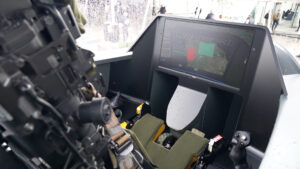
The U.S. Air Force is now considering whether a completely new type of stealth aircraft is necessary for Pacific warfare.
Not just another fighter.
But a long-range, highly survivable airborne command platform capable of controlling drones, coordinating attacks, surviving electronic warfare, and penetrating the world’s most dangerous air defenses.
Former Air Force Chief of Staff Charles Q. Brown Jr. previously suggested that the United States might need two versions of its future sixth-generation fighter:
- A shorter-range version optimized for Europe.
- A much longer-range variant built specifically for the Pacific.
That idea reflects a growing realization inside the Pentagon:
Future wars against China cannot be fought using Cold War assumptions.
The Pacific demands aircraft with:
- Massive operational range
- Extended loiter time
- Advanced stealth
- AI-assisted combat systems
- Drone coordination capability
- Electronic warfare dominance
- Long-range missile integration
In many ways, the next fighter may resemble a flying command center more than a traditional jet.
Elon Musk’s View Could Reshape the Entire Debate
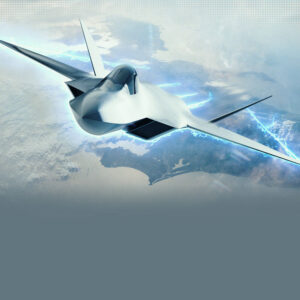
Few figures have influenced modern technology more dramatically than Elon Musk.
And his views on fighter aircraft have sparked controversy throughout the defense world.
Musk has repeatedly argued that the age of traditional manned fighters is ending. According to him, autonomous drones powered by artificial intelligence will eventually outperform human pilots in speed, reaction time, and cost efficiency.
His criticism of expensive fighter programs shocked many military leaders when he declared that “the fighter jet era has passed.”
At first, many defense experts dismissed those comments.
Now, however, reality is beginning to move closer to Musk’s vision.
The Air Force’s new generation of Combat Collaborative Aircraft (CCA) — AI-enabled drone wingmen designed to operate alongside human pilots — reflects exactly the kind of warfare Musk predicted.
Instead of relying solely on a handful of ultra-expensive fighters, future air combat may involve:
- Swarms of autonomous drones
- Human-machine teaming
- AI-directed surveillance
- Unmanned strike systems
- Distributed battlefield networks
This does not necessarily mean manned fighters will disappear.
But it does mean the future sixth-generation aircraft may become something radically different:
a stealth command-and-control brain directing entire fleets of autonomous systems.
Even Air Force Secretary Frank Kendall acknowledged that the NGAD program is being reevaluated partly because of questions surrounding crewed versus uncrewed combat systems.
That shift represents one of the biggest transformations in military aviation history.
China Is Moving Faster Than Many Expected
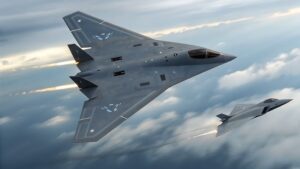
China is not waiting.
The People’s Liberation Army Air Force is rapidly modernizing across every domain:
- Stealth fighters
- Hypersonic weapons
- AI warfare
- Space systems
- Electronic warfare
- Drone swarms
- Long-range missile networks
Beijing has even unveiled concepts and renderings of potential sixth-generation aircraft designs.
Whether these systems are fully operational matters less than what they symbolize:
China is preparing for the next era of warfare now.
Unlike the United States, China also benefits from geographic proximity. Any battle near Taiwan occurs only around 100 miles from mainland China. Chinese aircraft can operate under the protection of land-based missiles, radar systems, and integrated air defenses.
American forces, meanwhile, must project power across oceans.
That difference changes everything.
Why Range May Matter More Than Speed
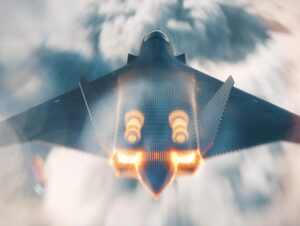
For decades, fighter aircraft competition focused heavily on speed, agility, and dogfighting.
But the Pacific changes military priorities.
Range may now matter more than raw maneuverability.
Aircraft like the Boeing B-21 Raider and Boeing B-52 Stratofortress are becoming increasingly important because they can strike targets from thousands of miles away while carrying enormous payloads.
Future wars may not begin with close-range dogfights.
They may begin with:
- Long-range missile barrages
- Cyber warfare
- Satellite disruption
- AI-enabled targeting
- Electronic attacks
- Drone saturation strikes
The side that controls information, range, and survivability may dominate the conflict before pilots even visually see each other.
That reality is pushing the Pentagon toward a layered force structure:
- Long-range bombers
- Stealth fighters
- Autonomous drones
- Space assets
- Naval aviation
- AI battle networks
The sixth-generation fighter would become the centerpiece connecting them all.
The Real Question: Can America Afford It?
Here lies the biggest challenge.
Building a Pacific-specific sixth-generation fighter could cost hundreds of billions of dollars over its lifetime.
And America faces difficult strategic choices:
- Invest in fewer ultra-advanced manned aircraft?
- Or build massive fleets of cheaper autonomous drones?
- Prioritize stealth?
- Prioritize range?
- Prioritize quantity?
These debates are now happening inside the Pentagon in real time.
Supporters of NGAD argue that only a highly advanced manned platform can survive the Pacific battlefield and coordinate future warfare systems.
Critics argue that concentrating so much money into a small number of aircraft creates dangerous vulnerabilities.
This is precisely where Elon Musk’s philosophy continues influencing defense conversations:
Why build a handful of extremely expensive fighters when AI-driven autonomous systems could overwhelm enemies through sheer scale and adaptability?
The answer may ultimately become a hybrid approach.
The Future of Air Warfare Has Already Begun
The debate over America’s sixth-generation fighter is about far more than aircraft.
It is about the future of military power itself.
The Pacific theater is forcing the United States to rethink nearly everything:
- How wars are fought
- How aircraft are designed
- How pilots interact with AI
- How deterrence works
- How mass and survivability are balanced
The next American fighter may not simply be a faster jet.
It may become an intelligent airborne battle manager commanding drones, missiles, satellites, and cyber systems simultaneously across thousands of miles.
And in many ways, the future now emerging looks remarkably close to the world Elon Musk predicted years ago.
The age of isolated fighter jets is ending.
The age of networked, AI-driven warfare has begun.