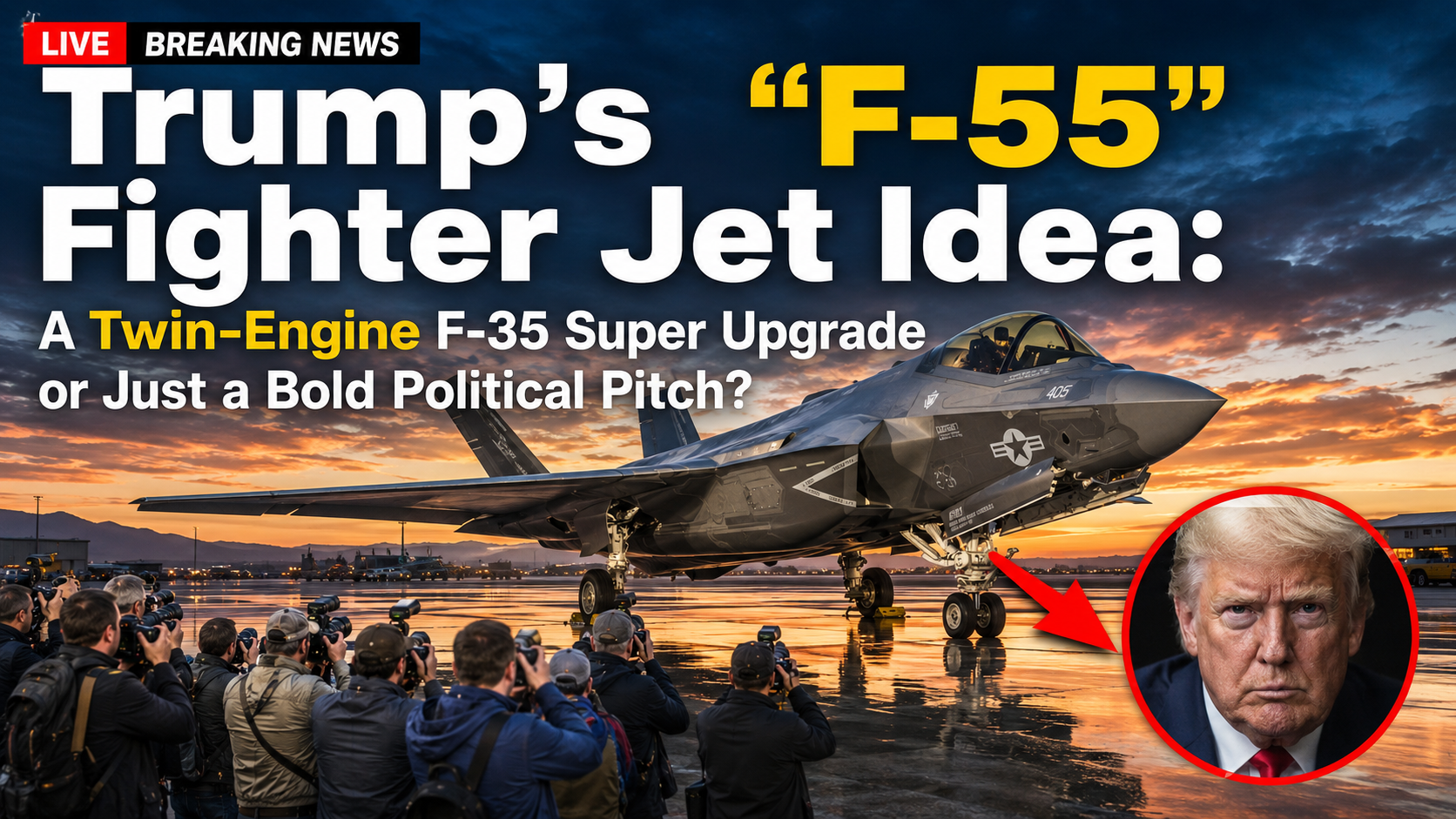
President Donald Trump says he wants a new twin-engine version of the F-35 called the “F-55.” The idea sounds dramatic, powerful, and futuristic — but turning America’s most famous stealth fighter into a two-engine aircraft would be one of the most difficult aviation redesigns in modern military history.
The F-35 Lightning II is already one of the most important fighter jets in the world. It serves the U.S. Air Force, Navy, Marine Corps, and many American allies. It was designed as a fifth-generation stealth fighter with advanced sensors, networked warfare capability, and the ability to strike targets while remaining difficult to detect.
But now, President Donald Trump has floated a surprising idea: a twin-engine version of the F-35.
During remarks in Qatar on May 15, 2025, Trump said the United States was working on upgrades for the F-35 and then mentioned what he called the “F-55.” In his words, the aircraft would be a “substantial upgrade” and would have two engines because he does not like single-engine aircraft.
The statement immediately caught the attention of the defense world.
You May Also Like
Was Trump revealing a real secret program? Was he describing a future Lockheed Martin concept? Was he talking about a possible Navy fighter? Or was this simply an off-the-cuff political statement about something that does not yet exist?
At this stage, the answer is unclear.
But the idea itself raises a huge question: could America really build a twin-engine F-35?
What Trump Said About the F-55
Trump’s statement was direct and surprising. He said the F-35 would receive an upgrade, but that the United States was also looking at what he called the F-55.
He described it as a major upgrade with two engines. His main reason was simple: he said the current F-35 has only one engine, and he does not like single-engine aircraft.
That comment may sound like a basic preference, but in military aviation, engine configuration is a very serious design decision.
A single-engine fighter is usually lighter, less complex, and often cheaper to operate than a twin-engine fighter. A twin-engine fighter can offer more thrust, better safety margins in some situations, and more room for growth in speed, payload, and power generation.
But adding a second engine to an existing stealth fighter is not like changing a car engine. It would require a deep redesign of the aircraft’s body, internal structure, fuel system, cooling system, flight controls, stealth shaping, maintenance access, and possibly its weapons bays.
In other words, a twin-engine F-35 would not simply be an upgraded F-35.
It would likely be a very different aircraft.
Why A Twin-Engine F-35 Sounds Attractive
There are reasons why the idea might sound appealing.
First, two engines can provide more thrust. More thrust could help improve speed, acceleration, climb rate, and payload performance. A twin-engine aircraft might carry more weapons, more fuel, or more advanced systems.
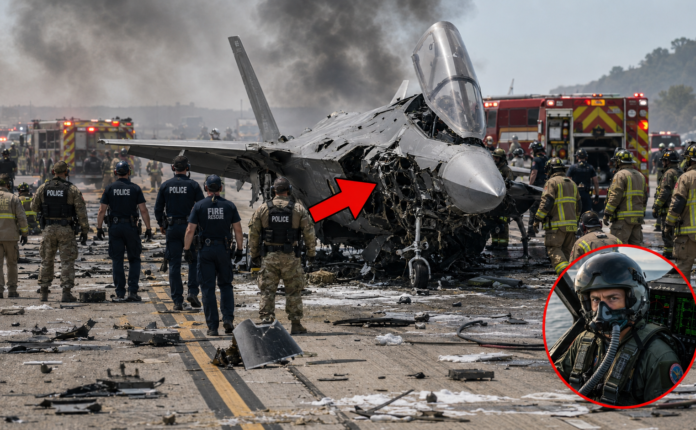
Second, two engines can provide an added safety margin. If one engine fails, a twin-engine jet may still have a chance to continue flying, depending on the situation. This is especially important for aircraft operating over water or from aircraft carriers.
Third, a larger twin-engine version could provide more electrical power and cooling capacity. Modern fighters need enormous amounts of power for radar, sensors, electronic warfare, communications, data processing, and future weapons. As fighter aircraft become more digital and more connected, power and cooling become just as important as speed and maneuverability.
Fourth, a twin-engine stealth aircraft could be attractive to the U.S. Navy. Carrier aviation is extremely demanding. A fighter launching from and landing on an aircraft carrier faces heavy stress, limited deck space, and dangerous operating conditions. For decades, the Navy has preferred twin-engine fighters such as the F-14 Tomcat and F/A-18 Super Hornet.
The Navy’s F-35C is single-engine, and it has not suffered major known carrier losses due to engine failure. Still, a future twin-engine carrier-based stealth fighter could be appealing if it offered more range, payload, survivability, and safety.
That is why some analysts wonder whether Trump’s “F-55” comment could be connected to ideas around the Navy’s future F/A-XX fighter program, rather than a simple upgrade of the existing F-35.
Why Building An F-55 Would Be Extremely Difficult
The problem is that the F-35 was never designed as a twin-engine aircraft.
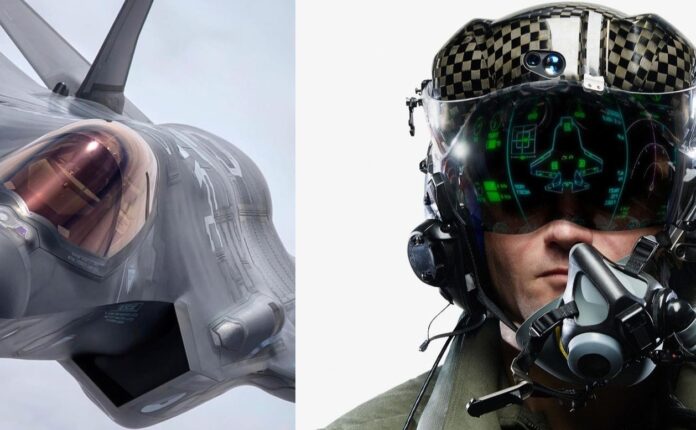
The F-35’s shape, internal layout, weapons bays, fuel tanks, sensors, lift fan design for the F-35B, and stealth features were all built around a single Pratt & Whitney F135 engine.
Adding a second engine would require major changes to the aircraft’s rear fuselage. It would change the air intakes, exhaust area, internal structure, weight balance, fuel flow, heat signature, radar signature, and maintenance design.
For a stealth aircraft, the exhaust area is especially sensitive. Engine nozzles, heat, and radar reflections all affect survivability. A redesigned twin-engine F-35 would need years of testing to ensure it could still meet stealth requirements.
The short takeoff and vertical landing F-35B would be especially difficult. The F-35B uses a lift fan system behind the cockpit and a rotating rear nozzle to land vertically. A twin-engine version of that aircraft would likely be unrealistic without completely changing the design. That means any possible “F-55” would most likely focus on the Air Force-style F-35A or the Navy’s carrier-capable F-35C.
Even then, it would be expensive.
A twin-engine F-35 would almost certainly cost far more than a standard F-35. It would require engineering, testing, certification, new production tooling, and new logistics support. It could also create maintenance and supply-chain challenges at a time when the current F-35 program is already dealing with modernization delays.
The F-35 Is Already Being Upgraded
One reason Trump’s comments are interesting is that the F-35 is already in the middle of major upgrades.
The most important ongoing modernization effort is known as Block 4. This upgrade is intended to bring new weapons, improved electronic warfare, better sensors, enhanced computing power, and stronger mission systems.
To support Block 4, the F-35 also needs Technology Refresh 3, or TR-3. TR-3 includes new hardware and software needed for future capabilities. But the modernization process has faced delays, cost growth, and delivery challenges.
This is important because the F-35 program is already complex. Before creating a completely new twin-engine version, the Pentagon must still manage the current fleet, fix software issues, support allies, improve readiness, and deliver promised upgrades.
That does not make an F-55 impossible. But it does make it harder to justify.
The U.S. military already has many expensive aircraft programs underway. Adding a new fighter variant would compete for money, engineers, industrial capacity, and political attention.
Could New Engines Make The Idea More Realistic?
Trump’s F-55 idea also raises questions about future engine programs.
The United States has been investing in advanced fighter engine technology, including adaptive engines that can improve range, thrust, and cooling. Programs such as the Adaptive Engine Transition Program and Next Generation Adaptive Propulsion have explored new engine designs for future combat aircraft.
These technologies are connected to America’s next-generation fighter ambitions, especially the F-47, the Air Force’s sixth-generation aircraft being developed by Boeing under the Next Generation Air Dominance program.
In theory, future engine technology could support a more powerful fighter. But putting two advanced engines into an F-35-based airframe would still require major redesign work.
This is why many defense observers are cautious. The phrase “twin-engine F-35” may sound simple, but the engineering reality is massive.
The F-55 And The F-47 Question
The timing of Trump’s comments is also important because the U.S. Air Force has already selected Boeing to develop the F-47, its future sixth-generation air-superiority fighter.
The F-47 is expected to eventually replace the F-22 Raptor and operate as part of a broader family of systems, including advanced sensors, long-range weapons, electronic warfare tools, and possibly drone wingmen.
So where would an F-55 fit?
That is one of the biggest questions.
If the F-47 is the high-end future fighter, and the F-35 remains the main fifth-generation multirole fighter, then a twin-engine F-55 would sit somewhere in between. It could be more capable than today’s F-35, but likely cheaper and less advanced than the F-47.
That sounds useful in theory.
But in practice, the Air Force already has to pay for the F-35, F-47, B-21 Raider bomber, KC-46 tanker, new missiles, drone programs, nuclear modernization, and many other priorities. A new F-55 program could become another expensive burden.
This is why some analysts think a twin-engine F-35 concept might make more sense for the Navy than the Air Force.
Could The F-55 Be A Navy Fighter?
The U.S. Navy is studying its own future fighter program known as F/A-XX. This aircraft is expected to eventually replace the F/A-18E/F Super Hornet and work alongside the F-35C.
A future Navy fighter would need long range, strong carrier performance, advanced sensors, stealth, and the ability to carry a meaningful weapons load.
A twin-engine design would be very natural for that mission.
Some observers have wondered whether Trump’s “F-55” comment could somehow be connected to a Lockheed Martin concept for the Navy’s future fighter competition. If Lockheed offered a design influenced by the F-35C but with two engines, Trump may have simplified or renamed the idea in public.
That is only speculation. There is no confirmed public evidence that the F-55 is an official Navy program.
Still, the Navy angle makes sense because a twin-engine stealth fighter would be more attractive for carrier operations than for a simple Air Force F-35 replacement.
Could Gulf Countries Be Interested?
Another interesting part of the story is where Trump made the remarks: Qatar.
The Gulf region has long been a major market for advanced fighter aircraft. Countries such as Saudi Arabia, the United Arab Emirates, and Qatar have invested heavily in modern air forces.
Saudi Arabia and the UAE have previously been linked to possible F-35 interest. The UAE came close to an F-35 deal before the process became complicated by political, security, and technology-transfer concerns.
A future “F-55” could, in theory, become a high-end export concept for wealthy U.S. partners. If Gulf countries helped fund development, it could reduce some cost pressure on the United States.
There is precedent for this kind of arrangement. Foreign investment in advanced versions of the F-15 helped create aircraft that later benefited the U.S. Air Force, including the F-15EX.
But exporting a twin-engine stealth fighter would be politically sensitive. The F-35 itself is already protected by strict security rules. A more advanced F-55 would likely raise even more questions about technology security, regional military balance, and long-term U.S. control.
The “Ferrari” F-35 Concept
Another possibility is that Trump was referring to a different idea from Lockheed Martin: a much more advanced version of the F-35 that would use technologies connected to the F-22 and F-47.
Lockheed Martin CEO Jim Taiclet previously described the possibility of upgrading the F-35 into something like a “Ferrari” version of the aircraft. The idea was to deliver a large portion of next-generation capability at a lower cost than a brand-new sixth-generation fighter.
That kind of aircraft might include better stealth materials, stronger sensors, more computing power, improved weapons, and new electronic warfare systems.
But that idea does not necessarily mean a twin-engine F-35. It could simply mean a deeply upgraded single-engine F-35.
Trump may have combined several ideas into one statement: a normal F-35 upgrade, a more advanced “super” F-35, and his personal preference for two engines.
That is why the F-55 story remains so uncertain.
What Lockheed Martin Said
After Trump’s remarks, Lockheed Martin did not confirm a specific F-55 program. Instead, the company thanked Trump for his support of the F-35 and F-22 and said it would continue working with the administration to support air dominance.
That kind of response is careful and diplomatic.
It does not deny future ideas. But it also does not confirm that a twin-engine F-35 is officially being developed.
Defense companies often prepare many concepts that never become production aircraft. Some are used for internal studies. Some are shown to government officials. Some influence future programs. Others disappear.
Until the Pentagon, Air Force, Navy, or Lockheed Martin provides more detail, the F-55 should be treated as an idea — not a confirmed fighter program.
The Risk Of Confusing Names And Programs
There is another reason for caution: Trump has previously made confusing comments about fighter aircraft.
In 2018, he referred to “F-52” aircraft in connection with Norway. Norway operates the F-35, and the “F-52” remark was widely understood as a mistake connected to the number of aircraft Norway had ordered.
Trump has also described stealth aircraft as “invisible,” which is not technically accurate. Stealth aircraft are not invisible; they are designed to be harder to detect and track.
Because of this history, some analysts believe the F-55 may be another case of a political leader speaking loosely about a complex military program.
That does not mean the idea should be ignored. Presidents can influence defense priorities. A public statement from the president can create pressure inside the Pentagon and industry. But it does mean readers should separate the headline from the reality.
The reality is this: no official F-55 program has been publicly confirmed.
Why The Debate Matters
Even if the F-55 never becomes real, the debate is important because it reveals a bigger problem facing U.S. airpower.
The F-35 is advanced, but it is also expensive and difficult to upgrade quickly. The F-22 is powerful, but aging and limited in number. The F-47 is promising, but still years away from operational service. The Navy needs a future carrier fighter. The Air Force wants more range and survivability for the Pacific. Allies want access to advanced aircraft. And China is rapidly developing its own stealth fighters, sensors, missiles, and air-defense systems.
In that environment, America is looking for a way to keep its fighter fleet ahead.
One path is to upgrade the F-35.
Another path is to build the F-47.
Another path is to create a future Navy fighter.
The F-55 idea sits somewhere in the middle of all those paths.
That is why it has gained attention, even without confirmation.
The Bottom Line
Trump’s “F-55” idea is one of the most surprising fighter jet comments of the year. A twin-engine version of the F-35 would be bold, powerful, and potentially attractive to the Navy or foreign partners.
But it would also be extremely difficult and expensive.
The F-35 was designed around one engine. Turning it into a twin-engine aircraft would require major redesign work, new testing, new stealth shaping, new logistics, and huge funding. It would not be a simple upgrade. It would likely become a new aircraft family.
For now, the F-55 is best understood as an idea, not a confirmed program.
It may represent Trump’s personal vision. It may reflect a Lockheed Martin concept. It may be connected to future Navy fighter studies. Or it may simply be a dramatic statement that never becomes reality.
Still, the discussion matters because it shows how intense the future fighter race has become.
America is trying to modernize the F-35, extend the life of the F-22, build the F-47, and prepare for a future air war where range, stealth, sensors, engines, and cost will all decide who controls the sky.
If the F-55 ever becomes real, it would mark one of the biggest redesigns in the history of the Joint Strike Fighter.
But until official details emerge, one thing is clear: the name “F-55” has already opened a major debate about the future of American air dominance.