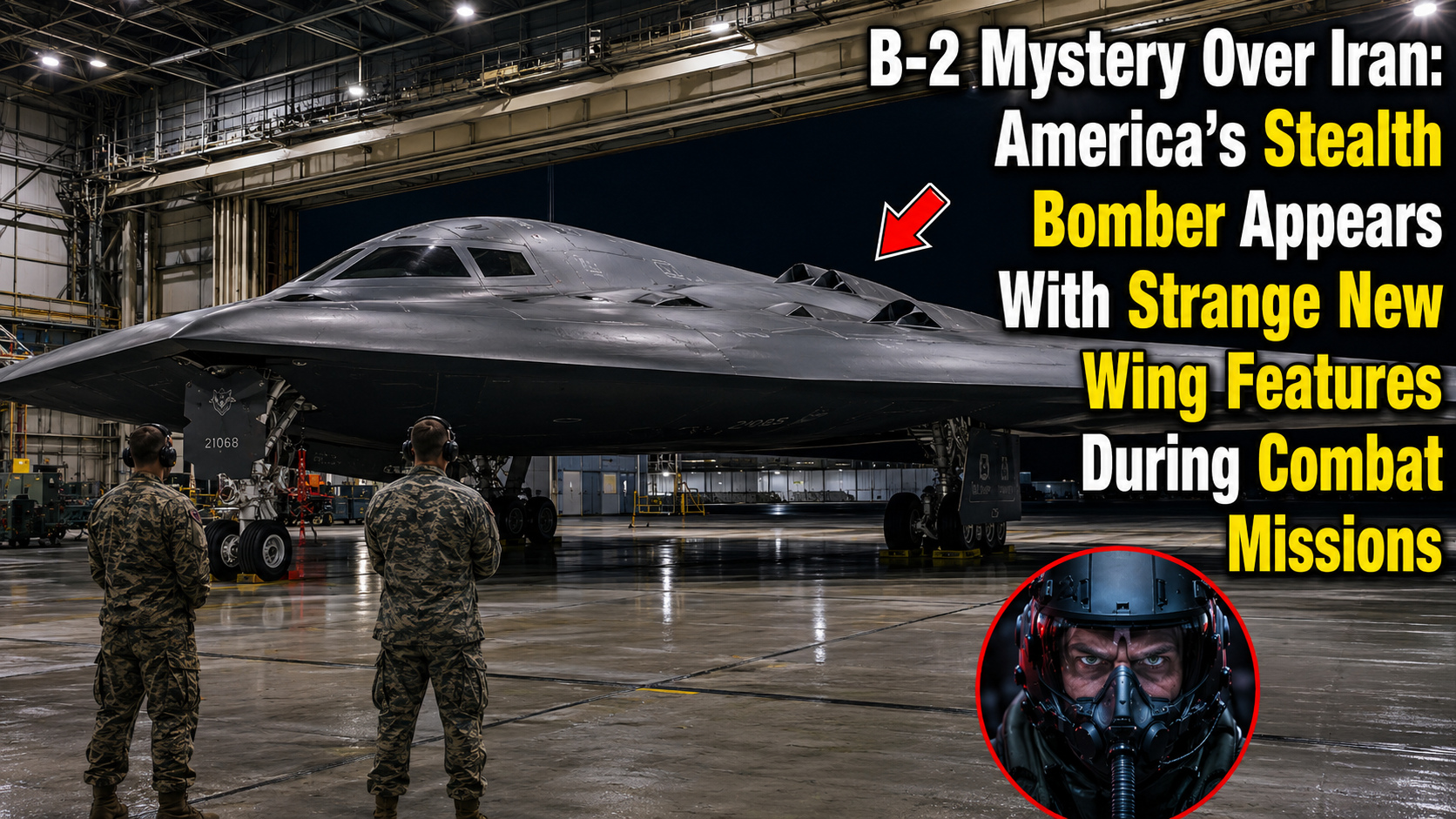
New images from Operation Epic Fury show America’s legendary B-2 Spirit heading toward Iran with puzzling markings on its wings — and the mystery may reveal how the stealth bomber is still evolving after more than 30 years in service.
The B-2 Spirit has always been one of the most mysterious aircraft in the world. It looks less like a traditional bomber and more like something from another world — a dark flying wing designed to slip through enemy defenses, strike hardened targets, and disappear back into the sky.
Now, during U.S. operations connected to the war with Iran, the B-2 has appeared with something new and unusual.
Recent images released during Operation Epic Fury show B-2 Spirit stealth bombers preparing for long-range missions with strange white rectangular features along their massive wing leading edges. The white shapes, bordered in black, appear on more than one aircraft. They are clearly visible, neatly placed, and appear to be sealed onto the aircraft’s surface.
For a normal aircraft, that might not seem like a major detail. But the B-2 is not a normal aircraft.
You May Also Like
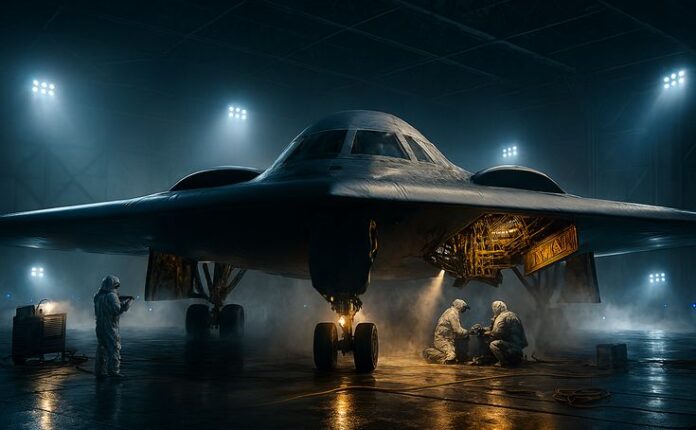

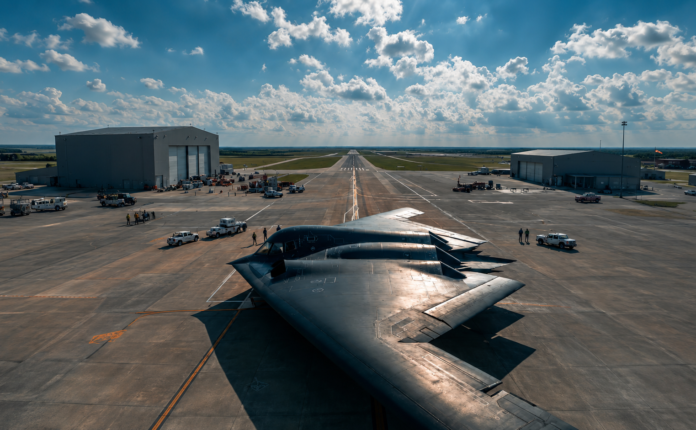
On a stealth bomber, every surface matters. Every panel, coating, edge, seam, and opening can affect how the aircraft appears to radar. That is why these new features have caused so much interest among military observers. Are they test markings? New sensors? A stealth modification? A coating experiment? Or something related to electronic warfare?
At this point, the answer is not publicly known.
And that is what makes the story so interesting.
The B-2’s Role In The Iran Campaign
The B-2 Spirit is one of the few aircraft in the world designed to fly deep into dangerous airspace and attack the hardest targets. During Operation Epic Fury, it has reportedly been used for missions that require long range, stealth, precision, and heavy weapons.
Other U.S. bombers, including B-1Bs and B-52Hs, have also been involved in regional operations. But the B-2 has a different role. It is built to penetrate advanced air defenses and deliver weapons against targets that may be too dangerous or too protected for other aircraft.
That is why the Spirit remains one of America’s most valuable military assets.
The B-2 can carry both conventional and nuclear weapons. It can fly long distances from the continental United States and strike targets on the other side of the world. Its flying-wing design, special coatings, and low-observable technology help reduce its radar, infrared, visual, acoustic, and electromagnetic signatures.
In simple words, the B-2 was built to go where other bombers may not survive.
During the current Iran campaign, TWZ reported that B-2s have flown smaller numbers of missions from their home base at Whiteman Air Force Base in Missouri. That detail matters because it shows the bomber’s unique global reach. Instead of needing to be forward deployed close to the battlefield, the B-2 can launch from the United States and still reach targets thousands of miles away.
That kind of mission requires enormous planning, aerial refueling, crew endurance, maintenance preparation, and intelligence support. It is not just a flight. It is a global strike operation.
The Strange White Rectangles On The Wings
The biggest mystery in the new images is the appearance of white rectangular features with dark borders along the B-2’s leading edges.
The leading edge is the front edge of the wing — the part of the aircraft that first meets the air as it flies. On a stealth aircraft like the B-2, this area is extremely important. The aircraft’s shape and surface treatments help control how radar waves reflect away from enemy sensors.
That is why anything added to this area stands out.
According to the images discussed by TWZ, these rectangles appear on both the upper and lower portions of the leading edge. They also appear to be sealed carefully, likely to protect the aircraft’s low-observable profile as much as possible.
But why would they be there during combat missions?
That is the unanswered question.
The markings look somewhat similar to test markings that have appeared on aircraft in the past. Test markings can help engineers study airflow, structural behavior, sensor performance, or other technical details. However, seeing something that looks like a test feature on aircraft preparing for real combat missions is unusual.
Even more interesting, the features appeared on two separate B-2s. That makes it less likely to be a random patch or one-off repair. It suggests something intentional.
Still, without official confirmation, any explanation remains uncertain.
Possible Explanation 1: Stealth Signature Management
One possibility is that the features are connected to stealth signature management.
The B-2’s radar signature is one of its most closely guarded secrets. The aircraft’s shape, materials, seams, coatings, and maintenance condition all influence how detectable it may be to enemy radar systems.
It is possible that the white rectangles are part of some effort to alter, protect, or manage the aircraft’s radar signature. They might help mask certain characteristics, support a temporary modification, or conceal something underneath.
However, this raises another question: why would B-2s fly such missions with visible external features if they were not necessary?
The B-2 already has advanced stealth technology. If the mission required maximum stealth, anything added to the aircraft would need to be extremely carefully designed and tested. That does not mean the rectangles reduce stealth, but it does mean they are probably not casual additions.
On a B-2, nothing is casual.
Possible Explanation 2: New Sensors Or Electronic Warfare Systems
Another possible explanation is that the rectangles cover or support new sensor or electronic warfare equipment.
Modern warfare is not only about dropping bombs. It is also about detecting threats, avoiding radar systems, jamming enemy sensors, sharing data, and reacting quickly to changes in the battlespace.
If the B-2 is operating in or near dangerous airspace, improved sensors could help it survive. A new system might help detect enemy radar emissions, monitor threats, improve communications, or support electronic attack.
Electronic warfare is especially important for stealth aircraft. A bomber like the B-2 may need to remain quiet, avoid detection, and still receive or share critical information. Any upgrade that improves situational awareness while preserving stealth would be extremely valuable.
If these white rectangles are related to sensor apertures, antennas, or electronic warfare systems, they could represent a significant modernization step for the aging bomber fleet.
But again, there is no public confirmation.
The B-2’s most important systems are classified, and many details may remain secret for years.
Possible Explanation 3: A New Coating Or Maintenance Upgrade
A third possibility is that the features are related to the B-2’s stealth coatings.
The B-2’s radar-absorbent materials are essential to its low-observable performance. But those materials are also expensive, maintenance-heavy, and sensitive to environmental conditions. Keeping a B-2 ready for combat is not like maintaining a normal aircraft. Its stealth skin requires careful inspection, repair, climate-controlled storage, and specialized processes.
Over the years, the appearance of the B-2 has changed as new coating technologies and maintenance improvements have been introduced. The Air Force and Northrop Grumman have continued working to improve the bomber’s readiness, lower maintenance burden, and keep the aircraft effective against evolving threats.
It is also possible that lessons from the newer B-21 Raider program are being applied to the B-2.
The B-21 is designed as the next-generation stealth bomber and will eventually replace older bomber capabilities. But the B-2 still has important years of service ahead. Any improvement that makes it easier to maintain, cheaper to operate, or more survivable in combat would be valuable.
So these rectangles could be part of a new material, coating process, test patch, or durability experiment.
That explanation may sound less dramatic than “secret sensor,” but it could be just as important. In stealth aviation, maintenance and materials can decide whether an aircraft is available for combat when it is needed most.
Mission Markings Add Another Layer Of Mystery
The images also reportedly show mission markings on one B-2’s nose gear door. These markings appear to show 15 bombs.
That immediately raises questions. Do they represent combat missions? Weapons dropped? Specific strike packages? Or a mix of operations over time?
TWZ noted that it is more likely these markings represent combat missions rather than individual bombs dropped, but even that is uncertain. The number appears high for only the current operation, so it may include missions from previous combat activity as well.
Some observers may wonder whether the markings represent GBU-57/B Massive Ordnance Penetrator weapons. The GBU-57 is the massive bunker-busting weapon associated with the B-2 and designed to attack deeply buried hardened targets.
However, there is no clear public evidence from this specific report that the number directly represents GBU-57 drops during the current campaign. It would be risky to claim that without official confirmation.
The safest and most accurate conclusion is this: the markings show the B-2 has been active, but their exact meaning remains unknown.
Why The B-2 Is Still So Important
The B-2 first flew decades ago, but it remains one of the most important aircraft in the U.S. military.
There are several reasons for that.
First, it is a true penetrating stealth bomber. It was designed to fly into defended airspace, not simply launch weapons from far away.
Second, it can carry heavy precision weapons. That makes it especially valuable against hardened targets such as underground command centers, bunkers, missile facilities, and deeply buried infrastructure.
Third, it has global reach. With aerial refueling, the B-2 can launch from the United States and strike targets across the world.
Fourth, there are very few aircraft like it. The B-2 fleet is small, expensive, and highly specialized. That makes every aircraft extremely valuable.
This is why even small changes to the B-2 attract attention. When something unusual appears on the aircraft, it may point to a larger effort to keep the bomber effective against modern threats.
The B-2 And The Future B-21 Raider
The B-2 is now in the later stage of its operational life. Its successor, the B-21 Raider, is already being developed as the future backbone of the U.S. bomber force.
The B-21 is expected to bring improved stealth, modern open-system architecture, advanced sensors, and lower long-term sustainment demands. It is being designed for the future threat environment, including advanced air defenses, electronic warfare, and long-range precision strike missions.
But the B-21 will not replace the B-2 overnight.
Until enough B-21s are available, the B-2 remains a critical national asset. It is still one of the only aircraft capable of performing certain high-risk strike missions. That means the Air Force must continue upgrading and maintaining it.
The puzzling wing features may be part of that effort. They may show that the B-2 is still being adapted, tested, and improved even as its replacement moves closer.
This is common in military aviation. Older aircraft often receive major upgrades near the end of their careers because threats evolve faster than replacement programs can arrive.
The B-52 is a perfect example. It has served for decades and is still being modernized. The B-2 may not serve as long as the B-52, but it is still too important to let fade quietly.
A Secretive Aircraft In A Secretive War
One of the most important things to understand about this story is that much of it remains classified.
The B-2 is a stealth bomber. Its full capabilities are not public. Its radar signature is not public. Its most sensitive systems are not public. Its exact combat configurations are often not public.
That means outside observers can study images, compare details, and make informed guesses — but they cannot know everything.
The same is true for Operation Epic Fury. Official releases may confirm some activity, but many mission details, target lists, weapons used, and damage assessments may remain limited or classified.
That is why this story should be reported carefully.
It is fair to say that the B-2 appeared with unusual features. It is fair to say those features could relate to sensors, electronic warfare, coatings, test markings, or stealth management. It is not fair to claim with certainty what they are without official confirmation.
In military reporting, accuracy matters more than drama.
And the truth is already dramatic enough.
America’s most secretive bomber is flying long-range missions connected to Iran. It is doing so while showing strange new features on its wings. The aircraft is aging, but still highly valuable. Its replacement is coming, but not fully here yet. And the U.S. Air Force appears determined to keep the Spirit relevant until the Raider takes over.
That is a powerful story.
Why This Matters
The B-2 mystery is not just about a few white rectangles on a bomber.
It is about the future of stealth warfare.
Modern air defenses are becoming more advanced. Radar networks are becoming more connected. Infrared sensors are improving. Electronic warfare is becoming more intense. Long-range missiles are threatening bases and tankers. Future wars may require aircraft to fly farther, hide better, communicate smarter, and adapt faster.
The B-2 was built ahead of its time. It was the world’s first operational stealth bomber, and it remains a symbol of American technological ambition.
But even a revolutionary aircraft must evolve.
If these new wing features are sensors, they could help the B-2 better understand the threat environment. If they are electronic warfare upgrades, they could help it survive. If they are coating tests, they could help reduce maintenance and keep more bombers ready. If they are signature-management tools, they could show how stealth aircraft are adapting to new detection methods.
Whatever they are, they remind us that the B-2 is still changing.
The Bottom Line
The B-2 Spirit remains one of the most secretive and powerful aircraft ever built. During Operation Epic Fury, new images showed B-2 stealth bombers preparing for missions with puzzling white rectangular features on their wing leading edges.
Their purpose is unknown.
They could be test markings. They could be part of a stealth coating upgrade. They could cover new sensors or electronic warfare systems. They could be related to signature management. Or they could be something else entirely.
What is clear is that the B-2 is still active, still relevant, and still being watched closely by the world.
The Spirit may be in the later years of its career, but it has not lost its importance. Until the B-21 Raider fully enters service, the B-2 remains America’s most unique penetrating bomber — a rare aircraft designed to fly into danger, strike the hardest targets, and return from missions few aircraft could even attempt.
For more than three decades, the B-2 has carried secrets under its dark flying wing.
Now, over Iran, it may be carrying a few new ones.