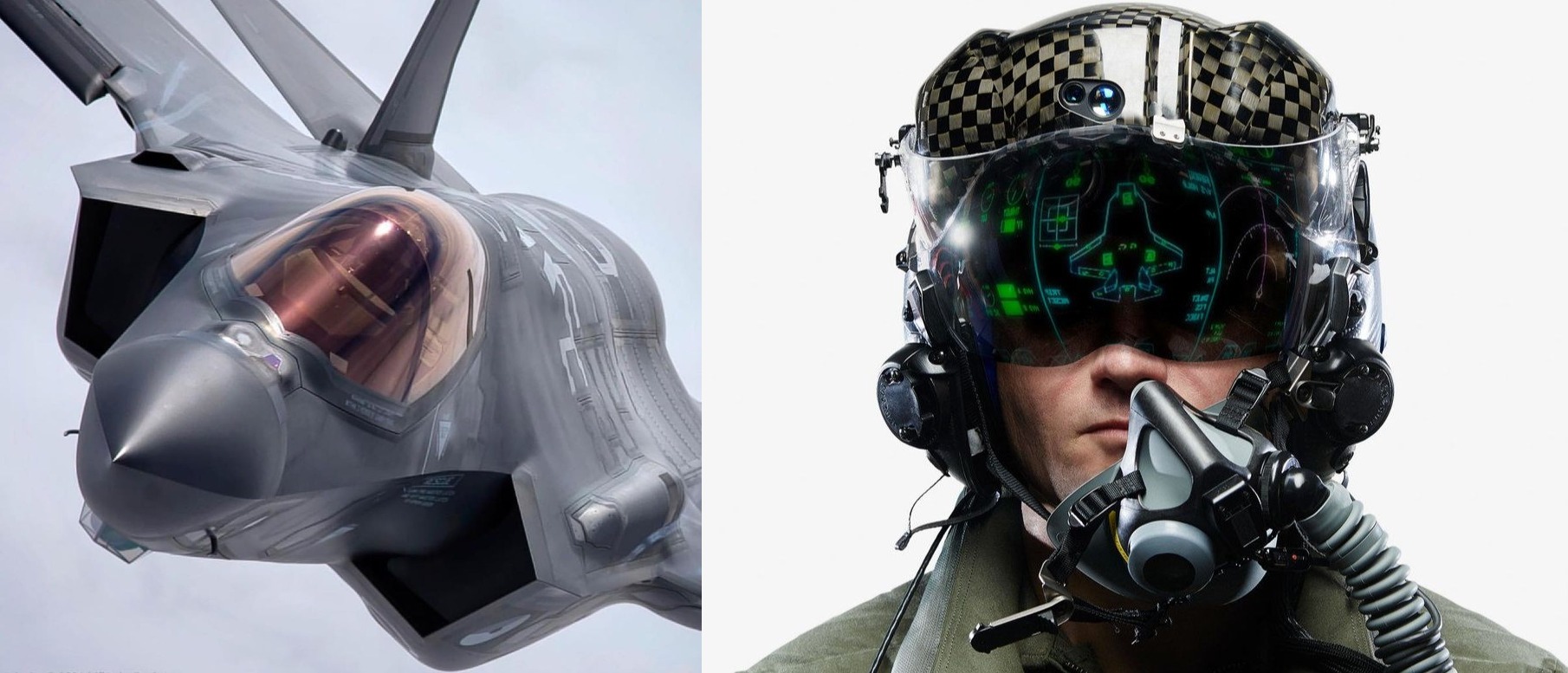
The F-35B Lightning II has always been one of the most unusual fighter jets in the world.
It can fly like a stealth fighter.
It can strike like a precision attack aircraft.
It can gather intelligence like a flying sensor network.
And unlike the Air Force’s F-35A or the Navy’s F-35C, it can take off from short runways and land vertically like a helicopter.
That makes the F-35B the centerpiece of modern Marine Corps aviation.
It can operate from amphibious assault ships.
It can launch from expeditionary airfields.
It can support Marines closer to the fight.
It can bring fifth-generation stealth and sensor power to places where normal fighter jets may not be able to operate.
You May Also Like
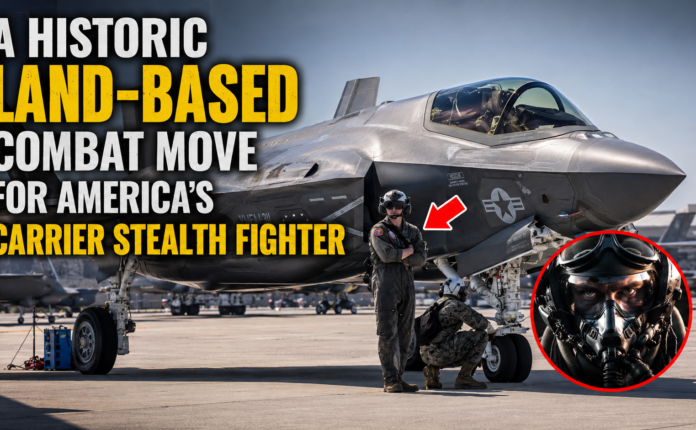
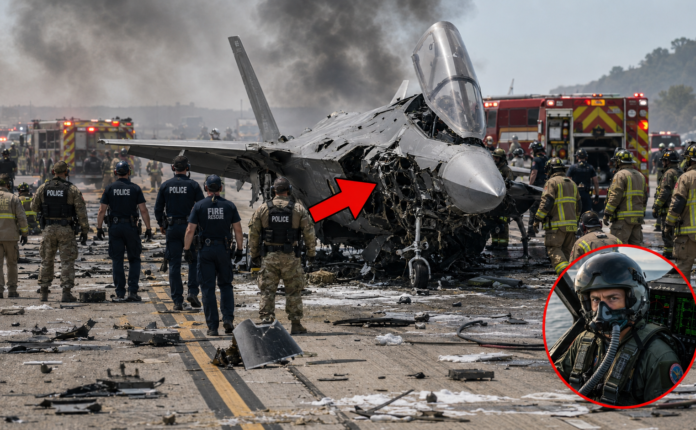
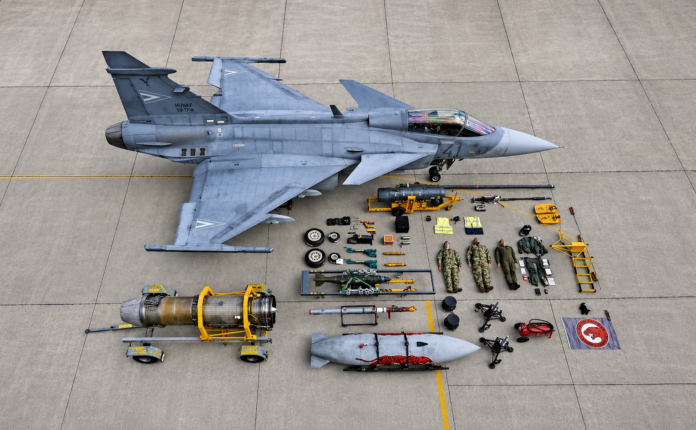
But now, the F-35B is entering one of the most important chapters of its life.
Fleet Readiness Center East, located at Marine Corps Air Station Cherry Point in North Carolina, has completed the first Technology Refresh 3 conversions on operational F-35B aircraft. The first two upgraded jets, BF-105 and BF-88, were delivered in May, while BF-81 is expected to complete its conversion in July.
At first glance, this sounds like a technical maintenance story.
But it is much bigger than that.
TR-3 is not just a repair.
It is not just a cockpit improvement.
It is not just another software update.
TR-3 is the foundation that allows the F-35 to move toward Block 4 — the next major modernization package expected to keep the aircraft relevant against advanced threats for years to come.
In simple words, the F-35B just began receiving the “brain upgrade” it needs for the future battlefield.
But the story is not only about success.
It is also about delay, complexity, software trouble, rising costs, and the enormous challenge of keeping the world’s most advanced fighter fleet ahead of China, Russia, Iran, and other emerging threats.
What Happened at Fleet Readiness Center East?
Fleet Readiness Center East, often called FRC East or FRCE, is one of the most important maintenance and upgrade centers for the F-35B.
Located at Cherry Point, North Carolina, the depot supports the Marine Corps’ short takeoff and vertical landing version of the F-35. This matters because the F-35B is not just another fighter variant. Its lift fan, clutch, swivel module, and unique propulsion layout make it much more complex to maintain than a standard runway-based fighter.
FRC East has now reached a major milestone by converting the first fielded F-35B aircraft from the older Technology Refresh 2 configuration to the newer Technology Refresh 3 standard.
The first three aircraft selected for this retrofit were BF-105, BF-81, and BF-88.
BF-105 was delivered first.
BF-88 followed shortly after.
BF-81 is expected to complete conversion next.
These aircraft are important because they are not brand-new production jets. They are already-fielded F-35Bs being upgraded from the previous configuration.
That is a major difference.
New-production aircraft can be built with newer equipment from the start. But upgrading aircraft already in the fleet is harder. Technicians must remove older systems, install new hardware, integrate new components, test everything, and make sure the aircraft can safely return to the fleet.
That process becomes even more difficult when the aircraft is as software-driven and sensor-heavy as the F-35.
This is why the FRC East milestone matters. It marks the beginning of a much larger retrofit effort across the F-35 fleet.
What Is TR-3?
Technology Refresh 3, or TR-3, is the hardware and computing upgrade that gives the F-35 the processing power it needs for future capabilities.
The F-35 is often described as a fighter jet, but that description is too small.
It is really a flying computer, sensor fusion platform, electronic warfare node, intelligence collector, and strike aircraft all in one.
That means computing power is everything.
The aircraft must collect information from radar, infrared sensors, electronic warfare systems, communication systems, other aircraft, satellites, and ground units. Then it must combine that information into a clear picture for the pilot.
That is what makes the F-35 so valuable.
It does not just fight.
It sees.
It listens.
It connects.
It shares.
It guides.
It becomes the quarterback of the battlespace.
But as threats become more advanced, the aircraft needs more processing power. Future weapons, sensors, radars, electronic warfare systems, and mission software all require stronger computing architecture.
That is the purpose of TR-3.
The upgrade includes new integrated core processors, expanded memory, improved processing capacity, and a panoramic cockpit display. It also provides the hardware foundation needed for Block 4 upgrades.
Think of it like replacing the brain and nervous system of the jet so it can handle future weapons and sensors.
Without TR-3, the F-35 cannot fully move into its next generation of capability.
Why Block 4 Matters
Block 4 is the next major step in the F-35’s evolution.
The original F-35 was already designed as a fifth-generation aircraft with stealth, sensor fusion, precision strike, and networked warfare capability. But the aircraft was never meant to stay frozen in one configuration forever.
The world changes.
Enemy radars improve.
Missiles get faster.
Electronic warfare becomes more dangerous.
Drones become more common.
China and Russia develop new air-defense systems.
Battlefields become more digital and more contested.
Block 4 is the F-35 program’s answer to those changes.
It is expected to support new weapons, improved electronic warfare, better sensors, upgraded mission systems, and stronger battlefield connectivity. It is meant to keep the F-35 effective in high-end conflict through the next decade and beyond.
But Block 4 depends on TR-3.
The new software and mission systems need more computing power than older F-35 hardware can provide. That is why TR-3 is often described as the backbone of Block 4.
In simple words:
TR-3 gives the F-35 the hardware.
Block 4 gives the F-35 the future combat capability.
One cannot fully succeed without the other.
Why the F-35B Upgrade Is Especially Important
The Marine Corps’ F-35B has a unique role.
The Air Force’s F-35A operates from conventional runways.
The Navy’s F-35C operates from aircraft carriers.
The Marine Corps’ F-35B can operate from short runways, amphibious assault ships, and expeditionary locations closer to the fight.
That gives commanders flexibility.
In a future Pacific conflict, large air bases may be targeted early by enemy missiles. Runways may be damaged. Aircraft carriers may be pushed farther away by anti-ship weapons. Commanders may need aircraft that can disperse across smaller locations, move quickly, and operate from less predictable sites.
That is where the F-35B becomes valuable.
It gives the Marine Corps a stealth aircraft that can support distributed operations. It can fly from amphibious ships and forward locations, gather intelligence, strike targets, and share data with other forces.
But to survive in that future environment, the F-35B must stay modern.
A stealth aircraft without updated sensors, electronic warfare systems, and computing power risks falling behind.
That is why TR-3 is not just a technical improvement.
For the Marines, it is a readiness and survivability issue.
The F-35B Is More Than a Fighter
Many people still think of fighter jets mainly in terms of speed, missiles, bombs, and dogfighting.
The F-35 is different.
It was designed to act as a central node in a modern battlespace. It can detect threats, map enemy systems, share data with friendly forces, support strikes, and help commanders understand what is happening.
That is why military leaders often describe it as the quarterback of the battlespace.
A quarterback does not just run with the ball. He sees the field, reads the defense, makes decisions, and directs the play.
That is what the F-35 is meant to do in the air.
It may detect enemy aircraft before they see it.
It may locate radar systems.
It may pass target data to ships, ground units, or other aircraft.
It may help older fourth-generation fighters become more effective.
It may support drones in the future.
It may enter dangerous airspace and make the entire force smarter.
But this only works if the aircraft’s hardware and software can keep up.
TR-3 is about keeping the F-35’s brain strong enough for that mission.
The Shadow Behind the Celebration: TR-3 Delays
The FRC East milestone is good news, but it comes after a difficult period for the F-35 program.
TR-3 caused major delivery problems.
Starting in 2023, the Pentagon stopped accepting some new F-35 deliveries because the TR-3 package was not ready. Aircraft built with the new configuration began piling up while the program struggled to stabilize the software.
To restart deliveries, the program accepted a truncated version of the software. That meant some aircraft could be delivered for training and limited use before the full combat-capable software was ready.
This helped clear the backlog, but it also created a serious question:
Were aircraft being delivered before they could fully fight?
That concern became even sharper after operational test reporting said that TR-3-configured aircraft delivered through September 2025 had not yet reached full combat-capable status for U.S. services.
This does not mean the F-35 program is failing. The F-35 is already operational worldwide, and many earlier-configuration aircraft remain combat capable. But it does mean the modernization path has been more difficult than expected.
The F-35 is a software-defined warplane.
That gives it incredible flexibility, but it also makes upgrades extremely complex. A small software issue can affect mission systems, sensors, weapons, or pilot displays. Every change must be tested carefully because the aircraft’s systems are deeply connected.
That is why TR-3 became such a challenge.
Why Software Is So Hard on the F-35
The F-35 is one of the most software-dependent aircraft ever built.
Older fighters could be upgraded with new weapons or sensors, but the F-35’s power comes from how everything works together. Radar, infrared sensors, electronic warfare systems, communications, navigation, weapons, cockpit display, and mission computers all feed into one integrated system.
That integration is what makes the F-35 special.
But it is also what makes upgrades difficult.
When engineers add new hardware or rewrite software, they must make sure the aircraft still performs safely and reliably. A new processor must communicate with existing systems. A new display must show information correctly. A new electronic warfare function must not interfere with other mission systems. A new radar or sensor package must fit into the aircraft’s overall architecture.
This is not like updating a phone app.
This is a combat aircraft that may fly in enemy airspace, carry weapons, support troops, and protect pilots.
The software must work.
That is why the TR-3 delays matter. They show how difficult it is to modernize a fighter that is already one of the most complex weapon systems in history.
The APG-85 Radar and the Block 4 Future
One of the most important future upgrades connected to the broader Block 4 path is the AN/APG-85 radar.
The current F-35 radar, the APG-81, is already highly advanced. But the APG-85 is expected to bring more capability for future threats. It is designed to improve the F-35’s ability to detect, track, and engage targets in complex environments.
A more powerful radar can help the aircraft find threats faster and operate more effectively against advanced enemies.
But a more powerful radar also creates new demands.
It may require more electrical power.
It may generate more heat.
It may require stronger cooling.
It may need deeper integration with mission computers and software.
It must work with electronic warfare systems, cockpit displays, and weapons.
That is why the radar story cannot be separated from TR-3, Block 4, and engine modernization.
The F-35 is not being upgraded in one area. It is being upgraded as a system.
And when one part of the system changes, other parts must change too.
The Engine and Power Problem
The F-35 is powered by the Pratt & Whitney F135 engine, one of the most powerful fighter engines ever built.
For the F-35B, that engine works with the Rolls-Royce lift fan system to create short takeoff and vertical landing capability. This makes the B variant extraordinary, but also mechanically complex.
Future upgrades create new pressure on the aircraft’s power and thermal management systems.
Modern sensors, radars, electronic warfare systems, cockpit displays, and computing hardware require energy. They also produce heat. If the aircraft cannot manage that heat efficiently, performance and reliability can suffer.
That is why engine modernization has become part of the F-35 conversation.
The Engine Core Upgrade is expected to improve the F135’s ability to support future power and cooling needs while maintaining the aircraft’s performance.
This is especially important because modern air combat is becoming more electronic. The fighter that wins may not be the one that turns hardest in a dogfight. It may be the one that sees first, jams first, shares data first, and launches first.
That requires power.
And power has to come from somewhere.
FRC East and the F-35B Lift System
FRC East’s work is not limited to TR-3.
The depot has also been expanding its ability to repair, overhaul, and support the unique lift system that makes the F-35B different from every other F-35 variant.
The F-35B’s short takeoff and vertical landing capability depends on a complex system that includes the lift fan, lift fan clutch, driveshaft, roll posts, and three-bearing swivel module.
The lift fan provides vertical lift near the front of the aircraft.
The three-bearing swivel module redirects engine thrust downward at the rear.
Together, these systems allow the F-35B to land vertically and operate from short spaces.
This is an incredible engineering achievement.
But it also creates sustainment challenges.
The more F-35Bs fly, the more their unique parts need inspection, repair, and overhaul. If those parts must always return to the original manufacturer, turnaround times can be long and supply chains can become strained.
That is why FRC East’s growing lift-system repair capability matters.
By standing up depot-level support for key F-35B components, the Navy and Marine Corps can improve readiness, reduce delays, and keep more aircraft available for missions.
The Lift Fan Clutch Milestone
One of FRC East’s earlier achievements was assembling an F-35B lift fan clutch outside the original manufacturer’s facility.
That was a major moment because the lift fan clutch is a vital part of the F-35B’s vertical-lift system.
When the aircraft transitions into short takeoff or vertical landing mode, the lift system must work precisely. The clutch helps connect the engine’s power to the lift fan. If the system is not maintained properly, the aircraft’s unique STOVL capability cannot be trusted.
Depot personnel had to go through extensive training, study detailed technical procedures, and adapt manufacturer processes to a military depot environment.
This was not simple maintenance.
It was the creation of a new sustainment capability for one of the most complicated parts of the F-35B.
That matters because the F-35B fleet is growing. More aircraft mean more flight hours. More flight hours mean more wear. More wear means more demand for repair capacity.
The future of the F-35B does not depend only on production.
It depends on sustainment.
The Three-Bearing Swivel Module
Another major FRC East milestone involved the three-bearing swivel module, often called the 3BSM.
This component is central to the F-35B’s ability to redirect engine thrust downward for vertical landing.
In simple words, it is the swiveling rear nozzle system that helps the aircraft land like no other stealth fighter can.
Overhauling this component is extremely important because the F-35B’s unique mission depends on it. Without reliable lift-system support, the aircraft loses the very capability that makes it special.
By completing its first 3BSM overhaul and returning the component to the global supply chain, FRC East moved closer to becoming a deeper support hub for the F-35B.
That may sound like a small depot story, but it is actually a readiness story.
A fighter jet is only useful if it can fly when needed.
And a stealth fighter with a unique lift system needs a repair network strong enough to keep it in the fight.
Why Depot Work Matters in a Future War
In peacetime, depot maintenance may not sound exciting.
In wartime, it becomes everything.
A future conflict in the Pacific could put enormous pressure on aircraft availability. Runways may be hit. Ships may be threatened. Supply chains may be stretched. Aircraft may fly intense mission schedules. Parts may wear out faster than expected.
In that environment, the military cannot depend only on new aircraft coming from factories.
It needs repair capacity.
It needs spare parts.
It needs trained maintainers.
It needs depots that can return components to service quickly.
It needs the ability to fix aircraft and keep them flying.
FRC East’s TR-3 upgrade work and lift-system support are part of that bigger readiness picture.
The F-35B is not just a technology platform.
It is a fleet that must be sustained across decades.
The F-35 Program’s Bigger Challenge
The F-35 program is massive.
It serves the U.S. Air Force, Navy, Marine Corps, allies, and international partners. It includes three variants, thousands of suppliers, global maintenance networks, software development, engine modernization, weapons integration, and long-term sustainment.
That scale gives the program power.
It also creates problems.
When something goes wrong, it affects many users. When software is delayed, aircraft deliveries slow. When engines or spare parts are late, readiness suffers. When upgrades cost more than expected, budgets tighten.
The F-35 is not just an aircraft program.
It is an ecosystem.
That is why TR-3 and Block 4 are so important. They are not small upgrades. They are part of keeping that ecosystem relevant as threats evolve.
But the delays show that modernization at this scale is extremely hard.
The Pentagon wants the F-35 to remain the center of Western tactical airpower. To do that, it must deliver new capability faster, reduce software delays, control costs, and improve readiness.
That is the hard work behind the headlines.
Why This Milestone Still Matters
Even with all the problems, FRC East’s first TR-3 conversions are still important.
They prove that the retrofit process has begun for fielded F-35B aircraft. They give maintainers and engineers real experience. They help refine procedures. They allow the program to learn how fast conversions can be done and what problems appear during the work.
Every major fleet upgrade begins with first aircraft.
The first conversions are rarely the fastest. They are the learning phase. Once the process matures, future retrofits can become smoother and more predictable.
That is why officials are focused not only on these first jets, but on the hundreds of already-fielded F-35s that will need upgrades over time.
The F-35 fleet is large, and many aircraft must eventually be brought into newer configurations if the program wants consistent capability across the force.
This is not a one-aircraft story.
It is the beginning of a fleet-wide modernization effort.
What It Means for Pilots
For pilots, TR-3 is about more than hardware.
It means better computing power, improved displays, and the ability to use future systems that may change how the aircraft fights.
A pilot in a modern fighter is overloaded with information. The aircraft must help turn that information into understanding. The F-35’s value comes from giving the pilot a clearer picture of the battlespace than the enemy has.
TR-3 supports that mission by allowing the aircraft to process more data and prepare for more advanced mission systems.
Future pilots may have better electronic warfare tools, improved sensor performance, expanded weapons options, and stronger data-sharing ability.
That means faster decisions.
And in modern air combat, faster decisions can mean survival.
What It Means for the Marine Corps
For the Marine Corps, the upgraded F-35B supports a much larger transformation.
The Marines are focused on distributed operations, especially in the Indo-Pacific. They want forces that can move quickly, operate from smaller locations, support naval campaigns, and survive inside contested areas.
The F-35B fits that vision because it can operate from ships and expeditionary sites.
But the aircraft must be ready for the threats of the 2030s, not just the threats of today.
That means better sensors.
Better electronic warfare.
Better weapons.
Better networking.
Better sustainment.
Better computing power.
TR-3 is part of that bridge.
Without it, the F-35B risks becoming a stealth fighter limited by older electronics.
With it, the aircraft can move toward the Block 4 future.
The Balance: Progress and Warning
The FRC East milestone should be seen as both progress and warning.
It is progress because the first fielded F-35Bs are now moving into the TR-3 configuration. That is necessary for the future of the aircraft.
But it is also a warning because the F-35 program has struggled to deliver modernization on time and at expected cost.
The aircraft remains one of the most advanced fighters in the world. It has changed how pilots see and fight. It gives the U.S. and allies a major advantage.
But advanced does not mean easy.
The more powerful the system becomes, the harder it becomes to upgrade, test, maintain, and sustain.
That is the challenge of modern warfare.
The future belongs not only to countries that can build advanced weapons, but to countries that can keep upgrading and maintaining them under pressure.
Conclusion: The F-35B’s Future Starts in the Depot
The delivery of the first TR-3-upgraded F-35Bs from Fleet Readiness Center East is more than a maintenance milestone.
It is a turning point in the F-35B’s future.
The Marine Corps’ stealth fighter is getting the hardware foundation it needs for Block 4. That means more computing power, more memory, stronger processing, improved cockpit systems, and the ability to accept future mission upgrades.
But the achievement also arrives after years of TR-3 delays, delivery pauses, truncated software, cost growth, and hard questions about how fast the F-35 program can modernize.
That is the real story.
The F-35B is not standing still.
It is being upgraded.
It is being prepared for the next decade.
It is moving toward new sensors, new weapons, and new battlefield roles.
But the path is complicated.
The aircraft is powerful because it is complex.
And it is difficult because it is powerful.
FRC East’s work shows that the future of airpower is not only built in factories or proven in combat. It is also created inside depots, by technicians, engineers, artisans, maintainers, and program teams doing the slow, difficult work of keeping advanced aircraft alive.
The F-35B may be the Marine Corps’ stealth fighter of the future.
But that future depends on upgrades like TR-3 — and on whether the program can turn technical ambition into reliable combat capability.
The first upgraded jets are now moving forward.
The next challenge is making sure the rest of the fleet can follow.
Suggested Hashtags
#F35B #F35LightningII #TechnologyRefresh3 #TR3 #Block4 #USMarineCorps #FleetReadinessCenterEast #FRCE #MCASCherryPoint #MilitaryAviation #StealthFighter #DefenseNews #AviationNews #USNavy #USMC #F35Program #AirPower #ModernWarfare #FighterJets #MilitaryTechnology