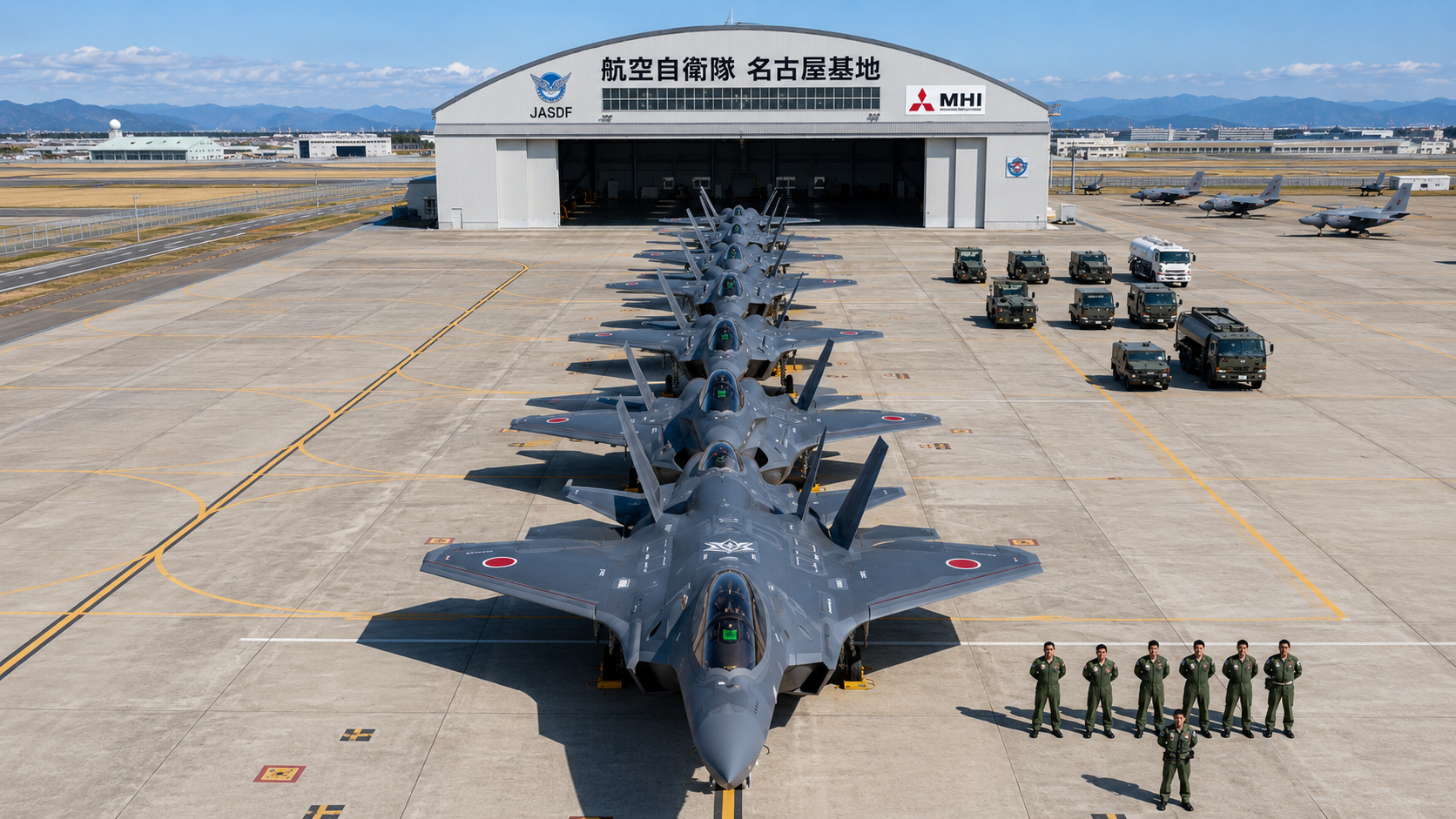
For decades, the future of fighter aviation looked like an American story.
The United States built the F-22 Raptor.
The United States built the F-35 Lightning II.
The United States pioneered stealth combat aircraft.
The United States shaped the modern battlefield with sensors, data links, precision weapons, and global air dominance.
But now, that story is changing.
China’s next fighter jet may not be just another stealth aircraft. It may be a warning sign that the world’s next great airpower race is becoming faster, more dangerous, and far less predictable than many people expected.
You May Also Like

A defense assessment cited by Arab Defense says a French report views Beijing’s sixth-generation fighter project as more mature than many Western estimates had assumed. The report suggests several core subsystems may have moved beyond early testing.
That is a major claim, and it must be handled carefully.
China’s sixth-generation aircraft is not operational yet. Public evidence does not prove every bold claim about its engines, stealth coatings, artificial intelligence, or weapons systems. But the direction is difficult to ignore.
China is no longer simply drawing futuristic jets on a whiteboard.
It is testing.
It is experimenting.
It is building.
And the rest of the world is paying attention.
The Fighter Race Is No Longer Only About America
For years, the United States had a major advantage in advanced fighter technology.
The F-22 Raptor gave America unmatched stealth air-superiority capability. The F-35 Lightning II became more than a fighter jet; it became a flying sensor network, able to gather information, share battlefield data, and support allied forces across air, land, sea, space, and cyber domains.
Because of that, many people assumed the next generation of airpower would again be led by Washington.
But China has been closing the gap.
The appearance of new Chinese tailless aircraft designs in late 2024 shocked many observers. These aircraft were not officially explained in detail by Beijing, but their shapes suggested serious work on stealth, range, sensor integration, and future combat concepts.
The U.S. Defense Department has also acknowledged that two Chinese companies conducted initial test flights of two separate sixth-generation prototype aircraft in December 2024. That does not mean China already has a finished sixth-generation fighter. But it does mean China has crossed an important line: from theory into flight testing.
In military aviation, that matters.
A prototype does not win a war. But a prototype tells the world that engineers are no longer just imagining an aircraft. They are discovering what works, what fails, what needs to be redesigned, and how fast the program can move.
China is still testing.
But it is no longer standing still.
What Makes a Sixth-Generation Fighter Different?
Many people understand fifth-generation fighters through aircraft like the F-22, F-35, J-20, Su-57, and J-35.
These jets are associated with stealth, advanced sensors, modern missiles, high-speed data sharing, and the ability to fight before the enemy even knows they are there.
But sixth-generation fighters are expected to go even further.
A true sixth-generation aircraft is not just a faster or stealthier jet. It is expected to become the center of a wider combat network.
That means it may combine:
Advanced stealth from multiple angles.
Artificial intelligence support for pilots and commanders.
Long-range sensors.
Powerful electronic warfare systems.
Hypersonic or long-range weapons.
Variable-cycle engines for speed and efficiency.
Manned-unmanned teaming with loyal wingman drones.
Data-sharing across satellites, aircraft, ships, and ground forces.
The ability to command other platforms while fighting.
In simple words, the fighter of the future may not fight alone.
It may act like a flying commander.
It may see through other aircraft.
It may send drones ahead.
It may confuse enemy radar.
It may launch weapons from long range.
It may manage a battlefield faster than a human pilot could do alone.
That is why China’s program matters so much. The real danger is not just one aircraft. The real danger is the system around it.
China’s Fighter May Be Designed as a Flying Network
The French assessment described in the defense brief reportedly points to a Chinese fighter built around layered stealth, AI support, manned-unmanned teaming, hypersonic weapons carriage, and advanced propulsion.
That sounds like a long list of futuristic technology, but all of it points toward one central idea:
China is not just trying to build a beautiful stealth jet.
China is trying to build a command center in the sky.
This is a major shift from older air combat thinking. In the past, fighter jets were often judged by speed, agility, climb rate, radar, missiles, and dogfighting ability. Those things still matter, but future air combat may be decided before pilots ever see each other.
The future battlefield could include stealth aircraft, drones, satellites, electronic jamming, cyber attacks, long-range missiles, decoys, and AI-assisted targeting.
A sixth-generation fighter would sit in the middle of that storm.
It would not simply chase enemy aircraft.
It would manage the fight.
The Loyal Wingman Problem
One of the most serious ideas connected to China’s future fighter program is the loyal wingman concept.
A loyal wingman is an unmanned aircraft designed to fly with or ahead of a crewed fighter. It can carry sensors, weapons, jammers, or decoys. It can take risks that commanders may not want a human pilot to take.
This changes the air battle completely.
Instead of sending one expensive fighter into dangerous airspace, a military could send a team: one crewed aircraft controlling several unmanned partners.
Some drones could scan for enemy radar.
Some could jam communications.
Some could act as decoys.
Some could carry missiles.
Some could fly ahead and force the enemy to reveal its position.
This creates a nightmare for air defenders.
Which aircraft is the real threat?
Which radar contact is a decoy?
Which drone is carrying weapons?
Which aircraft should be targeted first?
How many missiles should be fired?
What if the enemy is trying to make you waste your interceptors?
This is why future air combat may look less like a classic dogfight and more like a fast-moving chessboard.
If China can successfully pair a sixth-generation fighter with stealth drones, it could stretch enemy defenses and make U.S. and allied planning much harder, especially in the Indo-Pacific.
Why Taiwan Makes This Race More Dangerous
The most obvious place where China’s future airpower matters is Taiwan.
A conflict over Taiwan would likely involve some of the most advanced military systems in the world: aircraft carriers, submarines, stealth fighters, ballistic missiles, cruise missiles, drones, satellites, cyber weapons, and electronic warfare.
The geography favors China in some ways. Taiwan is close to the Chinese mainland, while U.S. forces would have to operate across long distances from bases in Japan, Guam, the Philippines, and aircraft carriers in the Pacific.
That means range, sensors, missiles, and drone coordination matter enormously.
A Chinese sixth-generation fighter, if eventually fielded in meaningful numbers, could become part of Beijing’s anti-access strategy. It could help push U.S. aircraft farther from the battle area, protect Chinese bombers and missile forces, or command drone formations designed to confuse allied air defenses.
Again, this does not mean China already has this capability today.
But defense planners do not only prepare for today.
They prepare for what may arrive in five, ten, or fifteen years.
That is why even an unfinished aircraft can change strategy now.
Stealth Is No Longer Just About Shape
When most people think of stealth, they think of a strange aircraft shape.
Sharp angles.
Smooth surfaces.
No vertical tail.
Hidden weapons.
Dark coatings.
A mysterious silhouette against the sky.
Shape matters, but modern stealth is much deeper than appearance.
A true stealth aircraft requires careful control of radar reflections, heat signatures, electronic emissions, engine exhaust, materials, coatings, maintenance quality, and even how the aircraft communicates.
The report described in the brief points to Chinese work in advanced coatings, intelligent aircraft skins, gallium nitride radar, and AI algorithms for air operations.
These claims are difficult to verify publicly. But they reveal the direction of the race.
Stealth is no longer just “make the aircraft hard to see.”
It is becoming “make the entire combat system hard to understand.”
That includes the aircraft, its drones, its data links, its radar behavior, its electronic warfare systems, and its ability to deceive the enemy.
The aircraft may not need to be completely invisible.
It only needs to confuse the enemy long enough to strike first.
The Engine Question: China’s Historic Weakness
One of the most important questions is propulsion.
For years, aircraft engines were one of China’s biggest weaknesses. Beijing built impressive airframes and missiles, but high-performance jet engines remained difficult. Fighter engines must survive extreme heat, pressure, vibration, and stress while delivering power, efficiency, and reliability.
A sixth-generation fighter may need even more advanced propulsion.
Many future fighter programs are expected to explore variable-cycle engines. These engines can adjust how they operate, giving better fuel efficiency during cruise and higher performance when speed or power is needed.
This matters because future fighters may need long range, high speed, strong electrical power for sensors and electronic warfare, and enough cooling for advanced systems.
For China, mastering this area would be a major breakthrough.
But it is also one of the hardest parts to prove from the outside.
A dramatic aircraft shape can be photographed. Engine maturity cannot be judged easily from a blurry image. Real engine success is proven through thousands of flight hours, maintenance performance, fuel efficiency, reliability, and production consistency.
That is where the gap between a prototype and an operational combat fleet becomes very important.
The U.S. Is Not Standing Still
China’s progress does not mean the United States has lost the race.
America is still moving aggressively into sixth-generation airpower.
The U.S. Air Force’s Next Generation Air Dominance fighter is now known as the F-47, with Boeing selected to develop the platform. The aircraft is expected to combine stealth, advanced sensors, long-range capability, and cooperation with unmanned Collaborative Combat Aircraft.
This is America’s answer to the future battlefield.
The F-47 will not be just a new fighter. It is expected to be part of a family of systems. That means crewed aircraft, drones, sensors, weapons, satellites, and command networks working together.
The U.S. advantage is experience.
America has operated stealth aircraft for decades. It has large combat-tested air forces. It has strong allies. It has deep experience integrating aircraft into global military networks. It also has the F-35 program, which already gives the U.S. and allies a massive base of fifth-generation experience.
But America’s challenge is cost and speed.
Advanced U.S. programs are expensive. Procurement can be slow. Political debates can delay funding. Industrial capacity has limits. Meanwhile, China’s defense industry may be able to move fast when Beijing makes a program a national priority.
This is why the race is so serious.
The U.S. may still lead in many areas, but China may be moving faster than expected.
Europe’s Problem: Big Ambition, Broken Cooperation
Europe also wants to be part of the sixth-generation race, but its path is more complicated.
For years, France, Germany, and Spain worked on the Future Combat Air System, known as FCAS. The idea was to build a next-generation European combat air system that could include a new fighter, drones, sensors, and a combat cloud.
But cooperation became difficult.
Different countries had different needs. Companies fought over leadership, technology sharing, intellectual property, and industrial control. France has carrier and nuclear strike requirements. Germany has different priorities. Airbus and Dassault clashed over who should lead key parts of the program.
Recent reporting says the joint fighter project has collapsed, creating a serious setback for European airpower.
That does not mean Europe is finished. The continent still has major aerospace talent, powerful defense companies, and parallel programs such as the Global Combat Air Programme involving the United Kingdom, Italy, and Japan.
But Europe has lost time.
And in a race where China and the United States are already flying or developing advanced prototypes, time matters.
Why China’s Industrial System Worries the West
China’s possible advantage may not be one magic engine or one invisible coating.
It may be the way China connects everything.
Aircraft design.
Drones.
Missiles.
Electronics.
Shipbuilding.
Space systems.
Artificial intelligence.
Radar.
Cyber capability.
Industrial production.
Military-civil fusion.
China’s defense system is not perfect, but it is huge, focused, and increasingly integrated. Beijing can push resources into priority areas, link civilian technology with military programs, and use its manufacturing base to scale production once a design is ready.
This is what worries Western planners.
A single prototype is not the biggest fear.
The bigger fear is that China may be building the entire ecosystem needed for future air combat.
That includes fighters, drones, long-range missiles, anti-ship weapons, satellites, electronic warfare systems, and command networks designed to work together in the Western Pacific.
In a future conflict, China may not need to defeat the U.S. everywhere.
It may only need to create enough danger near Taiwan, the South China Sea, or the first island chain to make American intervention extremely costly.
Sixth-generation aircraft could become one piece of that larger strategy.
The Hidden Environmental Cost of the Fighter Race
There is another side of this story that rarely appears in dramatic fighter jet headlines.
Military aviation burns enormous amounts of fuel.
Advanced prototypes, high-speed testing, long-range training missions, specialized materials, and large weapons programs all carry environmental costs. Fighter jets and bombers are not only expensive in money. They are expensive in energy.
Modern defense planners increasingly understand that climate, fuel logistics, and military readiness are connected.
A military that burns huge amounts of fuel must protect supply chains. It must move fuel across oceans. It must defend bases, tankers, pipelines, and storage facilities. In wartime, fuel becomes a target.
For next-generation aircraft, the challenge may become even harder.
Advanced engines may be more efficient in some modes, but larger aircraft, more testing, high-speed missions, drone networks, and energy-hungry sensors all create demand.
The airpower race is not only a technology race.
It is also a fuel race.
And in a world facing climate pressure, that issue will become harder to ignore.
A Prototype Is Not a Combat Fleet
It is important not to overhype China’s progress.
A test flight is not the same as an operational squadron.
A prototype does not mean the aircraft is ready for war. Many things can slow a fighter program down:
Engine problems.
Software delays.
Radar integration issues.
Weapons testing failures.
Stealth coating maintenance.
Pilot training.
Drone communication problems.
Production quality issues.
Budget pressure.
Command-and-control limitations.
Accidents during flight testing.
History is full of aircraft that looked promising but took years longer than expected.
The F-35 itself faced delays, technical issues, cost growth, and years of criticism before becoming a central part of U.S. and allied airpower.
China may face similar problems.
The difference is that even an unfinished aircraft can shape military planning. If the U.S., Japan, Australia, Taiwan, and Europe believe China may field a capable sixth-generation fighter by the 2030s, they must plan now.
That means more spending.
More drone development.
More missile defense.
More hardened bases.
More electronic warfare.
More long-range weapons.
More pressure on alliances.
This is how prototypes influence the world before they become operational.
The Psychological Impact
Military aircraft are not only weapons.
They are messages.
When China flies a strange new tailless aircraft, the message is clear:
China wants the world to know it is no longer behind.
That matters politically. It matters psychologically. It matters for allies and rivals.
For smaller countries in Asia, the message may be intimidating.
For Taiwan, it is a warning.
For Japan, it is a planning challenge.
For the United States, it is a wake-up call.
For Europe, it is a reminder that delay has consequences.
For Russia, it is another sign that China may be moving ahead in areas where Moscow once led.
The race for sixth-generation fighters is not only about who builds the best jet.
It is about who controls the story of future power.
Is China Catching Up — or Setting the Pace?
This is the biggest question.
Is China simply catching up to the United States?
Or is China beginning to set the pace in some areas of future airpower?
The honest answer is that public evidence does not prove China is ahead. The United States still has deep advantages in stealth operations, combat experience, alliance networks, aircraft integration, and high-end aviation systems.
But public evidence does show that China is moving seriously and quickly.
It has flown prototypes.
It has shown willingness to experiment with radical aircraft shapes.
It is investing in drones and AI.
It is building advanced sensors and missiles.
It is expanding naval and airpower across the Indo-Pacific.
It is preparing for a future where air combat is networked, unmanned, and extremely fast.
That is enough to change the conversation.
The fifth-generation race was dominated by America.
The sixth-generation race may not be.
Conclusion: The Future of Airpower Is Becoming More Dangerous
China’s mysterious sixth-generation fighter program is not yet a finished weapon. It is not yet an operational threat flying in combat squadrons. Many claims remain difficult to verify, and experts should remain cautious.
But caution does not mean comfort.
The signs are serious.
China is testing new aircraft.
The Pentagon has acknowledged sixth-generation prototype flights.
Reuters has reported tailless stealth-like designs.
The U.S. is rushing forward with the F-47.
Europe’s fighter cooperation is under pressure.
Drone wingmen are becoming central to future airpower.
AI, stealth, missiles, and unmanned systems are merging into one battlefield.
The old era of fighter jets is ending.
The next era will not be defined by one heroic pilot in one powerful aircraft. It will be defined by networks, drones, sensors, deception, speed, software, and the ability to make decisions faster than the enemy.
China understands this.
America understands this.
Europe is trying to keep up.
The question now is not whether sixth-generation airpower is coming.
It is already coming.
The real question is who will master it first.
And if China’s program is even close to what some assessments suggest, the future of air dominance may be far more contested than the world expected.




One Comment on “China’s Sixth-Generation Fighter Shock: Is Beijing Starting to Set the Pace in the Future of Airpower?”