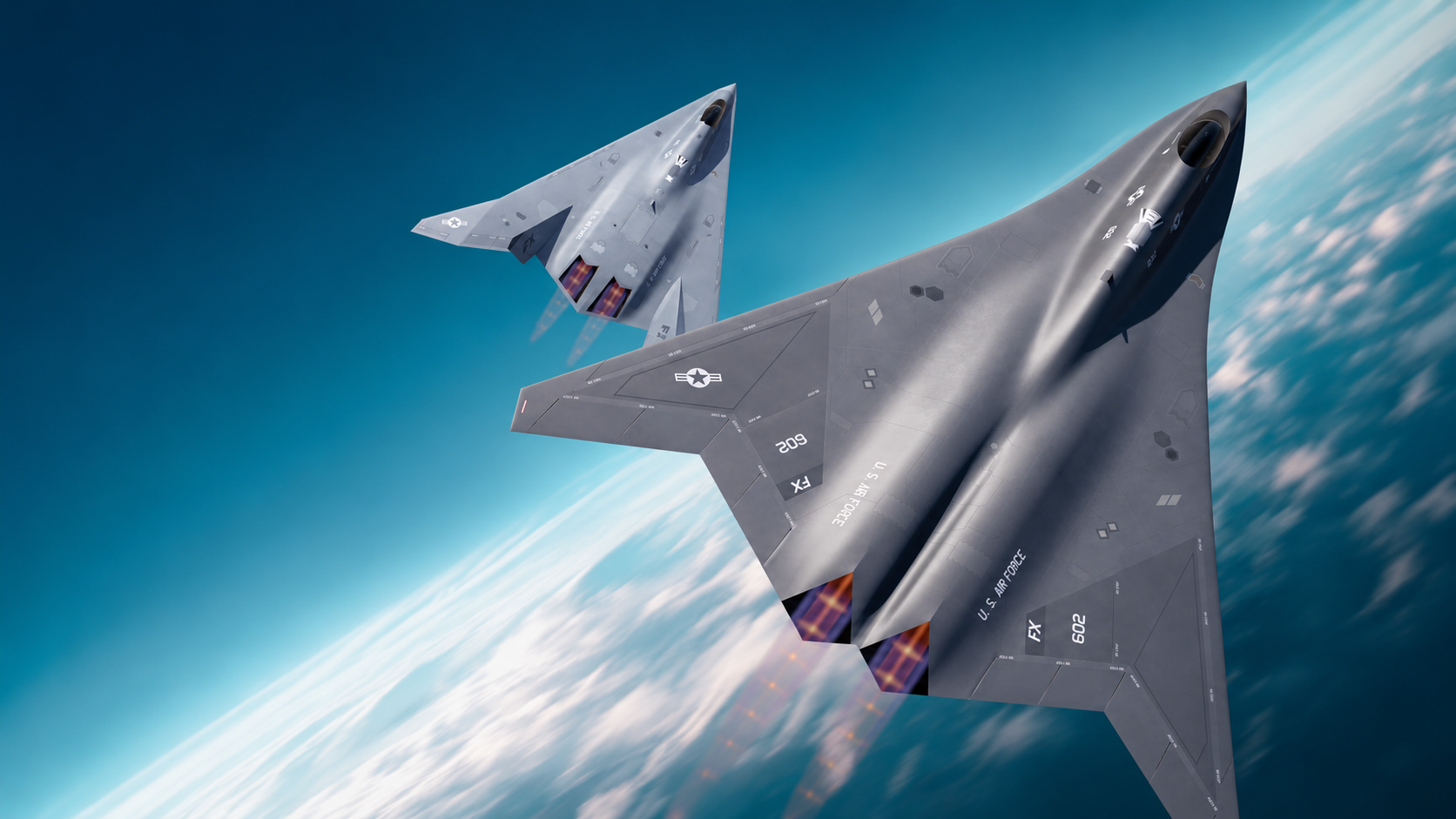
Russia’s Checkmate Fighter: The “Hypersonic” Stealth Jet Built to Challenge America’s F-35
Russia’s Su-75 Checkmate: The Single-Engine Stealth Fighter Aimed at the F-35 Market
Russia says its new Su-75 Checkmate fighter could be fast, stealthy, affordable, and even optionally unmanned. But is this really the beginning of a new fighter era — or another bold Russian promise waiting to prove itself?
For decades, Russia built its airpower reputation on heavy, twin-engine fighters.
You May Also Like
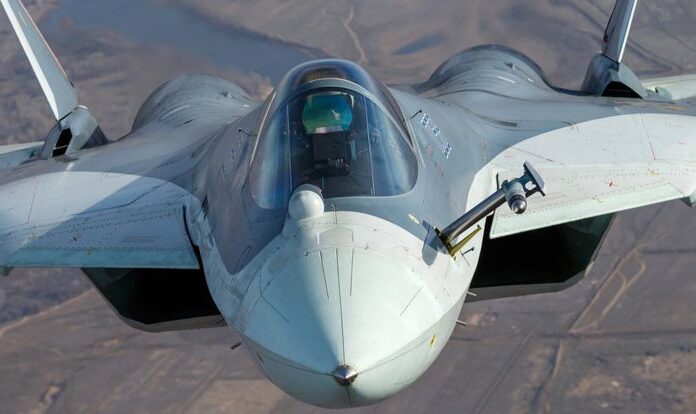
The Su-27 Flanker.
The Su-30.
The Su-35.
The Su-57 Felon.
These aircraft were large, powerful, highly maneuverable, and designed for a country so vast it stretches across 11 time zones. Russia needed fighters that could fly far, carry heavy weapons, operate from rough conditions, and defend enormous airspace.
But now Sukhoi is trying something different.
Russia is developing a new single-engine stealth fighter known as the Su-75 Checkmate — a lighter, cheaper, more export-focused combat aircraft that Moscow hopes can fill a major gap in its fighter lineup.
It has been described as a fifth-generation light tactical aircraft. Russian claims have promoted low visibility, artificial intelligence support for the pilot, high speed, internal weapons carriage, and even the possibility of manned and unmanned versions.
Some Russian media and commentators have pushed even more dramatic language, calling it “hypersonic.” But that claim deserves caution. Based on currently published figures, the Su-75 is expected to fly around Mach 1.8 to Mach 2 — very fast, but not truly hypersonic in the technical sense. Hypersonic normally refers to speeds of Mach 5 and above.
So what is the real story?
Is the Su-75 Checkmate Russia’s answer to the American F-35?
Is it a serious threat to Western airpower?
Or is it another bold Russian defense project that looks dangerous on paper but still has to prove itself in the sky?
The answer is complicated — and that is what makes this aircraft so interesting.
Russia’s Big Problem: It Needs a Cheaper Stealth Fighter
Russia already has a fifth-generation fighter: the Su-57 Felon.
The Su-57 is a twin-engine stealth fighter designed for air superiority, strike missions, and advanced combat against modern threats. It is fast, maneuverable, and heavily armed. But it is also expensive, complex, and difficult to produce in large numbers.
That is where the Su-75 Checkmate becomes important.
Russia does not only need a high-end stealth fighter. It also needs a cheaper aircraft that can be built faster, operated at lower cost, and sold to foreign customers who cannot afford aircraft like the F-35.
For years, the global fighter market has been dominated by one major reality: many countries want fifth-generation capability, but not every country can afford the F-35 or gain approval to buy it.
The F-35 Lightning II is the most successful fifth-generation fighter program in the world, but it comes with political restrictions, high operating costs, and deep dependence on the United States and its allies. Some countries want stealth technology without being tied completely to Washington.
Russia sees that as an opportunity.
The Su-75 is designed to enter that space — a single-engine fighter that promises stealth-like shaping, modern weapons, reduced operating costs, and export flexibility.
In simple words, Russia wants to tell potential buyers:
“You may not be able to buy an F-35. But you can buy Checkmate.”
That is the business logic behind the aircraft.
Why a Single Engine Matters
One of the biggest differences between the Su-75 and Russia’s traditional fighter designs is the engine layout.
Most famous Russian fighters are twin-engine aircraft. That includes the Su-27 family, Su-30, Su-35, MiG-29, MiG-35, and Su-57. Twin engines offer power, redundancy, range, and strong performance. They are useful for a country like Russia, where aircraft may need to patrol enormous distances and operate in harsh conditions.
But twin-engine fighters are also more expensive to build, maintain, and operate.
A single-engine fighter is usually cheaper. It uses fewer major parts, burns less fuel, requires less maintenance, and can be more attractive to countries with smaller defense budgets.
This is one reason the American F-16 became one of the most successful fighter jets in history. It was not the biggest or most expensive aircraft, but it offered strong performance at a lower cost. Later, the F-35 continued the single-engine idea into the stealth era.
Russia has not had a strong modern single-engine fighter presence for decades.
The Su-75 is an attempt to fix that.
If successful, it could give Russia a fighter that is easier to sell, cheaper to fly, and more practical for nations that do not need a heavy twin-engine aircraft.
But there is also a risk.
A single-engine stealth fighter requires excellent engine reliability, advanced materials, strong manufacturing quality, and modern electronics. Russia has struggled with some of these areas, especially under sanctions and wartime production pressure.
That means the Su-75 is not just a fighter project.
It is a test of Russia’s aviation industry itself.
The “Hypersonic” Claim: Powerful Marketing, Weak Technical Reality
The word “hypersonic” sounds terrifying.
It suggests extreme speed, advanced technology, and almost unstoppable performance. In modern defense media, hypersonic weapons are often described as the future of warfare because they travel so fast that enemy defenses may have little time to react.
But when discussing fighter jets, the word must be used carefully.
A fighter flying above Mach 2 is supersonic. That is fast. Very fast. But it is not hypersonic.
True hypersonic speed normally begins around Mach 5. That is a completely different world of heat, airflow, engine technology, and materials science.
The Su-75 is expected to be fast, but currently available figures point to the Mach 1.8–Mach 2 range. That makes it a high-speed fighter, but not a true hypersonic aircraft.
So why use the word?
Because “hypersonic fighter” sounds far more dramatic than “single-engine stealth fighter.”
It creates headlines.
It creates fear.
It creates attention.
It makes the aircraft seem more revolutionary than it may actually be.
That does not mean the Su-75 should be ignored. A Mach 2-class stealthy fighter with modern missiles can still be dangerous. But calling it hypersonic is more marketing than reality unless Russia proves a far more advanced speed capability in actual flight testing.
For now, the better description is this:
The Su-75 Checkmate is a fast, single-engine, low-observable fighter concept — not a confirmed hypersonic aircraft.
Thrust Vectoring: Russia’s Favorite Fighter Trick
One area where Russian fighters have always attracted attention is maneuverability.
Sukhoi aircraft are famous for dramatic airshow maneuvers. The Su-27, Su-30, Su-35, and Su-57 have all shown extreme control at high angles of attack. One reason is thrust vectoring.
Thrust vectoring means the engine nozzle can move and direct thrust in different directions. Instead of pushing the aircraft only straight forward, the nozzle can help move the aircraft’s nose up, down, or sideways.
This gives the fighter unusual agility.
In a close-range dogfight, that kind of maneuvering can help a pilot point the aircraft at an opponent faster, recover from difficult positions, or perform sudden movements that confuse the enemy.
It can also help reduce takeoff distance, because the nozzles can angle thrust in ways that assist lift and control.
Russia has long treated supermaneuverability as a major selling point. Russian fighters are often shown doing dramatic maneuvers like the Cobra, controlled flat spins, and extreme vertical climbs.
The Su-75 is expected to borrow from that design philosophy.
But modern air combat has changed.
Today, dogfighting is only one part of the picture. Stealth, sensors, missiles, electronic warfare, data links, and pilot awareness may matter even more than dramatic close-range maneuvers.
A fighter can be extremely agile and still lose if it is detected first, jammed first, or hit by a long-range missile before the pilot ever sees the enemy.
That is why the Su-75 must prove more than maneuverability.
It must prove that Russia can build the sensors, software, stealth quality, engines, and weapons integration needed for a real fifth-generation aircraft.
A Smaller Brother to the Su-57
The Su-75 is often described as a smaller, lighter partner to the Su-57.
That makes sense.
The Su-57 is Russia’s heavy stealth fighter. It is designed to be powerful, long-range, and capable of carrying a wide range of weapons. But heavy fighters are expensive.
The Su-75 is meant to be more affordable and easier to export.
It may share some design ideas, systems, and technologies with the Su-57. That could help reduce development time and cost. If Russia can reuse components, sensors, software, engines, or weapons integration from the Su-57 program, the Su-75 could become more realistic.
But this also creates a problem.
The Su-57 itself has faced long development delays, limited production numbers, and questions about how mature its stealth and sensor systems really are. If the larger program still has challenges, then the smaller program may inherit some of those same problems.
That is why analysts remain cautious.
On paper, the Su-75 looks like a smart idea. It fills a real gap. It targets a real market. It uses a design philosophy that makes sense.
But a modern fighter is not judged by its model at an airshow.
It is judged by flight testing, production quality, operational service, combat readiness, and the ability to deliver promised performance year after year.
The Su-75 still has to cross that bridge.
Manned, Unmanned, or Both?
One of the most interesting claims about the Checkmate program is that it could be offered in different versions, including manned and unmanned variants.
This is important because air warfare is moving toward a mixed future.
The next generation of airpower will likely include crewed fighters working together with unmanned combat aircraft. These drones may scout ahead, carry weapons, jam enemy radars, act as decoys, or even take risks that would be too dangerous for a human pilot.
The United States is developing this idea through loyal wingman drones and collaborative combat aircraft. Europe, Japan, China, and other powers are also moving in the same direction.
Russia does not want to be left behind.
An unmanned or optionally manned Su-75 could be used as a cheaper stealth strike platform, a drone fighter, or a loyal wingman for larger aircraft like the Su-57.
That sounds impressive.
But again, the challenge is execution.
Building a flying stealth aircraft is already hard. Building an unmanned stealth combat aircraft with reliable autonomy, secure communications, advanced sensors, and real battlefield survivability is even harder.
Russia has experience with drones, but it still trails the United States and China in many high-end unmanned combat aviation areas.
So the unmanned Checkmate concept is exciting, but it should be seen as a future ambition, not a proven capability.
The Export Dream: Russia Wants Another MiG-21 Moment
During the Cold War, Soviet aircraft spread across the world.
The MiG-21 became one of the most widely used fighters in history. It was simple, fast, relatively affordable, and exported to many countries. For decades, Soviet and Russian fighters offered an alternative to Western aircraft.
The Su-75 is trying to capture that spirit for the stealth age.
Russia wants the Checkmate to become the “affordable fifth-generation fighter” for nations that want modern capability without Western political restrictions.
Potential customers could include countries in Asia, the Middle East, Africa, and Latin America — especially nations already familiar with Russian weapons.
The aircraft’s export pitch is simple:
Lower cost.
Modern appearance.
Stealth-like design.
Single-engine efficiency.
Compatibility with Russian weapons.
Possible manned and unmanned options.
A claimed alternative to the F-35.
But the export market is not as easy as it once was.
Sanctions have made Russian defense deals more difficult. The war in Ukraine has damaged confidence in some Russian weapons. Spare parts, financing, insurance, logistics, and international banking have become major obstacles.
Countries may be interested in the Su-75, but interest is not the same as signed contracts.
Buyers will want proof.
They will want to see the aircraft fly. They will want to see real performance. They will want to know the engine is reliable, the radar works, the stealth is credible, and Russia can deliver parts for decades.
Until that happens, the Su-75 remains more of a promise than a proven export weapon.
The F-35 Comparison: Fair or Overhyped?
Russia clearly wants the Su-75 to be seen as an F-35 competitor.
That comparison is useful for marketing, but technically complicated.
The F-35 is not just a fighter jet. It is a flying sensor and data network. Its strength is not only stealth or weapons, but the way it collects information, shares data, and helps friendly forces understand the battlefield.
The F-35 is already in mass production, used by many countries, and integrated into Western military networks. It has years of operational experience.
The Su-75 has not yet proven itself in the same way.
Even if the Checkmate becomes cheaper than the F-35, cheaper does not automatically mean better. Modern fighters are judged by many things: radar quality, electronic warfare, stealth manufacturing, mission software, weapons integration, pilot interface, maintenance systems, and combat data sharing.
This is where Russia faces its biggest challenge.
It can design a sharp-looking stealth fighter. It can build powerful engines. It can create agile aircraft. But fifth-generation warfare is deeply digital. It requires advanced chips, software, sensors, and secure networks.
Those areas have become harder for Russia because of sanctions and limited access to some high-end technology.
So the Su-75 may compete with the F-35 in marketing.
But on the battlefield, it would have to prove far more than speed and maneuverability.
A Crowded Future Fighter Market
The Su-75 is not entering an empty field.
The 2030s fighter market is becoming crowded and highly competitive.
The United States is developing the F-47 under the Next Generation Air Dominance program. The United Kingdom, Japan, and Italy are working on the Global Combat Air Programme, often connected with the Tempest concept. South Korea continues developing the KF-21 Boramae. China is pushing forward with its own stealth aircraft programs. Europe is trying to shape its future combat aviation plans.
In this environment, the Su-75 is both ambitious and risky.
If Russia can deliver a working, affordable, export-ready stealth fighter, it could regain influence in a market where many countries want alternatives to Western aircraft.
But if delays continue, the Checkmate could become another impressive airshow model that never reaches large-scale production.
That is the central question:
Will the Su-75 become Russia’s new fighter export superstar?
Or will it remain a symbol of ambition under pressure?
Why the Su-75 Still Matters
Even with all the doubts, the Su-75 should not be dismissed.
Military technology does not always need to be perfect to matter. Sometimes a weapons program matters because of what it reveals.
The Su-75 reveals that Russia understands the future fighter market is changing. Heavy twin-engine fighters are not enough. Many countries want lower-cost aircraft with modern features. They want stealth shaping, internal weapons, advanced sensors, and flexible mission options.
The Checkmate is Russia’s attempt to answer that demand.
It also shows that Russia wants to remain a major player in military aviation despite sanctions, war pressure, and industrial limitations.
The aircraft is a message to the world:
Russia still wants to compete.
Russia still wants export customers.
Russia still wants to challenge the West.
Russia still wants to prove its aviation industry is alive.
Whether the aircraft can actually deliver is another question.
The Real Verdict
The Su-75 Checkmate is one of the most interesting fighter projects in the world today — not because it is already proven, but because it sits at the center of so many important questions.
Can Russia build a true fifth-generation single-engine fighter?
Can it produce advanced aircraft under sanctions?
Can it create a cheaper alternative to the F-35?
Can it offer reliable stealth, sensors, and weapons integration?
Can it attract export customers in a world where Russian defense deals are increasingly complicated?
Can it turn bold airshow promises into real combat aircraft?
Right now, the Su-75 is a fighter full of potential, but also full of uncertainty.
It may become a dangerous new addition to Russia’s airpower.
It may become a successful export fighter.
It may become an unmanned combat platform in the future.
Or it may become another ambitious Russian project that struggles to move from prototype to production.
But one thing is clear: the world is watching.
Because if Russia can actually deliver the Checkmate, it would give Moscow something it has lacked for decades — a modern, single-engine fighter designed for the stealth era.
And in the global chess game of military aviation, that is exactly why Russia chose the name:
Checkmate.