“SUKHOI SU-57 FELON: RUSSIA’S STEALTH FUTURE OR A FIGHTER THAT ARRIVED TOO LATE?”
A low murmur moved through the audience.
Pilots studied the image.
Students whispered.
Defense analysts opened tablets.
Journalists prepared headlines before hearing a word.
The Su-57 had always carried two reputations.
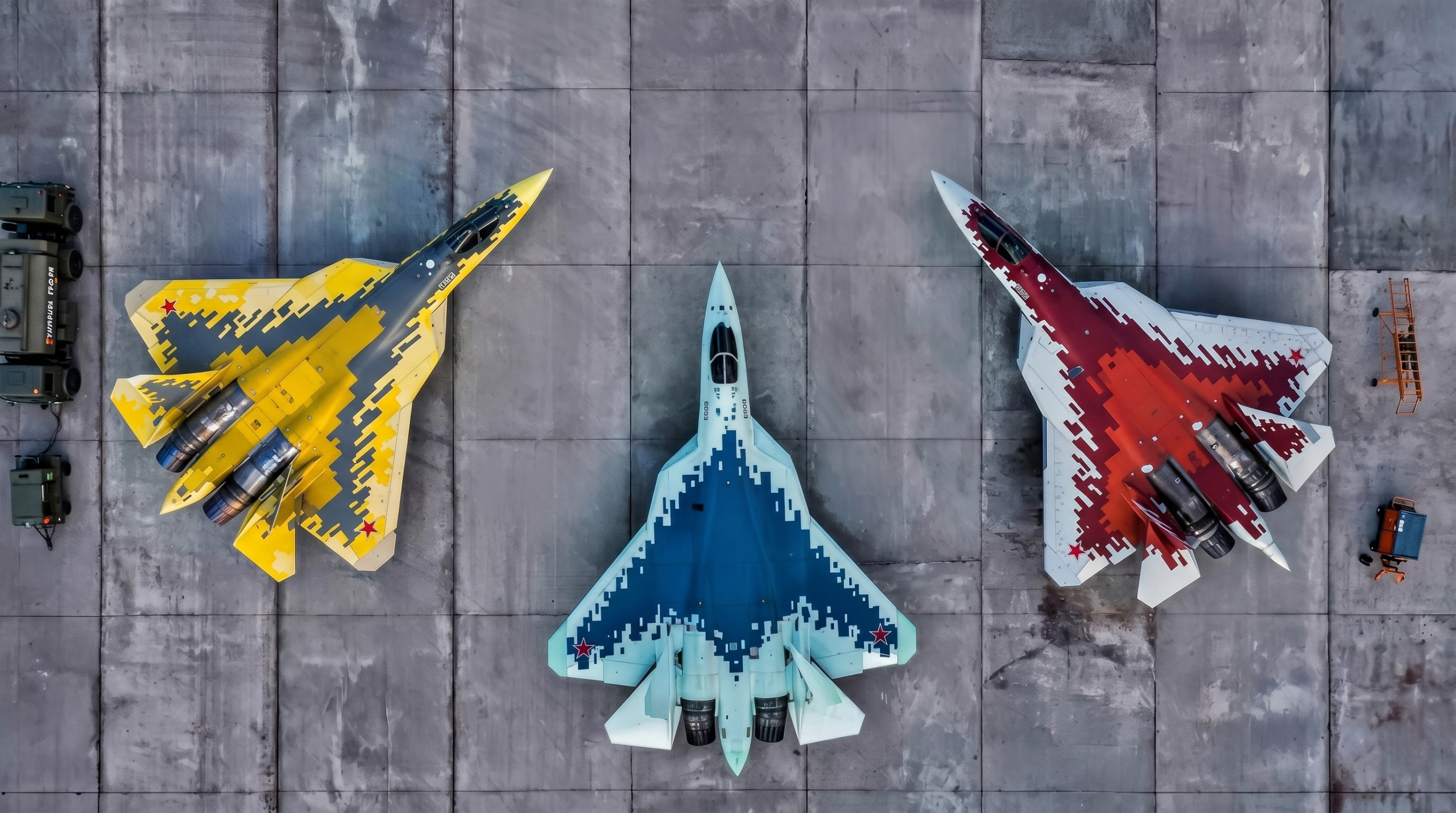
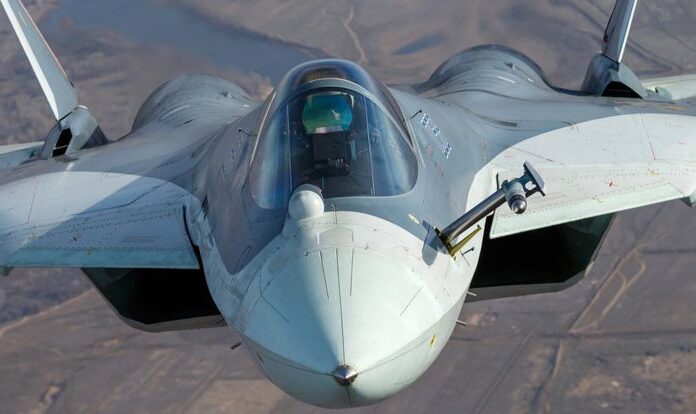
To Russian officials, it was a fifth-generation multirole fighter, capable of engaging air, ground, and sea targets. It had internal weapons bays, advanced missiles, composite materials, reduced radar and infrared signatures, and new weapons being integrated into its armament system. Russian industry leaders had called it the best aircraft in its class.
You May Also Like

To critics, it was something else: a fighter with grand claims but few numbers, delayed production, uncertain export appeal, and a reputation still waiting for proof.
At the center of the stage sat two professors.
Professor Adrian Vale adjusted his glasses and stared at the Su-57 like a detective examining a suspect.
Professor Elena Morozova folded her hands calmly, her expression unreadable.
Moderator Samuel Cross stepped forward.
Dr. Samuel Cross:
Ladies and gentlemen, tonight we discuss one of the most debated combat aircraft in the world: Russia’s Su-57 Felon. Recently, Russian state media and Rostec claimed the aircraft received a new technical configuration and upgraded weapons integration. But details remain limited. The question is simple, but the answer is not: is the Su-57 becoming a true fifth-generation threat, or is Russia selling a legend faster than it can build the aircraft?
He turned to the professors.
Dr. Cross:
Professor Vale. Professor Morozova. Begin.
PART ONE: THE CLAIMS, THE MACHINE, AND THE MYTH
Scene One: A New Weapon, But What Weapon?

Professor Vale:
Let us begin with what we know — and what we do not know. Rostec says the Su-57 has received upgraded weapons and a new technical configuration. Russian state media reported that the improvements would allow the aircraft to operate more effectively in different weather conditions and in areas where electronic jamming is attempted. But they did not provide the most important details.
Professor Morozova:
That is normal in military announcements.
Vale:
It is also convenient.
Morozova:
Of course. Military secrecy and public messaging often walk together.
Vale:
Or propaganda and engineering walk together until one trips.
A few people in the audience laughed.
Morozova:
That was sharp, Adrian. But not entirely fair. We should not dismiss an aircraft simply because the announcement is vague.
Vale:
I am not dismissing it. I am questioning it. There is a difference.
Morozova:
Good. Then question precisely.
Vale:
Gladly. If a new weapons system has been integrated into the Su-57, what kind? New air-to-air missiles? Improved precision-guided munitions? Longer-range strike weapons? Better internal carriage? Enhanced targeting under jamming? We are told the aircraft can use new types of aircraft weapons, but we are not told which ones.
Morozova:
That uncertainty matters, yes.
Vale:
It matters enormously. A fighter’s danger is not just its speed or shape. It is what it can detect, track, communicate, survive, and fire.
Morozova:
And the Su-57 was always designed around that larger idea. It was not simply a dogfighter. It was developed as a multirole aircraft, capable of attacking airborne, land, and maritime targets. That matters.
Vale:
Claims matter less than inventory.
Morozova:
Capabilities matter too.
Vale:
Capabilities only matter if enough aircraft exist to use them.
Morozova:
We will get to production. But do not jump there too early.
Vale:
Why not? That is where the Su-57’s myth begins to crack.
Morozova:
Because before asking whether Russia has enough of them, we must first ask what kind of aircraft the Su-57 is.
Vale:
Fine. Let us ask.
Scene Two: What Is the Su-57 Supposed to Be?
Dr. Cross:
Professor Morozova, define the Su-57 in one sentence.
Morozova:
The Su-57 is Russia’s attempt to build a fifth-generation multirole fighter that combines reduced observability, high maneuverability, internal weapons carriage, long-range missiles, advanced sensors, and the ability to attack air, ground, and sea targets.
Vale:
That was a long sentence.
Morozova:
It is a complicated aircraft.
Vale:
Or a complicated marketing campaign.
Morozova:
You are determined to be unpleasant tonight.
Vale:
Only because the aircraft deserves careful skepticism.
Morozova:
Then let us be careful. The Su-57 is listed with a top speed around Mach 2 at altitude, a range around 3,500 kilometers, a service ceiling around 20,000 meters, and a weapons load including missiles such as the R-77M, R-37M, R-74M2, Kh-59MK2, KAB-500 guided bombs, and an internal 30mm cannon.
Vale:
On paper, yes, it is impressive.
Morozova:
Not only on paper. Even critics acknowledge the airframe is serious.
Vale:
Serious, yes. Proven at scale, no.
Morozova:
You keep returning to scale.
Vale:
Because war returns to scale. One aircraft is a technology demonstrator. Thirty aircraft are a limited capability. Hundreds are a force.
Morozova:
And yet one aircraft with the right missile in the right place can still change a battle.
Vale:
A battle, maybe. A war, rarely.
Morozova:
History disagrees.
Vale:
History also says production wins.
The room grew quiet. This was not just a technical argument anymore. It was an argument about how wars are actually fought.
Scene Three: Stealth — Western Style vs Russian Style
Dr. Cross:
Let us discuss stealth. Is the Su-57 truly a fifth-generation stealth fighter?
Vale:
That depends on whether we are using the word “stealth” as an engineering standard or as a marketing label.
Morozova:
A harsh opening.
Vale:
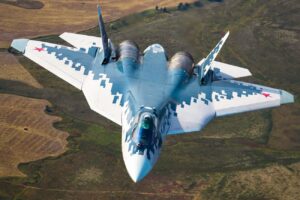
A necessary one. The F-22 and F-35 were designed with stealth as a central priority. Their shapes, coatings, internal weapons, sensor integration, and mission concepts all revolve around low observability. The Su-57 has stealth features, but many analysts argue it is not optimized in the same way.
Morozova:
True, but Russia may not be trying to build a perfect F-22 clone.
Vale:
Because it cannot?
Morozova:
Because it may not want to. Russian fighter design has often placed high value on speed, maneuverability, long-range weapons, and operating within an integrated air defense environment. The Su-57 may represent a different balance: stealth plus kinematics plus missile reach.
Vale:
That is the best defense of the aircraft.
Morozova:
Thank you.
Vale:
But it is also an admission that its stealth may not match Western fifth-generation standards.
Morozova:
It may not need to match them perfectly to be dangerous.
Vale:
That is true.
Morozova:
Good. We agree.
Vale:
Briefly. Do not become comfortable.
Morozova:
I would never.
The audience laughed.
Scene Four: The Long-Range Missile Argument
Morozova:
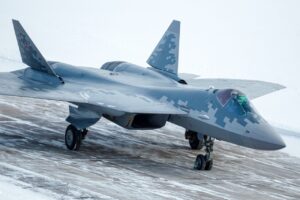
Let me make the strongest case for the Su-57. Its danger may not come from sneaking deep into enemy airspace like an F-35. Its danger may come from using reduced observability and high speed to position itself for long-range missile shots.
Vale:
The R-37M argument.
Morozova:
Partly. Long-range air-to-air missiles can threaten support aircraft: tankers, airborne early warning aircraft, surveillance planes, and command platforms. If the Su-57 can get close enough without being detected early, it could force enemy air forces to push those support assets farther back.
Vale:
That would reduce fighter endurance and situational awareness.
Morozova:
Exactly.
Vale:
So you are saying the Su-57 does not have to win a Hollywood dogfight. It only needs to complicate the enemy’s air architecture.
Morozova:
Precisely. Modern air combat is not only fighter versus fighter. It is network versus network. Kill the tanker, blind the radar plane, disrupt the data link, and suddenly the glamorous fighter at the front becomes less effective.
Vale:
That is a serious point.
Morozova:
I know.
Vale:
But it depends on numbers, sensor quality, missile reliability, training, and integration.
Morozova:
Yes.
Vale:
Which brings us back to the same problem.
Morozova:
Production.
Vale:
Production.
PART TWO: THE PRODUCTION PROBLEM AND THE ENGINE PROMISE
The screen behind them changed.
Now it showed three numbers:
Su-57 Built: Roughly 32
F-22 Fleet: Around 183
F-35 Delivered: More Than 1,300
The audience murmured.
Dr. Cross:
The Su-57’s supporters emphasize its capabilities. Critics emphasize its small numbers. Professor Vale, why do production numbers matter so much?
Scene One: The Fighter That Russia Cannot Build Fast Enough
Vale:
Because an air force does not fight with brochures. It fights with aircraft, pilots, weapons, maintenance crews, spare parts, and training cycles. The uploaded material notes that fewer than three dozen Su-57s are believed to exist, including prototypes, while Russia once spoke of having 76 operational aircraft by 2027–2028.
Morozova:
That gap is significant.
Vale:
Significant? It is the central weakness of the program.
Morozova:
It is a weakness, yes.
Vale:
A fifth-generation fighter in tiny numbers cannot transform an air force.
Morozova:
It can still provide elite capability.
Vale:
Elite capability is not the same as air superiority.
Morozova:
No, but it can shape specific operations.
Vale:
You are shrinking the claim.
Morozova:
I am refining it.
Vale:
That is what scholars call retreating with dignity.
Morozova:
And what critics call winning before understanding.
Vale:
Touché.
Scene Two: Why Numbers Become Strategy
Vale:
Let me explain this in plain language. If an air force has hundreds of advanced fighters, it can train, rotate, deploy, lose aircraft, maintain readiness, and apply pressure across multiple fronts. If it has only a few dozen, every aircraft becomes precious.
Morozova:
This is true.
Vale:
A small fleet means limited pilot experience. Limited maintenance familiarity. Limited sortie generation. Limited spare parts pipelines. Limited operational confidence.
Morozova:
And yet small numbers can still matter if used carefully.
Vale:
Yes, but careful use is not the same as dominance.
Morozova:
No. But Russia may not need the Su-57 to dominate everywhere. It may use it as a specialized tool.
Vale:
Again, the golden aircraft problem.
Morozova:
Explain.
Vale:
A golden aircraft is too advanced to ignore but too rare to risk. It appears in propaganda more often than in sustained combat. Its reputation becomes larger than its sortie count.
Morozova:
That is clever.
Vale:
And accurate?
Morozova:
Partly. But be careful. A low sortie count may reflect caution, secrecy, or mission selection — not uselessness.
Vale:
Or fear of losing face.
Morozova:
Also possible.
Vale:
You admit that?
Morozova:
Of course. Serious analysis must admit uncomfortable possibilities.
Scene Three: The Engine That Could Change the Story
The screen changed again.
A diagram of a jet engine appeared.
Izdeliye 177 Engine Upgrade
Dr. Cross:
The uploaded material mentions that Russia tested the Su-57 with the new Izdeliye 177 engine. Rostec officials claimed the engine offers around 16,000 kilograms of thrust with afterburner, reduced fuel consumption, and better durability. Professor Morozova, how important is this?
Morozova:
Potentially very important. Engines define fighter performance more than casual observers realize. Better thrust, fuel efficiency, and durability can improve acceleration, range, climb, supercruise potential, maintenance intervals, and overall combat reliability.
Vale:
Potentially.
Morozova:
Yes, potentially.
Vale:
That word is doing heavy lifting.
Morozova:
Because the engine must move from test and claim to reliable fleet service.
Vale:
Exactly. Russia has announced many improvements over the years. The question is not whether a prototype engine performs well in controlled testing. The question is whether it can be produced, installed, maintained, and trusted across an operational fleet.
Morozova:
Agreed.
Vale:
If the engine works as claimed, it may improve the Su-57’s credibility.
Morozova:
More than credibility. It may help the aircraft become what it was originally supposed to be.
Vale:
That is an interesting phrase.
Morozova:
The Su-57 has long been judged against its promise. A mature engine could narrow the gap between promise and reality.
Vale:
But only if production catches up.
Morozova:
Yes.
Vale:
You are trapped by numbers again.
Morozova:
Every aircraft program is eventually trapped by numbers.
Scene Four: Export Trouble — Why Aren’t Buyers Lining Up?
Dr. Cross:
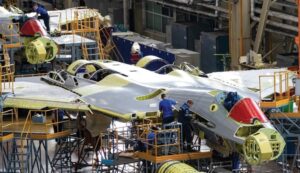
Let us talk about foreign buyers. Russia has tried to market the Su-57 abroad, but confirmed export success appears limited. Algeria has been mentioned as a confirmed buyer, though sanctions risks may complicate acquisition. Professor Vale, what does this tell us?
Vale:
It tells us that markets are skeptical.
Morozova:
Or constrained by geopolitics.
Vale:
Both. But if the Su-57 were universally trusted as a top-tier fifth-generation fighter, we would expect stronger demand from countries that cannot buy the F-35.
Morozova:
Some countries may fear sanctions.
Vale:
True. But others may fear becoming dependent on Russian supply chains weakened by war, sanctions, and industrial stress.
Morozova:
Also true.
Vale:
Buying a fighter is not like buying a sports car. You are buying training, maintenance, weapons, spare parts, software, upgrades, and political alignment.
Morozova:
And trust.
Vale:
Exactly. Trust may be the Su-57’s biggest export problem.
Morozova:
Not performance?
Vale:
Performance can be advertised. Trust must be earned.
Morozova:
That is a strong line.
Vale:
Thank you. I have been saving it.
Scene Five: The Western Comparison
The screen showed the F-22, F-35, and Su-57 side by side.
Dr. Cross:
Is it fair to compare the Su-57 directly to the F-22 and F-35?
Morozova:
Fair, but incomplete.
Vale:
I agree.
Morozova:
The F-22 was designed primarily for air dominance. The F-35 was designed as a multirole stealth fighter and sensor network platform. The Su-57 has its own design philosophy, mixing stealth features, maneuverability, long-range missiles, and multirole strike. Direct comparison can mislead if we assume all fifth-generation fighters must fight the same way.
Vale:
That is true. But comparison is unavoidable because Russia itself markets the Su-57 as a fifth-generation fighter. Once you enter that category, you invite comparison.
Morozova:
Yes.
Vale:
And on fleet size, the comparison is brutal. Around 183 F-22s. More than 1,300 F-35s delivered to the US, allies, and partners. Roughly 32 Su-57s, including prototypes.
Morozova:
Numbers favor the West overwhelmingly.
Vale:
Not just numbers. Ecosystem. The F-35 is operated by multiple countries, supported by a massive industrial base, constantly updated, and integrated into allied networks.
Morozova:
The Su-57 does not have that same ecosystem.
Vale:
Exactly. A fighter is not only an aircraft. It is a civilization of logistics.
Morozova:
That line may be too dramatic.
Vale:
But true.
Morozova:
Annoyingly true.
PART THREE: DEADLY THREAT OR STRATEGIC ILLUSION?
The lights dimmed further.
The screen now showed a Su-57 flying over clouds at sunset.
Below it appeared the final question:
“SHOULD THE WORLD FEAR THE SU-57?”
Scene One: Fear the Aircraft, Doubt the Program
Dr. Cross:
Final part. Professor Morozova, should NATO and other air forces fear the Su-57?
Morozova:
They should respect it.
Vale:
That is not the same as fear.
Morozova:
No. Fear can distort analysis. Respect is more useful.
Dr. Cross:
Explain.
Morozova:
The Su-57 is dangerous because it may combine reduced observability with long-range missiles, high speed, maneuverability, electronic warfare improvements, and increasingly modern weapons. If used intelligently, it could threaten high-value aircraft, complicate air planning, and create uncertainty.
Vale:
I agree with that.
Morozova:
You do?
Vale:
Yes. The aircraft itself deserves respect. My skepticism is about the program, the production base, the claims, and the gap between presentation and operational reality.
Morozova:
That is a fair distinction.
Vale:
So my answer is: fear the missile shot, doubt the mythology.
Morozova:
Excellent.
Vale:
Thank you.
Morozova:
I dislike how much I agree with you.
Scene Two: The Ukraine Question
Dr. Cross:
The uploaded text says Rostec claimed the aircraft had already proven itself during what Russia calls the “special military operation.” How should we understand that?
Vale:
With caution. When a government claims a weapon has proven itself but provides limited detail, analysts should ask: where, how often, with what weapons, under what threat conditions, and with what measurable effect?
Morozova:
Yes. Combat claims require evidence.
Vale:
If the Su-57 is firing stand-off weapons from safer airspace, that is not the same as penetrating heavily defended airspace.
Morozova:
Correct.
Vale:
If it performs limited sorties for strategic messaging, that is not the same as sustained operational dominance.
Morozova:
Also correct.
Vale:
So the phrase “proven itself” is not enough.
Morozova:
No, but we should not dismiss operational use either. Even limited combat use can reveal problems, improve systems, and mature tactics.
Vale:
Agreed. War is a brutal laboratory.
Morozova:
And sometimes a propaganda theater.
Vale:
Often both.
Scene Three: The New Weapons Mystery
Dr. Cross:
Let us return to the original headline: the Su-57 has received a deadly new weapons system. What is the most important question readers should ask?
Vale:
What exactly is new?
Morozova:
And how many aircraft can use it?
Vale:
Good.
Morozova:
And under what combat conditions?
Vale:
Better.
Morozova:
And is it integrated into a real kill chain?
Vale:
Best.
Dr. Cross:
Kill chain?
Morozova:
A weapon is only the final act. Before a missile is fired, the aircraft must detect or receive target data, classify the target, track it, communicate if needed, survive enemy interference, launch, guide, and confirm effect. A new missile is meaningless if the kill chain is broken.
Vale:
Exactly. Modern fighters are not judged by the missile alone. They are judged by the system that gets the missile to the right target at the right moment.
Morozova:
That is why the vague claim of “new weapons” is interesting but incomplete.
Vale:
It is a headline, not an assessment.
Morozova:
And headlines are often where understanding goes to die.
The audience laughed loudly.
Scene Four: Is the Su-57 a Failure?
Dr. Cross:
Professor Vale, do you consider the Su-57 a failure?
Vale:
No.
Morozova looked surprised.
Morozova:
That may be the most generous thing you have said tonight.
Vale:
Do not get emotional.
Dr. Cross:
Why not a failure?
Vale:
Because failure implies uselessness, and the Su-57 is not useless. It is an advanced fighter with serious capabilities. It has a real airframe, real weapons integration, real development, and real strategic value as a technology base. But it is not yet the force Russia promised.
Morozova:
That is a fair answer.
Vale:
I would call it an incomplete success.
Morozova:
Interesting.
Vale:
Or a successful prototype culture struggling to become a mass operational force.
Morozova:
That is even better.
Vale:
Thank you. I am also having a strong evening.
Morozova:
Do not become arrogant.
Vale:
Too late.
Scene Five: Is the Su-57 Underestimated?
Dr. Cross:
Professor Morozova, do you think Western analysts underestimate the Su-57?
Morozova:
Sometimes, yes.
Vale:
How?
Morozova:
They sometimes judge it only by Western stealth standards. They ask, “Is it as stealthy as the F-22?” If the answer is no, they treat it as a failure. But Russia may use the Su-57 differently: as a fast, reduced-signature missile platform operating inside a larger Russian air defense and electronic warfare network.
Vale:
That is a strong operational argument.
Morozova:
Also, small numbers do not mean no threat. Even a few aircraft can create uncertainty if they carry long-range weapons and operate unpredictably.
Vale:
But small numbers limit persistence.
Morozova:
Yes.
Vale:
And pilot training.
Morozova:
Yes.
Vale:
And maintenance experience.
Morozova:
Yes.
Vale:
And export confidence.
Morozova:
Yes.
Vale:
You are very agreeable suddenly.
Morozova:
Only because the facts are obvious. The argument is about what those facts mean.
Scene Six: Three Possible Futures
The screen showed three paths.
Path One: Su-57 Matures
Path Two: Su-57 Remains Limited
Path Three: Su-57 Becomes a Bridge to Something Else
Dr. Cross:
What are the possible futures for the Su-57?
Morozova:
First, Russia could solve production and supply chain problems, integrate the new engines, mature the weapons system, and slowly grow the fleet. In that case, the Su-57 becomes more dangerous over time.
Vale:
Difficult, but possible.
Morozova:
Second, the aircraft may remain a low-density prestige platform: useful, dangerous, but too few in number to transform the Russian Aerospace Forces.
Vale:
That is my current view.
Morozova:
Third, the Su-57 may become a bridge. Its technologies, engines, sensors, weapons, and lessons may feed future Russian aircraft or unmanned systems.
Vale:
That may be its most important legacy.
Morozova:
Even if the aircraft never appears in huge numbers.
Vale:
Exactly. A program can fail as a fleet and succeed as a technology seed.
Morozova:
Now you sound like me.
Vale:
I apologize.
Scene Seven: The Final Cross-Examination
Dr. Cross:
Now, each of you may ask the other three rapid questions.
Vale:
Professor Morozova, is the Su-57 currently produced in numbers comparable to Western fifth-generation fighters?
Morozova:
No.
Vale:
Has Russia clearly proven that the new weapons configuration dramatically changes the balance of airpower?
Morozova:
Not publicly.
Vale:
Would you advise an air force to buy the Su-57 without serious concern about supply chains, sanctions, and long-term support?
Morozova:
No.
Vale smiled.
Vale:
Then my skepticism stands.
Morozova:
Your turn to suffer.
The audience laughed.
Morozova:
Professor Vale, is the Su-57 an advanced combat aircraft?
Vale:
Yes.
Morozova:
Could it threaten high-value aircraft with long-range weapons if properly used?
Vale:
Yes.
Morozova:
Should NATO planners ignore it because Russia has built relatively few?
Vale:
Absolutely not.
Morozova smiled.
Morozova:
Then my warning stands.
Vale:
This is irritating.
Morozova:
Good debate usually is.
FINAL STATEMENTS
Professor Vale’s Closing Argument
Vale:
The Su-57 Felon is not a joke. It is not a paper airplane. It is not harmless. It is an advanced aircraft with reduced observability, high performance, serious weapons potential, and an evolving technical configuration.
He paused.
Vale:
But it is also not the aircraft Russia wants the world to imagine. Its production numbers are small. Its export success is limited. Its new weapons claims are vague. Its engine improvements remain a promise until they are proven across an operational fleet. Its reputation is larger than its inventory.
He turned toward the screen.
Vale:
So my conclusion is this: respect the Su-57 as a dangerous aircraft, but doubt the mythology around it. In modern war, a fighter’s power is not measured only by speed, missiles, or speeches from defense corporations. It is measured by numbers, training, maintenance, integration, logistics, and trust.
He looked at Morozova.
Vale:
The Felon may be deadly. But Russia still has to prove it can make the Felon decisive.
Professor Morozova’s Closing Argument
Morozova:
The Su-57 should not be dismissed because it does not look exactly like a Western fifth-generation fighter or because it exists in limited numbers. Military history is full of weapons that were underestimated because analysts expected them to fight according to someone else’s doctrine.
She leaned forward.
Morozova:
The Su-57’s danger may not be that it replaces the F-22 or outnumbers the F-35. Its danger may be that it complicates the battlefield: pushing support aircraft farther back, carrying long-range missiles, operating under electronic warfare cover, and forcing opponents to plan for a threat that is difficult to measure.
She paused.
Morozova:
Yes, production is a weakness. Yes, exports are uncertain. Yes, official claims require skepticism. But skepticism must not become arrogance. The Su-57 is not yet a proven airpower revolution. But it is also not irrelevant.
She looked at the audience.
Morozova:
The smart response is neither panic nor mockery. It is disciplined respect.
EPILOGUE: AFTER THE LIGHTS
The debate ended, but the audience did not immediately rise.
The Su-57 remained frozen on the screen, its gray body angled against the clouds.
It looked fast.
It looked dangerous.
It also looked alone.
Students gathered near the stage. Journalists argued quietly. One retired pilot stared at the aircraft for a long time before whispering:
Retired Pilot:
A few wolves can still scare a herd.
Professor Vale heard him and turned to Morozova.
Vale:
That man may have summarized your entire argument.
Morozova:
And yours?
Vale:
A few wolves do not make an army.
Morozova smiled.
Morozova:
Both are true.
They stood together beneath the image of the Felon.
Vale:
Do you think Russia will ever build enough of them?
Morozova:
Enough for what?
Vale:
To matter.
Morozova:
It already matters.
Vale:
To change the balance.
Morozova paused.
Morozova:
That is a harder question.
Vale:
Your honest answer?
Morozova:
Only if the engine matures, production improves, weapons integration becomes real at scale, and pilots train enough to exploit it.
Vale:
That is a long list.
Morozova:
Modern airpower is a long list.
Vale looked back at the screen.
Vale:
The Su-57 may be Russia’s most interesting fighter because it lives between two worlds.
Morozova:
Which two?
Vale:
The aircraft Russia says it is — and the aircraft Russia can actually field.
Morozova nodded.
Morozova:
And between those two aircraft, the truth flies.
The screen faded to black.
No engines.
No missiles.
No official statements.
No propaganda.
Only one question remained:
Is the Su-57 a shadow of future Russian airpower — or a shadow cast by promises too large for production to follow?
The answer was not simple.
And that was exactly why people would keep watching.
Closing Reflection
The Su-57 Felon is fascinating because it is neither easy to dismiss nor easy to praise.
It has real capabilities:
stealth features,
high speed,
long range,
internal weapons bays,
advanced missiles,
multirole design,
and a promised engine upgrade.
But it also has real problems:
small fleet size,
delayed deliveries,
limited export success,
supply chain pressure,
uncertain operational proof,
and vague claims about new weapons.
That is why the Su-57 debate is so powerful.
It is not simply a question of whether the aircraft is good or bad.
The real question is sharper:
Can Russia turn a dangerous aircraft into a decisive airpower force?
Until that happens, the Su-57 remains what it has always been:
a threat,
a symbol,
a mystery,
a warning,
and perhaps the most controversial fifth-generation fighter in the world.
It is not a joke.
It is not yet a legend.
It is the Felon in the shadows — waiting for Russia to prove whether it is truly the future, or only the shape of a future that never fully arrived.