Borrowed Wings, Dragon’s Fire: How China Turned Foreign Fighter Designs into Global Air Power
China’s air force did not become powerful by accident. It became powerful through urgency, ambition, money, engineering discipline—and, in many cases, foreign inspiration.
For decades, the People’s Liberation Army Air Force, or PLAAF, lagged far behind the United States and Russia. Its aircraft were mostly older Soviet-derived designs, useful for regional defense but not enough for a country that wanted to become a true global power. Then China changed strategy. Instead of waiting generations to build everything from scratch, Beijing studied, bought, licensed, adapted, reverse-engineered, and allegedly stole foreign aerospace technology. The result is one of the fastest military aviation transformations in modern history.
Calling every Chinese jet a “copy” is too simple. Some aircraft began as licensed Russian designs. Some appear influenced by Western programs. Some were shaped by alleged espionage. Others have evolved into increasingly capable Chinese platforms with domestic radar, weapons, engines, and electronics. The deeper story is not just imitation. It is acceleration.
You May Also Like
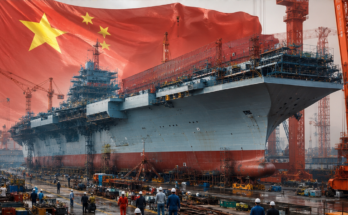
China learned from other nations’ aircraft—and then built an air force designed to challenge them.
1. Chengdu J-10: The Fighter That Marked China’s Leap Forward
Suggested image: A side-by-side comparison of China’s J-10, Israel’s Lavi, and the U.S. F-16.
Caption: The J-10 showed how quickly China could move from older fighter designs toward modern multirole combat aircraft.
The Chengdu J-10 was one of the clearest signs that China’s fighter industry was entering a new era. Before the J-10, much of China’s combat fleet was rooted in older Soviet technology. The J-10 gave the PLAAF a modern single-engine multirole fighter with fly-by-wire controls, canards, a delta wing, and a design philosophy closer to fourth-generation Western aircraft.
Its origins remain disputed. Analysts have long debated whether the J-10 benefited from Israel’s canceled Lavi fighter program, which itself had links to U.S. F-16 technology. GlobalSecurity notes that Chinese and foreign accounts differ: some sources argue the J-10 drew from the Lavi, while Chinese analysts argue its design came from earlier domestic Chengdu concepts. (Global Security)
What matters strategically is that the J-10 helped China close a major capability gap. Later versions, especially the J-10C, moved beyond simple visual resemblance and became far more serious aircraft, with improved avionics, active electronically scanned array radar, modern missiles, and better integration with China’s wider air-defense network.
The J-10 was not merely a “copycat.” It was China’s proof of concept: learn fast, adapt fast, and turn foreign influence into domestic capability.
2. Shenyang J-11 and J-16: The Russian Flanker Becomes Chinese Muscle
Suggested image: Chinese J-11 or J-16 in flight beside a Russian Su-27/Su-30.
Caption: China’s Flanker-family aircraft began with Russian roots but evolved into major pillars of the PLAAF.
China’s J-11 story begins with Russia’s Su-27, one of the most successful air-superiority fighters of the late Cold War. After the Soviet Union collapsed, Russia needed money, and China needed modern aircraft. Beijing acquired Su-27s and later began producing a Chinese version under license.
But China did not stop at production. It absorbed the design, studied it, and expanded it. The J-11 became the foundation for later Chinese Flanker variants, including the J-16, a heavier multirole strike fighter that combines the Su-27 family’s size and range with Chinese sensors, weapons, and electronics.
The International Institute for Strategic Studies describes the J-10C and J-16 as modern Chinese combat aircraft, while noting that the J-20 is China’s first fighter designed from the start with stealth shaping. The same assessment argues that China still trails the United States in top-end combat-aircraft design, but that the gap is far narrower than it was two decades ago. (IISS)
That is the key lesson of the J-11 and J-16: China did not just buy Russian aircraft. It used them as a bridge into a more independent aerospace industry.
3. Shenyang J-15: A Carrier Fighter with Heavy Baggage
Suggested image: J-15 launching from or landing on the Liaoning aircraft carrier.
Caption: The J-15 gave China carrier aviation experience, but its size and launch limitations exposed the difficulty of naval air power.
The J-15 is China’s main carrier-based fighter, and its roots trace back to the Russian Su-33, the naval version of the Su-27. China reportedly obtained a Su-33 prototype from Ukraine and used it as a basis for developing its own carrier aircraft.
On paper, the J-15 is large, fast, and powerful. But carrier aviation is not won on paper. Early Chinese carriers such as Liaoning used a ski-jump launch system instead of catapults. That limits how much fuel and weaponry a heavy fighter can carry during takeoff. In other words, the J-15 may look impressive, but the ship launching it can restrict what it can actually do.
The J-15’s importance is therefore not only combat capability. It gave China something even more valuable: experience. Pilots learned carrier operations. Ship crews learned deck handling. Engineers learned what worked and what did not.
The J-15 is a transitional aircraft—a stepping stone from borrowed naval aviation concepts toward a more advanced carrier air wing.
4. CH-4 Rainbow: China’s Reaper-Like Drone for the Export Market
Suggested image: CH-4 drone beside MQ-9 Reaper silhouette or battlefield drone-control station.
Caption: China’s CH-4 became popular among countries seeking armed drones without U.S. export restrictions.
China’s CH-4 Rainbow drone is often compared to the American MQ-9 Reaper. Visually, the resemblance is obvious: long wings, rear-mounted propeller, sensor ball, and underwing weapons stations. But resemblance does not mean equal performance.
Open-source comparisons show that the MQ-9 is generally larger and more powerful, with a much higher maximum takeoff weight than the CH-4. (GlobalMilitary.net) Still, the CH-4 mattered because it was available. Many countries that could not buy U.S. drones—or did not want the political conditions attached to them—could purchase Chinese armed drones instead.
This is where China’s strategy becomes especially effective. Even when its systems are not superior to American platforms, they can be cheaper, exportable, and “good enough” for many buyers. That gives Beijing influence, revenue, battlefield feedback, and diplomatic leverage.
The CH-4 shows that China’s air-power rise is not only about matching the U.S. military. It is also about competing in the global arms market.
5. FC-1 / JF-17 Thunder: A Budget Fighter with Real Strategic Value
Suggested image: Pakistan Air Force JF-17 taking off or carrying modern missiles.
Caption: The JF-17 is not the most advanced fighter in the world, but it gives smaller air forces an affordable modern option.
The FC-1 Xiaolong, known in Pakistan as the JF-17 Thunder, is a joint Chinese-Pakistani fighter designed to be affordable, maintainable, and exportable. It is often described as having roots in China’s F-7/J-7 lineage, itself derived from the Soviet MiG-21, but the final aircraft is far more modern than a simple MiG-21 upgrade.
The JF-17 program involved China’s Chengdu Aircraft Corporation and Pakistan Aeronautical Complex. It was created to replace older aircraft such as the Mirage III, Mirage 5, A-5, and F-7 in Pakistani service. (Wikipedia)
Its greatest strength is not prestige. It is practicality. The JF-17 gives countries a relatively affordable fighter with modern radar, beyond-visual-range missiles, precision-strike options, and continuing upgrade paths. Newer Block III versions are reported to include more advanced avionics and weapons integration.
For China, the JF-17 is also a geopolitical tool. It strengthens Pakistan, expands Chinese aerospace influence, and proves that Beijing can co-develop and export combat aircraft at scale.
6. Chengdu J-20: China’s Stealth Ambition Takes Flight

Suggested image: J-20 stealth fighter banking in flight, preferably front-quarter view showing canards and stealth shaping.
Caption: The J-20 is China’s most visible symbol of its ambition to challenge U.S. air dominance.
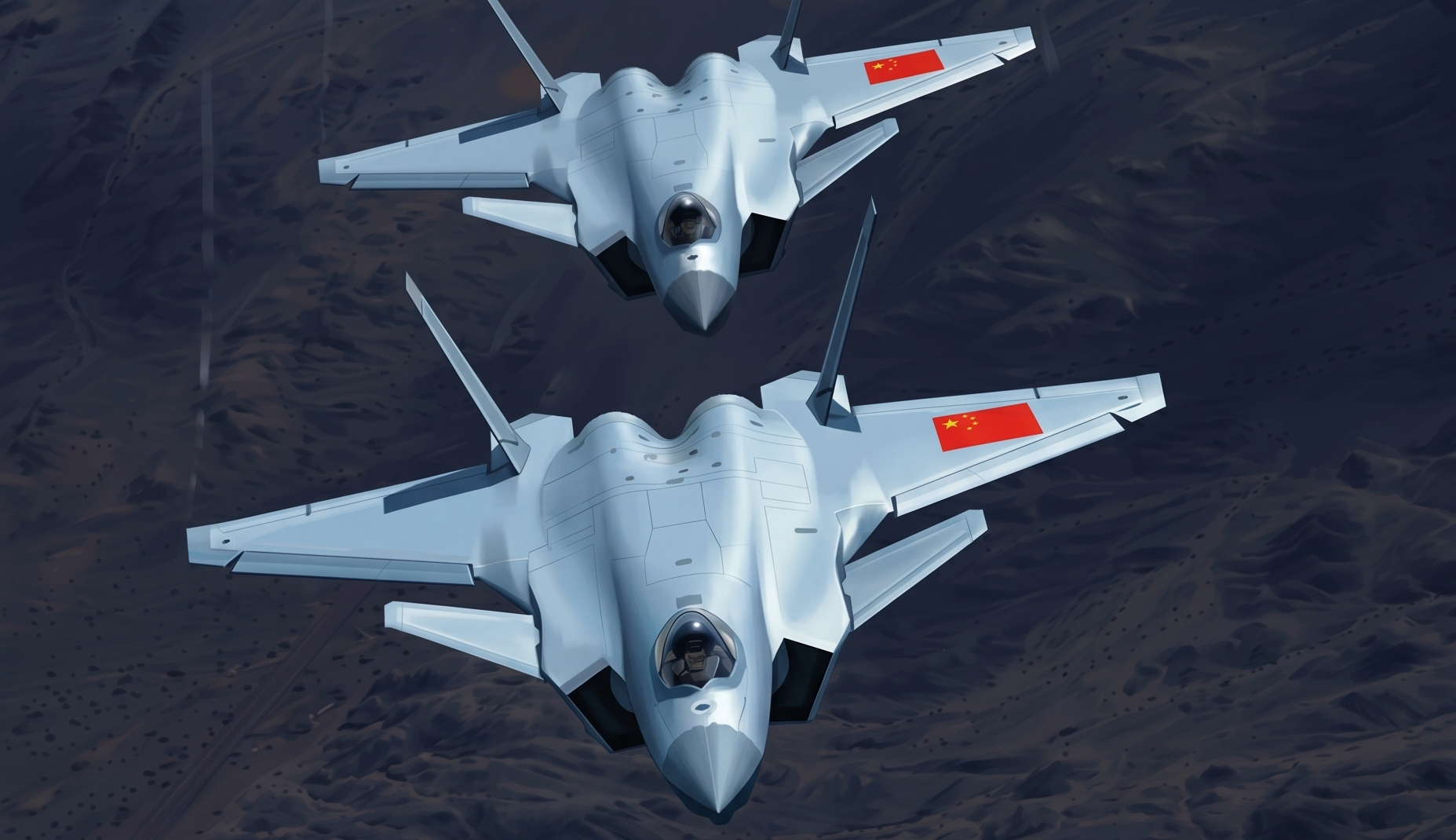
The J-20 is China’s first operational stealth fighter and the most dramatic symbol of the PLAAF’s modernization. It is large, fast, long-ranged, and designed to threaten high-value targets such as tankers, airborne early-warning aircraft, and command-and-control platforms.
Its development has been surrounded by claims of espionage. The U.S. Air Force Office of Special Investigations states that Chinese national Su Bin helped PLA-linked hackers steal more than 630,000 files from Boeing related to the C-17 and that the group also targeted data related to the F-22 and F-35. (osi.af.mil) The U.S. Department of Justice also said Su pleaded guilty to conspiring to hack U.S. defense contractors and steal military aircraft data for financial gain. (justice.gov)
But stolen files alone do not create a world-class stealth fighter. Stealth depends on materials, manufacturing precision, radar-absorbent coatings, engine design, weapons integration, maintenance quality, and decades of testing. That is why many analysts believe the J-20 is formidable but probably not as stealthy or mature as the F-22.
Still, dismissing the J-20 would be a mistake. It does not need to be a perfect F-22 clone to be dangerous. Its range, missiles, sensors, and growing production numbers can change the balance of air power in the Western Pacific.
The J-20 represents the new China: no longer just copying old designs, but fielding advanced aircraft that force its rivals to respond.
7. Shenyang J-35 / FC-31: China’s Next Carrier Stealth Fighter
Suggested image: J-35 or FC-31 prototype on runway, paired with an F-35 silhouette for comparison.
Caption: The J-35 appears designed to give China a stealth fighter for future aircraft carriers.
The aircraft once widely known as the FC-31 or J-31 has evolved into what is now commonly discussed as the J-35, China’s second stealth-fighter family. It strongly resembles Western stealth design trends, especially the F-35 and F-22, but it is not identical. It has twin engines, a different airframe layout, and appears aimed at both land-based and carrier-based roles.
The J-35 matters because China’s future carriers are expected to be far more capable than Liaoning. A modern catapult-equipped carrier paired with a stealth fighter would give the People’s Liberation Army Navy a much more serious blue-water aviation capability.
The big unknown is whether the J-35 can match the F-35’s most important advantage: sensor fusion. The F-35 is not just a fighter; it is a flying information node that gathers, processes, and shares battlefield data. There is no public evidence that the J-35 has reached that same level of integrated battlefield awareness.
Even so, the J-35 shows where China is going. Beijing wants not only a large air force, but a networked, stealth-capable, carrier-enabled air force that can operate far beyond China’s coastline.
Final Analysis: Copying Was the Shortcut. Mastery Is the Goal.
The phrase “copycat air force” is catchy, but it misses the most important point.
China’s strategy has not been simple imitation. It has been technological compression. Beijing has tried to squeeze decades of aerospace development into a much shorter timeline by using every available path: imports, licenses, reverse engineering, cyber theft, foreign partnerships, domestic research, and relentless iteration.
That strategy has weaknesses. Copied designs can carry inherited flaws. Reverse-engineered systems may lack the manufacturing precision of the original. Engines, stealth coatings, software, and sensor fusion are extremely difficult to master. China’s aircraft may still lag behind the best American platforms in several key areas.
But the trend is clear. China is learning. China is producing. China is improving.
The danger for its rivals is not that every Chinese aircraft is better than its Western or Russian counterpart. The danger is that China can field increasingly capable aircraft in large numbers, upgrade them quickly, and integrate them into a broader military strategy built around missiles, drones, ships, satellites, electronic warfare, and long-range sensors.
China’s air force began by borrowing wings. Now it is learning to fly on its own.
And that may be the most important story of all.