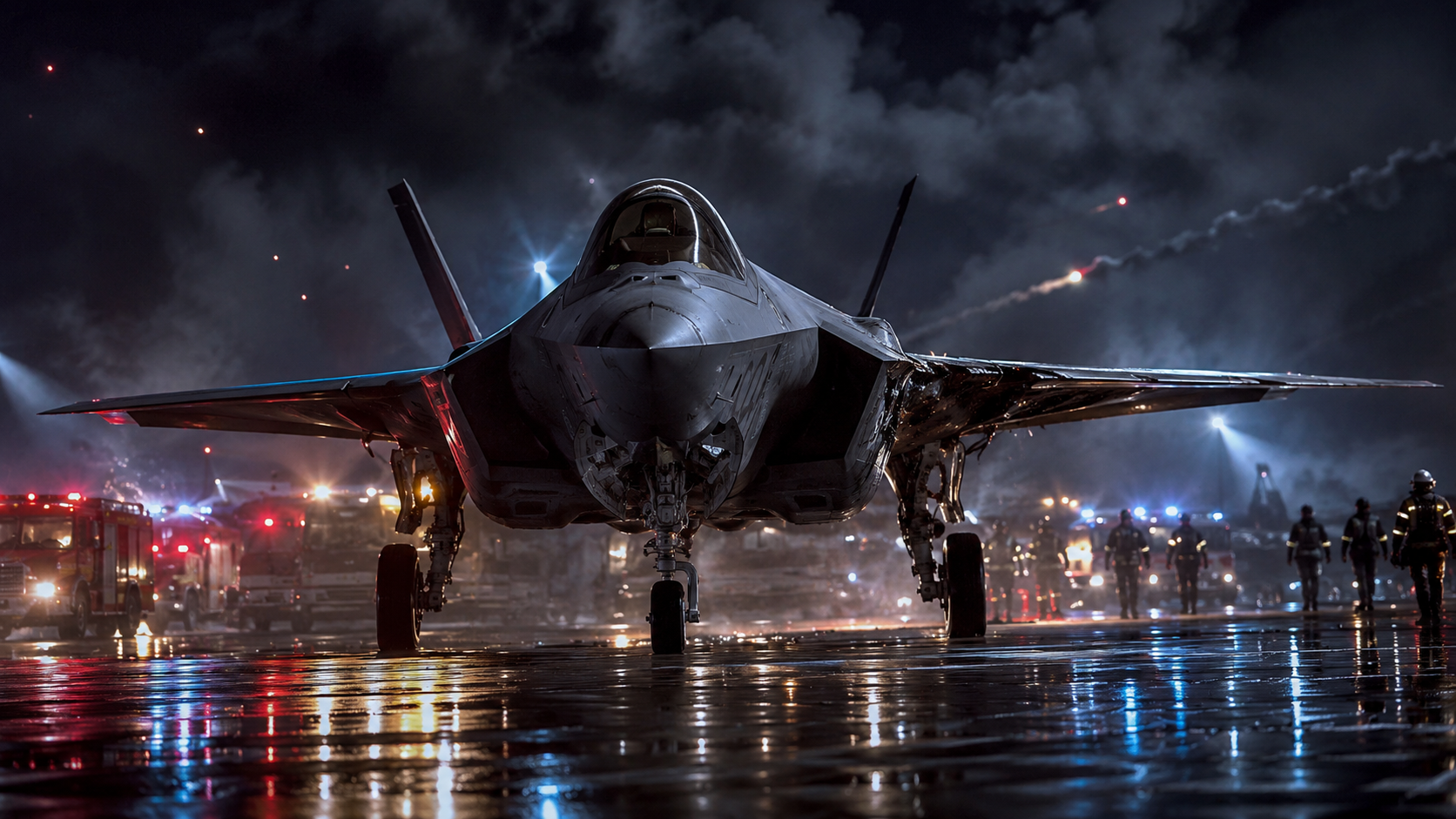
Iran may not have brought down America’s F-35 — but if it truly hit one, it may have cracked one of the most powerful myths in modern air warfare: that stealth means untouchable.
For years, the F-35 Lightning II has been described as one of the most advanced fighter jets ever built — a stealth aircraft designed to enter dangerous skies, avoid detection, gather battlefield intelligence, and strike with precision before the enemy even understands what is happening.
But now, one dramatic incident in the Middle East has forced the world to ask a dangerous question:
Can even the F-35 be touched?
You May Also Like
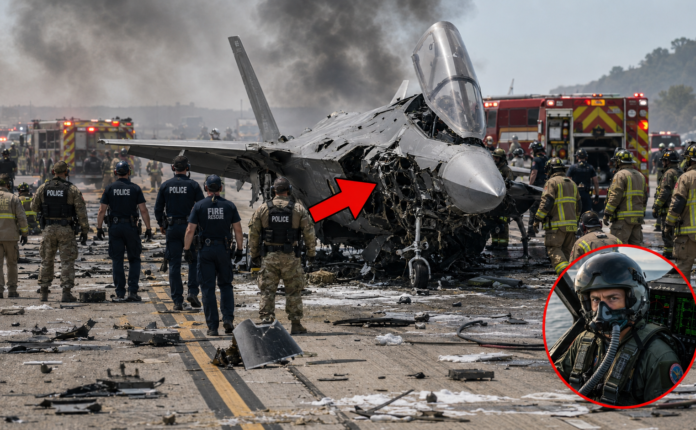

According to public reports, a U.S. F-35 made an emergency landing after a combat mission over Iran during the escalating U.S.-Israeli war with Tehran. The pilot survived and was reported to be in stable condition. U.S. Central Command confirmed the emergency landing but did not immediately confirm the exact cause, saying the incident was under investigation.
Iran, however, quickly claimed that its air defenses had targeted a U.S. aircraft. Iranian state-linked media released footage that it said showed the strike. Later reporting by Air & Space Forces Magazine, citing unnamed sources familiar with the matter, said the F-35 had been damaged by ground fire and that the pilot suffered shrapnel wounds.
If that claim is confirmed, it would be a historic moment.
Not because the F-35 was destroyed. It was not. The jet landed safely. The pilot survived. The aircraft was not “brought down” in the dramatic sense of being blasted from the sky.
But if Iranian fire truly damaged an F-35 in combat, it would still carry enormous symbolic and military weight. It would show that even the most advanced stealth fighter in the world is not invincible inside a dense, adaptive, high-threat air-defense environment.
That is why this story matters.
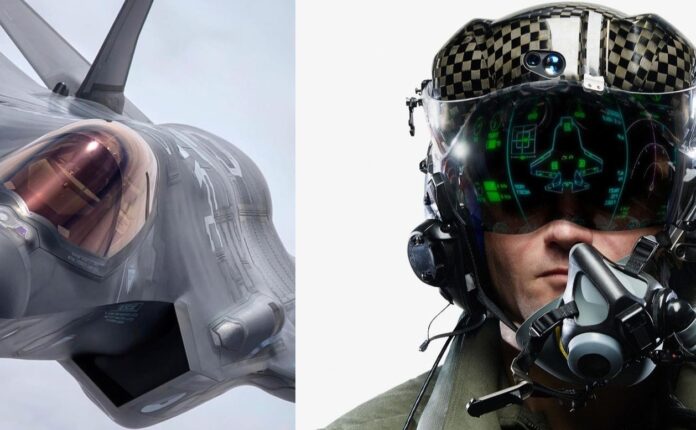
The F-35 is not an ordinary fighter jet. Built by Lockheed Martin, the Lightning II is a fifth-generation stealth strike fighter designed to combine low observability, advanced sensors, electronic warfare, data sharing, and precision weapons. It is not simply a plane with missiles. It is a flying intelligence platform, a digital command node, and a battlefield sensor designed to see more, process faster, and strike deeper than older aircraft.
The U.S. Air Force’s B-1B bombers are loading hundreds of JDAM bombs for the Middle East.
Its power comes from the combination of stealth and information.
The F-35 is built to reduce its radar signature. Its weapons can be carried internally to preserve stealth. Its sensors give the pilot a wide picture of the surrounding battlespace. Its helmet and sensor fusion systems help turn overwhelming battlefield data into usable information. In modern air combat, that matters as much as speed or firepower.
The pilot who sees first often survives first.
That is the promise of the F-35: enter contested airspace, detect the enemy, share information with other forces, and destroy targets before being found.
For the United States and its allies, the aircraft has become a cornerstone of modern airpower. Countries including the United Kingdom, Italy, Australia, Japan, South Korea, Israel, Norway, Denmark, the Netherlands, and others have bought or helped support the F-35 program. It is not just an American aircraft. It is a global military network in the sky.
That is why any report of an F-35 being hit immediately becomes international news.
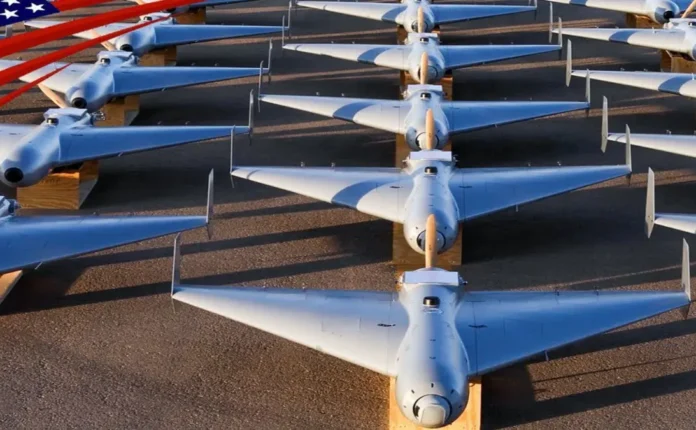
Iran’s claim is significant because Tehran has spent years building and improving its air-defense network. Iran knows it cannot match the United States fighter-for-fighter in the open sky. Instead, its strategy depends heavily on missiles, drones, radars, electronic warfare, underground facilities, and layered defenses designed to make any attack costly.
Against a normal fighter jet, that kind of defense is expected.
Against an F-35, the question becomes much bigger.
If Iranian systems were able to detect, track, or engage an F-35, it would raise urgent questions for military planners. Was the aircraft detected by radar, infrared sensors, passive detection systems, visual tracking, or a lucky shot? Was it hit at low altitude? Was it flying in a predictable route? Was it damaged by fragments rather than a direct missile impact? Was it struck while returning from the mission, when conditions may have been different?
These details matter.
A damaged F-35 does not automatically mean stealth has failed. Stealth does not make an aircraft invisible. It makes the aircraft harder to detect, harder to track, and harder to successfully target. That difference is important. No serious military expert believes stealth aircraft are magical. They reduce risk — they do not erase it.
That is why the word “unkillable” is dangerous.
No machine in war is unkillable.
Britain and Japan Forge Historic Tech and Defense Partnership as GCAP Fighter Jet Program Gains New Momentum
Not the F-35. Not the F-22. Not the B-2. Not a submarine. Not a tank. Not a drone. Every weapon system has strengths, weaknesses, conditions, and risks. The real question is not whether the F-35 can ever be hit. The real question is how difficult it is to hit — and under what conditions.
If the F-35 was damaged by Iranian ground fire, it would not mean the jet is a failure. It would mean modern air defense is becoming more dangerous, more adaptive, and more complex.
That is the real lesson.
The future battlefield will not be clean. It will be filled with overlapping radars, mobile launchers, decoys, drones, electronic jamming, cyberattacks, infrared sensors, satellite tracking, and hidden missile batteries. Even stealth aircraft may have to fight through layers of detection and fire.
In that kind of environment, survival depends on more than stealth alone.
It depends on intelligence, mission planning, electronic warfare, suppression of enemy air defenses, pilot skill, drone support, and real-time information. The F-35 is powerful because it brings many of these elements together. But even a powerful system can face danger when the enemy has time to adapt.
For Iran, the propaganda value of the claim is obvious.
One Mission, One Secret, One Hero: The Story of Captain Elias Vance –
If Tehran can convince the world that it hit an F-35, it can present itself as capable of challenging U.S. airpower. It can send a message to its domestic audience that its defenses are working. It can tell regional rivals that American technology is not beyond reach. In war, perception can be almost as important as damage.
For Washington, the messaging is different.
The U.S. can point to the fact that the aircraft landed safely and the pilot survived. That matters. A fighter that can absorb damage, protect its pilot, and return to base is not a failure. It is proof of survivability. In combat aviation, coming home is victory.
Still, the incident cannot be ignored.
If confirmed, this would be one of the most serious combat-related F-35 incidents ever reported. It would force defense analysts to study how the aircraft was engaged, what kind of system may have hit it, and whether Iran discovered a repeatable weakness or simply got one rare opportunity in a chaotic battlespace.
That distinction is crucial.
A lucky hit is not the same as a proven counter-stealth breakthrough.
But even a lucky hit can change the conversation.
The psychological image of the F-35 matters. For years, the aircraft has carried an aura of technological superiority. It has been described as a ghost, a flying computer, a stealth hunter, a jet that can see without being seen. That reputation has strategic value. It helps deter adversaries. It reassures allies. It shapes how enemies behave before the first shot is fired.
A single incident can damage that aura, even if the aircraft survives.
That is why headlines about the F-35 spread so quickly.
The story is not only about metal, radar, or missiles. It is about belief. It is about whether the world still sees the F-35 as untouchable. It is about whether America’s enemies believe the gap is narrowing. It is about whether future wars will become more dangerous for even the most advanced aircraft.
And it is about the brutal truth of modern warfare: technology gives an advantage, but it does not give immortality.
The F-35 remains one of the most advanced combat aircraft in the world. Its stealth, sensors, networking, and weapons make it a central pillar of U.S. and allied airpower. One reported hit does not erase decades of engineering or battlefield value.
But it does remind the world that the age of easy air dominance is fading.
Every mission over heavily defended airspace is a contest between attack and defense, between stealth and detection, between pilots and missiles, between technology and adaptation. The F-35 was built for that fight. Iran’s claim, if proven, shows that the fight is becoming harder.
So did Iran bring down an “unkillable” F-35?
Canada to join GCAP fighter jet program as an observer
Based on the public information available, no. The aircraft was not confirmed destroyed. The pilot survived. The jet landed safely.
But did Iran possibly damage one of the most advanced stealth fighters ever built?
That question remains far more serious.
Because if the answer is yes, then this incident may become a warning shot for the future of air combat. Not the end of stealth. Not the fall of the F-35. But a powerful reminder that no aircraft, no matter how advanced, can escape the oldest truth of war:
In combat, nothing is untouchable forever.