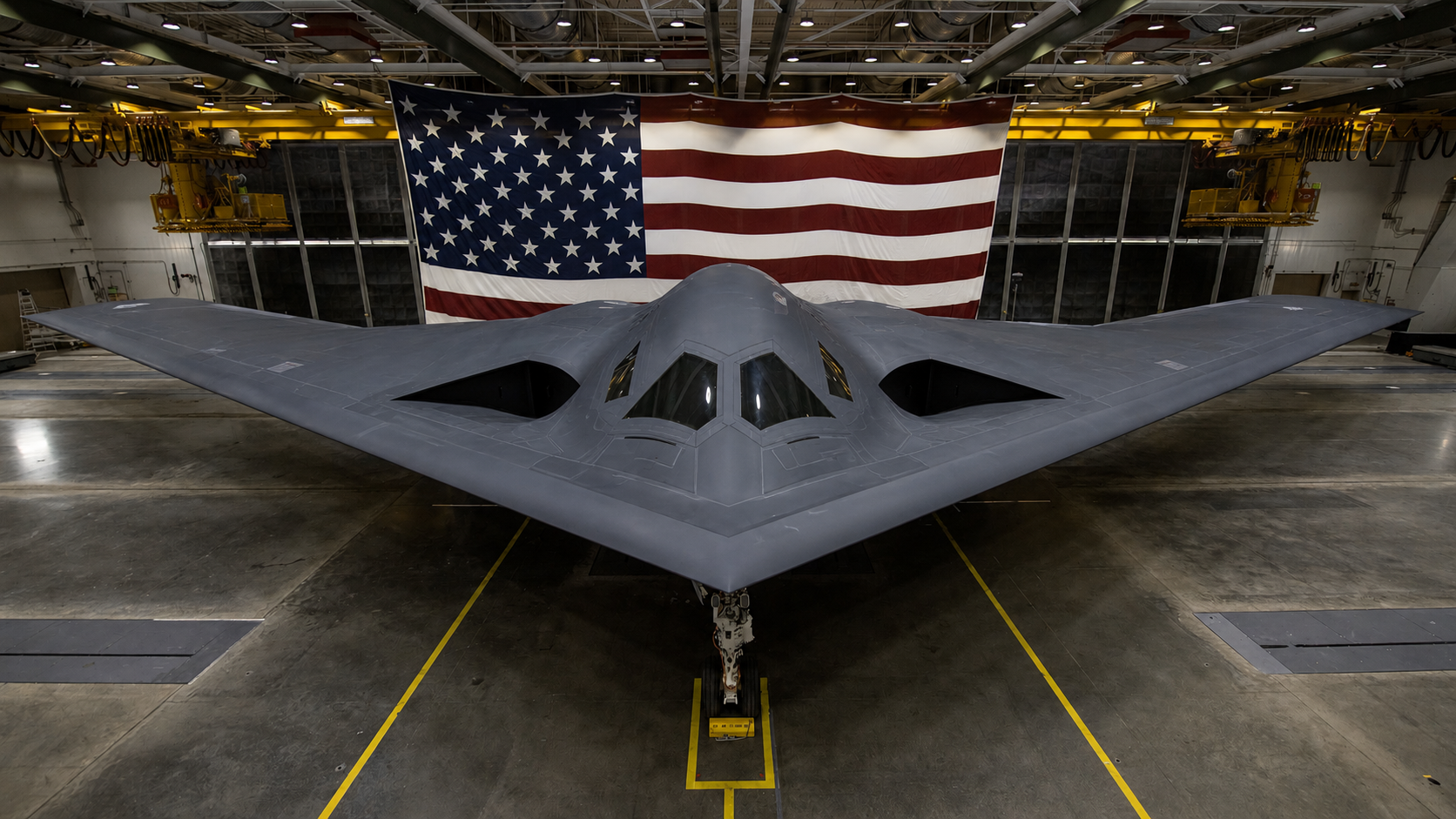
The Aircraft the World Waited More Than a Decade to See
For years, it existed only as rumors, artist renderings, and classified documents hidden behind the walls of the Pentagon.
Military analysts debated its capabilities.
Foreign governments tried to predict its design.
Aviation enthusiasts searched for clues in satellite images and defense reports.
You May Also Like
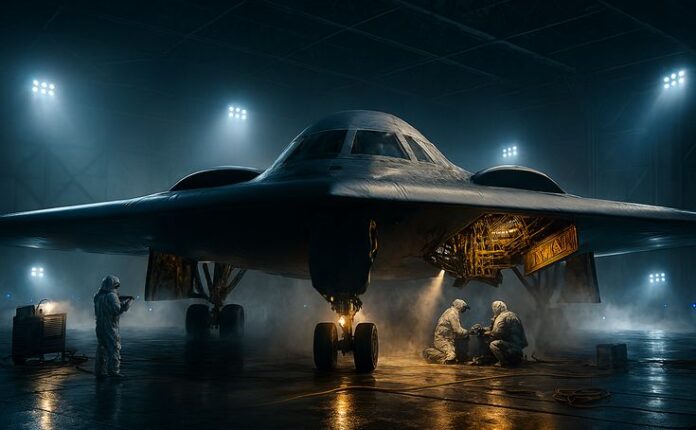

Then, after more than a decade of secrecy, the curtain finally lifted.
Emerging from a brightly lit hangar in California, a sleek flying-wing aircraft rolled into public view for the very first time.
It was unlike any bomber currently in service.
Its name was the B-21 Raider—America’s newest and most advanced strategic bomber, designed to operate in some of the most heavily defended airspace on Earth.
And according to many defense experts, it may represent the future of air warfare.
A New Era Begins
The story of the B-21 Raider began in 2011 when the United States Air Force launched the Long-Range Strike Bomber (LRS-B) program.
Military leaders understood that the world was changing.
Potential adversaries were developing increasingly sophisticated radar networks, air-defense systems, and long-range missiles designed to detect and destroy traditional aircraft.
The Air Force needed something new.
Not simply another bomber.
It needed a bomber built specifically for the challenges of the 21st century.
The mission was clear:
Create an aircraft capable of penetrating the world’s most advanced defenses while remaining difficult to detect.
The company chosen to accomplish this task was Northrop Grumman, the same aerospace giant responsible for developing the legendary B-2 Spirit stealth bomber.
After years of research, testing, and secrecy, the result was the B-21 Raider.
Why the Name “Raider” Matters
The bomber’s name honors the famous Doolittle Raiders, a group of American aviators who carried out one of the most daring missions of World War II.
In April 1942, sixteen B-25 bombers launched from an aircraft carrier and struck targets in Japan following the attack on Pearl Harbor.
Although the mission caused limited physical damage, its psychological impact was enormous.
It demonstrated American resolve during one of the darkest periods of the war.
The B-21 carries that legacy forward.
Its name reflects courage, innovation, and the ability to reach targets once considered unreachable.
Unveiled After Years of Secrecy
On December 2, 2022, the world finally got its first official look at the aircraft.
The unveiling attracted global attention.
Military officials, aerospace engineers, journalists, and aviation enthusiasts watched as the bomber slowly emerged from its hangar.
Even then, much remained hidden.
The aircraft displayed during the ceremony revealed only a portion of its design.
Many of its most important technologies remain classified today.
What observers did notice was its remarkably smooth appearance.
The aircraft featured a clean flying-wing design similar to the B-2 Spirit but appeared smaller, sleeker, and more refined.
Every curve, edge, and surface appeared carefully shaped to minimize radar detection.
The message was clear:
Stealth remains at the heart of the Raider’s design.
Why Is the A-10 Warthog Known as a “Flying Tank”? The Incredible Story Behind America’s Toughest Warplane
The First Flight
Nearly a year after its public unveiling, the B-21 reached another historic milestone.
On November 10, 2023, the bomber completed its first flight.
The event marked the beginning of an extensive testing campaign that will eventually prepare the aircraft for operational service.
For aviation enthusiasts, seeing the Raider in the sky for the first time was a remarkable moment.
For engineers and military planners, it was the culmination of years of effort.
The aircraft had moved from concept to reality.
And now the world knew it could fly.
What Makes the B-21 Different?
Although many details remain classified, defense experts believe the B-21 incorporates technologies never before used on an operational bomber.
Unlike previous generations of aircraft, the Raider was designed from the beginning for the digital age.
Advanced computing systems, modern sensors, secure communications, and future upgrades were built into its architecture.
This means the aircraft can evolve as technology changes.
Instead of becoming obsolete, the Raider can be continuously updated throughout its service life.
Military planners expect the aircraft to remain operational for decades.
Some analysts believe it could still be flying well into the second half of the 21st century.
A Bomber Built for the Future
One of the most remarkable aspects of the B-21 program is its emphasis on adaptability.
Future threats are impossible to predict with certainty.
The aircraft must therefore remain flexible.
The Raider is expected to support both conventional and strategic missions.
Its long range allows it to operate across vast distances, giving commanders the ability to respond to events anywhere in the world.
This global reach remains one of the defining strengths of American air power.
The B-21 is designed to extend that capability far into the future.
The Legendary P-51 Mustang: How One Aircraft Helped Turn the Tide of World War II
Interesting Facts About the B-21 Raider
It Is the First New American Bomber in More Than 30 Years
The B-2 Spirit first flew in 1989.
The B-21 represents the first completely new U.S. bomber design to enter flight testing since that era.
Much of Its Technology Is Still Secret
Many details about its radar signature, sensors, materials, and operational capabilities remain highly classified.
It Was Designed for Future Upgrades
Unlike older aircraft that required major redesigns, the B-21 was built with modernization in mind from the start.
It May Become the Backbone of America’s Bomber Fleet
The Air Force plans to acquire at least 100 B-21 bombers, making it a key component of future air power strategy.
It Represents a New Generation of Stealth
Experts believe the Raider incorporates lessons learned from decades of stealth aircraft development, potentially making it one of the most survivable aircraft ever built.
More Than Just an Aircraft
The B-21 Raider is more than a bomber.
It is a symbol of technological innovation, engineering excellence, and long-term strategic planning.
Its development demonstrates how modern warfare increasingly depends on advanced technology, information systems, and the ability to operate in highly contested environments.
For aviation enthusiasts, it represents the next chapter in the story of military flight.
For military planners, it provides a critical capability for decades to come.
And for the world, it remains one of the most fascinating aircraft ever created.
Ghost of the Skies: How the B-2 Spirit Became the Most Feared and Mysterious Bomber in Modern Military History.
Conclusion
The B-21 Raider spent years hidden behind secrecy, speculation, and anticipation.
Now it has emerged as one of the most important military aircraft of the modern era.
From its origins in the Long-Range Strike Bomber program to its public unveiling and successful first flight, the Raider represents the future of strategic aviation.
Much about the aircraft remains unknown.
And perhaps that mystery is part of what makes it so captivating.
What is certain, however, is that the B-21 Raider has already secured its place in aviation history.
The next generation of stealth has arrived—and it flies under the name Raider.




One Comment on “The B-21 Raider: America’s Mysterious New Stealth Bomber That Could Redefine Air Warfare”