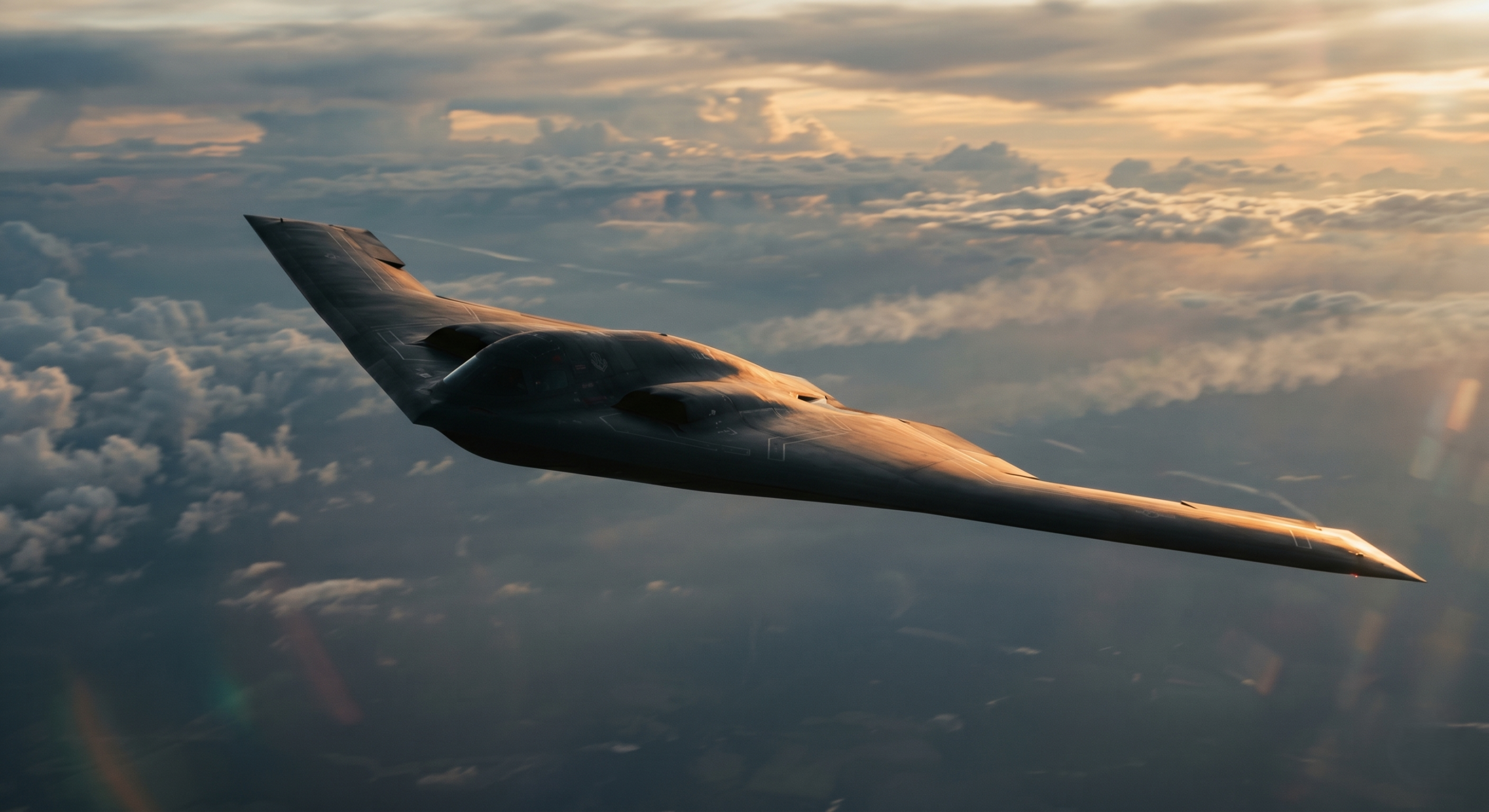
WASHINGTON — The Aircraft That Looked Like Science Fiction
Few military aircraft have captured the world’s imagination like the B-2 Spirit.
For nearly four decades, the stealth bomber has occupied a unique place in aviation history—part technological marvel, part military legend, and part mystery. Even today, few aircraft generate the same reaction when they appear overhead.
Its distinctive flying-wing silhouette seems almost unreal.
No tail.
You May Also Like
No traditional fuselage.
No visible features that resemble conventional aircraft.
To many observers, it looks less like a bomber and more like something from the future.
When the aircraft was publicly unveiled in 1988, it stunned the world.
Military analysts struggled to comprehend what they were seeing.
Aviation experts debated how such an aircraft could even function.
For the public, the aircraft appeared almost extraterrestrial.
For America’s adversaries, it represented something far more concerning.
A weapon unlike anything they had ever faced.
Born in the Shadows of the Cold War
The B-2’s story began during one of the most dangerous periods in modern history.
The Cold War had transformed the world into a contest of technology, strategy, and deterrence.
American military planners needed an aircraft capable of penetrating some of the most heavily defended airspace on Earth.
The mission seemed impossible.
The aircraft would need to fly thousands of miles.
Avoid radar.
Survive sophisticated air-defense systems.
Deliver devastating precision strikes.
And return home.
Northrop engineers responded with a revolutionary solution.
The flying wing.
Every angle.
Every curve.
Every surface.
Every material.
Was designed to reduce the aircraft’s visibility and give it a level of stealth the world had never seen before.
What emerged was not merely a bomber.
It was a technological revolution.
The Bomber That Almost Never Flew
Ironically, one of the greatest threats to the B-2 was not an enemy nation.
It was cancellation.
As the Soviet Union collapsed and the Cold War ended, many questioned whether such an expensive aircraft was still necessary.
The original plan called for 132 bombers.
Only 21 were ultimately built.
Because production numbers were dramatically reduced, costs soared.
The aircraft became one of the most expensive military platforms ever created, with costs exceeding $2 billion per aircraft.
Many believed the program would not survive.
Yet history had different plans.
Because the aircraft’s greatest achievements still lay ahead.
The Night That Changed Everything
April 1999.
Kosovo War.
The world would soon witness the B-2’s true capabilities.
On one historic mission, two B-2 bombers departed on a combat operation unlike anything attempted before.
Their destination lay deep inside hostile airspace.
The weather was terrible.
Enemy air defenses remained active.
Only days earlier, another stealth aircraft—the F-117 Nighthawk—had been shot down.
The danger was real.
Inside one cockpit sat Major Tom Bussiere.
Ahead of him stretched one of the most dangerous missions of his career.
For the first time in history, B-2 bombers would penetrate enemy territory during wartime without allied support aircraft accompanying them.
If discovered, they could not outrun missiles.
They carried no defensive weapons.
There would be no second chances.
Yet they pressed forward.
“It’s Game Time”
As storm clouds filled the horizon, Bussiere turned toward his fellow pilot.
The mission was approaching its most dangerous phase.
Weapons systems were checked.
Survival gear secured.
Stealth systems activated.
Then came the words that would become part of B-2 history.
“Weapons check complete, let’s go, it’s game time.”
With the press of a button, the aircraft entered maximum stealth configuration.
The giant black bomber became a ghost.
And then it disappeared into enemy territory.
The Combat Debut That Shocked Military Planners
The results were extraordinary.
Despite terrible weather conditions that forced thousands of other sorties to be cancelled, the B-2 continued its mission.
Flying high above storms and cloud cover, the aircraft delivered precision-guided weapons with remarkable accuracy.
Military analysts were stunned.
According to Air Force data, B-2 bombers were responsible for destroying approximately one-third of Serbian targets during the early stages of the conflict, despite representing only a tiny fraction of overall NATO operations.
The aircraft had proven itself.
Not in theory.
Not in simulations.
But in combat.
The age of stealth warfare had arrived.
More Than a Machine
Over the following decades, the B-2 participated in operations across multiple continents.
Afghanistan.
Iraq.
Libya.
Strategic deterrence missions.
And more recently, operations targeting hardened facilities requiring extraordinary precision and range.
Yet military leaders often emphasize that the B-2’s true strength is not merely its technology.
It is the people behind it.
The engineers who built it.
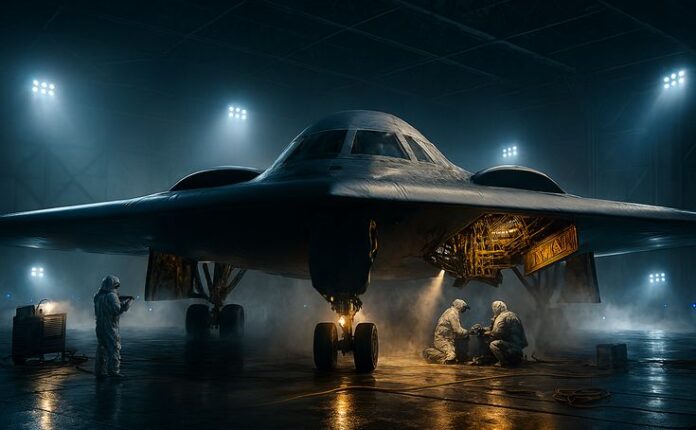
The maintainers who keep it mission-ready.
The planners who design complex operations.
And the pilots who fly missions lasting more than 30 hours.
Few aircraft demand more from their crews.
Few aircraft reward excellence more completely.
The Brotherhood of the Spirit
Perhaps the most remarkable aspect of the B-2 program is its culture.
Only a tiny number of pilots have ever flown the aircraft.
Each receives a unique “Spirit Number” signifying their place in the aircraft’s history.
Many arrive from different backgrounds:
Fighter pilots.
Bomber pilots.
Tanker crews.
Reconnaissance aircraft.
Helicopter aviators.
Even astronauts.
What unites them is not where they came from.
It is what they represent.
Professionalism.
Humility.
Excellence.
Mission focus.
And a shared commitment to operating one of the most extraordinary aircraft ever built.
The Future of the Ghost
Today, despite the arrival of newer technologies and the development of the next-generation B-21 Raider, the B-2 remains a vital component of American air power.
The aircraft continues receiving upgrades to its stealth coatings, avionics, software, sensors, and mission systems.
Military leaders expect the fleet to remain operational for years to come.
A remarkable achievement for an aircraft first conceived during the Cold War.
Its mission may evolve.
Its technology may improve.
But its legacy is already secure.
Because few aircraft have changed warfare so profoundly.
And even fewer have done so while remaining largely unseen.
A Legend That Refuses to Fade
As dawn finally broke after that historic Kosovo mission, the exhausted crews guided their aircraft back toward American airspace.
Their mission had lasted nearly 30 hours.
They had crossed oceans.
Entered hostile territory.
Delivered their weapons.
And returned safely home.
A voice came over the radio.
“Welcome home, gentlemen.”
Simple words.
Yet they marked the completion of a mission that would help cement the B-2 Spirit’s place in military history forever.
The bomber had proven itself.
The ghost had revealed its power.
And the skies would never be the same again.




2 Comments on “Ghost of the Skies: How the B-2 Spirit Became the Most Feared and Mysterious Bomber in Modern Military History”