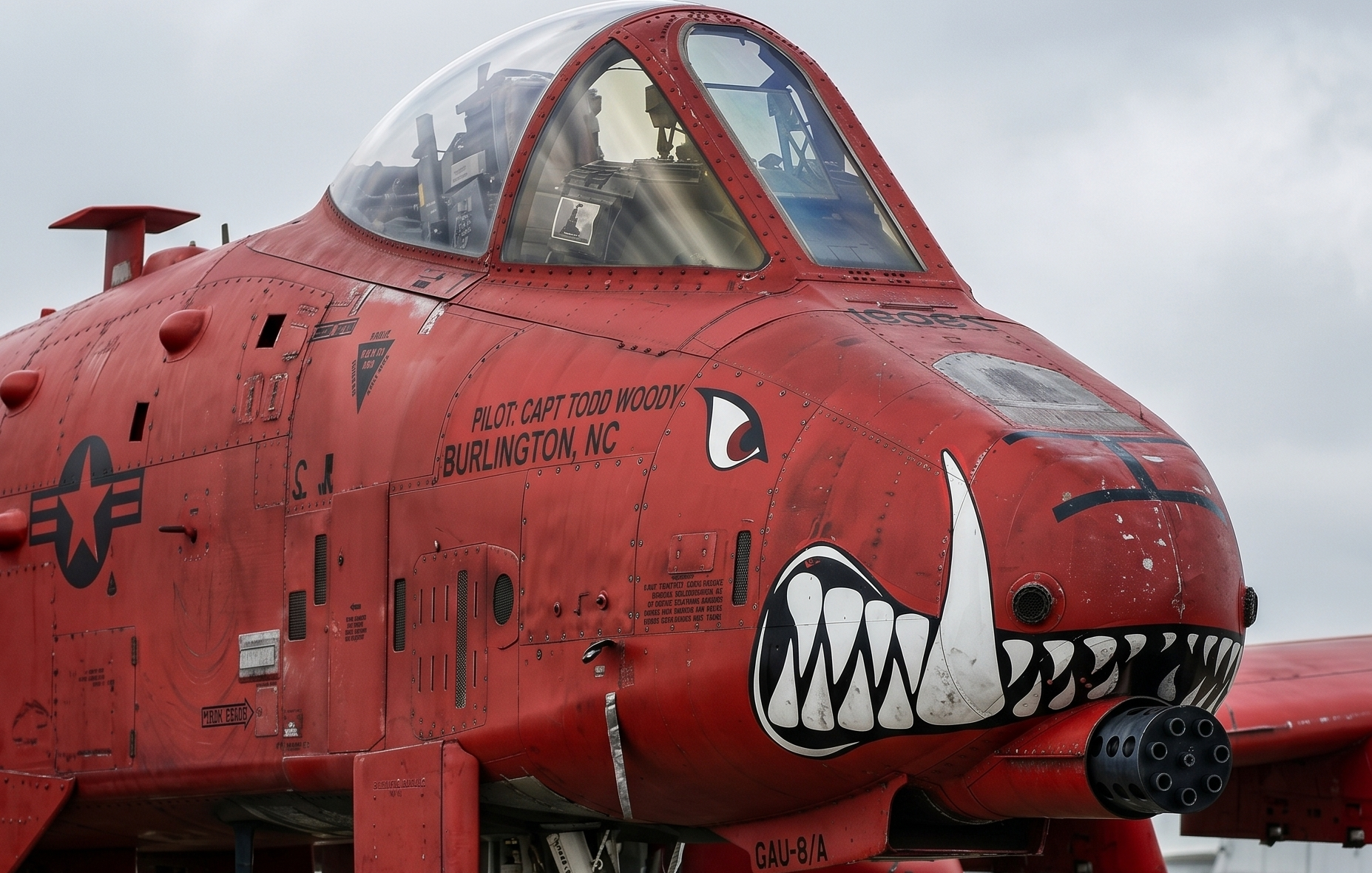
Some aircraft are remembered because they are fast. Some are remembered because they are beautiful. Some are remembered because they fly higher, farther, or quieter than anything before them. But the A-10 Warthog is remembered for a very different reason: it was built to survive punishment, protect soldiers on the ground, and keep fighting even after taking damage that would send most aircraft out of the sky.
The A-10 does not look like a graceful fighter jet. It does not have the sleek shape of a modern stealth aircraft. It does not try to hide its purpose. With its wide wings, blunt nose, high-mounted engines, and massive cannon, it looks tough, strange, and almost prehistoric. That is exactly why people love it.
To many troops, the sound of the A-10 is not just the sound of an aircraft. It is the sound of rescue. It is the sound of survival. It is the sound of hope arriving from above when the battlefield becomes too dangerous to handle alone.
That is why the A-10 Thunderbolt II is known around the world by a nickname that says everything: the “Flying Tank.”
You May Also Like
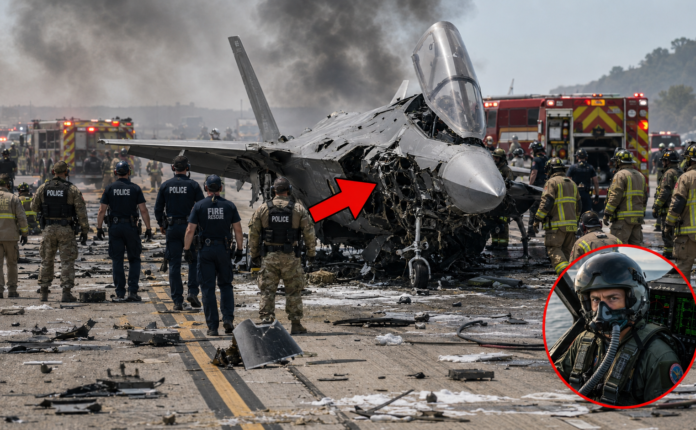
The official name of the aircraft is the A-10 Thunderbolt II, but most people know it as the Warthog. The nickname fits perfectly. Like a real warthog, the aircraft is not beautiful in a traditional way, but it is strong, aggressive, stubborn, and extremely difficult to stop. The A-10 was not designed to win beauty contests in the sky. It was designed to fly low over dangerous battlefields, absorb enemy fire, destroy armored vehicles, and bring American and allied troops home alive.
To understand why this aircraft became so legendary, we need to understand why it was created in the first place.
After World War II, military aviation changed very quickly. Jet fighters became faster. Bombers became more powerful. Nuclear strategy became a major focus of military planning. During this period, many aircraft were designed for speed, long-range strike missions, or air-to-air combat. But one very important mission did not always receive the same attention: close air support.
Close air support means helping troops who are fighting on the ground. It is one of the most dangerous and difficult jobs in military aviation. A close-air-support pilot may have to fly near enemy positions, identify friendly forces, understand a chaotic battlefield, and strike the enemy without harming the troops they are trying to protect. This is not just about dropping bombs. It is about timing, accuracy, patience, communication, and courage.
During the Vietnam War, the United States relied heavily on aircraft like the Douglas A-1 Skyraider for close air support. The Skyraider was tough and useful, but it was also an older propeller-driven aircraft from a previous era. As battlefield threats became more dangerous, the U.S. Air Force realized it needed a new kind of aircraft — one designed from the beginning for close air support.
That requirement led to the A-X program, which eventually produced the aircraft we now know as the A-10. The idea was simple but powerful: build an aircraft that could stay near the battlefield, carry heavy weapons, survive enemy fire, and destroy tanks and armored vehicles. This was during the Cold War, when NATO planners were deeply concerned about the possibility of massive Soviet armored forces moving across Europe. The Air Force needed something that could attack tanks again and again while staying close enough to support soldiers in direct contact with the enemy.
THE A-10 WARTHOG REFUSES TO DIE: The Jet the Air Force Keeps Trying to Bury
The result was one of the most unique aircraft ever built.
The A-10 was not simply given a big gun. In many ways, the aircraft was built around the gun. That weapon is the famous 30mm GAU-8/A Avenger Gatling gun. It is one of the most powerful aircraft cannons ever installed on a combat aircraft. This cannon is mounted in the nose of the A-10 and gives the Warthog one of the most recognizable battlefield sounds in modern military history.
People often describe the sound as “BRRRT.” It is short, deep, violent, and unforgettable.
The GAU-8/A cannon was designed to attack armored targets. Its rounds can tear into vehicles, equipment, and enemy positions with terrifying force. When people say the A-10 is like a tank in the sky, this cannon is one of the main reasons. Tanks are known for heavy armor and heavy firepower. The A-10 brings that same idea into the air: powerful protection, devastating weapons, and a mission focused on supporting the fight on the ground.
But the gun is only one part of the story.
The A-10 can also carry a large weapons load under its wings and fuselage. It can use bombs, rockets, missiles, guided weapons, unguided weapons, flares, and electronic countermeasure equipment. This gives the aircraft flexibility. It can attack tanks, vehicles, enemy troops, fortified positions, and other ground targets. It can support troops in open terrain, rugged mountains, deserts, and other difficult environments.
However, firepower alone does not make the A-10 a flying tank. Many aircraft can carry weapons. What makes the Warthog different is that it was designed to survive in places where aircraft are not supposed to survive.
The most famous example is the cockpit armor. The pilot sits inside a protective titanium structure often called a “bathtub.” This armor helps shield the pilot from ground fire and battlefield damage. It is one of the most important features of the aircraft because the A-10 often flies low and close to the action. Unlike aircraft that attack from far away, the Warthog may operate in range of small arms, anti-aircraft guns, and other threats.
The aircraft was built with the expectation that it might be hit.
That sentence is important.
Many aircraft are designed to avoid being hit. The A-10 was also designed to avoid unnecessary danger, of course, but its designers knew the mission would sometimes put it directly in harm’s way. So they built an aircraft that could take damage and keep flying.
The Warthog has self-sealing fuel tanks protected by foam. Its flight-control systems have backups. If the hydraulic systems are damaged, the pilot can still use manual controls to fly and land the aircraft. Its engines are separated and mounted high on the rear fuselage, which helps reduce the chance that one hit or one burst of damage will destroy both engines at once. Many parts of the aircraft are also designed with simplicity and field maintenance in mind.
This kind of survivability is one of the biggest reasons the A-10 earned its reputation. There are stories and photographs of A-10s returning to base with serious damage — missing parts, torn wings, damaged engines, and holes in the aircraft — yet still bringing the pilot home. That is the kind of reputation no marketing campaign can create. It must be earned in the air, under fire, mission after mission.
The A-10’s design looks unusual because almost every feature serves the mission.
Its straight wings help it fly slower and remain stable at lower altitudes. That matters because close air support is not always about speed. Sometimes the pilot needs to stay in the area, observe the battlefield, communicate with ground controllers, and wait for the right moment to strike. A very fast aircraft may pass over the target area quickly. The A-10 can loiter, circle, watch, and respond.
This ability to remain over the battlefield is one of the reasons ground troops respect the aircraft so deeply. When soldiers are under attack, they do not only need a quick explosion from the sky. They need protection. They need someone overhead who understands the fight. They need an aircraft that can stay with them until the danger changes.
The A-10 was built for that kind of patience.
The cockpit also gives the pilot excellent visibility. The large bubble canopy allows the pilot to look around and maintain awareness of what is happening below. In close air support, visibility can be life-saving. The pilot needs to identify friendly forces, locate enemy fire, understand terrain, and avoid mistakes. Modern avionics, night-vision compatibility, helmet-mounted cueing systems, and targeting systems have made the A-10C even more capable than the earlier versions.
This is another important point: the Warthog may look old, but it has been updated over time. The A-10C version includes modern systems that help pilots communicate, aim, navigate, and deliver weapons more accurately. The soul of the aircraft is still rugged and simple, but its tools have improved.
The A-10 first entered service in the 1970s. It was designed in an era when the threat of large armored warfare was a major concern. But its reputation truly exploded during later conflicts, especially in the Persian Gulf War. During Operation Desert Storm, the A-10 became famous for destroying tanks, vehicles, artillery, and other ground targets. It proved that a tough, low-flying attack aircraft still had a place on the modern battlefield.
In that war, the A-10 flew thousands of sorties and became closely associated with the destruction of enemy armor. It also showed an impressive mission-capable rate, proving that it was not only tough in combat but also reliable from a maintenance perspective. That combination — combat power and reliability — made the Warthog even more respected.
But numbers only tell part of the story.
The deeper reason people admire the A-10 is emotional. For troops on the ground, the Warthog is not just a machine. It is a guardian. It is an aircraft whose entire reason for existing is to help them survive. Its pilots do not fly it for glamour. They fly it to support the people below.
The Legendary P-51 Mustang: How One Aircraft Helped Turn the Tide of World War II
That makes the A-10 different from many other aircraft. Some jets are famous for fighting other jets. Some are famous for stealth. Some are famous for speed. The A-10 is famous for loyalty.
Its mission is not to dominate headlines. Its mission is to answer the call when ground troops are in trouble.
Imagine a unit pinned down by enemy fire. Dust is rising. Radios are crowded with urgent voices. Movement is difficult. The enemy position is dangerous, and the soldiers on the ground cannot easily escape or advance. Then, overhead, they hear the sound of the A-10. The pilot speaks with the ground controller, confirms the target, lines up the attack, and suddenly the battlefield changes. The enemy fire stops. The pressure breaks. The troops can breathe again.
That moment is why the Warthog is loved.
The phrase “flying tank” is not just about armor. It is also about attitude. A tank is expected to move toward danger, protect soldiers, and deliver heavy firepower. The A-10 does the same thing from the sky. It does not rely on elegance. It relies on toughness, firepower, and purpose.
Another interesting part of the A-10’s history is that it has survived not only enemy fire, but also years of debate about its future. For decades, some military planners have argued that the A-10 is too old, too slow, or too vulnerable for modern air-defense environments. Others have argued just as strongly that no aircraft fully replaces what the A-10 does for troops in close combat. This debate itself shows how important the aircraft has become. People do not fight passionately over ordinary machines. They fight over machines that matter.
The A-10 matters because it fills a very specific role. It was not built to do everything. It was built to do one mission extremely well: close air support.
That focus is one reason it became so effective. Modern military aircraft are often designed to perform many missions. The A-10 is different. Its identity is clear. It exists for the battlefield. It exists for ground troops. It exists for the hard, dangerous moments when support from the air can decide life or death.
The A-10 also has a special relationship with the people who maintain it. Behind every aircraft mission is a team of maintainers, weapons loaders, crew chiefs, and specialists who keep the jet ready. The Warthog’s rugged design helps it operate from bases with limited facilities near battle areas. Its parts were designed with practical maintenance in mind. That matters in war, because an aircraft that cannot be repaired quickly cannot keep helping troops.
The aircraft’s toughness is not only in its armor. It is in the entire system around it: the pilots who train for close air support, the maintainers who prepare it, the ground controllers who guide it, and the soldiers who trust it.
That is why the A-10 has become more than a weapon. It has become a symbol.
It symbolizes the idea that air power is not only about speed, technology, or distance. Sometimes air power is about staying close. Sometimes it is about refusing to leave. Sometimes it is about protecting a small group of people on the ground when the situation looks impossible.
The $400,000 Fighter Pilot Helmet That Nearly Exposed a Deadly Air Force Secret
The A-10’s appearance has also helped build its legend. Many famous aircraft look sleek and futuristic. The Warthog looks almost ugly at first glance. Its nose is wide because of the gun. Its engines sit high and far back. Its wings are broad and straight. Its landing gear does not fully disappear in the same clean way as many fighter jets. Everything about it seems practical rather than stylish.
But that rough appearance became part of its personality. The A-10 looks like what it is: a machine built for hard work.
That is why the nickname “Warthog” became so beloved. It turned what might have been seen as ugliness into pride. The aircraft is ugly in the same way a battle-scarred veteran’s equipment is ugly — marked by purpose, history, and survival.
Another fascinating fact is that the A-10 was named Thunderbolt II in honor of the Republic P-47 Thunderbolt from World War II. The P-47 was also known for toughness and ground-attack ability. By carrying the Thunderbolt name, the A-10 inherited a legacy of rugged aircraft built to survive difficult missions and support ground forces.
That connection to history gives the A-10 an even deeper meaning. It is not just a Cold War aircraft. It is part of a longer tradition of attack aircraft that put durability and ground support above sleek appearance.
Still, the A-10 became something uniquely its own.
The sound of its cannon, the sight of its wide wings, the stories of damaged aircraft returning home, and the gratitude of troops on the ground all combined to create a legend. The A-10 did not become famous because it looked advanced. It became famous because it worked.
In military history, some machines become symbols because they represent a larger idea. The A-10 represents stubborn survival. It represents the belief that troops on the ground should never be left alone when help can reach them. It represents the power of designing a machine for a clear purpose and refusing to compromise that purpose.
So why is the A-10 Warthog known as a flying tank?
Because it carries one of the most fearsome aircraft cannons ever built.
Because it can destroy armored vehicles and ground targets with brutal efficiency.
Because its pilot is protected by titanium armor.
Because its fuel systems, flight controls, engines, and structure were designed with survivability in mind.
Because it can fly low, stay near the battlefield, and support troops for extended periods.
Because it can take damage and still come home.
Because it was built not for glamour, but for war’s hardest and most dangerous moments.
And most importantly, because soldiers on the ground trust it.
That trust is the real heart of the A-10’s story. Machines can be powerful, but not every powerful machine becomes beloved. The A-10 became beloved because it earned a reputation for showing up when people needed it most. It became beloved because its pilots and crews dedicated themselves to the mission of close air support. It became beloved because, in the chaos of combat, the Warthog gave troops something priceless: a fighting chance.
The future of the A-10 may continue to be debated. Technology changes. Battlefields change. Air defenses become more advanced. Military planners must always think about what comes next. But no matter what happens, the A-10 has already secured its place in aviation history.
It will be remembered as one of the toughest aircraft ever built.
It will be remembered as a protector of ground troops.
It will be remembered for its strange appearance, terrifying cannon, and legendary survivability.
It will be remembered by the pilots who flew it, the maintainers who kept it alive, and the soldiers who looked up and knew help had arrived.
The A-10 Warthog is not the fastest aircraft in the sky. It is not the most beautiful. It is not the newest. But it may be one of the most honest aircraft ever created.
It was built to fight.
It was built to survive.
It was built to protect.
That is why the A-10 Warthog is known as the “Flying Tank” — a brutal, beloved, battle-tested legend with wings.




2 Comments on “Why Is the A-10 Warthog Known as a “Flying Tank”? The Incredible Story Behind America’s Toughest Warplane”