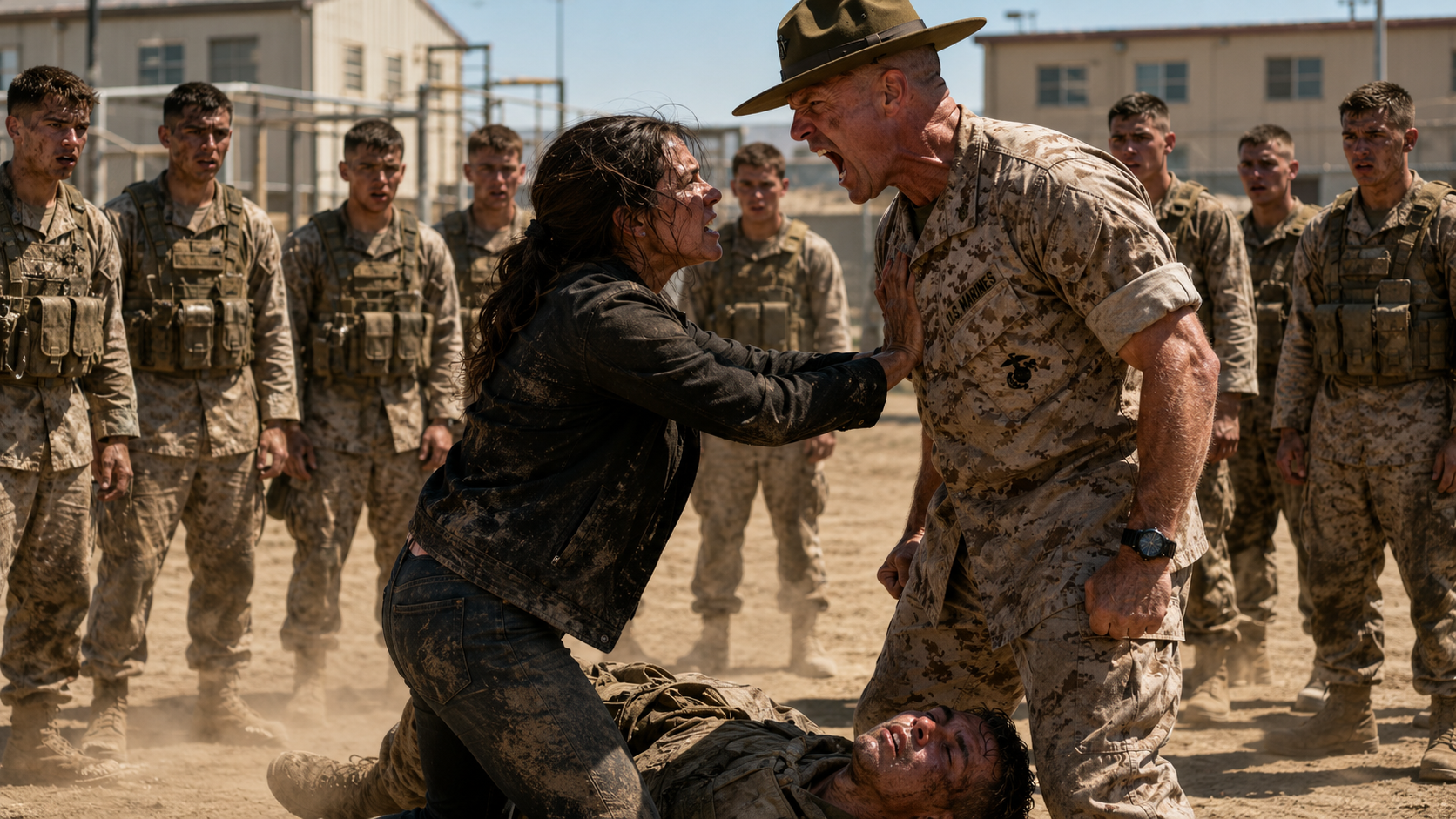
Get up, you pathetic piece of trash!” The voice cracked like a whip across the blisteringly hot asphalt of Fort Braxley. I am Lieutenant Colonel Sarah Jenkins, a twenty-five-year Army combat veteran, and as of Monday, the new Battalion Commander of this very training base. But right now, it’s Saturday. I’m wearing faded denim, a baseball cap pulled low, and mirrored sunglasses—just a ghost wandering my new kingdom.
I scrambled to my feet, wiping the blood and dirt from my torn palms. I didn’t say a word. I didn’t flash my badge or scream about my authority. I gave Vance one last, piercing look—a look that promised a reckoning he couldn’t possibly comprehend—and bolted toward the treeline where I had parked my civilian rental car. My heart pounded against my ribs, fueled by an agonizing mix of rage and terror for the dying boy.
The moment my car doors locked, I grabbed my phone and dialed base emergency services, bypassing the standard MP desk. “Code Red medical emergency at Grid 4. Severe heatstroke, unresponsive male. Send a medevac now.”
I watched through the windshield as the ambulance sirens wailed in the distance. Only when I saw the paramedics load the unconscious recruit onto a stretcher did I finally exhale. The boy was breathing, but just barely.
You May Also Like
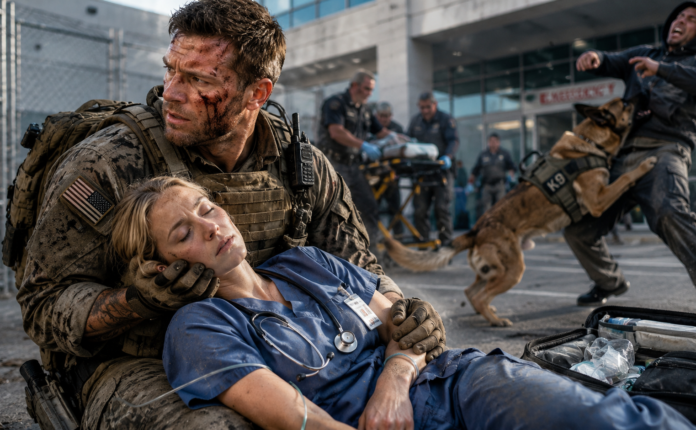
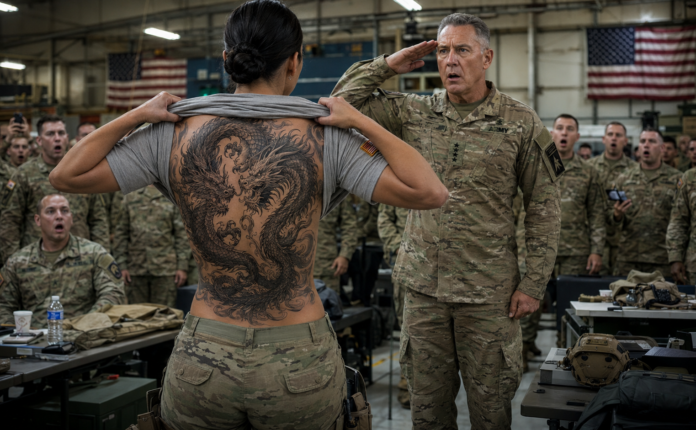
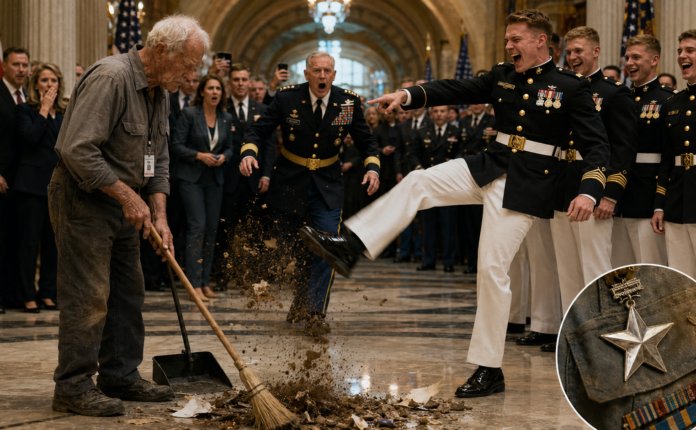
Then, I made the call that would detonate Vance’s entire world.
“Command Sergeant Major Harris,” a gruff voice answered on the third ring.
“Harris, it’s Lieutenant Colonel Jenkins. I’m on base early,” I said, my voice trembling with suppressed adrenaline. “I just physically engaged with Sergeant First Class Vance on the alpha field. He was beating a recruit dying of heatstroke.”
Dead silence on the other end. Then, a heavy sigh. “Ma’am… I need you to come to my off-post residence. Right now. There’s something you need to see. It’s worse than you think.”
Twenty minutes later, I was sitting in Harris’s dimly lit living room. The seasoned veteran, a man I trusted with my life during our tours in Iraq, slid a thick, unmarked manila folder across his coffee table. My fingers brushed the edges of the worn paper.
“I’ve been building this file in secret for eight months,” Harris revealed, his voice dropping to a harsh whisper. “Vance isn’t just a rogue drill sergeant, Sarah. He’s the crown jewel of the brigade. His platoons always graduate with the highest physical training scores, which makes the top brass look fantastic on paper. But the way he gets those numbers is pure, unadulterated torture.”
I flipped the folder open. My blood ran cold. It wasn’t just complaints; it was a horror story. Photographs of recruits with bruised ribs, documented sleep deprivation leading to hallucinations, and medical reports of severe dehydration that had been conveniently classified as ‘routine fatigue’.
“Why hasn’t he been court-martialed?” I demanded, slamming the file down.
Here came the twist. Harris leaned forward, his eyes grim. “Because the outgoing Battalion Commander—the guy you are replacing on Monday—has been burying the evidence. He’s Vance’s brother-in-law. Anyone who tries to report Vance gets their career systematically dismantled. We have a whistle-blower, a young Lieutenant named Davis, who has original, unredacted medical files hidden in his barracks. But he’s terrified. Vance already threatened his family.”
The danger of the situation suddenly magnified. I wasn’t just dealing with an abusive sergeant; I was walking into a deeply entrenched conspiracy of silence and intimidation. If Vance’s brother-in-law caught wind that I had the shadow file before I officially assumed command, he could destroy the evidence and medically discharge me for ‘assaulting’ a Drill Sergeant while undercover. I had assaulted him. Technically, he was right.
“Monday morning, at the change of command ceremony,” I said, my voice hardening into steel. “I want Lieutenant Davis in my office immediately after. We are going to blow this entire corrupt system wide open.”
I spent the rest of the weekend locked in a cheap motel off-base, memorizing every single page of Harris’s shadow file. I didn’t sleep. Every time I closed my eyes, I saw that kid’s face in the dirt, and remembered the sickening thud of Vance’s boot.
Monday morning arrived with a suffocating, humid heat. I stood perfectly still behind the podium, wearing my crisp Dress Blues, my silver oak leaves gleaming on my shoulders. The entire battalion was assembled in perfect, rigid formation before me. Hundreds of soldiers.
And right there, standing in the front row of the Alpha Company instructors, was Sergeant First Class Vance.
As the outgoing commander finished his speech and officially passed the unit colors to me, I stepped up to the microphone. My eyes scanned the sea of uniforms and locked dead onto Vance.
The smug, arrogant look on his face instantly vanished. The color drained from his cheeks as he recognized the ‘civilian’ he had assaulted and thrown off his field forty-eight hours ago.
I leaned into the microphone. “Sergeant First Class Vance. Report to my office. Now.”
If you’ve read this far, don’t hesitate to leave a like and comment before reading part 3. It makes us as happy as reading a complete story! Thank you. 👍❤️
Part 3
The heavy oak door of my office clicked shut, sealing us inside. Vance stood at attention, his massive frame rigid, but I could see a bead of sweat tracing its way down his temple. His knuckles were white.
“Ma’am, I…” Vance started, his voice cracking, entirely stripped of the booming arrogance he had displayed on the dirt field. “I didn’t know who you were.”
I sat slowly behind my desk, folding my hands over the thick manila folder. “That is precisely the problem, Sergeant. You thought I was a nobody. You thought I was a civilian with no power, which meant you felt perfectly entitled to brutalize me, just as you brutalized that dying teenager. You only respect the uniform, not the human being wearing it.”
“I was pushing him to be better!” Vance countered, a flicker of his old aggression returning. “That’s how we make soldiers!”
“You don’t make soldiers by kicking them when they are in cardiac distress,” I fired back, standing up. “You are relieved of your duties, effective immediately. Hand over your cover and your weapon.”
Vance sneered, leaning over my desk. “You can’t do this. My brother-in-law…”
“Your brother-in-law is no longer the commander of this battalion. I am,” I interrupted, my voice dangerously low. “And unlike him, I don’t give a damn about your inflated training statistics.”
Just then, the door opened. Command Sergeant Major Harris stepped in, followed by a pale, shaking young officer—Lieutenant Davis. Davis clutched a reinforced lockbox against his chest. When he saw Vance glaring at him, the young man instinctively stepped back in fear.
“It’s over, Vance,” Harris said, stepping between the lieutenant and the disgraced sergeant.
I looked at Davis. “You’re safe now, Lieutenant. I give you my absolute word as your commander. Nobody is going to hurt you or your career.”
Encouraged by the protection, Davis placed the lockbox on my desk. Inside were the unredacted medical files, original witness statements, and the terrifyingly detailed logs of Vance’s systematic abuse. The missing pieces of the puzzle were finally illuminated. Vance hadn’t just been abusing recruits; he had been falsifying federal documents and intimidating witnesses. His brother-in-law had been rubber-stamping the fraudulent reports to secure his own promotion.
By the end of the week, the explosive evidence triggered a massive independent investigation. The dominoes fell quickly. Vance’s brother-in-law was stripped of his promotion and forced into early retirement under immense scrutiny. As for Vance, the military justice system showed no mercy. He was permanently stripped of his Drill Sergeant badge, dishonorably discharged, and faced criminal charges for assault. The reign of terror was permanently dismantled.
But dismantling the monster wasn’t enough. I had to repair the damage he caused.
That Friday evening, I walked into the local military hospital. The room was quiet, save for the rhythmic beeping of a heart monitor. Private Leo Grant, the nineteen-year-old recruit I had pulled from the dirt, was sitting up in bed. He looked incredibly young and fragile.
“Private Grant,” I said softly, standing at the foot of his bed.
He tried to scramble to attention, wincing in pain. “Ma’am…”
“At ease,” I ordered gently. I sat beside him. “I want you to listen to me carefully. What happened wasn’t your fault. You didn’t fail the Army. The system failed to protect you. But I promise you, that system has been changed.”
Grant looked down, tears welling in his eyes. “I just wanted to be a soldier, Ma’am. I didn’t want to be weak.”
“You aren’t weak,” I told him, remembering the wise words of my own drill sergeant twenty-five years ago. “The field belongs to you, the soldier. We are just here to serve you. You get better. You come back. And you claim your field.”
One year later, I stood in the bleachers under the bright, blazing sun of Fort Braxley. Hundreds of new soldiers marched in perfect unison, their boots hitting the asphalt with a thunderous roar.
Down in the ranks, leading his squad, was Private First Class Leo Grant. He was no longer the frail boy in the dirt. He was broad-shouldered, confident, and fiercely proud.
As his company marched past the reviewing stand, our eyes met. He gave a sharp, incredibly precise salute. I returned it, a lump forming in my throat. We had saved him, and in return, he gave us everything.
What do you think of this story? Please leave a like and share your thoughts in the comments. Your support means a lot to us and inspires us to keep writing more meaningful and powerful stories. Thank you! 👍❤️




some really good info , Glad I detected this.
Thanks for helping out, superb information.