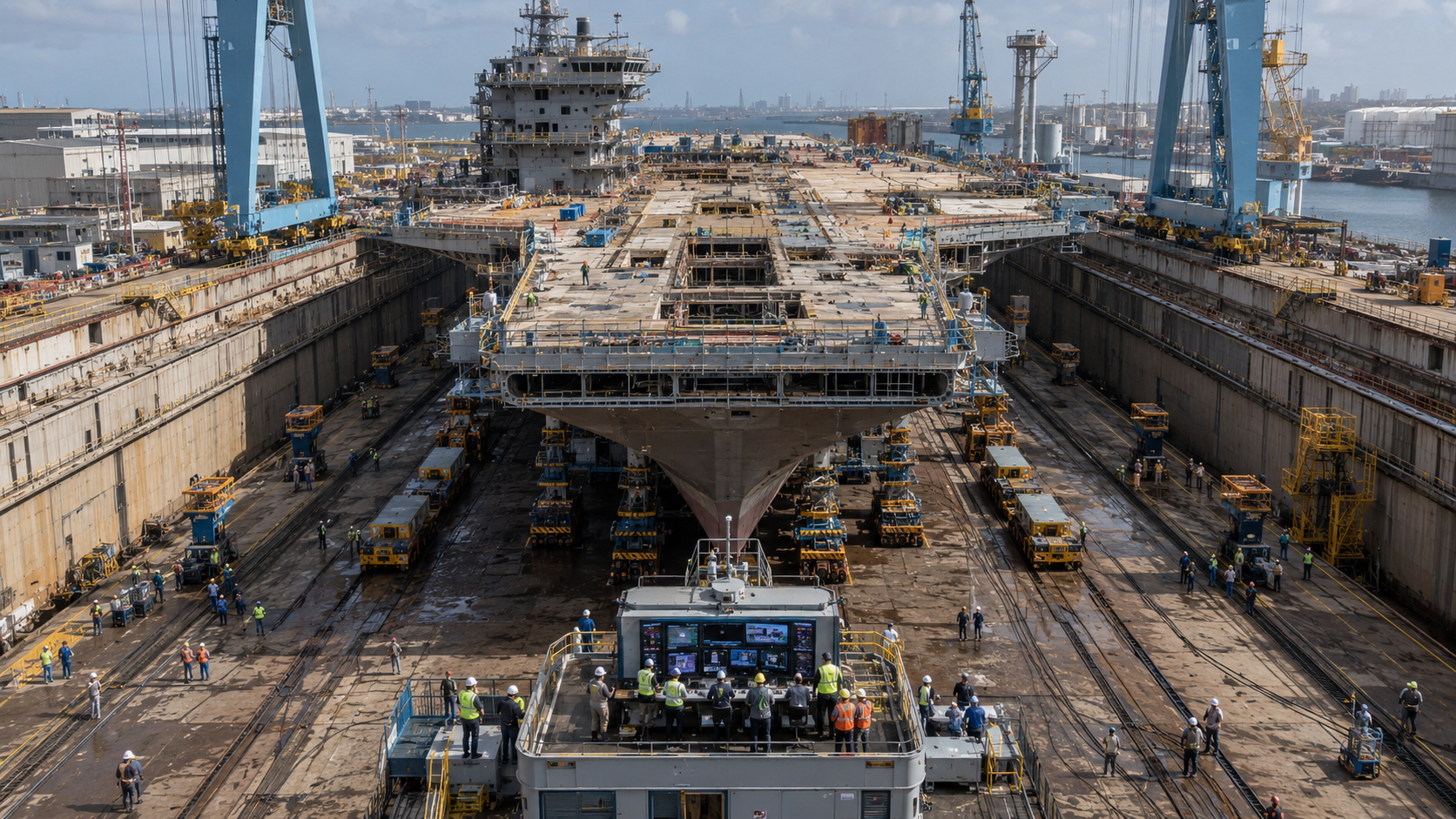
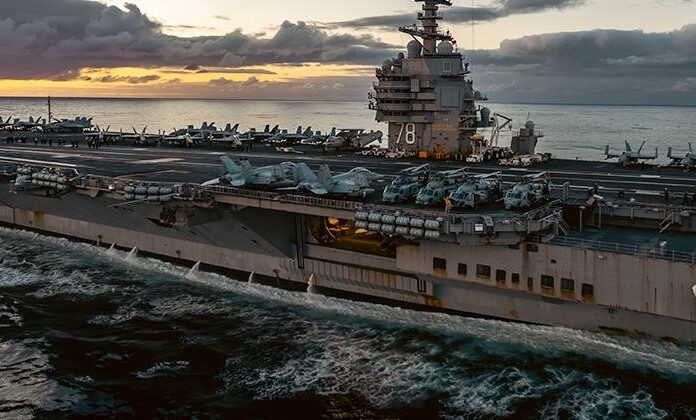
The USS Gerald R. Ford (CVN-78) is more than the largest warship ever built.
It is a floating city, a nuclear-powered fortress, and a symbol of American determination to dominate the world’s oceans.
Stretching more than 1,100 feet (337 meters) long and displacing over 100,000 tons, USS Gerald R. Ford represents one of the most ambitious engineering achievements in naval history. Yet this technological marvel did not arrive easily.
It took 12 years of construction, billions of dollars in cost overruns, and years of technical challenges before the ship officially entered service with the United States Navy.
You May Also Like
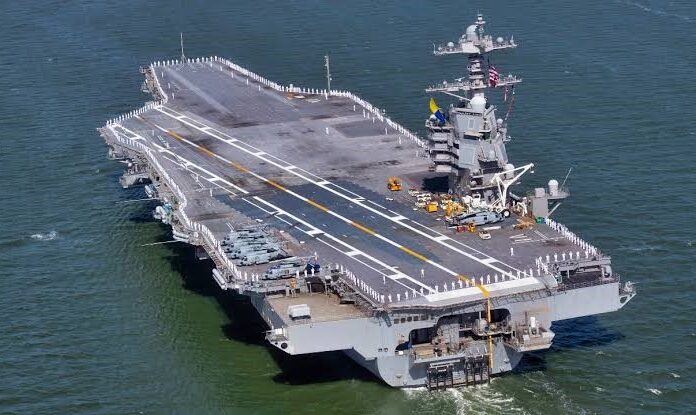
To critics, the carrier became a symbol of Pentagon inefficiency.
To engineers, it was an unavoidable consequence of building a revolutionary first-of-class warship.
To sailors, it became the most advanced aircraft carrier ever to put to sea.
And to history, it may be remembered as the vessel that reshaped naval warfare for the 21st century.
1. A New King of the Oceans

When the Navy conceived the Ford class, it was not seeking a modest upgrade to the earlier Nimitz-class aircraft carrier.
It wanted a generational leap.
The result was a ship designed to launch more aircraft, generate more electrical power, require fewer sailors, and operate with greater efficiency for decades to come.
USS Gerald R. Ford would become the lead ship of a new era—an aircraft carrier built not just for today’s conflicts, but for the wars of tomorrow.
This was America declaring that no ocean would be beyond its reach.
2. Why It Took 12 Years

Construction began in 2005 at HII’s Newport News Shipbuilding yard in Newport News.
The carrier was commissioned in 2017, but reaching operational readiness required years of additional testing and refinement.
Why so long?
Because the Ford introduced numerous new technologies simultaneously:
- Electromagnetic Aircraft Launch System (EMALS)
- Advanced Arresting Gear (AAG)
- New dual-band radar systems
- Advanced weapons elevators
- Redesigned nuclear reactors
- Greater automation to reduce crew size
Each innovation promised dramatic improvements.
Each innovation also brought risk.
The Ford was essentially a prototype of the most complex warship ever attempted.
3. The Price of Innovation

The final cost of USS Gerald R. Ford exceeded $13 billion, making it one of the most expensive warships ever built.
That figure sparked criticism from lawmakers and watchdog organizations.
But there is a crucial reality often overlooked.
First-of-class ships carry enormous non-recurring engineering costs—the research, design, and testing required to create an entirely new class of warship.
The Ford was not merely built.
It was invented.
Future ships would benefit from those lessons.
The pioneers always pay the highest price.
4. Modular Construction: Building a Giant Like Lego

Shipbuilders used modular construction, assembling large sections of the carrier before lifting them into dry dock.
These “superlifts” contained fully equipped compartments with pipes, wiring, and structural components already installed.
This approach accelerated production and improved quality.
Rather than building piece by piece, workers assembled giant portions of the ship like industrial building blocks.
It was engineering on a colossal scale.
5. Lessons Learned the Hard Way

The most significant challenge involved the ship’s advanced weapons elevators, which move bombs and missiles from magazines deep inside the ship to the flight deck.
These systems proved difficult to perfect, delaying the carrier’s full readiness.
Yet solving these problems transformed Ford from a troubled project into a mature combat platform.
Every revolutionary machine faces moments when doubt seems louder than progress.
Persistence is what turns ambition into achievement.
6. USS John F. Kennedy: Proof That the System Works

The second ship in the class, USS John F. Kennedy (CVN-79), demonstrates how experience reduces cost and time.
Builders expect Kennedy to cost at least $1.5 billion less than Ford.
Its design was completed before construction began, avoiding many of the inefficiencies that plagued the lead ship.
Several systems were also simplified, including radar and aircraft elevator components.
Kennedy is the Navy’s effort to turn a difficult first success into a repeatable process.
7. A Floating Air Base

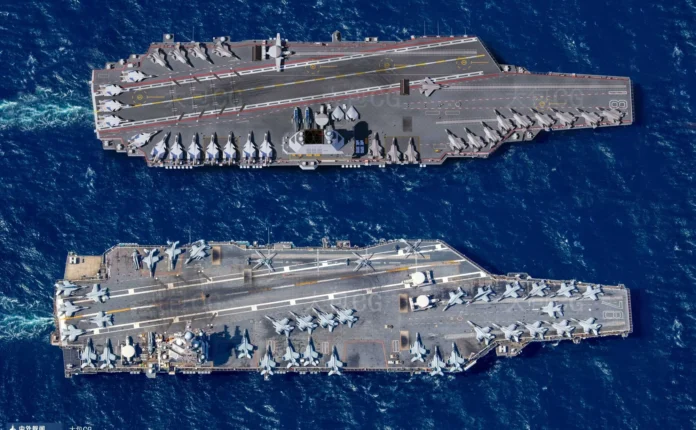
USS Gerald R. Ford carries more than 75 aircraft, including:
- F/A-18E/F Super Hornet fighters
- EA-18G Growler
- E-2D Hawkeye
- MH-60R Seahawk
- Future F-35C Lightning II aircraft
Powered by two nuclear reactors, the carrier can operate for more than two decades without refueling.
It combines the striking power of an air force base with the mobility of a warship.
8. Why Aircraft Carriers Still Matter

In an era of hypersonic missiles and drones, some question whether carriers remain relevant.
Yet no other platform can deliver sustained airpower anywhere on Earth without relying on foreign bases.
Aircraft carriers provide:
- Rapid crisis response
- Air superiority
- Precision strike capability
- Humanitarian assistance
- Visible deterrence
A carrier does not need permission to operate in international waters.
It brings American power wherever it sails.
9. The Human Story Behind the Steel

Behind every steel plate stands a vast team:
- Shipyard workers
- Welders
- Naval architects
- Nuclear engineers
- Sailors
- Maintainers
- Pilots
Thousands of people dedicated years of their lives to bringing this ship to life.
The true power of Ford lies not only in technology, but in the skill and determination of the people who built and operate her.
10. From Criticism to Combat Power

Today, USS Gerald R. Ford is fully operational and has demonstrated its ability to launch and recover aircraft at high tempo.
What was once criticized as an over-budget experiment is now a formidable instrument of American naval power.
History often judges innovation harshly before recognizing its value.
The same was true for the Ford.
11. The Strategic Meaning of USS Gerald R. Ford

Ford represents more than military hardware.
It embodies a national commitment to maintaining maritime superiority.
It sends a clear message:
The United States intends to remain a global naval power capable of projecting force, protecting allies, and deterring aggression.
In a world of uncertainty, this ship is a moving symbol of stability and strength.
Final Reflection: Greatness Takes Time
The story of USS Gerald R. Ford is not simply about delays and budgets.
It is about what happens when a nation attempts something extraordinary.
Twelve years of construction.
Billions of dollars.
Countless setbacks.
And one remarkable result.
The world’s most advanced aircraft carrier.
The Ford reminds us that history’s greatest achievements are rarely quick, simple, or inexpensive.
They demand patience.
They demand resilience.
They demand faith in a vision larger than the obstacles.
And when the giant finally steams into the open ocean, the years of struggle fade behind the wake.
The sea becomes its runway.
The horizon becomes its mission.
And the world is reminded that some symbols of power are so immense they take more than a decade to build.