A Long Debate Story of Scientists, Professors, Tankers, Engineers, and the M1 Abrams
The rain began before dawn.
It fell softly at first, tapping on the roofs of hangars and sliding down the steel sides of armored vehicles lined up across the proving ground. By sunrise, the air smelled of mud, diesel, wet concrete, and machine oil.
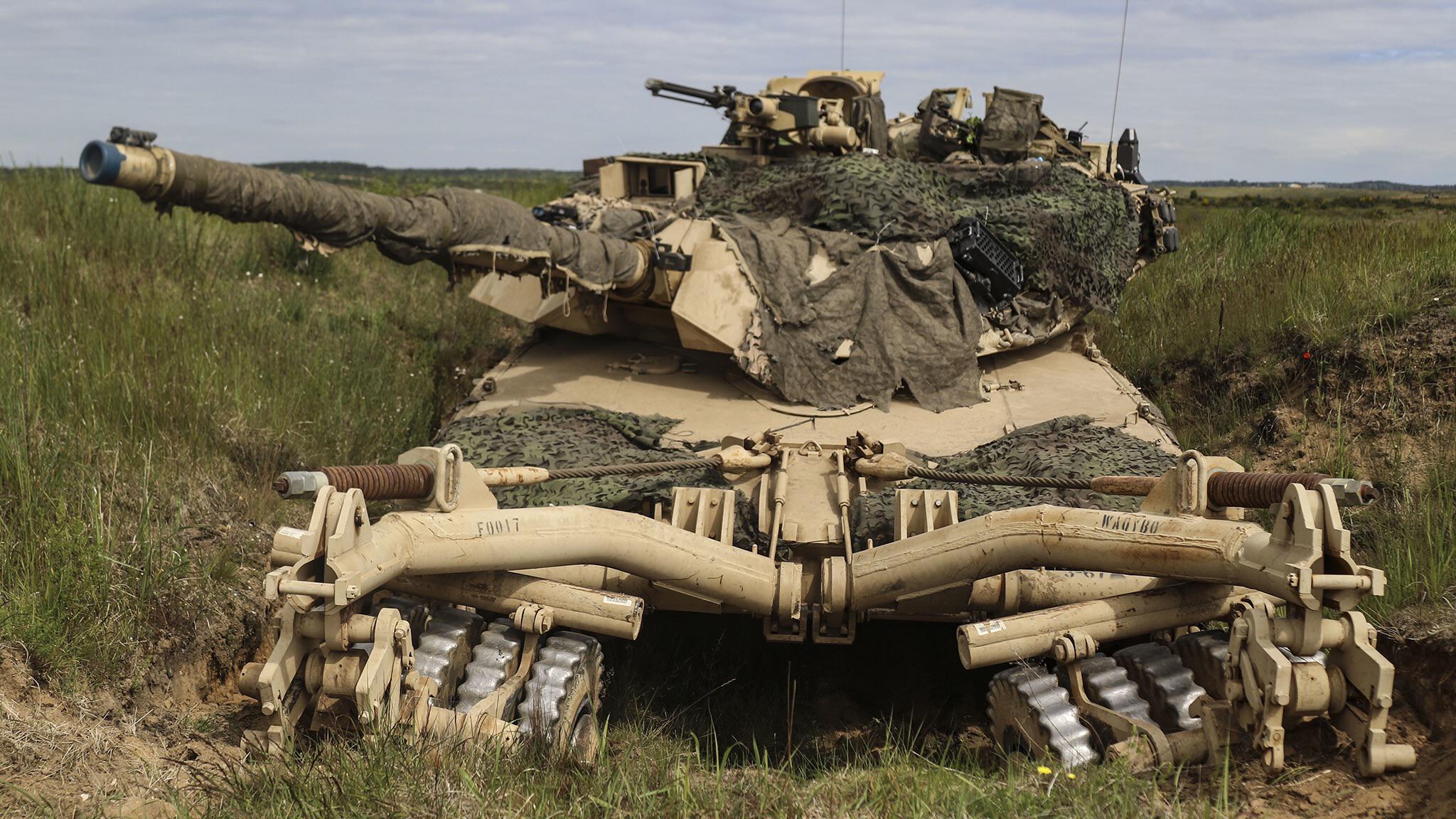
At the center of the yard sat the machine everyone had come to argue about.
You May Also Like
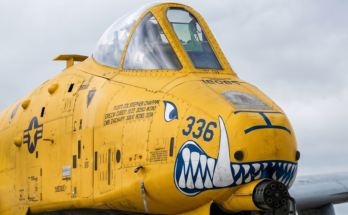
The M1 Abrams.
Low. Wide. Heavy. Silent.
Its long cannon pointed toward the gray horizon like an accusation. Its armor looked less like metal and more like a decision made by a nation that expected war to be brutal. The tank did not shine. It did not pose. It simply waited.
Around it gathered professors, engineers, officers, students, journalists, and mechanics. They had come to the International War Technology Forum, where the day’s debate carried a title that made every armored warfare expert in the room uncomfortable:
“THE M1 ABRAMS: IRON KING OR OVERBUILT LEGEND?”
The debate had been inspired by a controversial question that had followed the Abrams for decades:
Had the M1 lived up to expectations?
Some called it the greatest main battle tank ever fielded by the United States.
Others called it expensive, thirsty, complicated, and protected by reputation as much as armor.
On the stage outside the hangar stood six chairs.
In the first sat Professor Helena Cross, a military historian who had written books about tanks from World War I to the Gulf War.
Beside her sat Dr. Adrian Voss, a mechanical engineer and armored vehicle designer.
Next was Dr. Maya Kline, a defense systems analyst who believed modern warfare was becoming too fast, too networked, and too logistical for old assumptions.
The fourth chair belonged to Professor Samuel Reed, a philosopher of war who studied the moral burden of military machines.
The fifth belonged to Colonel Marcus Hale, a retired armored officer who had commanded Abrams tanks and trusted them like living beasts.
And finally, there was Dr. Elena Moreau, a defense economist famous for saying, “A weapon does not only fight the enemy. It also fights the budget.”
At the podium stood Professor Daniel Harrow, the moderator.
He raised his hand toward the Abrams.
“Ladies and gentlemen,” he said, “we begin not in a lecture hall, but beside the machine itself. Because a tank is not understood from paper alone. It is understood in mud, in fuel, in steel, in maintenance, in fear, and in the question every soldier asks before battle.”
He paused.
“Will this thing bring me home?”
The crowd became silent.
Professor Harrow turned to the panel.
“Today, we put the M1 Abrams on trial. Not because it is weak, but because it is powerful. Not because it is forgotten, but because it is legendary. And legends must be questioned.”
Colonel Hale leaned toward his microphone.
“Careful, Professor. Tanks do not like trials.”
Dr. Maya Kline smiled.
“Good. Then perhaps they should have performed better under cross-examination.”
A murmur moved through the audience.
The debate began.
1. THE HISTORIAN OPENS THE CASE
Professor Harrow turned to Helena Cross.

“Professor Cross, what is the M1 Abrams in the long history of armored warfare?”
Professor Cross stood and walked slowly toward the tank.
“The M1 Abrams is a child of fear,” she said.
The audience shifted.
She continued.
“All great tanks are. The British Mark I was born from the fear of trenches. The German Tiger was born from the obsession with armor and firepower. The Soviet T-34 was born from the need for rugged mass production. The Israeli Merkava was born from the belief that crew survival mattered above all. The Abrams was born from the Cold War fear of a massive armored clash in Europe.”
She touched the side of the tank gently.
“This machine was designed for a nightmare: Soviet armor rolling through Europe, speed, fire, shock, smoke, and survival. It was not designed to be cheap. It was designed to win.”
Colonel Hale nodded.
“And it would have.”
Dr. Moreau raised an eyebrow.
“At what fuel cost?”
Some people laughed softly.
Professor Cross smiled.
“That is exactly the issue. Every war machine has two histories: the history told by those who use it, and the history told by those who maintain and pay for it.”
Dr. Kline added, “And sometimes the second history is less heroic.”
Colonel Hale turned toward her.
“Heroism is not measured in gallons per mile.”
“No,” Kline replied. “But armies stop when fuel stops.”
The first clash had arrived.
2. THE TANKER DEFENDS THE KING

Professor Harrow faced Colonel Hale.
“Colonel, you commanded Abrams tanks. What do critics misunderstand?”
Hale did not answer immediately.
He looked at the tank the way old sailors look at ships.
“They misunderstand what trust feels like,” he said.
“Explain,” Harrow said.
Hale leaned forward.
“When you are inside a tank, you do not think in procurement charts. You do not think about congressional testimony. You think about whether your machine will move when you push it, fire when you command it, protect your crew when the enemy hits you, and keep fighting after the first bad moment.”
He tapped the table.
“The Abrams gives crews confidence. That matters.”
Dr. Moreau replied, “Confidence is important. But confidence can become expensive mythology.”
Hale looked at her.
“And criticism can become spreadsheet arrogance.”
The audience murmured.
Hale continued.
“The Abrams is fast for its size. It has powerful armor. It has excellent fire-control capability. It gives crews a chance to see first, shoot first, and survive. You cannot reduce that to fuel consumption.”
Maya Kline replied calmly.
“No one is reducing it. We are completing the picture.”
Professor Reed nodded.
“That is the moral problem with famous weapons. Their successes become visible. Their burdens become invisible.”
Hale answered, “The burden is worth it if the crew survives.”
Moreau replied, “That is a powerful argument. But what if the burden prevents other crews from receiving what they need?”
The colonel did not answer immediately.
The debate grew sharper.
3. THE ENGINEER AND THE TURBINE QUESTION

Professor Harrow turned to Dr. Adrian Voss.
“Dr. Voss, much of the debate around the Abrams has focused on its turbine engine. Is the turbine a genius decision or a costly mistake?”
Voss smiled.
“That depends on whether you ask an engineer, a tanker, a mechanic, or a fuel officer.”
“Ask all four,” Harrow said.
The audience laughed.
Voss began.
“The Abrams uses a gas turbine engine. The argument for the turbine was power, acceleration, smooth operation, and performance. The Abrams is heavy, but it moves with surprising speed. That gives tactical advantages.”
Colonel Hale nodded.
“The acceleration matters. People who have never moved armor under threat underestimate that.”
Voss continued.
“But the turbine also brings serious concerns. Fuel consumption. Heat signature. Maintenance complexity. Air intake vulnerability. Logistics burden. These are not minor issues. A tank does not fight alone. It fights as part of a supply system.”
Maya Kline jumped in.
“And if the supply system becomes too large, the tank’s strength creates its own weakness.”
Hale replied, “Every tank needs fuel.”
Kline answered, “But not every tank drinks like a battlefield dragon.”
The audience laughed, then quieted.
Moreau looked at her notes.
“The source material we are discussing argues that the Abrams consumed dramatically more fuel than some comparable diesel-powered tanks, including the Leopard II. It also emphasizes that a division equipped with M1 tanks would require an enormous daily fuel supply.”
Colonel Hale said, “The Leopard II is an excellent tank. But comparisons on paper do not capture battlefield doctrine.”
Voss nodded.
“True. But neither should doctrine become a shield against measurable weakness.”
Professor Cross leaned in.
“History punishes armies that ignore logistics. Napoleon learned it. Hitler learned it. Patton understood it. Tanks do not run on courage.”
Hale said quietly, “No. They run on fuel, crews, parts, and command.”
Moreau replied, “And all four are limited.”
4. THE ECONOMIST COUNTS THE PRICE OF POWER

Dr. Elena Moreau stood.
“I will say what everyone hates hearing: the tank is not only a weapon. It is a financial decision.”
Colonel Hale groaned.
“Here we go.”
Moreau smiled.
“Yes, Colonel. Here we go.”
She faced the audience.
“The Abrams was expensive. Its critics argued that it cost far more than certain foreign competitors while still facing serious questions about reliability, fuel use, and maintenance. The source compares the Abrams with tanks such as the German Leopard II and raises questions about whether higher cost guaranteed superior performance.”
Hale replied, “A cheaper tank that loses is not a bargain.”
Moreau answered, “An expensive tank that cannot be supported is not a victory.”
The room stirred.
Moreau continued.
“Every dollar spent on one platform is not spent somewhere else. Recovery vehicles. Fuel trucks. training. infantry equipment. air defense. spare parts. bridges. communications. logistics units. If one tank demands too much from the system, the entire force must bend around it.”
Dr. Voss nodded.
“That is the hidden architecture of warfare. People see the tank. They do not see the river of fuel behind it.”
Maya Kline said, “Or the trucks carrying the fuel. Or the mechanics. Or the spare track. Or the vulnerability of the supply convoy.”
Professor Reed added, “And sometimes the people in that convoy face danger created by the machine they are supporting.”
Hale’s expression hardened.
“That is true. But no army escapes logistics.”
Moreau replied, “Correct. The question is whether a design creates unnecessary logistical strain.”
Hale leaned back.
“And the answer depends on whether its combat performance justifies that strain.”
Professor Harrow smiled.
“Now we have the real debate.”
5. MOBILITY: SPEED OR SUSTAINMENT?

Professor Harrow changed the display behind the panel. Three words appeared:
MOBILITY. PROTECTION. FIREPOWER.
“The classic basics of tank warfare,” he said. “Let us begin with mobility.”
Dr. Voss spoke first.
“Mobility is often misunderstood. People think mobility means top speed. But battlefield mobility is more complex. It includes acceleration, cross-country movement, traction, reliability, fuel range, ability to recover from breakdowns, and the speed of the entire formation.”
Maya Kline added, “A tank battalion moves only as fast as its slowest critical dependency.”
Moreau said, “Often fuel.”
Colonel Hale replied, “Sometimes bridges. Sometimes maintenance. Sometimes command. Sometimes mud.”
Professor Cross said, “Mud has defeated more plans than enemy generals.”
The audience laughed.
Voss continued.
“The Abrams has impressive engine power. But critics have argued that the turbine’s fuel consumption and the track system created problems under some conditions. The source mentions concerns about mud, snow, ice, track wear, and thrown tracks.”
Hale raised his hand.
“Any heavy tracked vehicle can throw track. Any tank can struggle in bad terrain. This is not unique to the Abrams.”
Kline replied, “But if a design has specific weaknesses, we must name them.”
Hale said, “Name them, yes. Exaggerate them, no.”
Professor Reed asked, “Colonel, how did crews think about mobility?”
Hale answered, “Mobility was life. If you could move, you could reposition, flank, withdraw, exploit, survive. A tank that cannot move becomes a bunker. A bunker can be surrounded.”
Voss nodded.
“That is why reliability matters as much as speed.”
Moreau added, “And why maintenance statistics matter as much as horsepower.”
Hale smiled grimly.
“You people are determined to make horsepower boring.”
Kline replied, “No. We are determined to make it honest.”
6. PROTECTION: ARMOR, SURVIVAL, AND HEAT
Professor Harrow pointed to the second word.
“Protection.”
The room became quieter. Protection was not an abstract concept to tankers.
Professor Reed spoke first.
“Protection is not just armor thickness. It is the moral core of tank design. A tank carries human beings into the most violent space on land. Every design choice says something about how much we value their survival.”
Colonel Hale nodded slowly.
“The Abrams protects its crew. That is one reason crews love it.”
Voss said, “The Abrams’ armor protection became one of its defining strengths. Survivability is not just technical. It creates crew confidence.”
Maya Kline replied, “But protection also includes not being detected. And critics have pointed to the Abrams’ turbine heat signature as a serious concern.”
Moreau checked her notes.
“The provided source argues that the turbine exhaust produced a major heat signature and that this could make the tank more identifiable with infrared systems.”
Hale responded.
“Everything on a battlefield has a signature. Heat, sound, dust, movement, radio emissions. The enemy is always looking.”
Kline said, “Exactly. So why give them more to see?”
Hale answered, “Because the turbine gives performance.”
Voss interrupted gently.
“But the engineering question is whether similar performance could have been achieved with a diesel engine at lower logistical and thermal cost. That is not an anti-Abrams question. It is a design question.”
Professor Cross said, “The tank’s critics argue not that the Abrams lacked strengths, but that its strengths came at a price the Army did not always honestly acknowledge.”
Hale looked at her.
“And its defenders argue that critics sometimes counted every weakness while discounting battlefield dominance.”
Reed nodded.
“So the Abrams becomes two machines: the measured machine and the remembered machine.”
7. FIREPOWER: THE GUN AND THE MYTH
Professor Harrow turned to the third word.
“Firepower.”
Colonel Hale smiled for the first time.
“Finally, the fun part.”
Voss chuckled.
“The Abrams’ main gun and fire-control systems gave it excellent combat capability. The ability to detect, aim, and fire accurately while moving is central to modern armored warfare.”
Maya Kline said, “But the source also argues that many of those features were not unique, and that other modern tanks had similar capabilities.”
Hale answered, “War is not won by uniqueness. It is won by effectiveness.”
Moreau replied, “But procurement is justified by comparative advantage.”
Professor Cross leaned forward.
“Let us remember something. Tank firepower is not just tank-versus-tank. General Patton emphasized the role of tanks in breaking through, exploiting, and bringing machine guns and direct fire against enemy rear positions. The source also discusses the importance of machine guns and infantry support.”
Reed said, “This is where tank warfare becomes personal. The main gun fights armor. Machine guns and direct support often shape the relationship between tanks and infantry.”
Kline added, “Urban warfare especially complicates the picture.”
Voss nodded.
“Exactly. A tank designed for open armored combat may face cities, roadblocks, ambushes, infantry positions, and close-range threats.”
Hale replied, “That is why combined arms matters. A tank alone is never the full answer.”
Maya smiled.
“Now you sound like the critics in the source.”
Hale shrugged.
“Even critics can be right about combined arms.”
8. THE STUDENT’S FIRST QUESTION
A young student stood in the audience.
“My question is simple. If the Abrams has so many criticisms, why is it still considered legendary?”
Colonel Hale answered before anyone else.
“Because in combat, it earned respect.”
Moreau raised a finger.
“And because nations often build legends around weapons that symbolize power.”
Professor Cross nodded.
“Both are true. The Abrams became a symbol of American armored dominance. Symbols do not emerge from nothing. But once they exist, they can protect a system from criticism.”
The student asked, “So is the legend false?”
Cross replied, “No. Legends are rarely false. They are incomplete.”
Maya Kline added, “The Abrams can be powerful and still flawed. Expensive and still effective. Logistically difficult and still terrifying. Loved by crews and still worthy of scrutiny.”
Voss said, “Good engineering debate begins when we stop asking whether something is good or bad and start asking: good for what, bad under what conditions, and compared to which alternative?”
The student sat down, writing quickly.
9. THE TANK COMMANDER’S MEMORY
Professor Harrow looked at Colonel Hale.
“Colonel, tell us what the Abrams feels like from inside.”
Hale’s expression changed.
He looked toward the tank outside the hangar doors.
“Inside, the world becomes metal, noise, heat, voices, and vibration. You hear the crew in your headset. Driver. Gunner. Loader. Commander. Four people becoming one nervous system.”
The room was silent.
“You do not feel like you are driving a vehicle. You feel like you are inside a moving decision. Every second matters. Where is the enemy? Where is friendly infantry? What is the terrain? What is the next covered position? Can we shoot? Should we shoot? Are we exposed? Is the engine right? Is the track holding? Who needs us?”
He paused.
“A tank is power, yes. But it is also responsibility.”
Professor Reed nodded.
“That is often missing from debates about machines. People talk about capability and forget burden.”
Hale continued.
“When critics call a tank expensive, I understand. When they call it complicated, I understand. But when they talk as if the machine is only a procurement object, I want them to sit inside one while people are trying to kill them.”
Maya Kline answered softly.
“That is fair.”
Then she added, “But I would also ask tankers to stand beside a fuel convoy and remember that their power creates someone else’s danger.”
Hale looked at her for a long moment.
Then he nodded.
“That is fair too.”
10. THE LOGISTICS OFFICER SPEAKS
Professor Harrow noticed a man in the front row wearing an old logistics corps pin.
“Sir, you look like you have something to say.”
The man stood.
“My name is Major Paul Anders, retired. I moved fuel, parts, and recovery assets for armored units. And I want to say something unpopular.”
Hale smiled.
“Join the club.”
Major Anders pointed toward the Abrams.
“That tank is magnificent. But the tail behind it is enormous.”
Moreau whispered, “Thank you.”
Anders continued.
“People love talking about speed. But the real question is not how fast one tank can move. It is how long a formation can keep moving. Fuel trucks, maintenance teams, recovery vehicles, spare parts, filters, track, ammunition, food, water—this is the bloodstream of armor.”
Professor Cross said, “And if the bloodstream is cut?”
Anders replied, “The beast stops.”
Maya Kline looked at the audience.
“That is why fuel consumption is not a boring statistic. It is operational destiny.”
Colonel Hale said, “And yet, Major, you supplied us.”
Anders nodded.
“We did. And we were proud. But pride does not cancel the math.”
Voss smiled.
“That may be the most honest logistics sentence ever spoken.”
11. THE ENGINEER’S CROSS-EXAMINATION
Maya Kline turned to Dr. Voss.
“Adrian, if you were designing a new main battle tank today, would you choose a turbine?”
The room leaned forward.
Voss took his time.
“Probably not.”
Colonel Hale frowned.
“Probably?”
“Engineering is never absolute,” Voss said. “A turbine has advantages. But modern diesel powerpacks are highly capable. Fuel efficiency, thermal management, maintenance simplicity, and logistics matter greatly. If I were designing from scratch, I would strongly consider diesel or hybrid-electric architecture.”
Maya asked, “So the Abrams made the wrong choice?”
Voss shook his head.
“No. It made a choice in its time, under its assumptions, for its doctrine. The question is whether that choice aged well.”
Moreau said, “That is the key. A design decision can be rational at birth and costly in old age.”
Professor Cross added, “Like empires.”
Hale grunted.
“Professors always make everything about empires.”
Cross smiled.
“Because empires always make everything expensive.”
12. THE PROTECTION OF CREW VS. PROTECTION OF FORCE
Professor Reed leaned forward.
“I want to ask a moral question. Suppose the Abrams protects its four-person crew extremely well, but requires many additional people in logistics convoys to support it. How do we evaluate that?”
No one answered quickly.
Reed continued.
“Military ethics often focuses on the person inside the weapon. But every weapon creates a network of risk. The mechanic. The driver of the fuel truck. The recovery crew. The bridge engineer. The infantry screening the armor. The drone operator watching ahead. The protection of one crew may redistribute danger elsewhere.”
Hale answered slowly.
“That is true. But all military systems redistribute danger.”
Reed nodded.
“Yes. So the ethical question becomes: is the redistribution justified by the battlefield effect?”
Maya said, “And whether another system could produce the same effect with less distributed risk.”
Moreau added, “And at lower cost.”
Voss said, “And with better sustainability.”
Hale leaned back.
“You are all trying to replace my tank with a committee.”
Cross replied, “No, Colonel. We are trying to understand the kingdom that must exist behind the king.”
13. THE LEOPARD II COMPARISON
Professor Harrow said, “The source repeatedly compares the Abrams to the Leopard II. Let us address that directly.”
Moreau began.
“The comparison is powerful because both tanks are high-end Western main battle tanks. The source argues that the Leopard II achieved similar speed and power using a diesel engine while costing less and consuming less fuel according to the figures presented.”
Hale said, “Comparisons are useful, but they can be selective. Different armies have different doctrines, maintenance cultures, production systems, upgrade paths, and combat expectations.”
Voss nodded.
“That is fair. A tank is not just a vehicle; it is part of a national military ecosystem.”
Maya replied, “But if another ecosystem achieves similar battlefield goals with less logistical burden, we should study it honestly.”
Professor Cross added, “The tragedy of national weapons programs is pride. Once a country chooses a machine, criticism can feel like betrayal.”
Hale said, “And sometimes criticism is politically motivated.”
Moreau answered, “Sometimes defense is politically motivated too.”
The room murmured again.
Harrow smiled.
“This is why the Abrams remains such a fascinating subject. It is not only steel. It is politics, doctrine, money, memory, and national identity.”
14. THE QUESTION THAT SILENCED THE ROOM
A cadet stood from the third row.
“My question is for Colonel Hale. If your son or daughter had to go to war in a tank, would you want them in an Abrams?”
Hale did not hesitate.
“Yes.”
The cadet turned to Maya.
“Dr. Kline, would you?”
Maya paused.
“If the war matched the Abrams’ strengths and the support system was ready, yes.”
The cadet asked, “And if it did not?”
Maya answered, “Then I would want them in whatever system gave them the highest chance to survive and accomplish the mission.”
Hale nodded.
“That is the right answer.”
Moreau said, “And it reveals the entire debate. The Abrams is not universally right or wrong. It is conditionally powerful.”
Professor Reed added, “Most moral truth in war is conditional. That is why slogans are dangerous.”
15. THE OLD MECHANIC AND THE MACHINE
An older mechanic in oil-stained coveralls stood near the back.
“I worked on M1s,” he said. “May I?”
Harrow gestured for him to continue.
The mechanic said, “You professors talk beautifully. But let me tell you what a tank is when it comes back from the field. It is not a legend. It is broken bolts, clogged filters, worn track, angry crews, missing tools, impossible deadlines, and officers asking when it will be ready.”
The audience laughed.
He continued.
“The Abrams is powerful. No question. But it asks a lot. If you feed it, maintain it, and respect it, it gives you power. If you neglect it, it becomes a very expensive hill.”
Voss nodded enthusiastically.
“Exactly. Machines have personalities because maintenance realities create them.”
Maya asked, “Would you call it reliable?”
The mechanic thought.
“I would call it demanding.”
Moreau smiled.
“That may be more accurate than reliable or unreliable.”
Hale said, “Demanding machines can still be worth it.”
The mechanic nodded.
“Yes. But only if commanders understand the demand.”
16. THE FUTURE OF TANKS
Professor Harrow changed the slide.
Images appeared: drones, top-attack missiles, urban ruins, electronic warfare vehicles, loitering munitions, satellite imagery.
“The future battlefield,” Harrow said. “Can heavy tanks survive?”
Maya Kline answered first.
“They can survive only if integrated into a wider system. No tank, not even the Abrams, can operate as an isolated steel god. Drones will hunt armor. Precision fires will target logistics. Mines, missiles, electronic warfare, and surveillance will make movement harder.”
Hale replied, “People have declared the tank dead many times.”
Professor Cross smiled.
“After antitank guns. After helicopters. After guided missiles. After drones.”
Voss added, “The tank keeps surviving because the battlefield still needs protected mobile firepower.”
Maya said, “Agreed. But the tank’s role changes. It must become part of a network, not the center of every plan.”
Reed asked, “Does that make the Abrams outdated?”
Voss replied, “Not necessarily. But it means modernization must be more than new electronics. It must rethink how armor fights under constant observation.”
Moreau said, “And whether the cost of upgrading old platforms exceeds the value of designing new ones.”
Hale answered, “The soldier on the ground does not care whether fire support comes from a new design or an old one. He cares that it arrives.”
Reed said, “And that it arrives without creating an unwinnable burden elsewhere.”
17. THE SECOND STUDENT QUESTION: IS THE ABRAMS TOO HEAVY?
A young engineering student stood.
“Is the Abrams too heavy for modern war?”
Voss replied, “Weight is both protection and problem. Heavy armor protects crews. But weight affects bridges, transport, fuel, recovery, and terrain access.”
Moreau added, “A heavy tank may win a duel but struggle to deploy quickly.”
Hale replied, “Light tanks die faster.”
Maya said, “Not always. Survivability can come from not being seen, not being hit, not being there, or being unmanned.”
Hale looked skeptical.
“Unmanned systems do not hold ground.”
Maya answered, “Not yet.”
Professor Cross said, “There is always a ‘not yet’ in military history. It is the phrase that keeps generals awake.”
The student asked, “So should future tanks be lighter?”
Voss answered, “Some should. Some should not. Armies may need mixed armored forces: heavy tanks, lighter vehicles, unmanned scouts, active protection systems, engineering vehicles, and mobile air defense.”
Hale said, “Combined arms. Again.”
Maya nodded.
“Combined arms, but with robots watching from above.”
18. THE ACTIVE PROTECTION DEBATE
Professor Harrow asked, “Can active protection systems solve the tank’s survivability problem?”
Voss answered, “They help. Active protection systems can detect and intercept incoming threats. They are one of the most important developments in armored warfare.”
Maya said, “But every shield creates new tactics to defeat it. Saturation attacks, top-attack weapons, drones, electronic interference, multiple simultaneous threats.”
Hale replied, “Armor has always been a race between spear and shield.”
Cross added, “And neither side ever wins permanently.”
Reed asked, “Does active protection change the ethical equation?”
Moreau looked curious.
Reed explained.
“If a tank can better protect its crew, commanders may be more willing to use it aggressively. Protection can reduce casualties, but it can also encourage riskier operations.”
Hale replied, “That is a command problem, not a technology problem.”
Reed said, “Most technology problems become command problems.”
Maya nodded.
“And most command problems become human problems.”
19. THE ABRAMS SPEAKS THROUGH ITS CRITICS
Professor Harrow turned back to the source document.
“The report we are discussing is critical. It questions reliability, turbine necessity, fuel efficiency, mobility, heat signature, machine-gun effectiveness, and support requirements. Colonel Hale, what do you think critics got right?”
Hale leaned back.
“They were right to ask hard questions.”
The room quieted.
“They were right that logistics matters. They were right that fuel consumption matters. They were right that maintenance burden matters. They were right that no weapon should be protected from criticism by patriotic language.”
Maya looked surprised.
Hale continued.
“But critics can be wrong when they confuse imperfection with failure. A tank does not need to be perfect to be decisive. War is not won by perfect machines. It is won by crews, systems, doctrine, logistics, training, and timing.”
Moreau said, “That is a strong defense.”
Hale said, “It is not a defense. It is reality.”
Maya replied, “Then let me offer the mirror image. Defenders are right that the Abrams is powerful, survivable, and respected. They are wrong when they treat those strengths as permission to ignore cost, fuel, and modernization.”
Hale nodded.
“Agreed.”
Professor Cross smiled.
“Now the debate becomes useful.”
20. THE GREAT FINAL QUESTION
Professor Harrow stood.
“We are near the final round. I want one answer from each of you. Has the M1 Abrams lived up to expectations?”
Professor Cross answered first.
“It lived up to some expectations and exposed the danger of others. It proved that armored power still matters, but also that a great tank is never just a tank. It is an entire logistical civilization.”
Dr. Voss spoke next.
“From an engineering perspective, the Abrams is a remarkable machine built around a bold set of trade-offs. Some trade-offs paid off. Others created long-term burdens. It is neither miracle nor mistake. It is a powerful compromise.”
Dr. Moreau adjusted her notes.
“It lived up to expectations in battlefield reputation, but not always in affordability or logistical elegance. If a weapon is too costly to sustain comfortably, that cost must be counted as part of performance.”
Maya Kline leaned forward.
“The Abrams lived up to the expectations of a particular era. The danger is assuming that the same design logic will dominate the next era. The future battlefield will punish fuel hunger, heat signatures, isolation, and logistical dependence.”
Professor Reed spoke calmly.
“The Abrams lived up to the expectation that nations would build machines to protect their soldiers. But it also reminds us that protection is never free. It moves risk across systems, people, budgets, and battlefields.”
Finally, Colonel Hale.
The room waited.
“The Abrams lived up to the most important expectation,” he said. “Crews trusted it. Enemies respected it. Commanders relied on it. But trust is not an excuse to stop improving, and respect is not an excuse to stop questioning.”
The hall erupted in applause.
21. AFTER THE DEBATE: NIGHT AT THE PROVING GROUND
That night, after the audience left, rain returned to the proving ground.
The Abrams sat alone under floodlights. Water rolled down its armor. Its cannon pointed into the darkness.
Colonel Hale stood beside it with Dr. Maya Kline.
For a long time, neither spoke.
Finally, Maya said, “I expected you to defend it more emotionally.”
Hale smiled.
“I did.”
“No,” she said. “You were more honest than I expected.”
He looked at the tank.
“You cannot command armor and lie to yourself. The machine will punish you.”
Maya nodded.
“I do not hate tanks.”
“I know.”
“I just think the next war may be cruel to them.”
Hale looked at her.
“All wars are cruel to old assumptions.”
The mechanic from earlier walked past carrying a toolbox.
“And to maintenance schedules,” he muttered.
They laughed softly.
Maya looked at the Abrams again.
“It really does look like a king.”
Hale shook his head.
“No. Kings sit on thrones. Tanks work for a living.”
She smiled.
“Then what is it?”
Hale thought for a moment.
“A blacksmith’s answer to fear.”
Maya looked at him.
“That is almost poetic.”
“Don’t tell anyone,” he said.
22. THE LETTER FROM THE CADET
Three weeks after the debate, Professor Harrow received a letter from the cadet who had asked whether he would want to go to war in an Abrams.
The letter read:
Professor,
I came to the debate thinking the Abrams was either the greatest tank in the world or an overrated machine.
I left understanding that serious military technology is never that simple.
The Abrams is armor, firepower, speed, fuel, heat, cost, trust, maintenance, politics, doctrine, and memory.
It is a weapon and a warning.
A weapon, because it can dominate battle.
A warning, because even great machines carry hidden prices.
I used to think the question was: “Is the Abrams good?”
Now I think the better question is:
“Good under what conditions, at what cost, and for how long?”
That question is harder.
But maybe war deserves harder questions.
Professor Harrow read the letter twice.
Then he looked out his office window toward the distant proving ground.
Somewhere beyond the rain, engines were being tested. Tracks were being repaired. Fuel was being moved. Crews were training. Engineers were designing upgrades. Economists were counting costs. Officers were writing doctrine. Young soldiers were learning to trust machines that might one day carry them into fire.
And the Abrams remained there.
Not innocent.
Not obsolete.
Not perfect.
Not mythical.
A machine of steel and contradiction.
A king with a hunger.
A shield with a shadow.
A triumph with a bill attached.
23. EPILOGUE: THE IRON KING DOES NOT ANSWER
Years later, when Professor Cross wrote her final essay about the M1 Abrams, she ended with these words:
The M1 Abrams was never merely a tank.
It was a declaration.
It declared that mobility, protection, and firepower could be fused into one terrifying machine.
It declared that crew survival mattered.
It declared that the United States would pay almost any price for armored superiority.But every declaration invites a question.
How much fuel?
How much maintenance?
How much heat?
How much money?
How much logistical risk?
How much faith should be placed in one machine?The Abrams answered many questions on the battlefield.
But it also created questions that remain alive.Perhaps that is the fate of all great weapons.
They win battles, inspire loyalty, frighten enemies, protect crews, consume fortunes, and force future generations to ask whether yesterday’s answer has become tomorrow’s problem.The Iron King does not answer.
It waits.And when its engine starts, the debate becomes thunder.
On the proving ground, the tank sat under a cold morning sky.
A young crew climbed aboard.
The commander dropped into the turret.
The driver disappeared into the hull.
The gunner checked his sight.
The loader slapped a gloved hand against the turret wall and grinned.
Somewhere nearby, a mechanic shook his head and prepared for another long day.
The engine came alive.
Not like a truck.
Not like a car.
Like a storm being forced through metal.
The Abrams rolled forward, tracks grinding over wet earth, cannon steady, armor dark with rain.
Behind it came the fuel trucks.
Behind them came the mechanics.
Behind them came the arguments.
And ahead of them all waited the future.
The future did not care about legends.
It did not care about criticism.
It did not care about applause.
It would test everything.
The armor.
The engine.
The crew.
The doctrine.
The fuel.
The truth.
And somewhere inside the moving steel, a young commander whispered the oldest prayer of armored warfare:
“Move. Fire. Survive.”
The Iron King rolled on.