There are faster aircraft.
There are stealthier aircraft.
There are more technologically advanced aircraft.
But there is only one A-10 Thunderbolt II.
You May Also Like
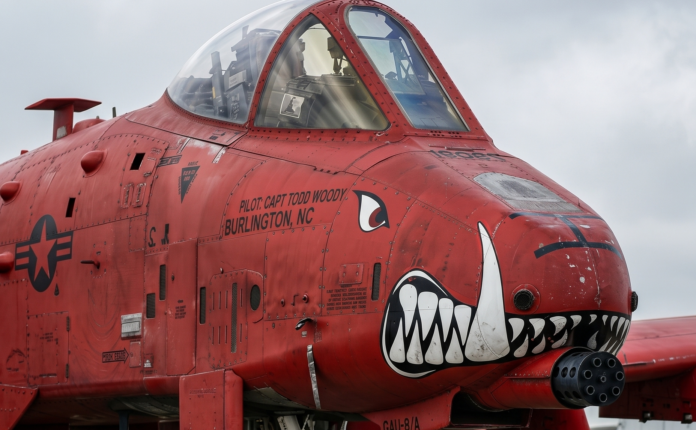
Known affectionately as the Warthog and respectfully as the Tank Killer, the A-10 is one of the most iconic combat aircraft ever built. It is not elegant. It was never meant to be.
It was designed for one purpose: to fly low, absorb punishment, and protect soldiers on the ground.
For nearly five decades, this rugged aircraft has done exactly that.
And in 2026, despite repeated predictions of its retirement, the Brute is still in the fight.
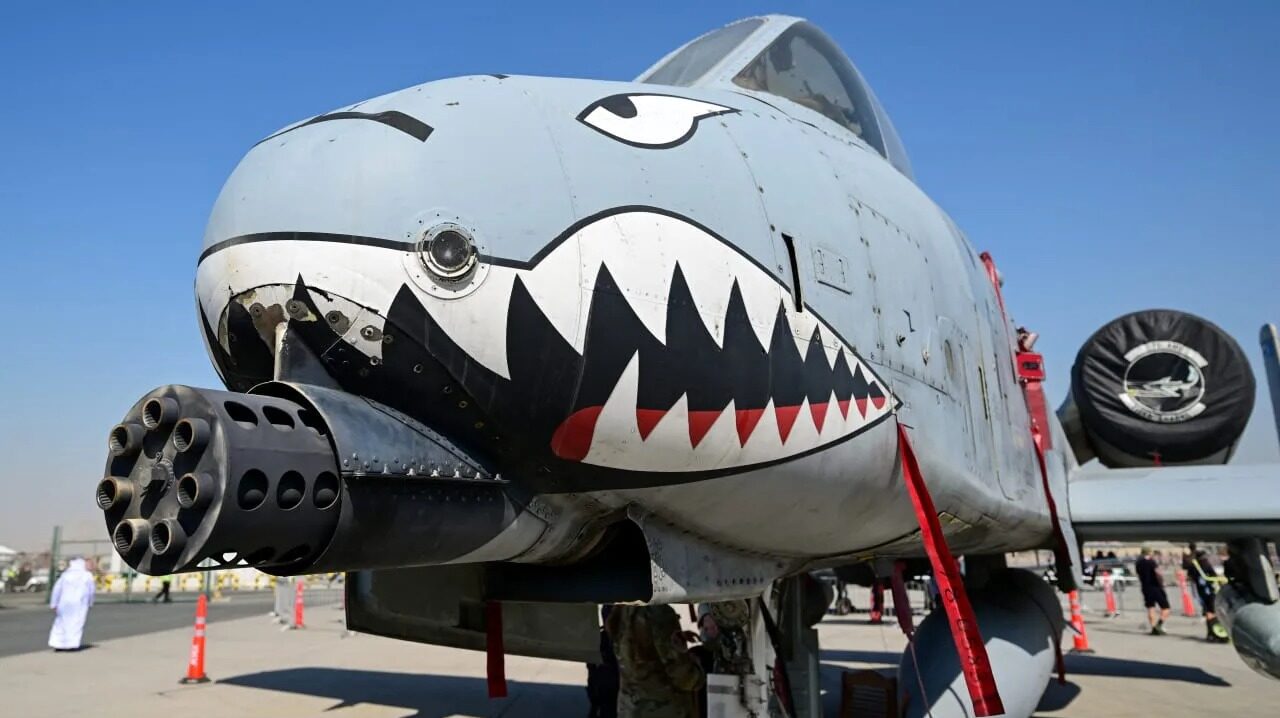
Shark Teeth and Steel: The Face of the Warthog

Standing on the flight line in front of an A-10 is an unforgettable experience.
The aircraft squats on its landing gear like a predator ready to pounce. Its broad wings carry a formidable array of weapons. Its nose is often painted with shark teeth, giving it the appearance of a flying beast.
And protruding from the center of that menacing face is the weapon that defines the aircraft: the seven-barrel GAU-8/A Avenger cannon.
Everything about the A-10 seems built around this gun, because it was.
The cannon is so large and powerful that the aircraft was essentially designed to carry it.
When it fires, the signature “BRRRT” is recognized by soldiers and adversaries alike.
To friendly troops, it is one of the most reassuring sounds in combat.
To enemy armor, it is often the last sound they hear.
Built to Protect Those on the Ground

The A-10 was developed during the Cold War to destroy large formations of Soviet tanks if war erupted in Europe.
Unlike high-speed fighters optimized for air-to-air combat, the Warthog was designed to loiter over the battlefield, identify threats, and strike with exceptional precision.
Its strengths include:
- Long endurance over target areas.
- Heavy weapons capacity.
- Excellent low-speed maneuverability.
- Exceptional pilot visibility.
- Ability to operate from austere airfields.
- Extraordinary battle damage tolerance.
Most importantly, it was built around a simple mission:
Protect American and allied troops when they need help most.
The Titanium Bathtub: Engineering for Survival

The Warthog is famous for its toughness.
Its pilot sits inside a titanium armored structure commonly called the “bathtub,” designed to shield against anti-aircraft fire.
The aircraft also features:
- Redundant flight control systems.
- Self-sealing fuel tanks.
- Widely separated engines.
- Manual backup controls.
Many A-10s have returned safely with severe battle damage, including missing hydraulic systems, damaged wings, and holes across the fuselage.
The aircraft has earned a reputation for refusing to quit.
The Ground Crew: The Unsung Heroes Behind Every Sortie


Before an A-10 launches, maintainers inspect every system, load weapons, refuel the aircraft, and ensure it is mission-ready.
These Airmen work long hours in extreme conditions so that the pilot can focus entirely on the mission.
The shark-mouth nose art may capture attention, but it is the dedication of the ground crew that keeps the Brute alive and ready.
Every successful sortie begins with their expertise.
The Pilot: Calm Above the Chaos

An A-10 pilot’s mission is unlike that of most fighter pilots.
They often fly low over dangerous terrain, coordinate directly with troops and Joint Terminal Attack Controllers, and make split-second decisions where friendly and enemy forces may be separated by only meters.
Their responsibility is immense.
The weapon is powerful.
But judgment is what matters most.
The Sound That Saves Lives

The GAU-8 cannon fires 30 mm rounds at extremely high rates, capable of devastating armored vehicles and fortified positions.
Yet the weapon’s true significance lies in what it represents.
For troops under fire, the arrival of an A-10 means they are not alone.
The Warthog can remain overhead, strike repeatedly, and provide the kind of persistent support that has saved countless lives.
Still in the Fight in 2026

As of 2026, A-10 squadrons continue to support U.S. military operations and deterrence missions.
Although the United States Air Force is gradually transitioning to newer platforms, the Warthog remains valued for close air support and battlefield presence.
Its ability to fly low, stay on station, and deliver accurate firepower keeps it relevant even in an era dominated by stealth aircraft such as the F-22 Raptor and F-35 Lightning II.
The aircraft may be old.
Its mission remains indispensable.
Why Soldiers Love the Warthog

Ground troops value the A-10 because it was built specifically for their survival.
It can:
- Identify threats visually.
- Remain overhead for extended periods.
- Deliver precise firepower.
- Return quickly for multiple attack runs.
Few aircraft inspire as much confidence among those fighting on the ground.
More Than a Machine


The A-10 is more than aluminum, engines, and weapons.
It represents a philosophy of warfare that places the needs of the soldier first.
It is blunt, durable, and uncompromising.
It exists to stand between friendly forces and danger.
That purpose has earned it enduring respect.
Final Thoughts: The Legend of the Warthog Endures

The A-10 Warthog was never designed to win beauty contests.
It was designed to survive the fiercest battles and protect troops when they needed it most.
Decades after its first flight, it still embodies one of the most important truths in military aviation:
Technology matters.
But reliability, courage, and trust matter even more.
The shark teeth still grin.
The cannon still roars.
And when the call for close air support comes, the Brute still answers.