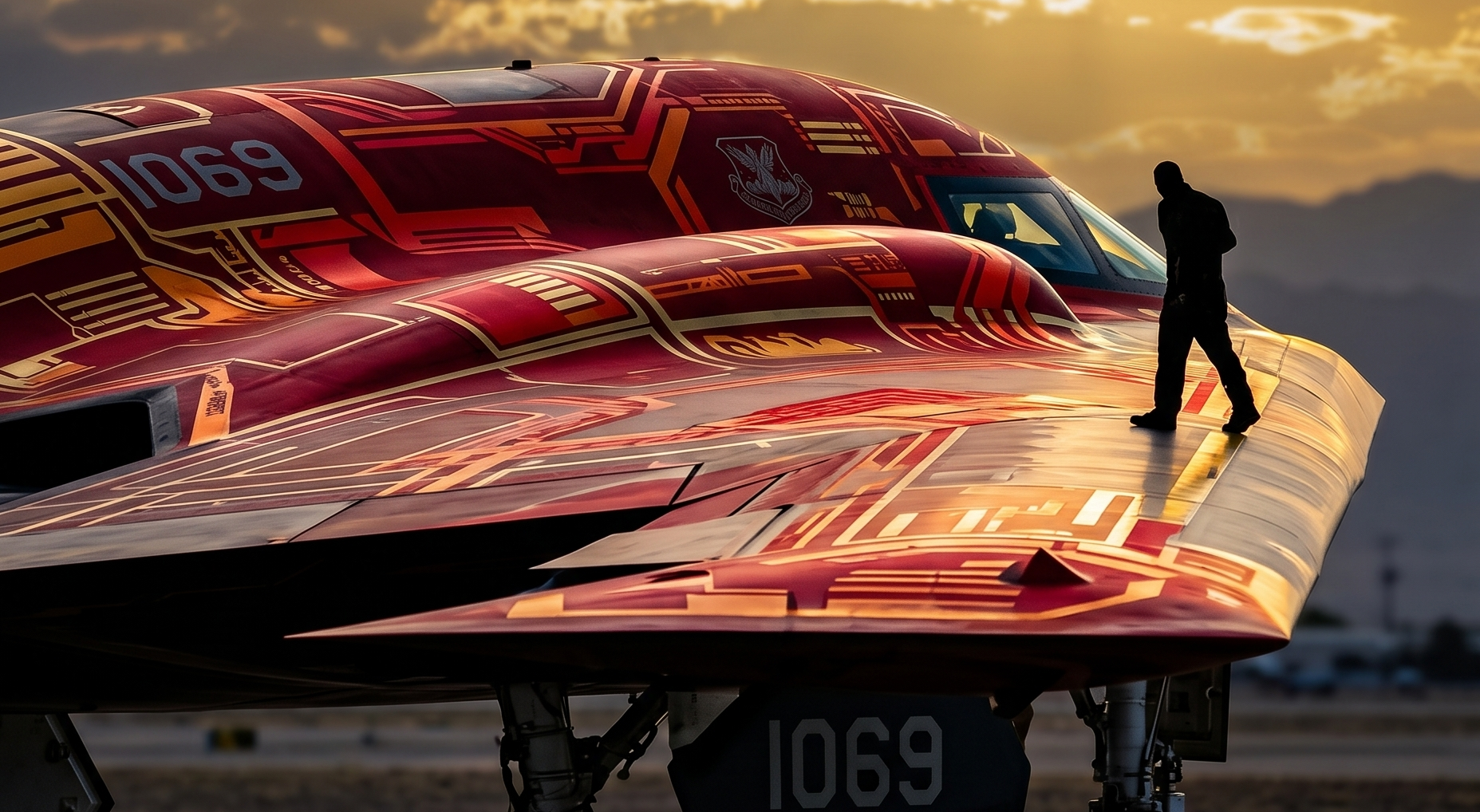
The B-2 Spirit is one of the most extraordinary aircraft ever built.
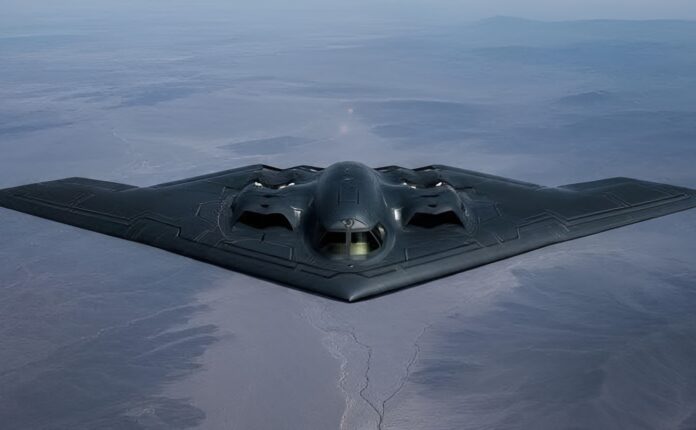
It does not roar into view with towering tail fins or gleaming afterburners. Instead, it appears as a dark, triangular shadow gliding silently through the night.
To some, it looks like a machine from science fiction. To military planners, it is one of the most powerful symbols of American strategic reach. And to taxpayers, it represents one of the most expensive aircraft programs in history.
Each B-2 costs roughly $2 billion when adjusted for inflation.
You May Also Like

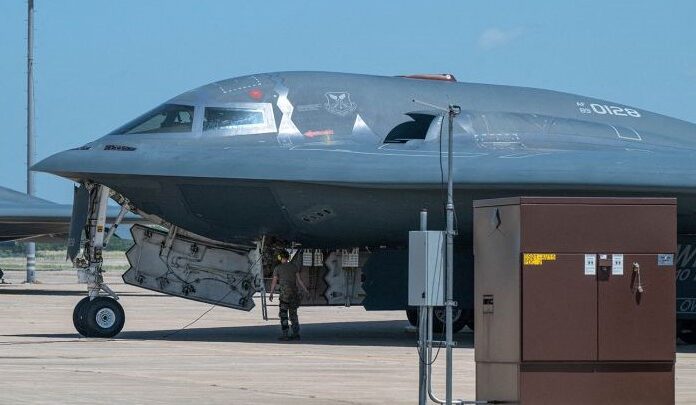
That is more than the cost of many skyscrapers, sports stadiums, or naval warships.
Why would the United States spend so much on a single airplane?
The answer lies in what the B-2 was built to do: fly across the world, penetrate the most heavily defended airspace on Earth, and strike targets with near impunity.
A Bomber Designed to Be Invisible


The B-2 was developed during the final years of the Cold War by Northrop Grumman.
Its mission was unprecedented: carry conventional or nuclear weapons deep into enemy territory while remaining nearly invisible to radar.
Unlike traditional bombers, the B-2 has no conventional fuselage or tail. Its flying-wing design minimizes radar reflections, and its surface materials absorb and scatter radar energy.
The goal is simple but revolutionary:
See the enemy before the enemy sees you.
Why Stealth Is So Valuable

Modern air defense systems are built to detect and destroy incoming aircraft.
Stealth technology allows the B-2 to slip through these defenses, reach strategic targets, and return home.
This capability gives national leaders options that few other systems can provide.
A stealth bomber can:
- Strike heavily defended targets.
- Deliver precision-guided weapons.
- Carry nuclear payloads if ever required.
- Launch from the continental United States.
- Operate with minimal warning to adversaries.
In military terms, that flexibility is invaluable.
The Price Tag That Defies Belief


The original procurement cost of the B-2 was approximately $1 billion per aircraft in the 1990s.
Adjusted for inflation, that figure exceeds $2 billion today.
Only 21 aircraft were built, which dramatically increased the cost of each unit because research and development expenses were spread across a very small fleet.
When production quantities are low, every aircraft becomes extraordinarily expensive.
What Else Could $2 Billion Buy?
To understand the scale of the B-2’s cost, consider what the same money could purchase:
- Around 17 F-35 Lightning II fighters.
- Several F-22 Raptor aircraft.
- Multiple C-17 Globemaster III cargo planes.
- Nearly four specialized presidential aircraft comparable in cost to Air Force One.
The B-2 is not merely expensive.
It is expensive on a strategic scale.
More Than a Bomber: A Pillar of Nuclear Deterrence

- Land-based intercontinental ballistic missiles.
- Ballistic missile submarines.
- Strategic bombers.
Unlike missiles launched from silos or submarines, a bomber can be recalled after takeoff if political circumstances change.
That human-controlled flexibility gives leaders a unique and highly credible deterrent option.
The Ability to Strike Anywhere on Earth
The B-2 can fly intercontinental missions with aerial refueling support.
Crews have conducted operations lasting more than 30 hours, departing from bases in the United States, striking targets on the other side of the globe, and returning without landing abroad.
Few aircraft in history have combined stealth, range, and payload in this way.
Precision, Not Just Power

Although associated with nuclear deterrence, the B-2 has also been used extensively in conventional warfare.
It played important roles in conflicts over Kosovo, Afghanistan, Iraq, and Libya.
With precision-guided munitions, one bomber can attack numerous targets in a single mission with exceptional accuracy.
Why Maintenance Is So Costly

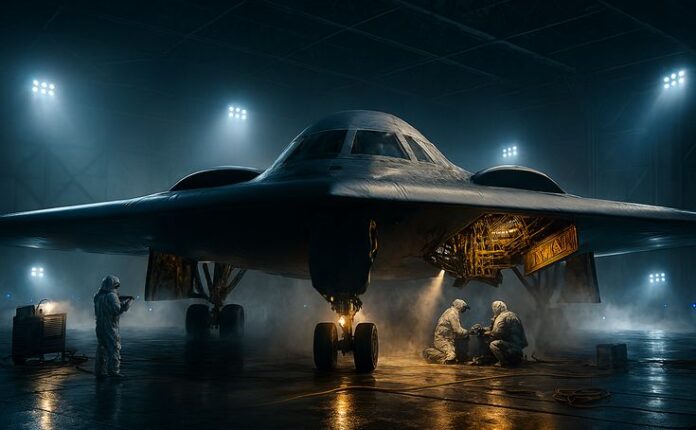
The B-2’s stealth coatings and specialized materials require meticulous care.
Even small surface imperfections can degrade radar signature performance.
Maintenance involves:
- Climate-controlled hangars.
- Specialized technicians.
- Detailed inspections.
- Complex repairs to low-observable materials.
Owning a B-2 is like maintaining a flying laboratory.
Is the B-2 Worth the Cost?
Critics argue that the United States already possesses formidable nuclear and conventional strike options, including missile submarines and land-based missiles.
Supporters counter that no other platform offers the same combination of stealth, flexibility, recallability, and precision.
The B-2 is an insurance policy against the most difficult military scenarios.
And insurance for national survival is never cheap.
The B-21 Raider: The Next Chapter


The B-21 Raider is being developed to replace the B-2 over time.
It is designed to preserve many of the B-2’s advantages while improving maintainability and reducing lifecycle costs.
The lessons learned from the B-2 helped make the B-21 possible.
Final Thoughts: The Price of Strategic Freedom

The B-2 Spirit is far more than a bomber.
It is a demonstration of what happens when a nation decides that certain capabilities are so important that cost becomes secondary.
At over $2 billion per aircraft, the B-2 is one of the most expensive flying machines ever created.
Yet its true value lies in the options it gives national leaders and the deterrence it provides to potential adversaries.
The B-2 was built to ensure that, if the most dangerous day in history ever arrived, the United States would possess an aircraft capable of reaching any target, anywhere on Earth, with precision and near invisibility.
Sometimes the most expensive weapon is not purchased to be used.
It is purchased to ensure it never has to be.