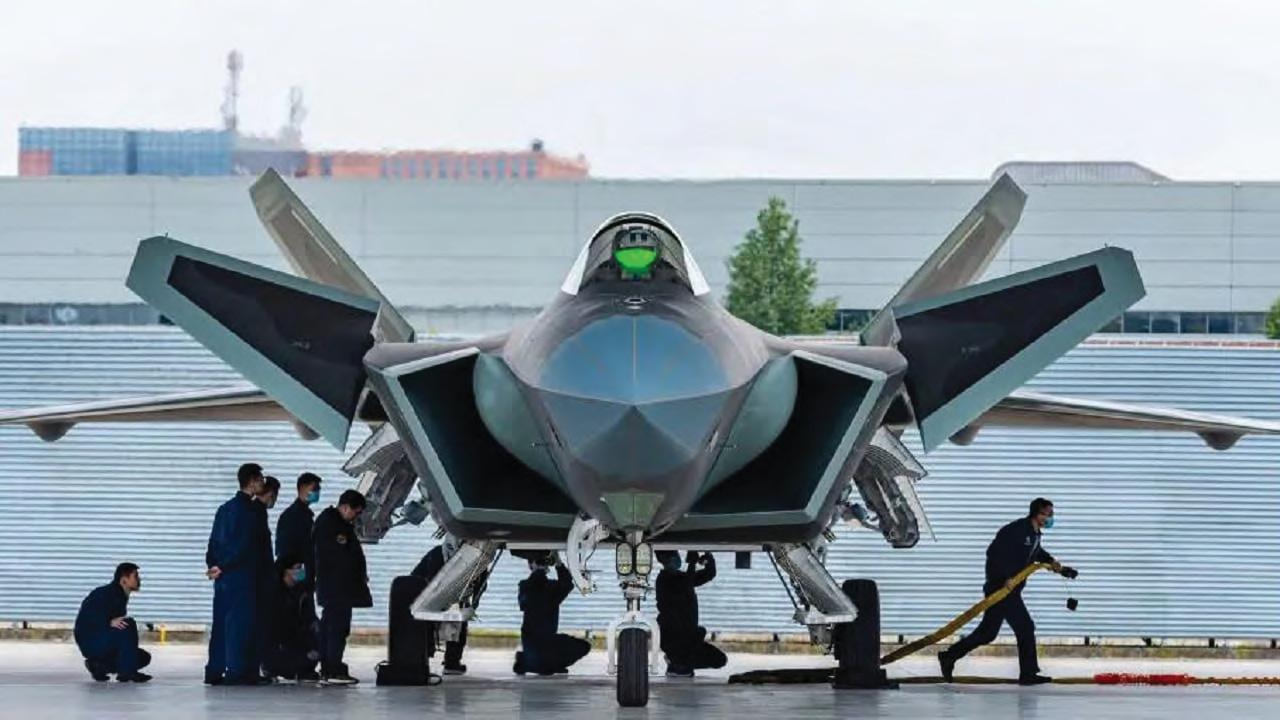
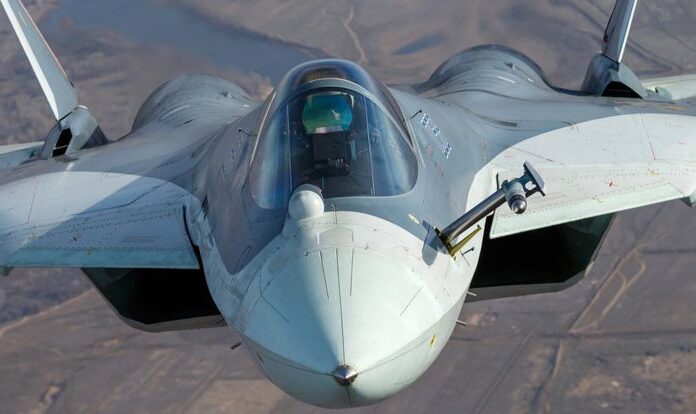
J-20 vs Su-57: The Battle for the Future of Air Dominance
In the silent skies of modern warfare, two fighters represent the ambitions of rising military powers: China’s Chengdu J-20 and Russia’s Sukhoi Su-57.
These aircraft are more than machines. They are symbols of national strategy, technological ambition, and the changing balance of global air power. One was built to strike first from long distances and dominate enemy airspace before the enemy even reacts. The other was designed as a highly agile aerial predator capable of surviving brutal close-range combat.
Both are called fifth-generation stealth fighters. Both promise advanced sensors, powerful weapons, and reduced radar visibility. Yet despite sharing similar goals, they were created with very different philosophies in mind.
The question is no longer whether these aircraft matter. The real question is: which one truly has the edge?
You May Also Like
Two Different Visions of Air Warfare
The J-20 and Su-57 were born from completely different military doctrines.
China designed the J-20 to project power deep into contested regions such as the Pacific. Its mission is strategic: intercept enemy aircraft at long range, destroy high-value targets, and challenge American air superiority far from China’s coastline. The aircraft emphasizes stealth, sensor range, and beyond-visual-range combat.
Russia took a different path with the Su-57. Russian designers focused heavily on agility, survivability, and versatility. The Su-57 is intended to dominate in chaotic combat environments where manoeuvrability and raw pilot control still matter. It reflects decades of Russian emphasis on close-range aerial combat and high-performance aerodynamics.
In simple terms, the J-20 is a stealth hunter built to strike first.
The Su-57 is a stealth fighter built to survive and outfight opponents in dynamic combat.
The J-20: China’s Long-Range Shadow


The J-20 is often described as China’s answer to America’s stealth fighters, but its role is unique. Unlike traditional fighters designed primarily for dogfights, the J-20 was engineered for long-range interception and strategic dominance.
Its large frame allows it to carry more fuel internally, giving it a combat radius estimated at around 1,200 kilometres or more. This enables the aircraft to patrol vast regions without relying heavily on refuelling aircraft.
The fighter is equipped with advanced sensors and long-range missiles intended to destroy enemy aircraft before visual contact even occurs. In modern warfare, this matters enormously. The side that sees first and shoots first often wins.
The J-20’s stealth shaping also prioritizes frontal radar invisibility, making it difficult for enemy radar systems to detect during head-on engagements. Combined with sophisticated electronic warfare systems, the aircraft becomes especially dangerous in long-range engagements.
Yet the J-20 is not without weaknesses. Critics have long questioned the performance of its engines and whether the aircraft can match the agility of American or Russian fighters in close combat. China continues to improve the aircraft with newer indigenous engines and upgraded avionics, but questions remain about how it would perform in a real high-intensity war.
Still, the J-20 represents something historically significant: China is no longer merely copying foreign aircraft. It is now producing sophisticated combat systems capable of challenging the world’s best.
The Su-57: Russia’s Agile Predator


If the J-20 is a long-range assassin, the Su-57 is a knife fighter.
Russia designed the Su-57 to combine stealth with extreme manoeuvrability. One of its most impressive features is thrust-vectoring engines, which allow the aircraft to perform dramatic aerial manoeuvres impossible for most fighters. In a close-range dogfight, that agility could become deadly.
The Su-57 is also fast, heavily armed, and versatile. It can carry weapons internally to preserve stealth or externally when stealth is less important. Unlike the J-20, which focuses strongly on long-range interception, the Su-57 was designed to handle multiple combat roles simultaneously.
However, the aircraft has faced major obstacles. Production delays, limited funding, sanctions, and technological challenges have slowed the program for years. Compared to Western stealth fighters, only a small number of Su-57s have entered service.
Stealth is another area of debate. While the Su-57 includes radar-reducing features, many analysts believe it sacrifices low observability for speed and manoeuvrability. In a world increasingly dominated by sensors and long-range missiles, this trade-off may become a disadvantage.
Yet the Su-57 should not be underestimated. Russian aircraft designers have decades of experience creating fighters that perform exceptionally well under combat stress. In the hands of a skilled pilot, the Su-57 could still become one of the most dangerous fighters in the sky.
Stealth vs Agility: A New Air Combat Philosophy


The rivalry between the J-20 and Su-57 reflects a deeper debate about the future of air warfare itself.
Does stealth matter more than agility?
Will future battles be decided long before pilots ever see each other?
Or will close-range combat still play a role in contested skies?
China clearly believes future wars will be sensor-driven, long-range, and information-dominated. The J-20 fits perfectly into that vision.
Russia appears less willing to abandon traditional dogfighting concepts. The Su-57 embraces manoeuvrability and flexibility alongside stealth rather than replacing one with the other.
The reality is that modern air combat will likely require both. Stealth without survivability can fail under pressure. Agility without stealth may not survive long enough to matter.
Geopolitical Power in the Sky
These fighters are not just military projects. They are geopolitical messages.
The J-20 signals China’s emergence as a global aerospace power capable of competing directly with the United States and reshaping military balance in the Indo-Pacific region. Its growing fleet demonstrates Beijing’s long-term ambition to dominate regional airspace.
The Su-57 represents Russia’s determination to remain a major military power despite economic and political pressures. Even with production difficulties, the aircraft showcases Russia’s continued expertise in advanced fighter technology.
Their existence alone changes military planning across Asia, Europe, and beyond.
Countries are now investing heavily in new radar systems, longer-range missiles, drones, and sixth-generation fighters because of the rise of aircraft like the J-20 and Su-57.
Which Fighter Has the Edge?
The answer depends entirely on the battlefield.
At long range, the J-20 may hold the advantage thanks to its stealth design, sensors, and interception capabilities. It was built to engage enemies before they can respond.
In close combat, the Su-57’s speed, agility, and thrust-vectoring manoeuvres could give it a serious edge.
But modern warfare is rarely decided by one aircraft alone. Victory depends on pilot training, satellite support, electronic warfare, drones, logistics, and battlefield coordination.
The most important truth is this: both fighters prove that the age of Western air dominance is being challenged.
The skies of the future will no longer belong to one nation or one technology. They will belong to whoever can adapt faster, think smarter, and innovate relentlessly.
And in that race, the J-20 and Su-57 are only the beginning.