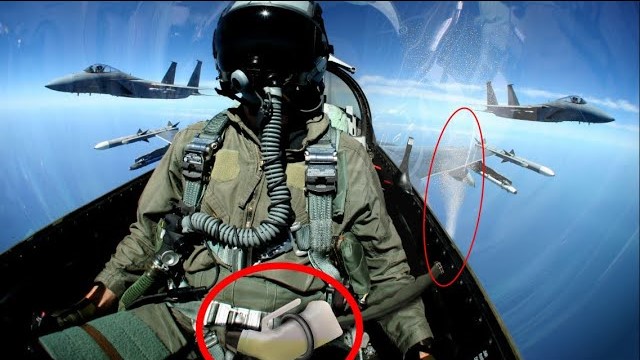
At 40,000 feet, inside a cockpit packed with cutting-edge technology, a fighter pilot can control missiles, evade enemy radar, refuel in midair, and fly faster than the speed of sound.
But there is one battle no amount of advanced engineering has completely solved:
What happens when the pilot needs to pee?
It sounds humorous at first. Yet behind the question lies a surprisingly intense reality of military aviation — one that reveals just how physically demanding and mentally exhausting fighter pilot life truly is.
You May Also Like
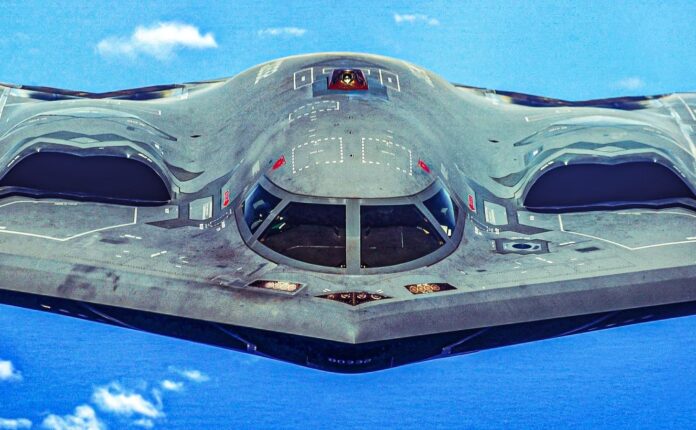
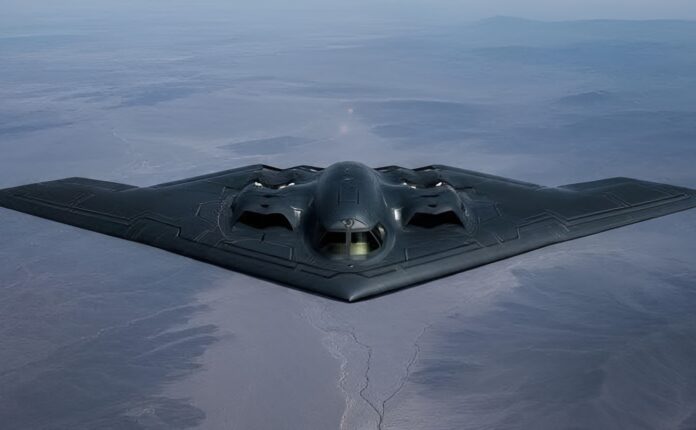
Modern fighter jets are marvels of engineering. They are designed for speed, survival, stealth, and combat dominance. But unlike commercial airliners, there is no extra room for comfort. No aisle. No bathroom. No chance to simply “take a break.”
For fighter pilots, even answering a basic human need can become a carefully managed operation requiring planning, discipline, and nerves of steel.
The Reality of Spending Hours Inside a Fighter Jet
Many people imagine fighter missions lasting only a short time — screaming into the sky, firing weapons, and returning home within an hour.
Reality is often very different.
Thanks to air-to-air refueling, modern combat aircraft can remain airborne for many hours. Some missions stretch across entire regions or oceans. Pilots may patrol hostile airspace, escort bombers, monitor enemy activity, or prepare for combat while flying for extended periods without landing.
And throughout all of this, pilots must stay hydrated.
That creates a difficult contradiction.
Drink too little water, and dehydration begins damaging concentration, reaction time, and physical endurance. Under high G-forces, dehydration becomes even more dangerous because the body is already under tremendous stress.
Drink too much water, however, and eventually the body demands relief.
At that point, the cockpit becomes one of the least convenient places on Earth.
A Mission Within the Mission
Relieving oneself inside a fighter jet is not quick, simple, or comfortable.
Before anything happens, the pilot must first ensure the aircraft is stable. Autopilot is usually engaged so the jet can maintain straight and level flight. Even then, the pilot remains fully alert because combat aircraft can never truly be left unattended.
The pilot then sits atop an ejection seat — essentially a rocket designed to blast them out of the aircraft during emergencies. Safety procedures become critical because nobody wants an accidental ejection at the worst possible moment.
Next comes the difficult part: accessing multiple layers of equipment.
A fighter pilot is wrapped in survival gear. Depending on the mission, this can include:
- A G-suit
- Flight suit
- Thermal layers
- Immersion suit for overwater operations
- Survival equipment
- Harness systems
- Body armor in some aircraft
Everything is tightly strapped down inside an extremely cramped cockpit.
Trying to maneuver through all of those layers while maintaining control of a supersonic combat aircraft requires patience, coordination, and concentration.
And then comes perhaps the hardest challenge of all:
Relaxing enough to actually go.
That may sound trivial, but mentally it is not. Imagine sitting inside a vibrating machine worth tens of millions of dollars, flying at hundreds of miles per hour, surrounded by radios, warning systems, navigation displays, and weapons controls — while trying to convince your brain that now is somehow the right time to relax.
For many pilots, that is easier said than done.
The “Piddle Pack”: One of Military Aviation’s Least Glamorous Tools
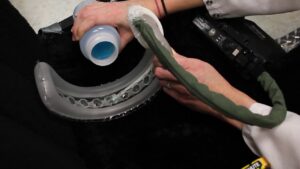
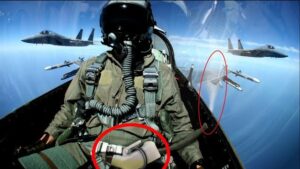
Male fighter pilots commonly use what is known as a “piddle pack.”
The name may sound amusing, but the device serves a serious purpose.
A piddle pack is essentially a specialized collection bag with an attached tube. Inside is an absorbent material or chemical compound that turns liquid into gel, preventing spills and reducing the risk of leaks inside the cockpit.
Simple? Yes.
Elegant? Not exactly.
Yet for decades, these systems have quietly solved one of aviation’s most unavoidable problems.
Still, using one in a cramped cockpit during turbulence or while wearing layers of flight gear is far from easy. Pilots must remain aware of their surroundings at all times. Formation flying, aerial refueling, or combat maneuvers are absolutely not the moments to attempt it.
That is why pilots usually communicate with their wingman beforehand. A quick radio call lets the other pilot know that for the next few minutes, their teammate’s attention may be slightly divided.
Even in modern warfare, teamwork extends to bathroom breaks.
Female Fighter Pilots Forced Aviation to Evolve
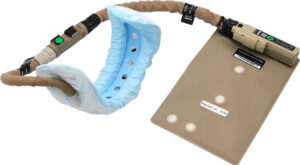
For many years, cockpit relief systems were designed almost entirely around male anatomy.
As more women entered combat aviation, the shortcomings of older systems became impossible to ignore.
Female fighter pilots often had to rely on uncomfortable and impractical solutions that increased distraction and stress during long missions. In an environment where concentration can mean the difference between life and death, that was a serious issue.
Fortunately, military aviation has gradually adapted.
Modern in-flight relief systems are becoming more ergonomic, more hygienic, and far more gender-inclusive. Some resemble advanced absorbent garments, while newer technologies use vacuum-assisted systems connected to specially designed undergarments.
The goal is simple but important:
Allow pilots to remain focused on the mission instead of fighting their equipment.
This evolution reflects a broader truth about military aviation: technology is not only about missiles and radar. Sometimes the smallest improvements can have a major impact on performance, safety, and endurance.
The Dangerous Cost of Tactical Dehydration
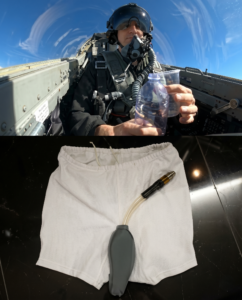
Some pilots attempt to avoid the problem entirely by limiting fluid intake before missions.
This practice, sometimes called tactical dehydration, may reduce the need for relief systems — but it comes at a cost.
Dehydration can severely affect the body and mind. Reaction times slow. Fatigue increases. Decision-making suffers. Under heavy G-forces, dehydrated pilots are also more vulnerable to blackouts and physical exhaustion.
Modern air forces increasingly recognize that hydration is not optional. A pilot performing complex combat tasks for hours must remain physically capable and mentally sharp.
In other words, fighter pilots cannot simply “tough it out.”
The body always keeps score.
Even Legends Have Embarrassing Moments
Military aviation is filled with stories that sound almost unbelievable.
One famous legend from the Balkan conflicts tells of an American fighter pilot who was hit by a surface-to-air missile while in the middle of using his piddle pack.
Moments later, he was forced to eject from the aircraft — apparently with the device still attached.
Whether every detail is perfectly accurate or not, the story has endured because it captures something deeply human about fighter aviation.
Behind the helmets and callsigns are ordinary people operating under extraordinary pressure.
Even elite pilots who fly machines capable of destroying targets with pinpoint precision still face the same human realities as everyone else.
The Human Side of Air Combat
The public often sees fighter pilots as fearless warriors surrounded by glamorous technology.
And in many ways, they are.
But stories like these reveal another side of military aviation — one rarely shown in movies or recruitment posters.
Inside every fighter jet is a human being enduring exhaustion, stress, physical strain, isolation, and discomfort while carrying enormous responsibility.
They must remain calm under pressure, think clearly at incredible speeds, and manage problems most people would never imagine — all while flying some of the most dangerous machines ever built.
In the end, the question is not merely how fighter pilots pee.
The real story is how human beings continue adapting to environments that machines were never designed to make comfortable.
Because even at the edge of the stratosphere, surrounded by radar screens and missiles, the human body still refuses to be ignored.