They thought Trump’s China visit was just red carpets, handshakes, and cameras. But behind the scenes, U.S. security leaders were preparing for the nightmare no one wanted to say out loud: What if the world’s most powerful president was walking into the most advanced surveillance trap on Earth?
When Donald Trump landed in Beijing, the world saw power.
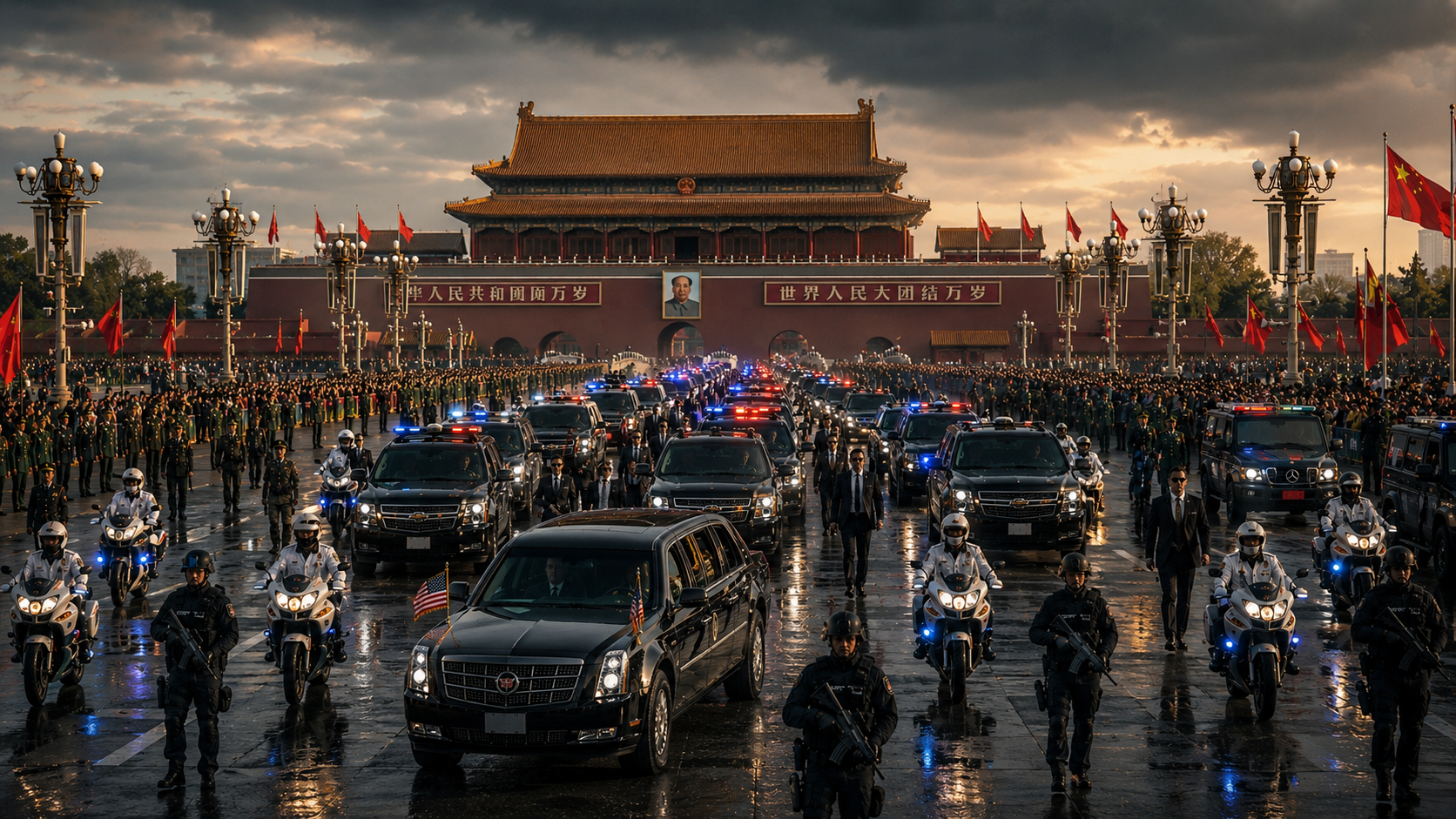
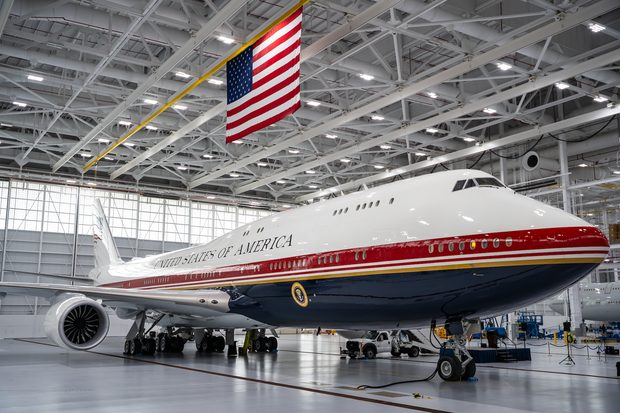
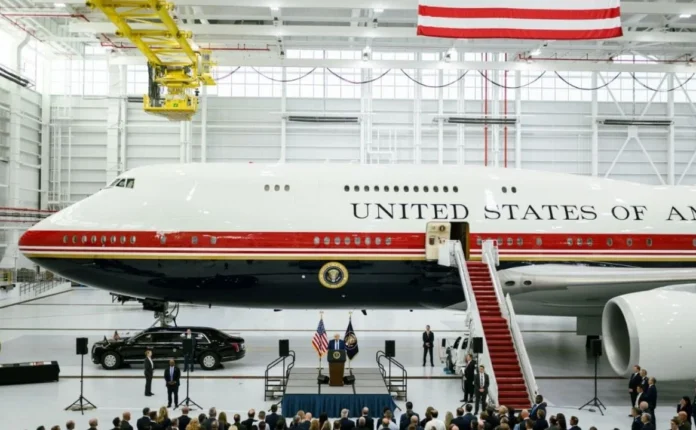
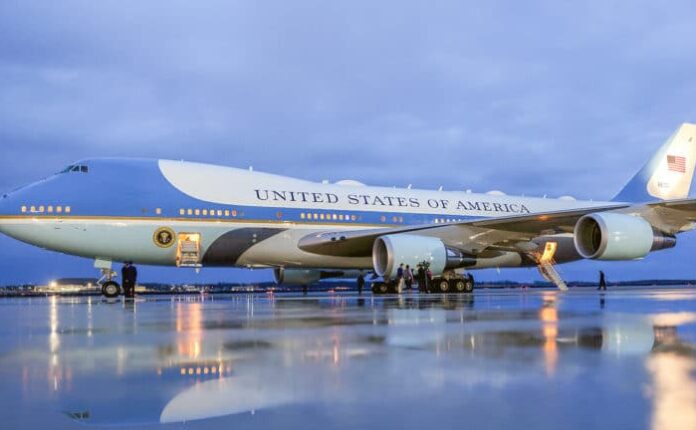
Air Force One touched down like a flying White House. Cargo aircraft had already delivered armored vehicles, Secret Service equipment, secure communication systems, and the presidential limousine known as The Beast. A long black motorcade waited under heavy security, surrounded by U.S. agents, Chinese police escorts, tactical vehicles, medical teams, and encrypted communication units.
To the cameras, it looked like diplomacy.
You May Also Like
To America’s top security officials, it looked like war without bullets.
Inside a sealed command room, far away from the cheering crowds and flashing cameras, two men sat across from each other.
One was the U.S. Top Secret Security Leader responsible for protecting the President overseas.
The other was the CIA Director.
The Security Leader looked at the live screen showing Air Force One parked on Chinese soil.
“He’s landed.”
The CIA Director did not smile.
“That means China’s real operation begins now.”
The Security Leader turned.
“You think this is an operation?”
The CIA Director leaned forward.
“Everything in Beijing is an operation. The red carpet. The route. The room. The gifts. The smiles. The silence. Even the temperature inside the meeting hall.”
The Security Leader looked back at the screen.
“We brought Air Force One, The Beast, C-17 cargo support, armored SUVs, counterassault teams, encrypted communications, medical support, and emergency extraction planning. The President is surrounded by one of the most secure travel systems ever built.”
The CIA Director nodded slowly.
“That protects his body.”
Then he pointed at another screen showing the meeting room.
“But who protects his judgment?”
The room went quiet.
The Security Leader lowered his voice.
“You believe Xi is trying to influence him.”
The CIA Director answered coldly.
“Of course he is. That is what great powers do.”
The Security Leader crossed his arms.
“Trump came to negotiate.”
“And Xi came to study.”
“Study what?”
“His patience. His pride. His anger. His instincts. His weakness. His hunger for victory.”
The Security Leader looked troubled.
“You make diplomacy sound like combat.”
The CIA Director replied, “At this level, diplomacy is combat. No bullets. No explosions. Just pressure, timing, ego, and fear.”
On the screen, the presidential motorcade rolled through Beijing. Black armored vehicles stretched down the road like a moving wall of American power.
The Security Leader said, “Look at that convoy. That is strength.”
The CIA Director nodded.
“Yes. But China sees something else.”
“What?”
“They see what we fear.”
The Security Leader frowned.
The CIA Director continued.
“Every armored vehicle tells them the threat level we expect. Every route change tells them what we consider vulnerable. Every communication blackout tells them what we are protecting. Every security reaction teaches them how America thinks.”
The Security Leader slowly sat down.
“So even our defense becomes intelligence for them.”
“Exactly.”
The Security Leader looked at the map of Beijing.
“That’s why nothing is simple here.”
“Nothing is ever simple in China,” the CIA Director said. “They don’t just host foreign leaders. They study them.”
For hours, the two men watched every movement.
Air Force One remained guarded.
The Beast moved through controlled roads.
Chinese police secured intersections.
Secret Service agents scanned rooftops, crowds, windows, vehicles, drones, communication signals, and electronic interference.
The Security Leader finally spoke again.
“You know what impresses me?”
The CIA Director looked over.
“The scale. The whole system. Air Force One is not just a plane. It is command, communication, defense, medicine, government continuity. The Beast is not just a car. It is a rolling bunker. The motorcade is not just transport. It is layered survival.”
The CIA Director nodded.
“That is the message America sends.”
“And what message does China send?”
The CIA Director looked at the Beijing skyline.
“That they can absorb it all without blinking.”
The Security Leader was silent.
The CIA Director continued.
“America arrives with noise, steel, aircraft, armor, movement. China responds with calm, control, patience, and a room prepared weeks in advance.”
The Security Leader whispered, “Two different kinds of power.”
“Yes,” the CIA Director said. “America projects power. China surrounds power.”
That sentence stayed in the air.
Later that night, after the public handshakes were over, the two men met again inside a secure compartment aboard Air Force One.
Outside, staff were ordered to remove or isolate anything collected during the visit: badges, pins, gifts, devices, papers, and anything that might carry electronic or intelligence risk.
The Security Leader watched through the window.
“Nothing from China comes aboard.”
The CIA Director replied, “Good.”
“You really think a pin can be dangerous?”
The CIA Director looked at him.
“A pin can carry a tracker. A gift can carry a microphone. A badge can store data. A phone can become a window. A friendly handshake can become a photograph studied for months.”
The Security Leader gave a tired smile.
“You trust nothing.”
“That is why I’m still alive.”
The aircraft engines began to rumble.
The Security Leader said, “The visit went smoothly.”
The CIA Director answered, “Smoothly is not the same as safely.”
The Security Leader looked at him sharply.
“What did we lose?”
The CIA Director paused.
“Maybe nothing.”
Then he looked at the dark runway outside.
“Maybe something we won’t discover for six months.”
The Security Leader exhaled.
“That’s the worst kind of answer.”
“That’s intelligence.”
Air Force One lifted into the night sky above Beijing.
For the world, the visit was ending.
For the CIA, the investigation was beginning.
The Security Leader looked at the classified folder on the table.
“So what’s your final assessment?”
The CIA Director opened the file and looked at the map of China, Taiwan, and the Pacific.
“Trump arrived with a billion-dollar fortress. China welcomed him with a billion-dollar stage. Both sides smiled. Both sides calculated. Both sides collected information.”
The Security Leader asked, “And the biggest danger?”
The CIA Director closed the folder.
“The danger is believing a handshake means trust.”
The Security Leader looked out the aircraft window as Beijing disappeared under clouds.
“And the lesson?”
The CIA Director answered quietly.
“In today’s world, the President does not travel alone. He travels with aircraft, armor, agents, intelligence, doctors, communication systems, and fear. Because modern diplomacy is no longer just about peace.”
He paused.
“It is about surviving the room long enough to negotiate it.”
Trump’s China visit showed that modern presidential travel is not only ceremony. It is a moving fortress involving Air Force One, C-17 cargo support, The Beast, armored SUVs, Secret Service teams, communications systems, medical readiness, route coordination, and U.S.–Chinese security cooperation.