For decades, China watched the United States dominate modern warfare.
It watched American stealth fighters cross enemy skies undetected.
It watched U.S. aircraft carriers project power across entire oceans.
It watched precision missiles destroy targets with terrifying accuracy.
You May Also Like


And perhaps most importantly of all—
China watched how America connected everything together.
Because modern military dominance is no longer just about tanks, ships, or fighter jets.
It is about networks.
Information.
Speed.
Artificial intelligence.
Sensors.
Communication.
And the ability to connect every weapon, every radar, every soldier, every aircraft, and every command center into one giant combat brain.
That is the future of warfare.
And according to growing evidence, China has spent years trying to copy it.
Not only by stealing technology or reverse engineering hardware—
But by replicating America’s entire military modernization strategy itself.
The New Age of Warfare Is About Networks, Not Just Weapons
In the past, wars were fought by individual military branches operating separately.
The army fought on land.
The navy fought at sea.
The air force controlled the skies.
But modern warfare changed everything.
Today, the deadliest military is not necessarily the one with the biggest weapons.
It is the one that connects them fastest.
The United States military realized this years ago.
American defense planners began developing a revolutionary concept known as:
Multi-Domain Operations.
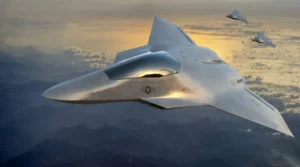
The idea is simple but transformational:
Every military asset becomes part of one massive integrated network.
A fighter jet is no longer just a fighter jet.
A warship is no longer just a ship.
A satellite is no longer just observing.
Instead, every platform becomes a “node” in a gigantic digital combat web.
This system allows:
- Aircraft to share targeting data with warships
- Ground forces to receive satellite intelligence instantly
- Drones to relay battlefield information in real time
- Missiles to update targets during flight
- AI systems to coordinate battlefield decisions at machine speed
The result is what military strategists now call:
The Kill Web
A battlefield where sensors, weapons, and commanders are all digitally connected.
And China has clearly been watching.
China’s Long History of Copying Military Technology

China’s efforts to copy foreign military technology are no secret.
Over the years, analysts and intelligence reports have repeatedly accused China of:
- Cyber espionage
- Industrial spying
- Reverse engineering foreign weapons
- Acquiring stolen defense data
- Copying aircraft designs
- Replicating missile technologies
Aircraft like the Chengdu J-20 have often been compared visually to the Lockheed Martin F-22 Raptor and the Lockheed Martin F-35 Lightning II.
Meanwhile, the Shenyang FC-31 has drawn comparisons to the F-35 as well.
China also studied:
- American aircraft carriers
- U.S. naval doctrine
- Drone warfare concepts
- Satellite communication systems
- Integrated radar networks
But copying physical designs was only part of the strategy.
The bigger goal was learning how America fights modern wars.
China Is Now Copying America’s Military Networking Strategy
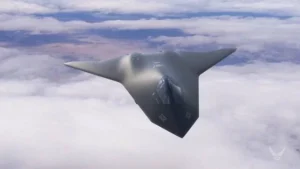
One of the clearest signs of this shift appeared when Chinese military sources revealed efforts to integrate Chinese Army and Air Force systems into a unified combat network.
According to reports, the People’s Liberation Army (PLA) has been linking:
- Air defense radars
- Army brigades
- Air Force warning systems
- Intelligence-sharing networks
- Battlefield communications
Into one interconnected operational structure.
This is remarkably similar to what the Pentagon has been building for years through programs like:
Joint All-Domain Command and Control (JADC2)
The U.S. vision behind JADC2 is revolutionary.
It aims to connect every military branch into one seamless combat ecosystem.
Imagine this:
A stealth fighter detects an enemy ship.
That information instantly travels through satellites.
A naval destroyer receives the coordinates.
An Army missile battery launches the strike.
A drone confirms the hit.
All within seconds.
That is modern warfare.
And China appears determined to build its own version.
Project Convergence: America’s Breakthrough That China Watched Closely
One of the biggest American demonstrations of future warfare occurred during an event called Project Convergence.
The exercise showcased how different military branches could share information almost instantly.
In one major breakthrough:
American ground forces successfully exchanged targeting data directly with overhead Lockheed Martin F-35B Lightning II aircraft.
This represented something historically important:
A battlefield where sensors and shooters across different branches operate as one integrated organism.
The speed of modern combat is now measured in seconds.
The military that processes information fastest may ultimately win future wars.
China clearly noticed.
Weapons Are Becoming Information Nodes
Modern military platforms are evolving into something far more complex than traditional weapons.
Today, every system serves two purposes:
- Fighting
- Sharing information
A fighter jet can now function as:
- A radar platform
- An intelligence collector
- A communications relay
- A battlefield coordinator
The same applies to ships, drones, satellites, and ground vehicles.
This creates a giant web of battlefield awareness.
Military planners call this:
Sensor-to-Shooter Integration.
The goal is simple:
Detect threats faster.
Process information instantly.
Strike before the enemy can react.
The Real Battlefield Is Now Data
Future wars may be decided less by brute force and more by information dominance.
The side with:
- Faster networks
- Better AI systems
- More secure communications
- Superior battlefield awareness
May gain overwhelming advantages.
This is why military networking matters so much.
A disconnected army can become blind.
A connected army becomes exponentially more dangerous.
The Biggest Challenge: Building Secure Networks
However, copying the idea is easier than copying the execution.
The true strength of American military networking comes from decades of technological development.
The effectiveness of any military network depends on:
- Cybersecurity
- Jam-resistant communications
- AI processing speed
- Satellite reliability
- Data encryption
- Signal resilience under attack
This is extremely difficult to master.
A networked military becomes vulnerable if its communications are disrupted.
Future wars may involve massive electronic warfare campaigns aimed at:
- Jamming communications
- Destroying satellites
- Hacking networks
- Blinding radar systems
- Interrupting battlefield coordination
This is why resilient communications are becoming as important as missiles themselves.
The Pentagon’s “Kill Web” Vision
The United States military is increasingly moving away from isolated combat platforms toward a fully connected “kill web.”
Unlike traditional warfare, where units operate independently, the kill web creates constant collaboration between systems.
This includes:
- Satellites
- Fighters
- Drones
- Ground forces
- Ships
- Missile batteries
- AI targeting systems
The battlefield becomes fluid, decentralized, and incredibly fast-moving.
China’s recent military developments strongly suggest it wants to replicate this concept.
Why China Is Racing So Aggressively
China understands something critical:
The future of military power is no longer measured only by the number of tanks or ships.
It is measured by:
- Information dominance
- Artificial intelligence
- Integrated combat systems
- Autonomous warfare
- Network resilience
This explains why China has invested heavily in:
- AI development
- Quantum communications
- Hypersonic weapons
- Cyber warfare
- Satellite systems
- Drone technology
The goal is not merely matching America.
It is eventually surpassing it.
The Pacific Is Becoming the Center of Future Warfare
The Indo-Pacific region has become the primary testing ground for this new era of military competition.
The United States, China, and allies are all preparing for future conflicts where:
- Space assets
- AI systems
- Cyber attacks
- Drone swarms
- Electronic warfare
- Long-range missiles
Will play central roles.
The military that connects all domains most effectively may dominate future battlefields.
America Still Holds Critical Advantages
Despite China’s rapid rise, the United States still maintains major advantages.
America possesses:
- Decades of operational combat experience
- Advanced stealth technology
- Superior alliance networks
- Mature aerospace industries
- Powerful global logistics
- More experienced joint-force interoperability
The Pentagon has spent years testing and refining integrated warfare concepts in real-world operations.
That experience matters enormously.
But China’s Progress Is Real
Underestimating China would be dangerous.
The PLA is modernizing at extraordinary speed.
Its military transformation over the past two decades has been historic.
China is no longer merely copying old Soviet systems.
It is building a highly advanced, technologically ambitious military force designed specifically to challenge American dominance.
And increasingly, it is learning from America itself.
The Future of War May Be Machine-Speed Warfare
The next generation of warfare may happen too quickly for humans alone to manage.
Artificial intelligence may eventually process battlefield information faster than commanders can react.
Future conflicts may involve:
- AI-assisted targeting
- Autonomous drone coordination
- Real-time sensor fusion
- Automated missile defense
- Machine-speed decision cycles
The nation that masters this first could gain enormous strategic advantage.
Final Reality: China Didn’t Just Copy American Weapons — It Copied America’s Way of War
China’s military modernization is not simply about building aircraft or missiles.
It is about replicating an entire philosophy of warfare.
A philosophy built around:
- Connectivity
- Information dominance
- Joint operations
- AI integration
- Networked combat systems
The future battlefield will not belong solely to the strongest weapons.
It may belong to the fastest network.
And right now, the United States and China are racing to build the military nervous systems that could define global power for the rest of the 21st century.