The modern world is obsessed with the next great leap in military technology.
For decades, humanity has imagined aircraft that move like science fiction — machines capable of vanishing into clouds, flying faster than missiles, operating at the edge of space, and dominating battlefields before enemies even realize they are under attack.
Whenever mysterious objects appear in the sky, people immediately ask the same question:
What if someone has already built the future?
You May Also Like



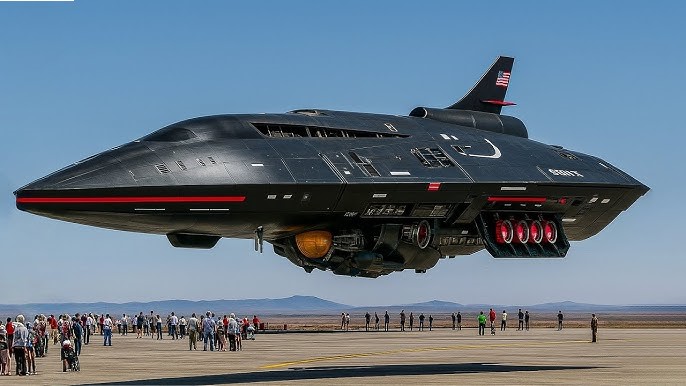
That is why stories surrounding a supposed SpaceX-developed fighter jet called the “X1” have exploded across the internet. According to viral claims, the aircraft can fly at hypersonic speeds exceeding 4,600 miles per hour, disguise itself as a cloud, operate near the edge of space, and deploy futuristic microwave weapons capable of disabling enemies instantly.
The stories describe a machine so advanced that the United States Department of Defense supposedly mistook it for a UFO.
It sounds extraordinary.
It also reveals something important about the modern age:
People are increasingly struggling to distinguish between emerging military reality and science fiction.
Because while many of the dramatic claims surrounding the so-called “X1” are unverified or highly speculative, the technologies inspiring these stories are not entirely imaginary.
Hypersonic weapons are real.
Directed-energy systems are real.
Stealth technology is real.
Artificial intelligence is transforming warfare right now.
Private companies like SpaceX are reshaping aerospace faster than governments once believed possible.
And perhaps most importantly, the line between civilian innovation and military power is becoming increasingly blurred.
That reality may be even more revolutionary than the fictional aircraft itself.
The Truth Behind The “X1” Story
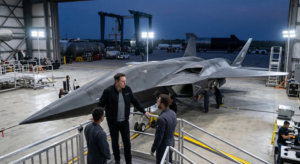
At present, there is no publicly verified evidence that Elon Musk or SpaceX has officially unveiled an operational fighter jet called the “X1” matching the dramatic descriptions circulating online.
No confirmed Pentagon documentation supports claims of a UFO-like fighter aircraft flying at 4,600 mph under SpaceX control. No official aerospace announcements have revealed such a program. Many descriptions associated with the “X1” combine speculative technologies, internet rumors, futuristic concepts, and misunderstandings about emerging defense research.
But dismissing the fascination entirely would miss the larger story.
Because the reason millions of people instantly believe such stories is that the real aerospace revolution already underway is astonishing enough on its own.
The world is entering an era where technologies once confined to science fiction are gradually becoming reality.
And companies like SpaceX sit directly at the center of that transformation.
How SpaceX Changed Aerospace Forever
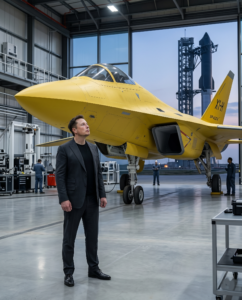
Before SpaceX, many people believed space technology would remain dominated by governments and enormous defense contractors forever.
Then Elon Musk disrupted the industry.
SpaceX transformed aerospace through reusable rockets, rapid engineering cycles, and aggressive innovation strategies that dramatically reduced launch costs while accelerating development speed.
The Falcon 9 changed global launch economics.
The Starship aims to become the most powerful spacecraft ever built.
The Starlink created a massive space-based communications network with major strategic implications.
These achievements already forced governments and militaries worldwide to rethink the future of aerospace power.
That matters because throughout history, revolutionary civilian technologies often become military technologies.
Railroads transformed warfare.
Aircraft transformed warfare.
Computers transformed warfare.
Satellites transformed warfare.
And now private space companies are increasingly shaping the future battlefield.
Why The Pentagon Watches SpaceX Closely

The relationship between SpaceX and the Pentagon is both cooperative and complicated.
The U.S. military depends heavily on advanced communications, satellite networks, launch capabilities, surveillance systems, and space infrastructure. SpaceX increasingly provides many of those services faster and cheaper than traditional contractors.
At the same time, this creates unprecedented strategic questions.
What happens when critical military infrastructure relies on private companies?
How much influence should private innovators have over national defense?
What happens if one corporation controls technologies essential to modern warfare?
These questions became especially visible during conflicts involving Ukraine, where Starlink communications systems played a major role in battlefield connectivity.
Suddenly, private aerospace technology was influencing active warfare in real time.
That alone would have sounded unbelievable only twenty years ago.
So while the fictional “X1” may not exist publicly, the broader fear — or excitement — surrounding privately driven aerospace revolutions is absolutely real.
Hypersonic Speed: The New Global Arms Race
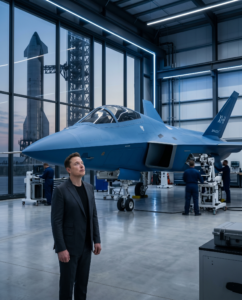
One reason the “X1” story feels believable is because hypersonic technology itself is becoming one of the most important military competitions on Earth.
Hypersonic weapons travel at speeds above Mach 5 — more than five times the speed of sound. At those velocities, interception becomes extraordinarily difficult. Reaction times shrink dramatically. Entire defense systems can become vulnerable.
Countries including United States, China, and Russia are all racing to develop hypersonic missiles and glide vehicles.
The idea of a hypersonic aircraft therefore no longer belongs entirely to fiction.
The legendary Lockheed SR-71 Blackbird already demonstrated extraordinary speed decades ago, flying above Mach 3 during the Cold War. Experimental aerospace programs have long pursued even greater velocities.
Could future aircraft eventually exceed 4,000 mph?
Possibly.
But enormous engineering challenges remain.
Extreme heat generated by atmospheric friction, propulsion limitations, pilot survivability, fuel efficiency, and maneuverability all create major obstacles. Sustained hypersonic atmospheric flight remains one of the hardest problems in aerospace engineering.
Still, humanity continues pushing toward it.
Because speed has always shaped military dominance.
The Dream Of Invisible Aircraft

Another reason the “X1” story resonates so strongly is humanity’s obsession with invisibility.
Modern stealth aircraft already seem almost magical compared to earlier generations of aviation.
The Lockheed Martin F-22 Raptor and Lockheed Martin F-35 Lightning II reduce radar signatures dramatically. The Northrop Grumman B-2 Spirit can penetrate defended airspace while remaining extremely difficult to detect.
To earlier generations, these capabilities would have looked like science fiction.
So when stories emerge describing aircraft that disguise themselves as clouds or become nearly invisible, people instinctively wonder whether secret military breakthroughs already exist beyond public knowledge.
Historically, classified aviation programs have indeed surprised the public repeatedly.
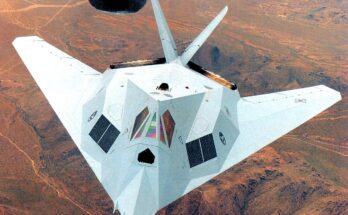
The Lockheed F-117 Nighthawk flew secretly for years before official acknowledgment. The U-2 spy plane once generated UFO reports. Advanced drone programs remained hidden long before entering public awareness.
That history fuels endless speculation today.
Directed-Energy Weapons: Science Fiction Becoming Real

Perhaps the most dramatic aspect of the “X1” story involves microwave weapons capable of disabling enemy systems or causing intense physical sensations without permanent harm.
Surprisingly, this concept is not entirely fictional.
Directed-energy weapons are actively being researched by multiple nations.
High-energy lasers may eventually destroy drones and missiles. Microwave systems can potentially disrupt electronics, communications, and radar networks. Non-lethal crowd-control technologies have also been explored using directed energy.
The military appeal is obvious.
Traditional missiles are expensive and finite. Directed-energy systems could theoretically engage targets rapidly with minimal ammunition limitations.
Yet major technological barriers remain, especially involving power generation, atmospheric interference, cooling systems, and battlefield reliability.
Still, the direction of military research is unmistakable:
The weapons of tomorrow increasingly resemble yesterday’s science fiction.
Why People Want To Believe
The “X1” phenomenon reveals something psychological as much as technological.
Human beings are drawn to visions of the future.
Especially during periods of global tension, rapid technological change, and uncertainty, people search for symbols representing either hope or fear about what comes next.
Advanced aircraft embody that perfectly.
They combine mystery, power, speed, national competition, and technological ambition all at once.
In earlier eras, people imagined flying saucers.
Later generations imagined stealth fighters.
Today, people imagine AI-controlled hypersonic craft operating at the edge of space.
The fantasies evolve alongside technology itself.
And Elon Musk occupies a unique position within modern culture because many of his real-world projects already sound futuristic enough to seem fictional.
Reusable rockets landing vertically once sounded impossible.
Global satellite internet sounded impossible.
Human missions to Mars still sound impossible to many people.
So when sensational claims emerge involving Musk and futuristic aircraft, millions immediately find them plausible.
The Real Revolution May Be Even Bigger
Ironically, the actual aerospace revolution happening today may prove even more transformative than the fictional “X1.”
Artificial intelligence is rapidly reshaping military operations.
Autonomous drone swarms are changing battlefield tactics.
Private space infrastructure is becoming strategically essential.
Hypersonic weapons are destabilizing traditional defense systems.
Satellite networks increasingly influence modern warfare directly.
The future of aerospace power may not belong to a single super-fighter jet at all.
Instead, it may belong to interconnected ecosystems of satellites, AI systems, drones, cyberwarfare platforms, autonomous sensors, and space-based infrastructure operating together simultaneously.
That future is already beginning.
And unlike the fictional “X1,” it does not require violating the laws of physics to transform the world completely.
The New Age Of Aerospace Imagination
Stories like the “X1” endure because they tap into humanity’s oldest dreams about flight, speed, and technological transcendence.
People want to believe someone, somewhere, has already built the impossible.
And perhaps one day, they will.
Because every generation redraws the limits of what machines can do.
There was a time when breaking the sound barrier seemed impossible.
There was a time when reusable rockets seemed impossible.
There was a time when stealth aircraft seemed impossible.
Today those technologies are real.
Tomorrow’s breakthroughs may sound just as unbelievable to us now.
That is the deeper power behind stories like the “X1.”
They remind us that the future often arrives faster than society expects.
And somewhere, in laboratories, hangars, and secret test facilities across the world, engineers are already building technologies that will redefine the skies again.