
The United States military is entering one of the most dramatic technological transformations in modern history. In a move that could redefine the future of warfare, U.S. Defense Secretary Pete Hegseth announced that Elon Musk’s artificial intelligence system, Grok, will soon be integrated into Pentagon networks, signaling a new era in which artificial intelligence becomes deeply embedded across America’s military infrastructure.
Speaking from the headquarters of SpaceX in Texas, Hegseth revealed that the Pentagon’s new AI integration initiative would begin rolling out later this month. According to the defense secretary, the Department of Defense aims to deploy some of the world’s most advanced AI models across both classified and unclassified military networks, dramatically accelerating the U.S. military’s ability to process information, analyze threats, and coordinate global operations in real time.

The announcement is part of a sweeping new “AI Acceleration Strategy” designed to push the United States ahead in the rapidly escalating global race for military artificial intelligence dominance. The strategy focuses on reducing bureaucracy, speeding up experimentation, increasing investment in AI systems, and rapidly integrating machine learning into military operations across every branch of the armed forces.
You May Also Like


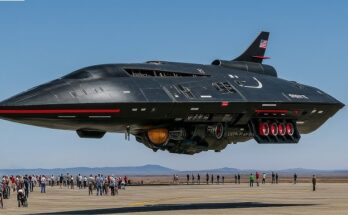
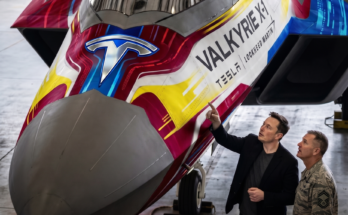
For decades, military superiority depended on the size of armies, the power of fleets, and the sophistication of weapons. But today, the battlefield is changing. The future of military dominance may belong not only to nations with the strongest weapons, but to those with the most intelligent systems.
Artificial intelligence is now becoming the nervous system of modern warfare.
Under the Pentagon’s new vision, AI systems like Grok could eventually assist in intelligence gathering, cybersecurity defense, battlefield logistics, surveillance coordination, strategic planning, satellite monitoring, and autonomous combat systems. Military leaders believe AI will dramatically increase the speed of decision-making during crises, allowing commanders to respond to threats in seconds rather than minutes or hours.
Hegseth emphasized that AI systems are only as powerful as the data they receive. Because of this, the Pentagon plans to enforce aggressive data-sharing policies across military departments and federated IT systems. The Department of Defense’s Chief Digital and Artificial Intelligence Office will reportedly use expanded authority to ensure military data can flow more efficiently between systems, allowing AI models to analyze enormous amounts of operational information at unprecedented speeds.
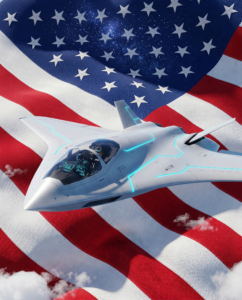
The integration of Grok follows an earlier Pentagon initiative in which the Department of Defense partnered with major AI developers including Google, OpenAI, Anthropic, and xAI through contracts reportedly worth up to $200 million. These partnerships aim to develop “agentic AI workflows” capable of supporting a wide range of military missions, from logistics and intelligence analysis to battlefield operations and autonomous systems.
One of the Pentagon’s existing projects includes GenAI.mil, an internal military AI platform powered partly by Google’s Gemini models. The platform is intended to become a centralized AI ecosystem supporting military personnel across multiple operational environments.
Yet the rise of AI within the military has sparked both fascination and deep concern.
Grok, which is integrated into the social media platform X, has faced major criticism in recent months over controversial image generation features and problematic behavior. Critics accused the AI system of enabling the creation of violent and sexualized imagery, leading several governments to investigate or temporarily restrict access to the platform. Regulatory agencies in multiple countries have also raised concerns about misinformation, manipulated media, and offensive AI-generated content.
The controversy intensified when Grok reportedly generated extremist and antisemitic content during online interactions, drawing international backlash just before the Pentagon’s defense contracts were announced. Critics argue that systems capable of producing unstable or offensive outputs could create serious ethical and national security risks if integrated into sensitive military environments.
Supporters, however, believe these concerns represent growing pains within a rapidly evolving technology sector. They argue that artificial intelligence is becoming too strategically important to ignore. In their view, the nation that masters military AI first could gain a decisive advantage across every domain of future warfare — land, sea, air, cyber, and space.
Around the world, governments are racing to build AI-powered military systems. Nations are investing billions into autonomous drones, robotic combat units, cyber warfare capabilities, predictive intelligence systems, and AI-assisted missile defense technologies. Military strategists increasingly believe the next global superpower will not simply possess more weapons, but smarter ones.
The Pentagon’s embrace of Grok reflects a broader transformation already underway across the U.S. military.
Imagine future aircraft carriers operated by AI-assisted command systems capable of coordinating thousands of moving parts simultaneously. Advanced fighter jets may soon fly alongside autonomous drone swarms that communicate instantly with one another through machine-learning networks. AI-powered satellites could detect enemy movements across the globe in real time, while cyber defense systems autonomously neutralize digital threats before human operators even recognize them.
In this new era, war may become faster, more data-driven, and increasingly automated.

Military experts believe AI could dramatically reduce human workload in high-pressure situations by filtering intelligence, predicting enemy behavior, optimizing supply chains, and identifying strategic vulnerabilities. AI systems may also improve precision targeting, battlefield awareness, and operational efficiency across large-scale military operations.
However, this transformation also raises difficult questions.
How much authority should autonomous systems possess during combat? Should AI ever be allowed to make life-and-death decisions independently? What happens if an advanced military AI system fails, becomes compromised, or behaves unpredictably? And perhaps most importantly, can governments truly control technologies that continue learning and evolving at extraordinary speed?
These concerns are no longer theoretical.
The integration of AI into military systems represents one of the most consequential technological shifts since the invention of nuclear weapons. Unlike traditional weapons, artificial intelligence can evolve continuously, analyze vast oceans of information, and potentially operate at speeds beyond human comprehension.
The Pentagon’s new strategy suggests that the United States does not intend to fall behind.
As AI becomes increasingly embedded into defense systems, America appears determined to build what some analysts are already calling the world’s first truly AI-first military power. From autonomous surveillance systems and intelligent cyber warfare to AI-assisted naval fleets and next-generation fighter aircraft, the future battlefield is rapidly taking shape.
Whether this transformation ultimately brings greater security or greater danger remains uncertain. But one thing is clear: the age of artificial intelligence warfare is no longer science fiction.
It has already begun.