For decades, the world’s greatest military powers have competed not only with missiles, aircraft, and warships — but with ideas.
Behind every stealth bomber, every advanced radar system, every hypersonic weapon, and every artificial intelligence platform lies something even more valuable than steel:
Knowledge.
And in the modern age, knowledge has become the most fiercely protected resource on Earth.
You May Also Like

That is why one accusation has followed the rise of modern Chinese military technology more than almost any other:
Did China independently build its advanced military systems… or did it systematically learn from, imitate, reverse-engineer, and in some cases allegedly copy American technology?
The question itself is explosive because it touches the center of a geopolitical transformation now reshaping the 21st century.
For much of the late 20th century, the United States stood technologically alone at the summit of aerospace and military dominance. American stealth aircraft looked decades ahead of anything competitors possessed. Systems like the Lockheed Martin F-22 Raptor, Lockheed Martin F-35 Lightning II, and Northrop Grumman B-2 Spirit were considered engineering marvels so advanced that many experts believed rival nations would need generations to catch up.
But then something remarkable happened.
Chinese aerospace development accelerated at extraordinary speed.
Aircraft began appearing that looked surprisingly familiar to Western analysts.
Stealth fighters emerged with angular surfaces resembling American radar-evasion geometry. Bomber concepts carried visual similarities to U.S. flying-wing designs. Drone systems mirrored operational concepts pioneered by American defense research. Even naval technology and missile systems increasingly demonstrated echoes of existing Western platforms.
To some observers, this was coincidence.
To others, it was evidence.
And history shows the reality is far more complicated than simple accusations.
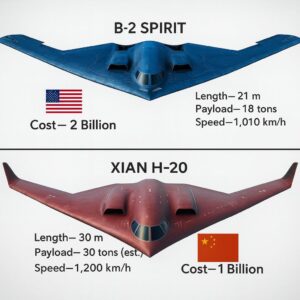
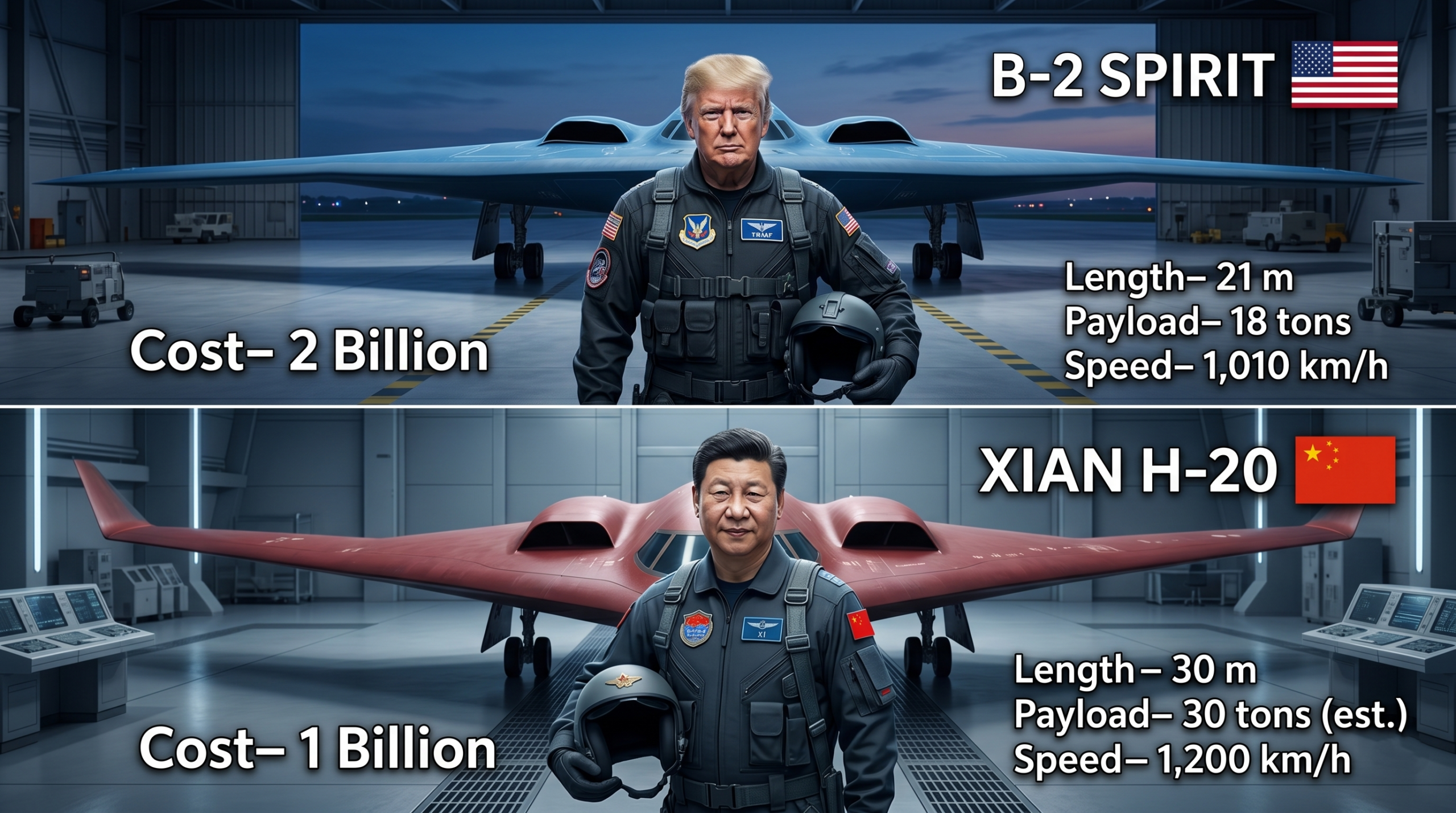
The image comparing the Northrop Grumman B-2 Spirit and the Xian H-20 perfectly captures why this debate exists. Both aircraft appear to share the flying-wing stealth philosophy that minimizes radar visibility by eliminating vertical surfaces and smoothing radar reflections across curved geometry. This design is not merely aesthetic. It emerges from highly specialized aerodynamic and electromagnetic engineering principles developed over decades of stealth research.
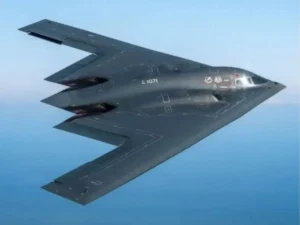
The B-2 Spirit itself was revolutionary when introduced. It looked less like an airplane and more like a shadow detached from physics. Its flying-wing configuration reduced radar cross-section dramatically while allowing long-range strategic strike capability deep inside hostile territory.
For years, many experts believed duplicating such technology would be extraordinarily difficult because stealth is not only about shape. It requires mastery of advanced composite materials, thermal management, radar-absorbent coatings, engine masking, computational fluid dynamics, and sophisticated manufacturing precision.
Yet China’s rumored H-20 bomber concept appears strikingly similar in overall strategic philosophy.
Critics immediately argued this similarity could not be accidental.
But scientifically speaking, there is an important nuance often ignored in public discussions.
In aerospace engineering, physics limits design possibilities.
When multiple nations attempt to solve the same problem — especially stealth optimization — certain shapes naturally emerge because they work best under the laws of aerodynamics and radar physics. Flying-wing aircraft are not automatically proof of copying; they are highly effective stealth solutions.
And yet, similarities between Chinese and American systems extend beyond broad aerodynamic concepts.
This is where historical evidence becomes important.
Over the past several decades, the United States has repeatedly accused Chinese operatives and affiliated entities of intellectual property theft, cyber espionage, and technology acquisition targeting aerospace, semiconductor, artificial intelligence, and defense industries.
Numerous publicly documented cyber intrusions reportedly targeted defense contractors connected to programs like the F-35 Joint Strike Fighter. U.S. officials and cybersecurity investigators have alleged that massive amounts of technical data were compromised during sophisticated hacking campaigns linked to Chinese state-sponsored groups.
Some analysts believe certain design similarities between the Shenyang FC-31 and the Lockheed Martin F-35 Lightning II intensified suspicions surrounding those breaches.
Again, the issue is complex.
Similarity does not automatically equal direct copying.
But intelligence agencies worldwide increasingly recognize that modern technological competition includes cyber espionage on an unprecedented scale.
And China is not alone in this behavior.
Historically, every major power has engaged in technology acquisition from rivals.
The Soviet Union studied captured Western aircraft extensively during the Cold War. The United States also benefited from foreign scientific discoveries throughout history, including German rocket research after World War II.
Even the famous Soviet Tupolev Tu-4 was directly reverse-engineered from the American Boeing B-29 Superfortress after several U.S. bombers landed in Soviet territory during World War II.
Nations copy.
Nations adapt.
Nations learn from rivals.
This has always been part of technological evolution.
But China’s rise stands apart because of its speed and scale.
Within just a few decades, China transformed from a nation largely dependent on foreign military technology into one capable of producing advanced stealth fighters, aircraft carriers, hypersonic systems, quantum communication research, AI-driven surveillance systems, and ambitious space programs.
That transformation shocked many Western analysts.
Some view it as evidence of systematic technological appropriation.
Others argue it reflects massive state investment, educational expansion, industrial discipline, and relentless engineering development.
The truth likely involves elements of both.
China has undeniably invested enormous national resources into scientific advancement. Universities expanded aggressively. Engineering programs multiplied. State-directed industrial policy accelerated aerospace manufacturing capabilities. Domestic research institutions grew rapidly.
At the same time, documented cases of cyber espionage and intellectual property theft remain real concerns acknowledged by governments and intelligence agencies worldwide.
In modern warfare, stealing blueprints can save decades of research.
And in an era where technological superiority determines military balance, nations increasingly treat information itself as strategic ammunition.
But there is another side to this story that many emotional geopolitical debates ignore.
Copying alone cannot create long-term dominance.
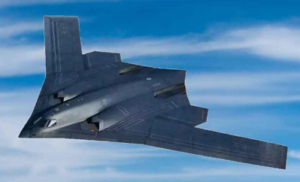
Replication may shorten development timelines, but mastering advanced aerospace engineering still requires immense scientific infrastructure, manufacturing capability, materials science expertise, computational modeling, and operational integration.
A stealth aircraft is not merely a shape.
It is an ecosystem of technologies functioning in perfect harmony.
Radar systems.
Sensor fusion.
Engine performance.
Software architecture.
Electronic warfare integration.
Thermal management.
Precision manufacturing tolerances.
Pilot systems.
Satellite coordination.
Artificial intelligence processing.
Even if designs are inspired by foreign systems, reproducing operational excellence remains extraordinarily difficult.
This is why military analysts carefully distinguish between appearance and capability.
An aircraft resembling an American stealth fighter does not necessarily perform at the same level operationally.
Yet the rapid narrowing of the technological gap has undeniably changed global power dynamics.
The United States no longer operates in a world of uncontested aerospace supremacy.
China now fields advanced systems that force Western defense planners to rethink assumptions about Pacific security, air superiority, and future warfare.
And perhaps the deeper truth beneath this entire debate is not whether China copied certain technologies.
Perhaps the deeper truth is that humanity has entered an age where technological competition itself has become the defining battlefield of civilization.
Not just aircraft.
Artificial intelligence.
Quantum computing.
Semiconductors.
Cyberwarfare.
Space systems.
Biotechnology.
Energy infrastructure.
The next global superpower may not be decided purely by armies or geography, but by who masters innovation fastest.
That reality terrifies governments because modern technology spreads faster than ever before. A single cyber breach can transfer years of research instantly across continents. Scientific papers circulate globally. Engineers migrate between nations. Supply chains intertwine rival economies together in ways history has never seen before.
The line between inspiration, adaptation, reverse engineering, and outright theft becomes increasingly blurred.
And throughout history, rising powers have almost always learned from dominant powers before eventually competing against them directly.
Japan once studied Western industrial systems intensely during the Meiji era before becoming a technological giant itself.
The Soviet Union studied Western engineering relentlessly during the Cold War.
China may simply represent the largest and fastest version of that historical pattern ever witnessed.
Still, the emotional power of these comparisons remains undeniable.
When people see the silhouette of the Xian H-20 beside the Northrop Grumman B-2 Spirit, they do not merely see aircraft.
They see a symbol of a changing world.
A world where technological dominance is no longer guaranteed.
A world where the secrets once locked inside classified American hangars now inspire rival superpowers across the globe.
A world entering a new era of silent competition fought not only with bombs and missiles — but with algorithms, blueprints, data, and ideas.
Because in the end, the greatest weapon of the 21st century may not be the stealth bomber itself.
It may be the knowledge required to build one.