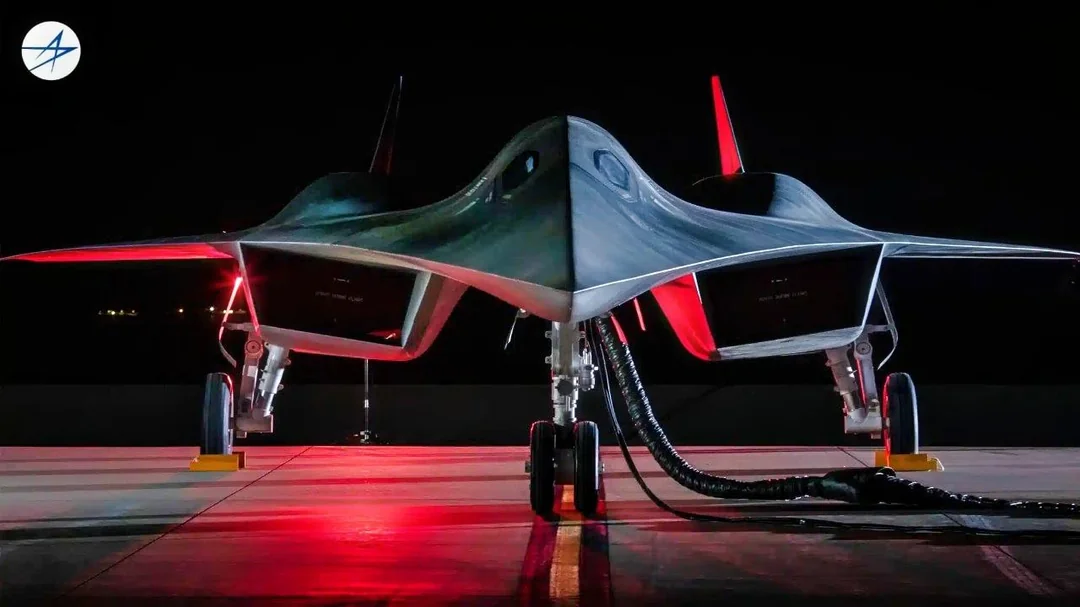
The sky has always belonged to those willing to imagine beyond the limits of their own era.
Once, humanity believed cavalry would rule forever. Then tanks arrived. Nations once believed battleships were untouchable, until aircraft carriers transformed naval warfare. For decades, fighter pilots represented the ultimate symbol of military supremacy — elite humans soaring above the clouds at supersonic speeds, controlling machines worth hundreds of millions of dollars while carrying the strategic weight of nations on their shoulders.
But history has a brutal habit of replacing legends with algorithms.
And few people have challenged that reality more aggressively than Elon Musk.
You May Also Like

When Musk publicly mocked the continued development of piloted fighter aircraft like the Lockheed Martin F-35 Lightning II, many military analysts reacted with outrage. Veterans called the comments disrespectful. Defense experts accused him of oversimplifying warfare. Aerospace traditionalists dismissed him as another billionaire speaking outside his field.
Yet beneath the controversy was a question so powerful that it shook the foundations of modern military doctrine:
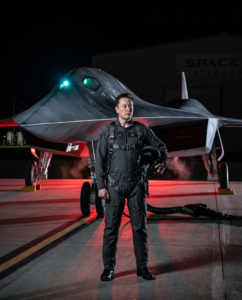
What if the age of the human fighter pilot is slowly coming to an end?
The statement itself sounded almost insulting in its simplicity. Musk shared footage of drone swarms moving through the sky with eerie synchronization and remarked that “some idiots” were still building piloted fighter jets. The internet exploded instantly. But unlike ordinary internet provocations, this one carried unusual weight because Musk’s career has repeatedly involved predicting technological shifts long before the rest of society accepts them.
Reusable rockets were once considered unrealistic.
Electric vehicles were mocked as impractical luxury experiments.
Private spaceflight was treated like science fiction.
And yet, somehow, the impossible kept becoming real.
That is why the fighter jet debate matters far beyond social media. It is not simply an argument about aircraft. It is a conflict between two visions of the future itself.
One side believes human pilots remain irreplaceable — emotionally adaptive, strategically creative, morally accountable. The other believes warfare is entering an era where machines will outperform humans in almost every measurable category: speed, reaction time, endurance, survivability, coordination, and cost efficiency.
At the center of this conflict stands the F-35.
The Lockheed Martin F-35 Lightning II is among the most advanced combat aircraft ever constructed. Designed as a fifth-generation stealth fighter, it combines radar evasion, sensor fusion, network warfare, electronic attack capability, and multirole combat operations into a single platform. In theory, it represents the pinnacle of manned aerial warfare.
But the aircraft also became one of the most controversial defense programs in modern history.
Its development costs reached staggering levels. Maintenance remains extraordinarily expensive. Critics argue the aircraft was forced to satisfy too many military branches simultaneously — Air Force, Navy, and Marine Corps requirements merged into one highly complex system. Musk himself described the aircraft as a machine whose “design failed at the requirements stage because it was asked to be too many things for too many people.”
Scientifically speaking, his criticism touches a real engineering principle.
Complexity creates vulnerability.
The more mission profiles a single platform attempts to satisfy, the more compromises emerge in optimization. Weight distribution changes. Aerodynamic priorities shift. Software architecture becomes increasingly layered and difficult to maintain. Cost overruns multiply because engineering harmony becomes harder to achieve.
And yet the F-35 remains terrifyingly capable.
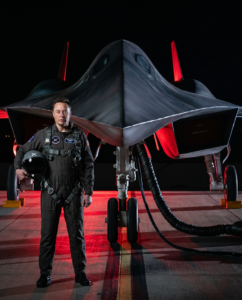
Its stealth geometry drastically reduces radar cross-section visibility. Advanced sensor arrays allow pilots to process battlefield information with unprecedented situational awareness. The aircraft effectively acts as an airborne computational node — not merely a jet, but a flying data-processing network connected to satellites, ground systems, drones, and allied forces.
In many ways, the F-35 is already partially a machine intelligence platform.
Ironically, this is exactly why Musk believes the human pilot may eventually become unnecessary.
Human beings are biologically slow compared to advanced autonomous systems. A trained pilot may react in fractions of a second, but artificial intelligence operates in milliseconds. Human consciousness experiences stress, fatigue, fear, and sensory overload. Machines do not. Pilots require oxygen systems, cockpit space, ejection mechanisms, pressure regulation, thermal stabilization, and extensive survival infrastructure. Remove the pilot, and aircraft design changes radically.
Suddenly, the machine no longer needs to protect fragile biology.
Acceleration limits disappear.
Extreme maneuvers become possible.
G-force restrictions vanish.
Aircraft can become smaller, faster, cheaper, and more expendable.
This is where Musk’s fascination with drone warfare becomes strategically important.
Modern drones are not merely remote-controlled toys. They are evolving into autonomous battlefield ecosystems. In Ukraine, small first-person-view drones demonstrated something militaries around the world had underestimated for years: relatively cheap autonomous or semi-autonomous systems could destroy assets worth millions of dollars.
A small explosive drone costing a few hundred dollars could eliminate tanks, armored vehicles, radar systems, and artillery platforms worth exponentially more.
This represents a catastrophic equation for traditional military economics.
Historically, military superiority depended heavily on industrial scale and financial dominance. But drone warfare introduces asymmetry. Suddenly, smaller nations or irregular forces gain access to precision strike capabilities once reserved for superpowers.
However, critics of Musk correctly argue that comparing consumer-scale or tactical drones directly to aircraft like the F-35 oversimplifies reality.
A drone swarm cannot currently replicate the operational flexibility of advanced stealth fighters.
The F-35 can travel enormous distances at high speed while carrying sophisticated long-range weaponry deep into hostile territory. Its electronic warfare systems can jam enemy defenses, coordinate allied forces, and survive in heavily contested airspace where many drones would immediately fail.
This distinction is scientifically critical.
Not all drones are equal.
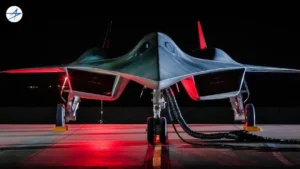
Small tactical drones operate as expendable battlefield tools. But larger strategic drones like the General Atomics MQ-9 Reaper or Bayraktar TB2 reveal the limitations of unmanned systems under sophisticated air defense environments.
Early in the Ukraine conflict, Turkish Bayraktar drones gained international attention for devastating armored columns. Yet once layered Russian air defenses intensified, those same drones became increasingly vulnerable. Large unmanned systems often struggle against advanced radar networks, electronic warfare systems, and missile interception capabilities.
In essence, survivability remains the defining challenge of drone warfare.
And survivability is precisely where stealth fighters still dominate.
The scientific principle behind stealth is not invisibility, but detection delay. Reducing radar cross-section buys precious time. Every second an aircraft remains undetected increases mission success probability. The F-35 achieves this through geometric shaping, radar-absorbing materials, infrared management systems, and electronic signal control.
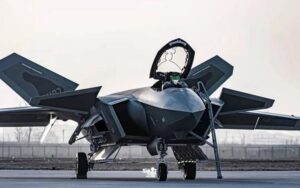
China’s development of stealth aircraft resembling American designs demonstrates something profound about military evolution: adversaries do not spend billions countering useless technology.
If stealth fighters were obsolete, rival powers would not race to replicate them.
But Musk’s broader argument may not depend on whether today’s drones outperform today’s fighters. His real argument concerns trajectory.
Technological revolutions rarely begin by outperforming existing systems immediately. Early automobiles were slower than horses. Early computers were weaker than human mathematical specialists in many tasks. Early rockets exploded constantly.
What matters is rate of evolution.
Artificial intelligence evolves exponentially.
Machine coordination improves yearly.
Autonomous targeting systems advance rapidly.
Battery systems, swarm logic, neural networking, quantum communication research, and autonomous navigation algorithms are all progressing simultaneously.
At some point, the convergence of these technologies may fundamentally alter aerial warfare.
Future combat may involve intelligent drone ecosystems rather than individual hero pilots.
Thousands of semi-autonomous airborne systems communicating in real time.
Distributed intelligence replacing centralized control.
Machines making tactical decisions faster than human cognition allows.
The battlefield itself becoming algorithmic.
This possibility terrifies many scientists and ethicists.
Because once warfare becomes machine-speed, human diplomacy may struggle to keep pace.
Traditional military escalation historically involved time: human discussions, command chains, political calculations. But AI-driven combat systems could compress conflict escalation into seconds. Autonomous systems detecting threats, predicting attack probabilities, and responding instantly may remove human hesitation entirely.
The consequences could become globally destabilizing.
And yet, history suggests humanity rarely abandons transformative technologies simply because they are dangerous.
Nuclear weapons did not disappear after Hiroshima.
Cyberwarfare did not stop after major infrastructure attacks.
Space militarization did not vanish after anti-satellite weapon tests.
Instead, humanity continuously attempts to regulate technologies after they already exist.
This may ultimately define the future of fighter aviation.
Not replacement, but evolution.
The future battlefield may not eliminate fighter jets entirely. Instead, piloted aircraft could become command nodes surrounded by autonomous drone wingmen. Human pilots may remain strategically present while increasingly removed from direct danger. The pilot becomes less a traditional aviator and more a battlefield systems commander overseeing intelligent machine formations.
Ironically, this hybrid vision already exists within modern military planning.
The United States, China, and several NATO nations are actively researching “loyal wingman” drone systems designed to accompany advanced fighters into combat zones. These drones may carry additional weapons, conduct reconnaissance, absorb enemy fire, or perform electronic warfare operations while coordinating directly with manned aircraft.
In that sense, Musk may not be entirely right.
But he may not be entirely wrong either.
Because the deeper truth beneath the controversy is this:
Humanity is entering a period where warfare itself is becoming less human.
The fighter pilot — once the ultimate symbol of courage, instinct, and national pride — now faces competition from autonomous intelligence systems capable of processing reality at superhuman speed.
And this transformation extends beyond the military.
The technologies emerging from autonomous aerospace research could reshape civilian civilization itself. Advanced AI navigation may revolutionize transportation. Autonomous flight systems could redefine logistics and emergency response. Swarm coordination algorithms might influence communications infrastructure, disaster relief, medical delivery systems, and even planetary exploration.
The same innovations capable of building terrifying war machines may also help humanity solve enormous global challenges.
That paradox has followed every major technological leap in history.
Fire cooked food and burned cities.
Electricity illuminated homes and powered weapons.
The atom generated energy and destroyed nations.
Technology itself remains neutral.
Human intention defines its legacy.
And somewhere above the clouds, inside classified hangars and research laboratories, the future is already being built.
Whether it arrives as liberation or catastrophe may depend not on the machines humanity creates — but on whether human wisdom evolves faster than human power.