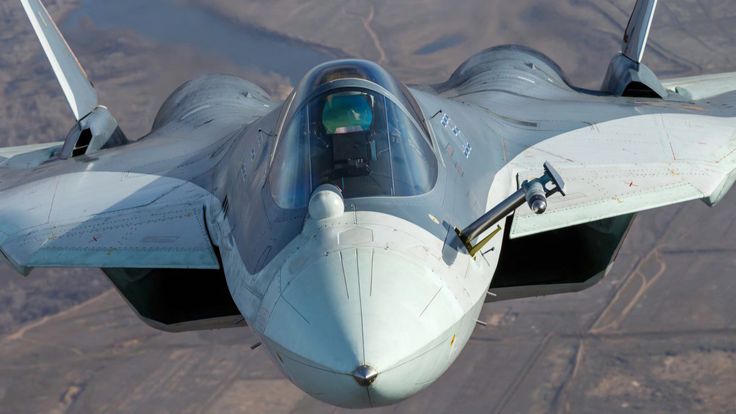
Russia’s Su-57 “Felon” is one of the most mysterious fighter jets in the world.
It looks sharp.
It looks futuristic.
It looks dangerous.
It looks like Russia’s answer to the F-22 Raptor and F-35 Lightning II.
But looks are not enough to win the fifth-generation fighter race.
In 2026, the Su-57 remains one of Russia’s most ambitious military aviation projects. It was designed to give Moscow a stealth fighter capable of operating in modern air combat, attacking air and ground targets, surviving contested environments, and carrying advanced weapons.
You May Also Like


On paper, it sounds impressive.
It has a blended-body design.
It has internal weapons bays.
It can reportedly reach around Mach 2.
It carries modern sensors, including AESA radar and infrared search-and-track capability.
It is designed for both air-to-air and air-to-ground missions.
It may eventually work with unmanned systems such as the S-70 Okhotnik drone.
But the central question remains:
Can the Su-57 truly challenge NATO’s fifth-generation airpower?
The honest answer is complicated.
The Su-57 is not a joke.
It is not harmless.
It is not something NATO can ignore.
But it is also not an F-22 fleet.
It is not an F-35 ecosystem.
It is not being produced in large numbers.
And it has not yet proven that it can fight deep inside the most dangerous Western air-defense environment.
Russia may have built a stealth fighter.
But NATO has built an entire fifth-generation airpower machine.
That is the difference.
The Su-57 Was Built to Close the Fifth-Generation Gap
The Su-57 was Russia’s answer to a problem that became obvious after the Cold War.
The United States had moved far ahead in stealth aviation.
The F-117 had shown the power of stealth during the Gulf War.
The B-2 Spirit gave America a deep-strike stealth bomber.
The F-22 Raptor became the world’s first operational fifth-generation air-superiority fighter.
The F-35 Lightning II turned stealth into a global allied fighter network.
Russia could not ignore this.
For decades, Moscow had produced excellent fourth-generation fighters such as the Su-27, Su-30, Su-35, MiG-29, and MiG-31. These aircraft were fast, maneuverable, powerful, and heavily armed. But they were not true fifth-generation aircraft.
The Su-57 was designed to change that.
It was meant to combine stealth shaping, high speed, maneuverability, advanced sensors, internal weapons, electronic warfare, and multirole capability.
In Russian service, the Su-57 is supposed to become a fighter that can hunt enemy aircraft, attack ground targets, operate in difficult electronic-warfare conditions, and support future networked combat.
That is the ambition.
But ambition and operational reality are not the same thing.
What Makes the Su-57 Dangerous?
The Su-57 should not be dismissed simply because Russia has only a small number of them.
Even a small number of advanced aircraft can matter if used carefully.
The Su-57 is believed to have several important capabilities.
First, it has a stealth-influenced design. The aircraft uses a blended wing-body shape, internal weapons carriage, angled surfaces, and radar-reduction features meant to lower its detectability compared with older Russian fighters.
Second, it is fast. Public performance claims suggest the aircraft can reach around Mach 2, giving it strong speed for both interception and missile-launch missions.
Third, it is maneuverable. Like many Sukhoi fighters, the Su-57 is designed with high agility in mind. Russia has long valued supermaneuverability, especially in close-range air combat.
Fourth, it carries modern sensors. Reports associate the Su-57 with AESA radar, side-looking radar arrays, infrared search-and-track systems, electronic countermeasures, and modern targeting equipment.
Fifth, it can carry advanced missiles. Russia has reportedly used the Su-57 as a stand-off missile platform, allowing it to launch weapons from safer distances rather than fly directly into heavy air defenses.
This combination makes the aircraft dangerous.
A Su-57 flying inside Russian-controlled airspace and launching long-range missiles is still a serious threat. A stealth-shaped fighter with modern sensors and advanced weapons can complicate Ukrainian and NATO planning.
But being dangerous is not the same as being dominant.
The Stealth Question
The biggest debate around the Su-57 is stealth.
Russia calls the Su-57 a fifth-generation fighter, and its design clearly includes stealth features. But Western analysts have long questioned whether it reaches the same low-observable standard as the F-22 or F-35.
This is difficult to prove publicly because radar cross-section data is highly classified.
No country openly publishes the real stealth performance of its most advanced fighters. Russia will not reveal the exact detectability of the Su-57. The United States will not reveal the true radar signature of the F-22 or F-35.
So we must be careful.
The Su-57 is likely more difficult to detect than older Russian fighters such as the Su-27 or Su-35, especially from certain angles and under certain conditions.
But the F-22 and F-35 were designed from the beginning around stealth as a central requirement. Their shapes, coatings, inlets, internal weapons bays, surface finishes, and maintenance systems are deeply connected to low-observable performance.
The Su-57 appears to make more trade-offs.
It emphasizes speed, maneuverability, range, weapons, and sensor coverage alongside stealth. That may make it useful in Russia’s doctrine, but it may not make it as stealthy as the best American fifth-generation aircraft.
The key point is this:
The Su-57 may be stealthier than Russia’s older fighters, but public evidence does not prove that it matches the F-22 or F-35 in low-observable performance.
The F-22 Comparison: Air Dominance vs Multirole Ambition
The F-22 Raptor was built for one main purpose: air dominance.
It combines stealth, supercruise, extreme maneuverability, high-altitude performance, advanced sensors, and powerful air-to-air capability. The F-22 was designed to enter contested airspace and destroy enemy fighters before they could threaten U.S. forces.
The Su-57 is often compared to the F-22 because both are twin-engine stealth fighters with high speed and maneuverability.
But the comparison has limits.
The F-22 entered service in 2005 and has had years of operational development, pilot training, tactics refinement, maintenance experience, and integration into U.S. Air Force doctrine.
The Su-57 is still maturing.
Russia has far fewer aircraft. Its production pace is slower. Its combat use has been limited and cautious. Its full sensor, networking, software, and drone-teaming capabilities remain difficult to verify from open sources.
The Su-57 may be fast and agile, but the F-22’s advantage is not just speed. It is the combination of stealth, avionics, pilot training, doctrine, and long-established operational experience.
Air superiority is not won by the shape of one aircraft.
It is won by the whole system behind it.
That is where the F-22 still has a major edge.
The F-35 Comparison: Sensor Fusion vs Small Fleet
The F-35 is a different kind of aircraft from the F-22.
It was not built mainly as a pure air-superiority fighter. It was built as a multirole stealth fighter and sensor-fusion platform that can gather, process, and share battlefield information.
That is why the F-35 is so important to NATO.
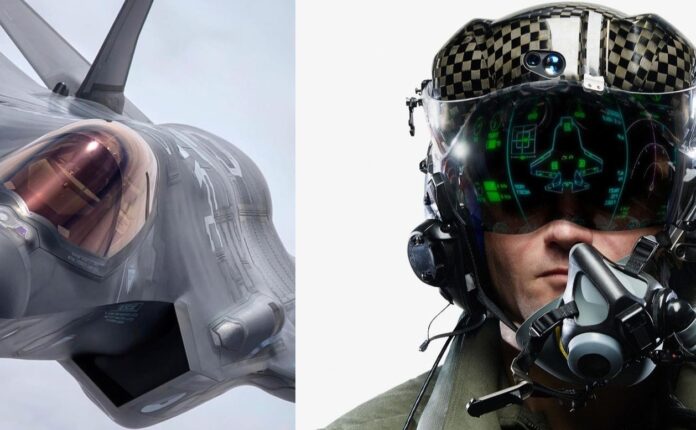
The F-35’s strength is not just stealth. It is its ability to connect the battlespace. It can use radar, infrared sensors, electronic warfare systems, communications, and data links to create a picture of the battlefield and share that picture with friendly forces.
In simple words, the F-35 helps the entire force fight smarter.
This is where the Su-57 faces a serious challenge.
Russia may have advanced sensors on the Su-57, but it has not publicly demonstrated anything on the same scale as the global F-35 network. The F-35 is operated by the United States and many allied countries. It is supported by a huge industrial base, shared training, common logistics, and growing interoperability across NATO and allied air forces.
The Su-57 is a small Russian fleet.
The F-35 is a global airpower ecosystem.
That difference matters more than a simple one-on-one comparison.
The Numbers Problem
The Su-57’s biggest weakness is not that it is useless.
Its biggest weakness is that Russia has too few of them.
Public estimates vary, and Russia does not always disclose exact delivery numbers. Recent Russian announcements have mentioned new batches, but often without giving clear aircraft totals.
Even if the fleet has grown beyond earlier estimates, it remains tiny compared with the F-35.
The F-35 program has delivered more than 1,300 aircraft globally. The United States alone operates hundreds, while NATO and allied countries continue receiving more. Countries such as the United Kingdom, Italy, the Netherlands, Norway, Denmark, Belgium, Poland, Finland, Germany, Canada, Japan, South Korea, Australia, and Israel are all part of the wider F-35 world in different ways.
That creates a scale Russia cannot match.
Scale matters because wars are not fought by one aircraft.
A small Su-57 fleet cannot be everywhere. It cannot absorb heavy losses. It cannot maintain constant patrols across multiple fronts. It cannot train large numbers of pilots at the same pace. It cannot generate the same operational pressure as a massive allied fifth-generation fleet.
Even if the Su-57 is capable, there are not enough of them to transform the balance of airpower against NATO.
That is the core problem.
Why Small Numbers Change How Russia Uses the Su-57
Because Russia has so few Su-57s, it must use them carefully.
A large fleet can take more risks. A small elite fleet cannot.
This helps explain why the Su-57 appears to have been used cautiously in the Ukraine war. Rather than flying deep into dangerous airspace and risking loss, Russia has reportedly used the aircraft mainly from safer positions, launching stand-off weapons from behind protected lines.
That makes sense.
Ukraine’s air-defense network has been strengthened by Western systems, including Patriots, NASAMS, IRIS-T, and other platforms. Flying a rare and expensive Su-57 directly into dense air defenses would be extremely risky for Russia.
If one Su-57 were shot down, it would be a propaganda disaster. It would also reduce an already small fleet.
So Russia appears to be using the aircraft in a way that preserves it: launch from distance, avoid unnecessary exposure, and use the jet as a high-value missile platform rather than a constantly visible front-line fighter.
This may be smart from Russia’s perspective.
But it also reveals the limitation.
A true air-dominance fighter must be available in enough numbers to shape the battlefield. The Su-57 has not yet done that.
Ukraine Has Exposed a Hard Truth
The war in Ukraine has shown that modern airpower is harder than many people expected.
Russia entered the war with a large air force, but it failed to completely control Ukrainian skies. Ukraine, despite having a smaller air force, survived through air-defense systems, dispersal, tactics, Western support, drones, and adaptation.
This matters for the Su-57 story.
If Russia’s most advanced stealth fighter were truly ready to dominate, the Ukraine war would have been an opportunity to prove it.
Instead, the aircraft has appeared only in limited roles.
That does not mean it has no value. But it does mean Russia has not used it in a way that shows full confidence in its ability to defeat modern air defenses and operate freely.
The lesson is clear:
Modern air superiority is not guaranteed by owning a stealth fighter.
It requires numbers, training, sustainment, sensors, electronic warfare, command systems, weapons, tankers, intelligence, and integrated operations.
Russia has pieces of that system.
NATO has far more of it.
The Su-57’s Sensors: Impressive but Unproven at Scale
The Su-57 reportedly uses advanced radar and infrared systems.
Its radar suite is often described as including AESA technology. It also has an infrared search-and-track system, allowing it to detect heat signatures from aircraft without relying only on radar. This can be useful in an environment where electronic jamming is heavy or where a pilot wants to detect targets passively.
IRST systems are valuable because stealth aircraft are designed mainly to reduce radar detection, not heat detection. In some scenarios, infrared detection can help locate aircraft that are difficult to see on radar.
But sensors are only one part of the equation.
The question is not simply whether the Su-57 has radar and IRST.
The question is how well those sensors work together.
How far can they detect real targets?
How well do they perform against jamming?
How quickly can the jet process data?
How clearly does it present information to the pilot?
How well can it share data with other aircraft and ground systems?
How well does it integrate with missiles and targeting networks?
Those are the questions that define fifth-generation combat capability.
The F-35’s reputation is built heavily on sensor fusion. The Su-57’s sensor claims are serious, but its real performance remains much harder to judge from public information.
Manned-Unmanned Teaming: The Future Russia Wants
Russia has also discussed pairing the Su-57 with unmanned aircraft, especially the S-70 Okhotnik heavy combat drone.
This idea is important.
The future of air combat may involve crewed fighters working with loyal wingman drones. These drones could scout ahead, carry weapons, jam enemy radars, act as decoys, or attack targets while the crewed aircraft stays farther back.
The United States is moving in this direction with Collaborative Combat Aircraft. China is also investing heavily in fighter-drone teaming. Europe and other powers are exploring similar concepts.
Russia does not want to be left behind.
The Su-57 and Okhotnik pairing could eventually give Moscow a way to expand the reach and survivability of its advanced fighter force.
But public evidence of mature real-time operational teaming remains limited.
Flying a drone near a fighter is one thing.
Using that drone in real combat as part of a reliable, networked, AI-assisted system is another.
The technology requires secure communications, autonomy, software, command logic, electronic-warfare resistance, and doctrine.
Russia may be working on this.
But NATO and the United States are also moving fast.
For now, the Su-57’s drone-teaming future remains more promise than proven capability.
Why NATO’s Advantage Is Not Just Aircraft Count
NATO’s advantage over the Su-57 is not only that it has more F-35s.
It also has a larger support system.
NATO has AWACS aircraft.
It has aerial refueling tankers.
It has electronic warfare aircraft.
It has satellite intelligence.
It has advanced air-defense networks.
It has integrated command and control.
It has shared training across many countries.
It has combat experience from decades of coalition operations.
It has a massive industrial base behind the F-35.
This matters because modern air warfare is not a tournament between two fighter jets.
It is a contest between systems.
A Su-57 pilot does not just fight an F-35 pilot. He fights the radar picture, the data links, the AWACS aircraft, the electronic warfare support, the tanker-backed patrols, the ground-based air defenses, the satellite intelligence, and the allied network surrounding the F-35.
This is why NATO’s airpower advantage is so hard for Russia to challenge.
Russia can build a good aircraft.
But NATO has built a network.
The F-35 Is Not Perfect
A balanced article must also say this clearly: the F-35 is not perfect.
The F-35 program has struggled with high sustainment costs, maintenance delays, spare parts shortages, software issues, and readiness problems. U.S. government reporting has shown that mission-capable rates have fallen, and the program still needs major improvements to reach its readiness goals.
That matters.
A large fleet on paper is not the same as every aircraft being ready every day. If too many jets are grounded by maintenance problems, the advantage becomes less efficient.
But even with those problems, the scale of the F-35 program remains enormous.
A troubled fleet of more than 1,300 aircraft is still very different from a small fleet of Su-57s.
NATO’s challenge is readiness.
Russia’s challenge is both readiness and numbers.
That is a much harder problem.
The Su-57’s Real Role: A Stand-Off Threat
The most realistic way to view the Su-57 today is not as a NATO-killing super fighter.
It is better understood as a high-value stand-off strike and air-combat platform that Russia will protect carefully.
Used from safer airspace, the Su-57 can launch advanced missiles, support air defense, test new weapons, and serve as a symbol of Russian technological ambition.
That is not meaningless.
In a conflict, a few Su-57s carrying long-range missiles could still threaten targets. They could force NATO planners to account for them. They could complicate Ukrainian defense. They could provide Russia with a prestige platform for operations and propaganda.
But that is very different from saying the Su-57 can challenge NATO’s entire fifth-generation fleet.
At present, the Su-57 looks more like a limited high-end asset than a massed air-superiority force.
That is the key distinction.
Could Russia Build More?
Russia has announced plans to acquire more Su-57s and has spoken about increasing production. The long-stated target has been dozens of aircraft, not hundreds.
But production is difficult.
Modern stealth fighters require advanced engines, radar-absorbent materials, precision manufacturing, electronics, sensors, software, and a stable supply chain. Russia is building them under the pressure of war, sanctions, manpower demands, and competing military priorities.
Russia must also produce missiles, drones, tanks, artillery shells, helicopters, air-defense systems, and replacement aircraft for losses elsewhere.
That creates industrial pressure.
Even if Russia increases Su-57 production, catching NATO’s F-35 scale would take many years.
And by then, NATO will also be modernizing.
The F-35 will continue receiving upgrades. The U.S. is developing the F-47 under the Next Generation Air Dominance program. Europe is pursuing next-generation systems. Drones and loyal wingmen are entering the airpower race.
Russia is not chasing a frozen target.
It is chasing a moving one.
Why the Su-57 Still Matters
It would be a mistake to dismiss the Su-57 as useless.
The aircraft matters for several reasons.
First, it is Russia’s only operational fifth-generation fighter program.
Second, it gives Russia experience with stealth design, advanced sensors, internal weapons, and next-generation fighter production.
Third, it allows Russian pilots and engineers to develop tactics for modern air combat.
Fourth, it can support weapons testing and stand-off strike missions.
Fifth, it serves as a foundation for future Russian aircraft development.
Even if the Su-57 never matches the F-35 in scale or the F-22 in air-dominance reputation, it still gives Russia a technology path forward.
That is why NATO watches it.
Not because it is unbeatable.
Because it shows where Russia wants to go.
The Psychological Role of the Felon
The Su-57 also has propaganda value.
For Russia, the aircraft is a symbol. It tells the domestic public that Russian aerospace technology remains advanced. It tells foreign buyers that Russia can still build modern fighters. It tells NATO that Moscow has not surrendered the fifth-generation race.
The aircraft appears in videos, airshows, official statements, and state media reports because it looks powerful.
That image matters.
In military politics, symbols can be useful even before systems mature. A small number of Su-57s can create headlines, influence public opinion, and support the idea that Russia remains a major military innovator.
But symbols do not replace production.
In a real war against NATO, aircraft count, readiness, pilot training, sustainment, sensor integration, and command networks matter far more than dramatic footage.
The Su-57 may win attention.
The question is whether it can win air superiority.
So far, public evidence says that remains highly doubtful.
The Bottom Line: Fighter vs Fighter Is the Wrong Question
Many people ask: can the Su-57 beat the F-35 or F-22?
That is an attractive question, but it is too simple.
Real air combat is not a clean one-on-one duel.
The better question is:
Can Russia field enough Su-57s, with enough sensors, weapons, pilots, support aircraft, electronic warfare, and command networks, to challenge NATO’s fifth-generation airpower system?
That answer is much clearer.
Right now, no.
The Su-57 may be capable in some missions. It may be dangerous as a stand-off missile platform. It may improve over time. But Russia’s tiny fleet cannot match the combined weight of U.S. and allied F-35s, F-22s, air-defense systems, tankers, AWACS, satellites, and NATO command networks.
The Su-57 is an aircraft.
NATO’s fifth-generation airpower is a machine.
That is the difference.
Conclusion: The Felon Is Dangerous, but the Numbers Tell the Truth
Russia’s Su-57 Felon is real. It is advanced. It is fast. It carries modern sensors and weapons. It gives Moscow a fifth-generation fighter it can use for prestige, limited combat missions, and future development.
But in 2026, it still faces a harsh reality.
There are too few of them.
The aircraft’s true stealth performance remains uncertain. Its sensor-fusion capabilities are not proven at F-35 scale. Its manned-unmanned teaming future remains unclear. Its combat role in Ukraine has been cautious and limited. Its production pace remains far behind the F-35 industrial machine.
Meanwhile, NATO’s fifth-generation advantage continues to grow.
The F-22 remains one of the world’s top air-dominance fighters. The F-35 is spreading across U.S. and allied air forces. NATO countries are building a common stealth-fighter ecosystem. Even with readiness problems, the Western fleet is massive compared with Russia’s Su-57 force.
So the Su-57 should not be mocked.
But it also should not be exaggerated.
It is not a NATO-killer.
It is not an F-35 replacement.
It is not a mass-produced stealth revolution.
It is a capable but limited Russian fighter trapped inside a numbers problem.
And in modern air warfare, numbers, networks, training, and sustainment can matter just as much as speed and stealth.
Russia built the Su-57 to close the fifth-generation gap.
But the gap is still there.
And for now, NATO’s advantage remains overwhelming.