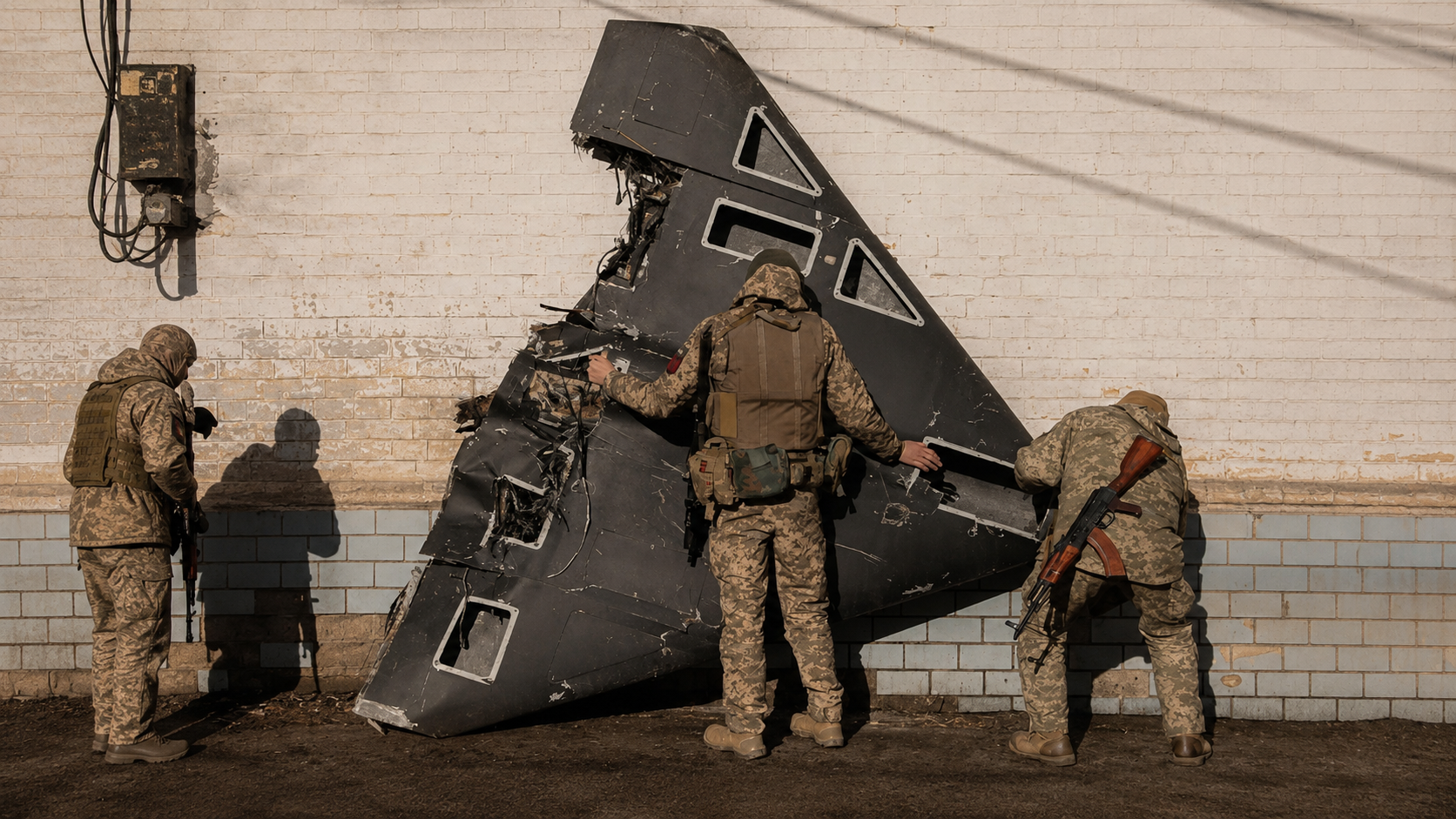
Ukraine entered Russia’s full-scale invasion with fewer resources, fewer missiles, and a smaller defense budget than its enemy. But four years later, Kyiv has turned one of its biggest weaknesses into one of its strongest weapons: drones.
From cheap FPV attack drones on the frontline to long-range strike drones hitting targets deep inside Russia, Ukraine has built a fast-moving drone industry that is changing the future of modern warfare.
How Ukraine Became a Drone Superpower
Ukraine’s rise as a drone superpower did not happen by choice. It happened because survival demanded it.
Facing Russia’s larger military, massive missile stockpiles, and constant waves of Iranian-made Shahed drones, Ukraine could not simply copy the old model of air defense. Expensive missiles were too slow to build, too costly to use, and too limited in supply. So Ukraine built a different system — faster, cheaper, and more flexible.
You May Also Like
One of the clearest examples came in March, when a two-person Ukrainian crew reportedly shot down 23 Russian Shahed drones in a single engagement using Sting interceptor drones developed by the Ukrainian company Wild Hornets.
The numbers show why this matters.
A Sting interceptor costs about $2,500. A U.S.-made Patriot interceptor missile can cost more than $3 million. Both can be used to stop incoming drones, but the difference in cost is enormous. In a war where Russia launches thousands of drones, Ukraine cannot afford to fire million-dollar missiles at every low-cost target.
That reality pushed Ukraine to create what many now call “small-scale air defense” — a layered system of interceptor drones, mobile fire teams, electronic warfare, and automated anti-aircraft weapons.
By early 2026, Ukrainian firms were reportedly producing up to 1,000 interceptor drones per day. In the Kyiv region, these drones were credited with stopping around 70 percent of Shahed attacks in February alone.
This is not just a new weapon. It is a new way of fighting.
Russia’s Drone War Forced Ukraine to Innovate
Throughout 2025, Russia launched more than 54,000 Shahed-type drones against Ukraine. These drones are relatively cheap, often made with commercial components, and designed to overwhelm traditional air defense systems.
For Ukraine, every drone required a response.
Using expensive Western missiles against every Shahed was not sustainable. Even countries with advanced U.S.-supplied air defense systems have struggled when facing large waves of drones. The problem is not that those systems do not work. The problem is that they were not designed for this scale of cheap, repeated attacks.
Ukraine’s answer was speed and quantity.
Instead of relying only on large defense contractors and slow production cycles, Ukraine opened the door to hundreds of private companies, engineers, startups, and battlefield units. The result is a drone economy that can move from idea to testing to frontline use in weeks.
FPV Drones Changed the Frontline
Ukraine’s drone power is not limited to air defense.
On the battlefield, small first-person-view drones, known as FPV drones, have become one of the most important weapons of the war. These drones are cheap, fast, and controlled by operators wearing headsets that stream live video from the drone’s camera.
A single FPV drone may cost only $300 to $400, yet it can destroy vehicles, strike trenches, hit artillery, and support troops when ammunition is limited.
Ukraine’s FPV drone production has exploded. In 2022, production was estimated at only a few thousand units per year. By 2025, Ukraine was producing millions. By early 2026, its defense industry reportedly had the capacity to produce more than 8 million FPV drones annually.
This has helped Ukraine reduce some of the pressure caused by artillery shortages. While drones cannot fully replace artillery, they have become a powerful tool for precision strikes, surveillance, and frontline defense.
Long-Range Drones Give Ukraine Strategic Reach
Ukraine has also developed long-range drones capable of striking targets far beyond the front line.
These systems are more expensive than simple FPV drones, but they are still much cheaper than many Western missiles. More importantly, Ukraine can use its own drones without needing permission from foreign governments.
That matters because Western-supplied weapons often come with restrictions on how and where they can be used. Missiles such as Storm Shadow or ATACMS are powerful, but their use against targets inside Russia has often been politically limited.
Ukraine’s home-built drones give Kyiv more freedom.
Ukrainian drones have reportedly struck oil refineries, ammunition depots, military airfields, and fuel infrastructure hundreds of miles from the battlefield. Some strikes have reached more than 1,500 kilometers from the front line.
One major example was the June 2025 “Spiderweb” operation, a coordinated long-range drone attack against multiple Russian airfields. According to the article, Ukraine used just 117 FPV drones costing around $117,000 in total to damage or destroy more than 40 Russian aircraft valued at billions of dollars.
Whether used on the frontline or deep behind enemy lines, Ukraine’s drone strategy is built around one idea: make the enemy spend more than you spend.
A New Military-Industrial Model
Ukraine’s drone success is not just about the drones themselves. It is about the system behind them.
More than 500 companies now reportedly manufacture drones in Ukraine. Around 40 to 50 are considered market leaders, and the private sector produces most of the country’s FPV drones.
This is very different from the traditional defense industry model used in Russia, Europe, and the United States.
In many countries, military procurement can take years. Large companies receive long contracts, equipment is tested through slow official channels, and changes can be difficult once production begins.
Ukraine does not have that luxury.
Its engineers work directly with soldiers. Combat units send feedback from the battlefield. Drone makers adjust the design, improve the software, change the electronics, or modify the frame — sometimes within weeks.
This fast feedback loop is one of Ukraine’s biggest advantages.
If Russian forces develop a new jamming tactic, Ukrainian drone teams must respond quickly. If a drone fails under battlefield conditions, engineers learn from it immediately. In Ukraine, the battlefield has become the testing ground.
That is dangerous, but it is also incredibly fast.
The Talent Behind Ukraine’s Drone Boom
Ukraine’s pre-war technology sector played a major role in this transformation. Software engineers, electronics experts, designers, and startup founders became part of the defense effort.
This created what some observers describe as a “dronization” of the economy — not a full militarization, but a rapid shift of civilian technical talent into wartime production.
The result is a defense ecosystem that is flexible, creative, and deeply connected to battlefield needs.
But this model also has risks.
Ukraine has suffered a major brain drain since the start of the full-scale invasion. Many IT and engineering professionals have left the country. Some defense companies still face hundreds of unfilled technical positions.
Ukraine’s drone industry also depends heavily on foreign components, especially from China. If supply chains tighten, production could slow. And if the war ends suddenly, companies built around massive wartime demand may face a sharp drop in orders.
Ukraine Is Now Exporting Its Drone Knowledge
For years, Ukraine depended heavily on Western weapons. Now, it is beginning to export its own technology and battlefield experience.
In 2026, Kyiv reportedly opened weapons export offices across Europe and agreed to supply Gulf states with air defense packages that include maritime drones, electronic warfare tools, and interception technology.
But Ukraine is not simply selling finished weapons.
It is offering something bigger: a working model.
That model includes production methods, engineering knowledge, battlefield feedback systems, and the ability to adapt quickly when the threat changes.
A country that buys a traditional billion-dollar air defense system may receive a powerful weapon, but not necessarily the ability to redesign it quickly. Ukraine’s model is different. It teaches partners how to build, modify, and improve systems on their own soil.
Why the World Is Watching
Ukraine’s drone revolution has shown that the future of war may not belong only to the country with the most expensive weapons. It may belong to the country that can build faster, learn faster, and adapt faster.
Russia forced Ukraine into a war of survival. But in response, Ukraine created one of the most innovative drone ecosystems in the world.
Cheap drones are not replacing every traditional weapon. Missiles, fighter jets, artillery, and air defense systems still matter. But Ukraine has proven that small, low-cost systems can have massive strategic impact when produced at scale and improved constantly.
The lesson is clear: modern warfare is changing.
Ukraine did not become a drone superpower because it had unlimited money. It became one because it had no other choice — and because it learned how to turn necessity into innovation.




One Comment on “Ukraine’s Drone Revolution: How Kyiv Became a Battlefield Superpower”