Title: “The Sky We Refuse to Sell: A Conversation That Could Reshape Power on Earth”
The storm rolled quietly beyond the reinforced glass, lightning flickering across the horizon like distant artillery. Inside the secure chamber, nothing moved—except the slow rotation of a machine that had never truly belonged to the world.
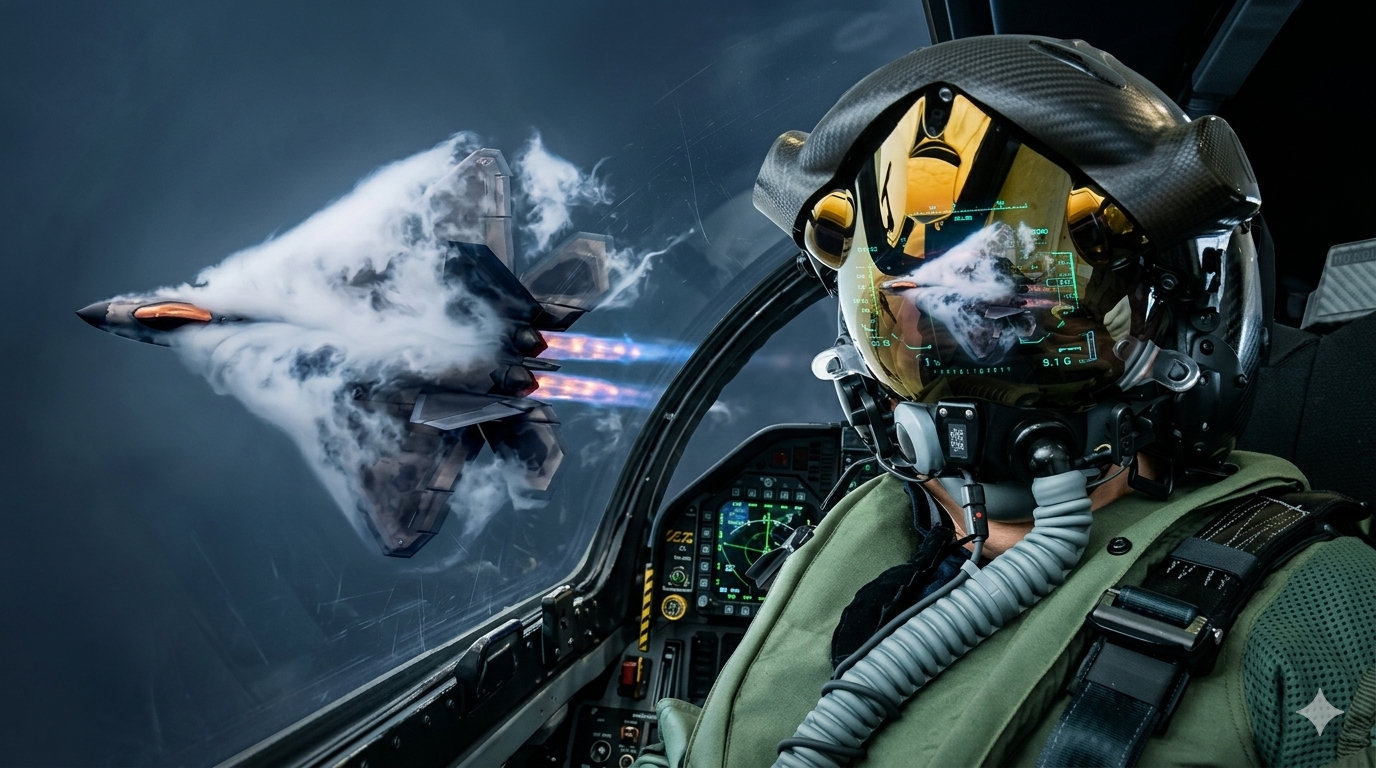
The Lockheed Martin F-22 Raptor hovered in holographic light, flawless, untouchable, almost unreal.
Dr. Eleanor Hayes stood with her hands behind her back, her posture rigid, her gaze unblinking.
You May Also Like


Dr. Marcus Reed sat across from her, one hand resting on the console, the other pressed lightly against his chin—as if he were not just studying the aircraft, but questioning everything it represented.
For a long moment, neither spoke.
Then Marcus broke the silence.
“You ever think,” he said quietly, “that this machine isn’t just a weapon… but a decision?”
Eleanor didn’t turn.
“It is a decision,” she replied. “A very deliberate one.”
Marcus leaned forward slightly.
“And what if it’s the wrong one?”
That made her turn.
“You’re asking whether we should sell it,” Eleanor said, her voice steady, almost surgical in its precision. “Let’s not soften the question. Let’s not pretend this is academic curiosity.”
Marcus met her gaze.
“I’m asking whether keeping it locked away truly makes the world safer—or just makes us feel safer.”
Eleanor took a slow step toward the projection.
“This aircraft,” she said, “is the result of decades of research in aerodynamics, materials science, quantum-level signal analysis, and computational warfare. It is not a product. It is not a commodity. It is a strategic boundary.”
Marcus stood now.
“So was every breakthrough in history—until it wasn’t.”
The room shifted. Data streamed across the walls—radar signatures, thermal maps, engagement timelines.
Eleanor gestured toward the F-22’s outline.
“Do you understand what you’re proposing we release?” she asked.
Marcus answered calmly.
“I understand that it uses radar-absorbent materials engineered to scatter electromagnetic waves. That its radar cross-section is smaller than a steel marble. That its sensor fusion integrates infrared search and track, electronic signals, and radar into a single, predictive battlefield model.”
Eleanor narrowed her eyes slightly.
“Go on.”
“It cruises supersonically without afterburners—supercruise—reducing infrared signature and fuel consumption. It uses thrust-vectoring nozzles to outmaneuver anything currently deployed. Its AN/APG-77 radar can track multiple targets at ranges where it remains effectively invisible.”
He paused.
“I know exactly what it is.”
Eleanor stepped closer.
“Then you know exactly why it must never leave.”
Marcus walked past her, circling the projection slowly.
“You’re assuming control,” he said. “You’re assuming that by keeping it here, locked behind law and secrecy, we preserve its advantage indefinitely.”
Eleanor’s response was immediate.
“We preserve it long enough to matter.”
Marcus turned sharply.
“History doesn’t work that way.”
He brought up another display. Two silhouettes appeared beside the F-22.
The Chengdu J-20.
The Sukhoi Su-57.
“They’re not copies,” Marcus said. “But they’re evolving. Faster than we expected.”
Eleanor crossed her arms.
“They’re approximations.”
“Today,” Marcus replied. “But tomorrow?”
Lightning flashed again outside. The room flickered.
Eleanor’s voice lowered.
“Do you know what the Obey Amendment represents?” she asked.
“A law,” Marcus said.
“No,” she replied. “A line. A moment where the United States government looked at this aircraft and said: this cannot be shared—not even with allies.”
Marcus nodded slowly.
“And laws are permanent?”
“They are necessary,” she corrected.
Marcus stepped closer to her, his tone sharpening.
“Japan asked for it,” he said. “Australia showed interest. Nations we trust. Nations that stand with us.”
Eleanor didn’t hesitate.
“And they were denied.”
“Exactly,” Marcus said. “So what message does that send?”
“That some capabilities are too dangerous to distribute.”
Marcus exhaled slowly, then pointed at the projection.
“Or that we don’t trust even our closest allies with the tools to defend themselves at the highest level.”
Eleanor’s eyes hardened.
“Trust is not the issue. Control is.”
She moved to the console and brought up a new simulation.
A breach scenario.
Cyber infiltration.
Fragments of code extracted.
Material samples analyzed.
“Technology leaks,” she said. “Not hypothetically. Inevitably.”
Marcus watched the simulation unfold.
“Espionage,” he said.
“Yes.”
“Cyber warfare.”
“Yes.”
“Human error.”
Eleanor turned to him.
“Yes.”
She stepped closer, her voice now carrying weight—not just logic, but warning.
“You export the F-22, and you multiply the number of points where failure can occur. One compromised technician. One infiltrated network. One captured component.”
She held his gaze.
“That’s all it takes.”
Marcus didn’t respond immediately.
Instead, he walked to the edge of the room and stared out at the storm.
“Do you ever think,” he said softly, “that fear of loss can become its own kind of weakness?”
Eleanor didn’t move.
“Explain.”
He turned back.
“If we build something so powerful that we’re afraid to let anyone else touch it… then it stops being a tool of stability and starts becoming a symbol of isolation.”
Eleanor shook her head.
“Or it remains exactly what it was designed to be—a decisive advantage.”
Marcus returned to the center.
“Let’s talk about war,” he said.
Eleanor raised an eyebrow.
“Go on.”
“In modern conflict, the side that controls the air controls everything else—logistics, communication, ground movement, surveillance. The F-22 was built for one purpose: absolute air dominance.”
Eleanor nodded.
“Yes.”
“And you’re saying that dominance should remain exclusive.”
“Yes.”
Marcus stepped closer.
“But what if shared dominance prevents war in the first place?”
Eleanor’s response came like a blade.
“Or guarantees that when war comes, it is far more destructive.”
The room fell quiet again.
Then Marcus changed direction.
“Let’s talk cost.”
Eleanor exhaled slightly, as if relieved to shift ground.
“Finally.”
He brought up numbers—staggering figures.
“Each aircraft, when you include research and development, reaches into the hundreds of millions. Maintenance hours per flight hour are among the highest ever recorded. The stealth coating requires controlled environments, constant inspection, specialized materials.”
Eleanor nodded.
“And?”
“You don’t just sell the jet,” Marcus said. “You sell an entire ecosystem—training programs, secure data links, maintenance infrastructure, classified software updates.”
He paused.
“Most countries can’t support that.”
Eleanor allowed herself a faint smile.
“So even your argument collapses under reality.”
Marcus shook his head.
“No. It evolves.”
He tapped the console again.
A new aircraft appeared beside the F-22.
The Lockheed Martin F-35 Lightning II.
“This,” he said, “is the answer we chose.”
Eleanor studied it.
“Exportable. Modular. Controlled.”
Marcus nodded.
“It gives allies advanced capabilities—stealth, sensor fusion, network warfare—without exposing the most sensitive elements of the F-22.”
Eleanor turned to him.
“And you think that’s enough?”
Marcus hesitated.
Then spoke honestly.
“I think it’s a compromise.”
Eleanor walked slowly between the two projections.
“One is a sword kept in a vault,” she said.
She gestured to the F-35.
“The other is a shield distributed among friends.”
Marcus watched her carefully.
“And which one wins wars?” he asked.
Eleanor stopped.
“The one the enemy never fully understands.”
The storm outside began to fade, the thunder more distant now.
Inside, the tension remained.
Marcus spoke again, quieter this time.
“Do you believe the F-22 will remain unmatched forever?”
Eleanor didn’t answer immediately.
“No,” she said finally.
“Then what are we protecting?” he asked.
She turned to him.
“Time.”
Marcus frowned slightly.
“Time for what?”
“For innovation,” she said. “For the next breakthrough. For the next leap that keeps us ahead.”
She stepped closer.
“The F-22 isn’t the end of the story. It’s a chapter we refuse to give away before we’ve written the next one.”
Marcus considered that.
Then nodded, slowly.
“That,” he admitted, “is the strongest argument you’ve made.”
Eleanor allowed a small, tired smile.
“I’ve had years to refine it.”
They stood side by side now, both looking at the aircraft.
Not as rivals.
But as thinkers standing at the edge of something bigger than either of them.
Marcus spoke one last time.
“So we keep it,” he said. “Locked behind law, secrecy, cost, and strategy.”
Eleanor nodded.
“Yes.”
“And the world?” he asked.
Eleanor’s answer was calm, but carried the weight of everything they had discussed.
“The world adapts,” she said. “It always does.”
The projection dimmed.
The F-22 faded into darkness.
But its presence remained—unseen, like the very principle it embodied.
Marcus turned to leave, then stopped.
“Eleanor.”
She looked at him.
“If the day ever comes,” he said, “when keeping it hidden causes more risk than revealing it…”
He didn’t finish the sentence.
He didn’t have to.
Eleanor held his gaze.
“Then we’ll face that day,” she said.
He nodded.
And walked out.
Eleanor remained alone in the room.
The storm was gone now.
The sky was clear.
She reactivated the projection one last time.
The Lockheed Martin F-22 Raptor returned—silent, perfect, untouchable.
“Not for sale,” she whispered.
Not because it couldn’t be.
But because, for now—
It must not be.