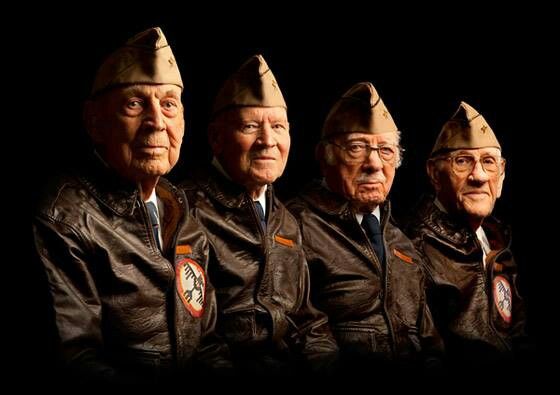
“Commanding the Invisible Battlefield: A Relentless Intellectual War Over the Legacy of Arthur Coningham”
The storm had been building for hours, rolling across the horizon like an advancing front. Lightning cracked in the distance, illuminating the glass walls of the research facility. Inside, however, the real storm wasn’t in the sky.
It was on the table.
A massive, interactive projection displayed a living battlefield from World War II—North Africa, 1942. The desert stretched endlessly, broken only by moving lines of armor, supply routes, and above them—tiny icons representing aircraft, darting like thoughts made visible.
At the center of the projection, a name pulsed softly:
You May Also Like
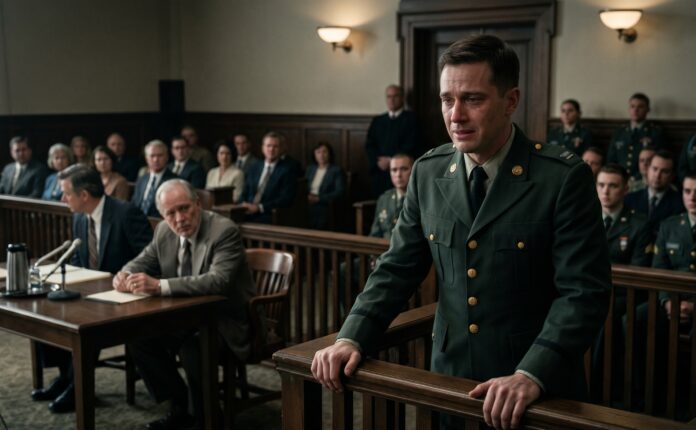
Arthur Coningham.
Dr. Marcus Hale stood over it, unmoving, as if the weight of history rested in that single point. His hands pressed firmly against the edge of the table, fingers tense, eyes sharp.
“People misunderstand power,” he said, his voice low but cutting through the room. “They think it’s speed. Firepower. Technology.”
Across from him, Dr. Evelyn Carter sat still, composed, her gaze fixed not on Marcus—but on the battlefield.
“And you think it’s something else?” she asked.
Marcus didn’t look at her.
“I think it’s coordination.”
A brief silence followed.
Then Evelyn stood.
“And that,” she said, stepping closer to the projection, “is exactly why he matters.”
She gestured toward the glowing name: Arthur Coningham.
Marcus finally turned, slowly.
“Or why he’s overrated.”
The words didn’t echo—but they lingered.
Evelyn’s expression didn’t change, but something sharpened in her eyes.
“Overrated?” she repeated. “You’re talking about the man who redefined tactical air support.”
Marcus crossed his arms.
“I’m talking about a man who introduced a system that only works under ideal conditions.”
Evelyn stepped closer.
“There are no ideal conditions in war.”
“Exactly,” Marcus replied. “Which is why I question how reliable his system really was.”
The projection shifted.
Before Coningham’s influence—aircraft scattered, uncoordinated, operating independently. Ground forces advanced blindly, often without aerial awareness.
Then the simulation evolved.
Aircraft began moving in synchronized patterns—tight, responsive, precise. Ground units advanced under a protective umbrella of calculated air strikes.
Evelyn pointed.
“Before this,” she said, “air power was disconnected. Pilots flew missions. Ground troops fought battles. There was no real-time integration.”
Marcus nodded.
“That’s historically accurate.”
“But Coningham changed that,” she continued. “He created a system where air and ground forces communicated, adapted, responded together.”
Marcus leaned slightly closer.
“And introduced dependency.”
Evelyn didn’t hesitate.
“Dependency on coordination is not weakness—it’s evolution.”
Marcus shook his head.
“Only if the system is stable.”
He tapped the projection.
“Look at the variables. Communication delays. Weather interference. Human error. Intelligence inaccuracies.”
He turned to her.
“You increase complexity—you increase points of failure.”
Evelyn nodded slowly.
“Yes. But you also increase potential effectiveness.”
Marcus’s voice sharpened.
“Potential is not guaranteed.”
The storm outside cracked louder—thunder rolling like distant artillery.
Inside, the debate deepened.
“Let’s strip this down to fundamentals,” Marcus said, pacing now. “Air warfare is governed by constraints—fuel range, payload capacity, sortie rates, detection probability.”
He gestured toward the projection.
“Every decision is a calculation. Every mission a balance of risk.”
Evelyn listened, arms folded—not defensive, but engaged.
“And Coningham understood that,” she said.
Marcus stopped.
“Did he? Or did he rely too heavily on coordination to compensate for uncertainty?”
Evelyn stepped forward.
“He didn’t compensate—he optimized.”
She expanded the simulation further.
Now, data overlays appeared—timing intervals, strike windows, communication loops.
“Before Coningham,” she explained, “air support requests could take hours. By the time aircraft arrived, the battlefield had already shifted.”
Marcus nodded.
“Yes. Delay reduces effectiveness.”
“Exactly,” Evelyn said. “So he reduced delay. He created forward air controllers. He decentralized certain decisions while maintaining strategic oversight.”
Marcus’s eyes narrowed.
“That’s a delicate balance.”
“It is.”
“And fragile.”
“It can be.”
Marcus pointed to a section of the map.
“Show me failure.”
Evelyn didn’t hesitate.
The simulation shifted again.
A breakdown.
Miscommunication between ground forces and air command. Aircraft arrived early—targets not yet identified. Strikes missed their intended impact. Enemy forces regrouped.
Momentum lost.
Marcus stepped closer.
“This,” he said, “is the risk of integration. When it fails—it fails everywhere at once.”
Evelyn nodded.
“And when it succeeds—it transforms everything.”
She reset the simulation.
Now, precision.
Air strikes hitting supply lines just as ground forces advanced. Enemy units disoriented. Defensive structures collapsing before engagement.
The battlefield moved—not slowly—but decisively.
Marcus watched in silence.
“You’re focusing on the negative extremes,” Evelyn said quietly.
“And you’re focusing on the positive outcomes,” Marcus replied.
“Because they define progress.”
“And failures define consequences.”
They stood across from each other—two perspectives, neither wrong, neither complete alone.
Marcus exhaled.
“You know what bothers me?” he said.
Evelyn waited.
“People treat him like a visionary without acknowledging the risks he introduced.”
Evelyn tilted her head slightly.
“And you treat him like a risk without acknowledging the transformation he created.”
Marcus almost smiled.
“Fair.”
The storm outside began to soften—but inside, the conversation intensified further.
“Let’s go deeper,” Marcus said. “Beyond tactics.”
Evelyn nodded.
“Go on.”
Marcus gestured to the system as a whole.
“Coningham didn’t just change how air support worked. He changed how information flowed.”
Evelyn’s expression sharpened.
“Yes.”
“Faster communication. Real-time adjustments. Dynamic targeting.”
“And that,” Evelyn said, “is the foundation of modern warfare.”
Marcus looked at her carefully.
“Which also means…”
He paused.
“…he introduced the first real dependency on continuous information accuracy.”
Evelyn didn’t respond immediately.
Then:
“Yes.”
Marcus leaned forward.
“And if your information is wrong…”
Evelyn finished:
“Your entire system acts on error.”
Silence.
Not tension—recognition.
“But that’s not a flaw unique to his system,” Evelyn added. “That’s a universal truth of all coordinated systems.”
Marcus nodded slowly.
“True.”
They both looked back at the battlefield—now frozen.
A moment suspended in time.
“You know what he really understood?” Evelyn said.
Marcus glanced at her.
“What?”
“That war is no longer about isolated strength,” she said. “It’s about interconnected capability.”
Marcus nodded.
“Systems thinking.”
“Yes.”
“And that,” Marcus added, “is what makes his legacy so powerful.”
Evelyn smiled slightly.
“And so controversial.”
Marcus turned back to the glowing name.
Arthur Coningham.
“I think I understand now,” he said slowly.
Evelyn waited.
“He didn’t just improve air support,” Marcus continued.
“He changed the structure of decision-making in warfare.”
Evelyn nodded.
“He compressed time.”
Marcus’s eyes sharpened.
“And in doing so… increased both speed and risk.”
Evelyn stepped closer.
“That’s the nature of all innovation.”
Marcus exhaled.
“Then maybe the real question isn’t whether he was right or wrong…”
Evelyn finished it, her voice calm but certain:
“…but whether the world was ready for what he created.”
The storm outside had passed.
Inside, clarity replaced conflict.
Marcus looked at Evelyn.
“So where do you stand?”
She didn’t hesitate.
“He was necessary.”
Marcus nodded.
“And dangerous.”
Evelyn smiled faintly.
“Those two things are often the same.”
They turned off the projection.
The battlefield vanished.
But the ideas remained—stronger than ever.
“History remembers outcomes,” Marcus said.
Evelyn replied softly:
“But progress is built on decisions.”
And somewhere, beyond the room, beyond time itself, one truth echoed through every evolution of warfare:
The sky is not controlled by those who fly fastest.
It is commanded by those who understand how everything moves together.