The Silent Cockpit: A Legacy of Blue and Gold
The late afternoon sun surrendered to the creeping dusk, casting elongated, amber shadows across the oak-paneled walls of General Thomas “Dusty” Miller’s study. The room smelled of old paper, leather polish, and the faint, ever-present scent of black coffee. It was a museum of a life lived entirely on the edge of the stratosphere. The walls were covered in framed commendations, blurry black-and-white photos of early jet prototypes, tactical maps from conflicts most people had forgotten, and a pristine set of command pilot wings secured in a velvet shadowbox. In the corner, a glass case held a worn, olive-green flight suit, its patches telling a story of speed, altitude, and survival that spanned over four decades.
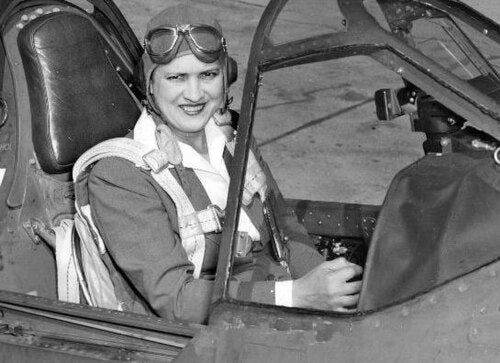
Nineteen-year-old Alex Miller, recently graduated from high school and standing at the precipice of his own adulthood, was pacing. He stopped by his grandfather’s heavy mahogany desk, picking up a printed collage of aviation history. The printout still had its digital file name, 452d91498a4798d1f79969e4fca24ef9.jpg, stamped across the bottom margin. It featured men in old flight gear, the iconic “Glamorous Glennis” aircraft, and faces that had stared down the sound barrier and lived to tell the tale.
Alex traced the image with his thumb, then turned to his grandfather. The General was settled deeply into his leather armchair, looking frail in his cardigan, yet his eyes—a piercing, unclouded blue—still held the sharp, unforgiving focus of a fighter pilot scanning the horizon for bogeys.
“Grandpa,” Alex began, his voice tight with a mixture of reverence and deep frustration. “I look at all this. I look at this file, 452d91498a4798d1f79969e4fca24ef9.jpg, I look at these faces… Chuck Yeager, the early test pilots, you. It’s intimidating. It’s monolithic. Mom says you’re the oldest living U.S. Air Force fighter pilot. Is that true?”
You May Also Like

General Miller smiled slightly, the wrinkles around his eyes deepening into familiar grooves. “Depending on who you ask, son, and which records haven’t burned in some bureaucratic fire. But yes, I’ve logged more hours in single-seat cockpits than probably anyone else still drawing breath on this earth. From the early straight-wing jets out of Muroc to the F-15 Eagles, I’ve seen the world change from forty thousand feet. I’ve seen the curvature of the earth while most men were still looking down at the dirt.”
Alex sat down heavily on the leather ottoman opposite the old man, leaning his elbows on his knees. “The recruiter called again this morning. He keeps talking about the legacy. He talks about you. But honestly, Grandpa, I look at the news right now. I see how complicated, how deeply flawed things are. The politics, the endless proxy wars, the shifting alliances. It feels entirely different than when you served. And frankly, it feels like a massive, suffocating weight to carry.”
The General shifted in his chair, reaching out with a slightly trembling hand to take a slow sip of his coffee. He placed the mug back on the coaster with deliberate precision.
“It is different, Alex,” the General said, his voice a gravelly baritone that commanded the room without raising in volume. “It is always different. The technology changes, the adversaries evolve, the geopolitical reasons we deploy to foreign skies change. But if you think for one second that I served in some simpler, pure, untarnished era of black-and-white patriotism, you are sorely mistaken.”
He pointed a gnarled finger toward a framed photograph of a young, intense version of himself standing beside an early-model F-86 Sabre in Korea.
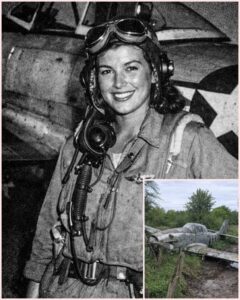
“There is a dangerous misconception about military service, Alex. The movies, the books, even the recruiters—they sell you on glory and adventure. They sell you on the roar of the afterburner. But that is the smallest fraction of the reality. It’s not about glory. It’s about duty. And duty is often a very quiet, very lonely, very heavy thing. When I was exactly your age, I was flying combat air patrols over MiG Alley, unsure if I’d see the next sunrise, knowing the Soviet-built MiG-15s we were up against could out-climb and out-turn us. We were scared. We were uncertain. And the politics back home were just as messy.”
Alex leaned forward, his brow furrowed. “But you talk about it like it was the greatest thing that ever happened to you. Did you ever actually feel… honored? Did you feel blessed? Because the recruiter uses those words, and to me, it just sounds like a sales pitch to get me to sign four years of my life away.”
“Absolutely,” the General stated, the single word ringing like a struck bell. “Every single day I strapped into that ejection seat, I felt profoundly blessed. But you need to understand why, Alex. I didn’t feel blessed because I got to fly multi-million-dollar machines at Mach 2, though, God knows, that was a thrill you can’t buy. I felt blessed because I was given the immense, sacred privilege to stand between this country and those who wished to tear it apart.”
The old man leaned forward, his blue eyes locking onto his grandson’s. “I felt honored to be part of an unbroken line of service that stretches back to the freezing snows of Valley Forge. Look around this room, Alex. Don’t just look at the metal and the ribbons. Look at the ghosts. These aren’t just trophies of a career. These represent the sweat, the terror, the sacrifice, and too often, the lives of men I loved more than brothers. When you put your name on that dotted line, and when you put on that uniform, you aren’t just representing Alex Miller anymore. You become a custodian of their sacrifice. You are handed a torch that has been kept lit by the blood of better men than you or I.”
Alex shook his head, standing up to pace the length of the rug. “But what if I don’t want to be a custodian? What if I want to blaze my own path? Why does it have to be military service? Dad didn’t serve. He became a professor. He helps people. Isn’t that enough?”
A shadow of complex emotion passed over the General’s face. He loved his son, Alex’s father, deeply, but the gulf of experience between a civilian academic and a combat pilot was vast.
“Your father chose his own path, and I respect it immensely,” the General said softly. “He found his own way to serve the republic by educating its youth. I have never been disappointed in him. But Alex… look at me.” The General sat straighter, the years seemingly falling away from his posture. “There is a unique, unyielding kind of discipline, a specific brand of moral and physical courage, that is forged only in service to something that demands your absolute all—including your life. The military teaches you, in the most brutal and beautiful way possible, that you are not the center of the universe.”
The General paused, letting the silence hang in the room, save for the steady ticking of the grandfather clock in the hallway.
“It teaches you,” the General continued, his voice dropping to a near whisper, “that some things—freedom of speech, the right to a fair trial, the safety of your neighbors, the sheer existence of this messy, beautiful republic—are worth dying for. And if they are worth dying for, they are certainly worth dedicating your life to.”
Alex stopped pacing and looked out the window at the darkening sky. “But Grandpa, warfare is different now. You flew against men you could see. You looked your enemy in the eye across the canopy. Now? Guys sit in an air-conditioned trailer in Nevada, sipping energy drinks, and push buttons to drop Hellfire missiles halfway across the world. Where’s the honor in that? Where’s the chivalry? It feels sterile. It feels… disconnected.”
The General let out a short, harsh laugh. “Chivalry? Son, war is not a medieval jousting tournament. It is organized, state-sanctioned destruction. It is terrifying, chaotic, and ugly. Do you think the infantryman pinned down under enemy fire cares if the close air support comes from an F-4 Phantom screaming out of the clouds at treetop level, or from a Reaper drone loitering in the stratosphere? He just wants the fire to stop so he can go home to his mother.”
The General pointed a finger at Alex. “The burden, Alex, is not in the delivery system. The burden is in the decision. The moral weight on the soul of the young captain in Nevada pulling the trigger on a drone strike is exactly the same as the weight I felt squeezing the trigger on my 20mm cannons over Vietnam. You hold the power of life and death. That requires a depth of character, a moral compass so perfectly calibrated, that it won’t shatter under the pressure. That is where the honor lies. In bearing the moral weight of the nation’s defense so that the civilians back home can sleep soundly and argue about politics on the internet.”
“But what if the politicians are wrong?” Alex challenged, his voice rising, pouring out the anxieties of a generation raised on endless news cycles and global pessimism. “What if we’re deployed for the wrong reasons? What if I’m asked to fight a war that is unjust, driven by greed or bad intelligence? How do you reconcile that honor with the reality of Washington?”
The General didn’t flinch. He had wrestled with these exact demons in the humid nights of Southeast Asia.
“You swear an oath, Alex. Do you know what that oath says?”
Alex hesitated. “To protect and defend the Constitution…”
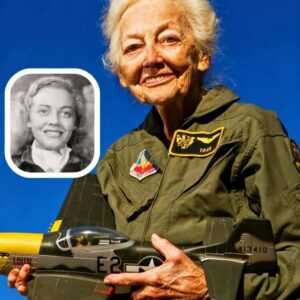
“Exactly,” the General interrupted, his voice ringing with authority. “‘I will support and defend the Constitution of the United States against all enemies, foreign and domestic.’ Notice what is missing from that sentence? You do not swear allegiance to a President. You do not swear allegiance to a political party, a general, or a policy. You swear a sacred oath to a piece of paper that represents an idea. The idea of the Republic.”
He leaned back, his eyes softening slightly. “Politicians will fail. Policies will shift. Administrations will make catastrophic blunders. I have seen it firsthand. But the shield—the military—must remain intact, disciplined, and subordinate to civilian rule, or the whole magnificent experiment of America collapses into tyranny. You serve to ensure that the system survives its own mistakes. You serve the Constitution. And sometimes, serving the Constitution means carrying out orders you personally hate, because the alternative—a military that picks and chooses which laws to follow—is the death of democracy.”
Alex slowly sank back down onto the ottoman, burying his face in his hands. “It’s just… it’s so much, Grandpa. I’m terrified I don’t have what it takes. I’m terrified I’ll freeze. I’m terrified I won’t be you.”
The General’s expression melted from that of a commanding officer to that of a loving grandfather. He slowly pushed himself up from his chair, his joints popping, and walked over to the desk. He opened a small mahogany box and pulled out a heavy, tarnished object.
He walked over to Alex and gently placed the object in the boy’s hands. They were silver pilot wings, smaller than the modern ones, darkened by over a century of age.
“These,” the General said quietly, “belonged to my grandfather. Your great-great-grandfather. He earned them in 1918. He flew canvas and wood biplanes over the trenches of France without parachutes. He passed the torch to my father, who flew B-17s over Germany. My father passed them to me. And I’ve held them for a very long time.”
Alex looked down at the cold, heavy silver in his palms, feeling the weight of the history pressing into his skin.
“Alex, look at me,” the General commanded softly.
Alex looked up, his eyes glassy.
“It is not about living up to me,” the General said, his voice thick with emotion. “It is not about living up to the ghosts on these walls. It is about living up to the potential inside of you. You think I wasn’t terrified? Let me tell you something I have never told your father.”
The General sat down next to Alex on the edge of the large desk. “It was 1968. Over North Vietnam. I was flying an F-105 Thunderchief, escorting a bombing run. The sky was black with flak. It looked like you could walk on it. Suddenly, the radar warning receiver screams. Surface-to-air missiles. Then, MiGs drop out of the clouds above us. It was chaos. Absolute, unadulterated chaos. My wingman, Johnny ‘Mac’ MacAllister, took a hit to his engine. I watched his plane burst into a ball of fire. No chute.”
The General paused, his breathing shallow as the memory flooded back. “In that moment, Alex, I didn’t think about patriotism. I didn’t think about the flag. I was paralyzed with a fear so deep it felt like ice in my veins. I wanted to pull the ejection handle and quit. I wanted to go home. I was a coward for exactly three seconds.”
Alex stared at him, stunned. “What… what did you do?”
“My training took over,” the General said simply. “I remembered the oath. I remembered that if I ran, the bombers behind me would be slaughtered. I pushed the throttle to the firewall, pulled seven Gs until the blood drained from my head and my vision went gray, and I turned directly into the oncoming MiGs. I fought like a cornered animal not because I was brave, but because I had a job to do, and I refused to let my brothers down.”
He reached over and tapped the silver wings in Alex’s hand. “Bravery is not the absence of fear, Alex. Any man who says he isn’t afraid in combat is either a liar or a psychopath. Bravery is being absolutely terrified, your stomach in knots, your mind screaming at you to run, and doing your duty anyway. It is finding that core of integrity inside yourself and seeing if you have the sheer willpower to offer it in service to others.”
The room had grown dark, illuminated only by the small brass lamp on the desk. The debate had shifted from an argument over geopolitics to an excavation of the soul.
“If you choose the Air Force,” the General continued, his voice steady and empowering, “know this: you will be joining the finest, most dedicated team of human beings on the face of the Earth. You will find brothers and sisters of every race, religion, and background who will lay down their lives for you, and you will find that you would do the same for them. That connection, that bond of shared hardship and absolute trust… it transcends politics. It is stronger than whatever is trending on the news. It is the most beautiful thing I have ever known.”
The General looked past Alex, his eyes staring into the middle distance, perhaps seeing the endless blue skies of his youth.
“I will never, as long as I live, forget the feeling of pushing through a heavy, dark cloud bank, the turbulence shaking the airframe until your teeth rattle, and then suddenly breaking out into pure, endless, blindingly bright blue. The air up there is perfectly smooth. It is utterly silent, except for the rhythmic sound of your own breathing in the oxygen mask. In that silence, looking down at the earth, I felt closer to God than I ever have in a church. And in that silence, I always knew, with absolute certainty, that I was exactly where I was meant to be. I was bearing the shield.”
He placed his hand firmly on Alex’s shoulder. “This country, Alex, is an extraordinary, miraculous experiment. It is flawed because human beings are flawed. But it is worth defending. It needs young people exactly like you. It needs intelligent, skeptical, thoughtful young men who ask the hard questions, because those are the leaders who will ensure the military remains a force for good. We don’t need mindless robots. We need men of conscience.”
A long, heavy silence settled over the study. The grandfather clock ticked steadily, marking the passage of time, the turning of generations.
Alex sat motionless, looking at the file 452d91498a4798d1f79969e4fca24ef9.jpg still resting on the desk, then down at the silver wings from 1918 in his hands. The cynicism and the political exhaustion that had clouded his mind seemed to shrink, replaced by a profound, sobering clarity. The debate wasn’t about whether America was perfect. The debate was whether he had the strength to stand watch while she tried to be better.
He slowly closed his fingers around the silver wings, feeling their sharp edges press into his palm. It hurt, just a little. A reminder of the reality.
“Okay, Grandpa,” Alex said, his voice no longer tight, but quiet, deep, and resolute. “I get it. It’s not just about the jets. It’s not about the glory. It’s about bearing the shield.”
General Thomas “Dusty” Miller smiled, a true, beaming smile that reached his eyes. He squeezed his grandson’s shoulder.
“That’s all I ever wanted you to understand, son,” the General whispered, the torch finally passing from his hands. “The choice of how to serve is entirely yours. But the legacy? The legacy is waiting for you to write its next chapter.”