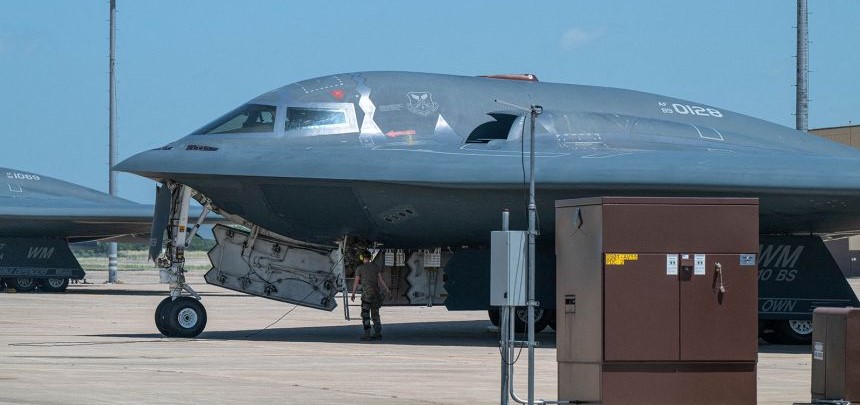
Northrop Grumman B-2 Spirit Bomber air crews in the United States Air Force are well-known for flying some of history’s longest missions. During American anti-terror operations in the Gulf, one crew flying the spirit of America accomplished the long-term goal decades ago. When you’re flying around the world as part of your flight plan, sleep and rest are critical for both performance and safety.
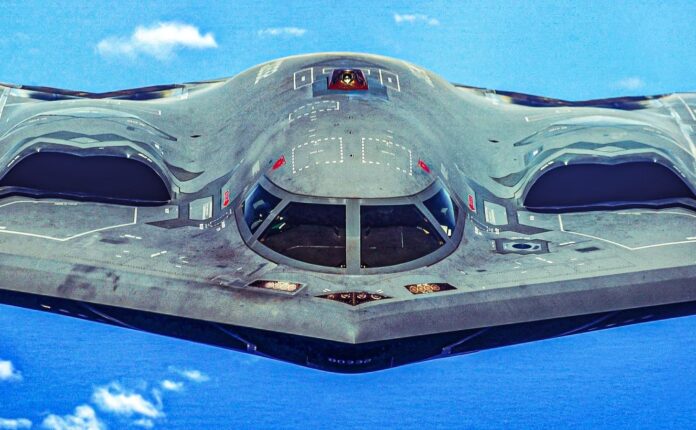
Inside the oddly shaped cabin of the B-2 Spirit, there is an interesting arrangement. The flight deck has a bulbous shape and enough space to stand behind the main area of control in avionics. There is a small camp-style bed and a miniature microwave for cooking food. There is even a small toilet that can be used while flying. The amazing stealth flying wing only requires one pilot at a time to function during cruise profile flying because of the advanced computer. During their extraordinarily lengthy marathon missions, the crew divided up the work and took turns sleeping to manage their mission and keep each other as sharp as possible.
The 30,000 ft View

Sleeping facilities on board are essential for maintaining pilot performance. One pilot can supervise flight operations while the other can relax during non-critical phases thanks to the B-2’s automation. A small, roughly six-foot-long sleeping area is located on the floor behind the ejector seats.
You May Also Like
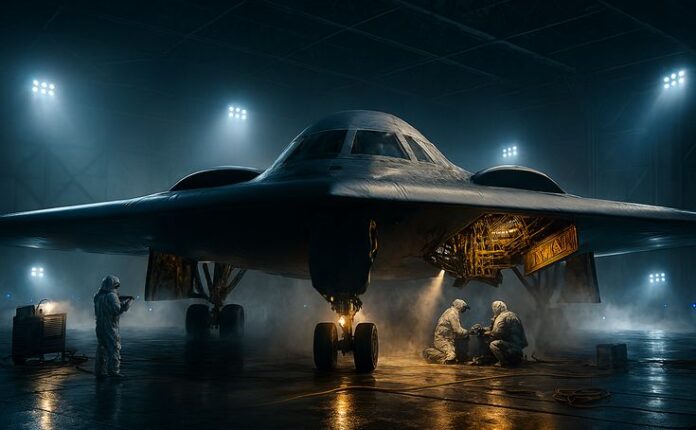

Crew rotation is meticulously planned, with pilots taking brief rest periods of 2 to 3 hours to ensure that they are well rested for the mission. However, both pilots must remain seated during critical operations such as takeoff, aerial refueling, engaging in weapon activity, and landing to ensure operational safety. To promote healthy sleep patterns, pilots work with aerospace physiologists to synchronize their circadian rhythms with the mission’s schedule well in advance.
Fatigue management is another important aspect of B-2 operations. Flight surgeons may prescribe “go pills,” which are amphetamines, to help pilots stay alert, especially after the initial adrenaline rush of a mission has subsided. Furthermore, pilot hydration and nutrition are prioritized, with an emphasis on easily digestible meals to maintain energy and reduce gastrointestinal discomfort. The B-2’s advanced flight control system reduces the cognitive demands on the remaining pilot during rest periods, allowing for greater focus and mission effectiveness.
Crew Resource Management

Pilots spend weeks planning not only the flight path but also who will do what and when. This includes cross-checking protocols for crucial mission phases like aerial refueling and carefully planning sleep rotations. The other pilot assumes complete responsibility for keeping an eye on the aircraft’s systems while the first is at rest. Pilots can increase their mental capacity for situational awareness by reducing manual data entry through the use of automated flight systems and digital mission updates.
How Much Load Can a B-2 Bomber Carry? Inside the Terrifying Power of America’s Stealth Bomber
B-2 crews receive rigorous simulator-based training, including 24-hour nonstop simulations. This allows them to practice CRM while fatigued, which helps them understand how their individual decision-making and communication styles change after many hours of wakefulness. During high-stress situations, such as “blind” night-time refueling where the tanker boom is out of direct sight, pilots rely on constant verbal communication and memorized visual cues to keep the aircraft safe.
Technology Empowering Aircrew

The B-2’s advanced flight control system maintains the massive wing’s stability and performs basic flight maneuvers. This level of automation enables one pilot to safely monitor the aircraft while the other rests. Modernized displays, such as the Vertical Situation Display (VSD), reduce complex data to understandable visuals. This allows a resting pilot to quickly regain situational awareness when returning to the seat.
The B-2 Spirit is equipped with a suite of “human performance” tools to support two-person crews on missions longer than 44 hours. These tools are intended to manage extreme physiological and mental stress. The crew must put up with continuous engine noise throughout the flight, and there is no door or privacy for the restroom.
Only roughly 25 square feet make up the entire livable crew compartment. In order to accommodate stretching and changing positions during flights lasting more than thirty hours, the ejection seats are made to be extremely adjustable, sometimes reclining up to 180 degrees.
THE GHOST THAT COST BILLIONS
Bomber Pilots Amping Up

Before using the medication in flight, each pilot must “ground test” it under medical supervision to ensure there are no adverse reactions. The pills are given in low doses as they are extremely powerful stimulants for the central nervous system. Even after 48 hours of sleep deprivation, it is very effective in restoring cognitive function to baseline levels and has been a standard for decades.
“HAS THE FIGHTER JET ERA PASSED?” A LONG DEBATE BETWEEN SCIENTISTS, PROFESSORS”
“Go pills” are never used as the first line of defense against fatigue; rather, they are used after other methods like caffeine, exercise, and in-flight naps have been exhausted. The Air Force has developed newer “wakefulness” stimulants to help dual-piloted bomber cruise on missions over 12 hours as well. These are less powerful but carry fewer risks and side effects as well.
According to research on B-2 combat missions, pilots on shorter sorties (approximately 17 hours) used dextroamphetamine 97% of the time because mission profiles limited their ability to nap. On extremely long missions, usage fell to 58% as pilots relied more on scheduled in-flight sleep rotations.
Extra Aircrew Aids

THE CLASSROOM THAT TOUCHED THE STARS: How One Museum Beamed Space History Into the Lives of Students
Pilots are given “No-Go Pills,” or sedatives like Ambien, to counteract the effects of stimulants and guarantee they can rest when the mission permits. These assist pilots in resetting their circadian rhythms by forcing them to sleep in the bunk during their off-duty rotations or right after a mission.
These are typically recommended for “inhospitable sleep settings,” rapid cross-time zone travel, or adjusting sleep schedules for night operations. When behavioral strategies such as good sleep hygiene and dietary changes are unsuccessful, they are viewed as a last resort.
Strict “do not fly” (DNIF) periods are required following a no-go pill to ensure that the sedative has completely cleared the pilot’s system before returning to the controls. The Air Force employs extensive monitoring programs to ensure pilots’ physical and mental fitness for long-range strike missions.
Non-invasive techniques for passively measuring physiological data are currently being developed by advanced research programs. This involves keeping an eye on heart rate, breathing, brain activity (EEG), and eye movement to determine when a pilot’s performance may deteriorate due to exhaustion.
The B-2 At A Glance

The B-2 Spirit is a long-range, multirole stealth heavy bomber that can penetrate sophisticated enemy air defenses. As of January 2026, it remains a key component of the United States’ strategic nuclear triad. The B-2 employs a quadruplex computer-controlled fly-by-wire system to maintain stability in the inherently unstable flying-wing configuration. A unique “flying wing” configuration with no fuselage or vertical tail, deflecting radar energy with large-radius curved surfaces.
To maintain its stealth profile, the B-2 carries all ordnance internally in two weapons bays. Officially rated at 40,000 pounds (18,144 kilograms), but testing has revealed capacities of up to 60,000 pounds for specific heavy munitions. It is certified for the B61 and B83 nuclear gravity bombs.
The GBU-57 Massive Ordnance Penetrator (MOP) “bunker buster” can only be delivered in combat by the B-2. In order to prevent interference with commercial satellites, the AN/APQ-181 multimode radar was upgraded to an Active Electronically Scanned Array (AESA).




2 Comments on “How Crew Rest & Sleep On B-2 Spirit Bomber Flights”