
In most countries, snow removal is a routine winter chore.
A plow pushes snow aside.
A blower throws it off the runway.
A few de-icing trucks finish the job.
You May Also Like


But in Russia, where winter is not merely a season but a relentless force of nature, ordinary solutions are often not enough.
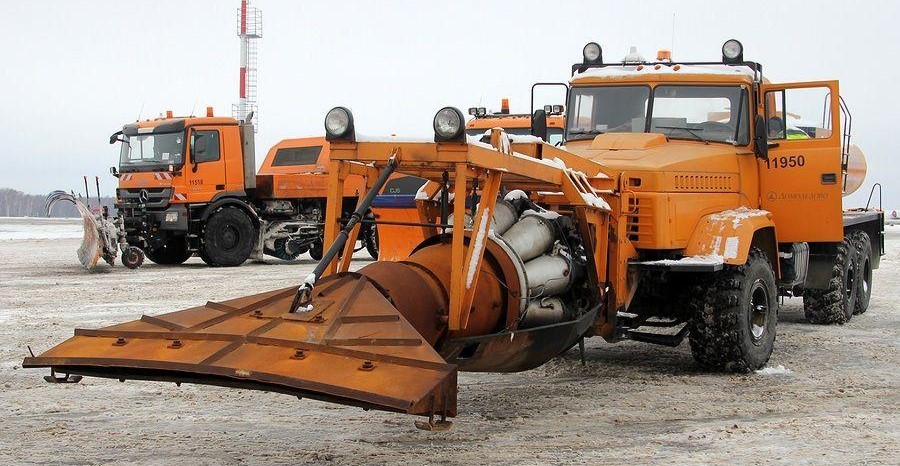
When blizzards bury runways under thick layers of snow and ice, grounding aircraft and threatening military readiness, Russia answers with a machine that seems to have leapt straight out of a Cold War engineering workshop:
A military truck with a fighter jet engine bolted to its roof.
The result is one of the most extraordinary snow-clearing vehicles ever built.
It does not scrape snow.
It does not gently blow it aside.
It unleashes a torrent of scorching jet exhaust powerful enough to melt ice and blast snow off runways in seconds.
It is loud.
It is fuel-hungry.
It is spectacular.
And it is a brilliant example of Russian pragmatism: if a retired fighter engine still has life left in it, why not use it to defeat winter itself?
Russia’s Endless Battle Against Winter


Russia spans eleven time zones and contains some of the harshest climates on Earth.
In regions such as Siberia, Yakutia, and the Arctic north, winter temperatures can plunge below –40°C. Snowstorms can blanket runways within hours, while freezing rain transforms pavement into sheets of ice.
For civilian airports, delays are costly.
For military airfields, they can be dangerous.
A fighter squadron cannot afford to wait for good weather. Strategic bombers, interceptors, transport aircraft, and emergency response planes must remain ready to launch at a moment’s notice.
In these conditions, runway clearance is not simply maintenance.
It is national defense.
The Soviet Mindset: Nothing Goes to Waste
The Soviet Union was famous for its engineering philosophy.
Build things to last.
Keep them simple.
And repurpose anything that still works.
When first-generation jet fighters such as the Mikoyan-Gurevich MiG-15, Mikoyan-Gurevich MiG-17, and later aircraft were retired, thousands of engines remained serviceable.
To Soviet engineers, these were not obsolete relics.
They were compact power plants capable of producing thousands of pounds of thrust.
Someone asked an inspired question:
What if we pointed that thrust at the snow?
The answer was one of the most dramatic snow-clearing machines ever created.
How a Fighter Jet Became a Snow Blower


The concept is elegantly simple.
Engineers mount a decommissioned turbojet engine on a heavy-duty truck chassis, often a rugged 6×6 military vehicle.
The engine is angled slightly downward and to the side.
When ignited, it generates an intense blast of hot exhaust.
This jet stream:
- Melts ice.
- Loosens compacted snow.
- Blows debris clear of the runway.
- Reaches areas conventional plows struggle to clean.
Instead of pushing snow mechanically, the machine uses pure jet thrust.
The effect is like placing a fighter aircraft at the edge of the runway and directing its exhaust exactly where it is needed.
The Klimov VK-1: Cold War Muscle

At the heart of many early machines was the Klimov VK-1.
This engine powered the legendary MiG-15 and MiG-17 fighters.
Its characteristics remain impressive:
- Approximately 5,950 pounds of thrust.
- Extremely hot exhaust.
- Proven reliability.
- Massive parts availability during the Soviet era.
Built to launch combat aircraft into the sky, the VK-1 was more than capable of moving snow.
What It Looks Like in Action
Imagine a truck rolling slowly down a runway.
Behind the engine nozzle, a roaring plume of superheated air blasts outward.
Snow erupts in towering white clouds.
Ice softens and fractures.
Within moments, the pavement beneath is visible.
To spectators, the machine looks less like maintenance equipment and more like a rocket-powered dragon breathing fire across a frozen landscape.
It is both practical and unforgettable.
Why Jet Power Works So Well

Traditional plows are effective for moderate snowfall, but compacted snow and ice can be stubborn.
Jet-powered systems offer several advantages.
Instant Ice Removal
The heat softens frozen layers that mechanical blades may struggle to break.
Rapid Clearing
A single pass can remove large accumulations quickly.
Reduced Surface Contact
Because the machine does not scrape aggressively, it can help avoid damage to runway lighting and markings.
Reuse of Existing Engines
Repurposing retired engines extracts additional value from military equipment.
Faster Than Conventional Snow Equipment
A conventional airport blower typically advances methodically, requiring multiple passes.
Jet snow blowers can clear difficult areas much more quickly, especially where snow is wet, compacted, or bonded to the pavement.
For military bases where every minute matters, speed is a strategic advantage.
Where These Machines Are Used

Jet-powered snow blowers have been associated with Russian military airfields and some civilian airports, particularly in regions known for severe winters.
Locations often mentioned include:
- Murmansk.
- Novosibirsk.
- Yakutsk.
- Other Arctic and Siberian airfields.
In these environments, specialized equipment is essential to maintain operations.
The Drawbacks of a Rocket-Powered Snow Blower
No engineering solution is perfect.
Fuel Consumption
Turbojet engines burn large amounts of fuel.
Extreme Noise
Operating sound levels can exceed 120 decibels, requiring strict hearing protection.
Heat Hazards
Exhaust must be directed carefully to avoid damaging nearby equipment.
Environmental Impact
Jet fuel emissions are significant compared with conventional snow-removal methods.
Even so, when winter threatens to shut down a critical runway, performance often outweighs efficiency.
A Symbol of Russian Ingenuity

The true appeal of these machines lies in their philosophy.
They embody a practical mindset:
Use what you have.
Solve the problem decisively.
Do not be afraid of unconventional ideas.
A retired fighter engine that once defended the skies can continue serving the nation on the ground.
There is something deeply compelling about that transformation.
Similar Concepts Around the World
Russia is not the only country to experiment with jet-powered snow clearing.
Variants and related concepts have appeared elsewhere, including in Canada and other cold-weather nations.
Yet Russia remains most closely associated with these dramatic vehicles because of its climate, engineering heritage, and extensive stock of retired jet engines.
The Future of Snow Removal
Modern airports increasingly employ:
- High-efficiency rotary blowers.
- Advanced de-icing systems.
- GPS-guided maintenance vehicles.
- Potential electric and autonomous equipment.
Still, for extreme conditions, few solutions are as visually striking—or as effective—as jet thrust.
More Than a Curiosity

At first glance, a fighter-engine snow blower seems like an eccentric invention.
In reality, it solves a serious operational problem.
It ensures aircraft can launch.
It keeps supply lines open.
It protects military readiness.
It demonstrates creative engineering.
Sometimes the most brilliant ideas are also the most dramatic.
Final Thoughts: When a Fighter Jet Fights Winter
Russia’s jet-powered snow blowers are among the most fascinating examples of military technology repurposed for peaceful use.
An engine once designed for combat is given a second life clearing runways, enabling aircraft to fly safely through some of the harshest winters on Earth.
It is a story of adaptation, resourcefulness, and engineering imagination.
Where others see obsolete hardware, innovators see possibility.
Where nature delivers mountains of snow and ice, they answer with the roar of a turbojet.
And in that thunderous blast of fire and wind, an old fighter jet continues its mission—not in war, but in the timeless struggle to keep humanity moving forward, no matter how fierce the winter becomes.