Alternative Powerful Titles
- Hidden for Months: The Missing Epstein Files That Put Trump Back Under the Spotlight
- The Documents They Said Were Duplicates: Why the Epstein Files Matter More Than Ever
- Truth, Allegations, and Power: What the Newly Released Epstein Files Reveal
- The Shadow of Epstein: New FBI Records Revive Questions Surrounding Trump
- America Demands Answers: The Missing Epstein Files and the Battle for Transparency
Introduction: When Buried Documents Return to the Light
In Washington, secrets rarely stay buried forever.
Sometimes they are hidden behind bureaucracy. Sometimes they are delayed by politics. Sometimes they disappear into the maze of government databases.
But eventually, the truth—or at least the documents surrounding it—returns to public view.
That is exactly what happened when the U.S. Department of Justice released previously withheld FBI records related to convicted sex offender Jeffrey Epstein and allegations involving President Donald Trump.
You May Also Like

The documents do not prove criminal wrongdoing by Trump. They do not contain verified evidence. They do not result in any charges.
But their release has reignited one of the most politically explosive questions in modern American history:
How should the public evaluate serious allegations that remain unsubstantiated, yet involve some of the most powerful figures in the world?
The answer touches on politics, justice, media responsibility, and the enduring principle that no person—regardless of wealth or office—is above scrutiny.
Reference Images for This Article
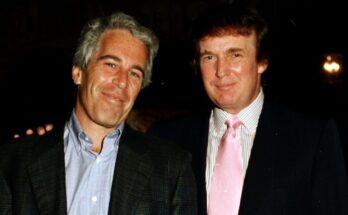
- Jeffrey Epstein and Donald Trump at Mar-a-Lago in 1997.
- The U.S. Department of Justice headquarters in Washington, D.C.
- FBI agents walking into headquarters.
- Ghislaine Maxwell during court proceedings.
- U.S. Capitol Building and House Oversight Committee.
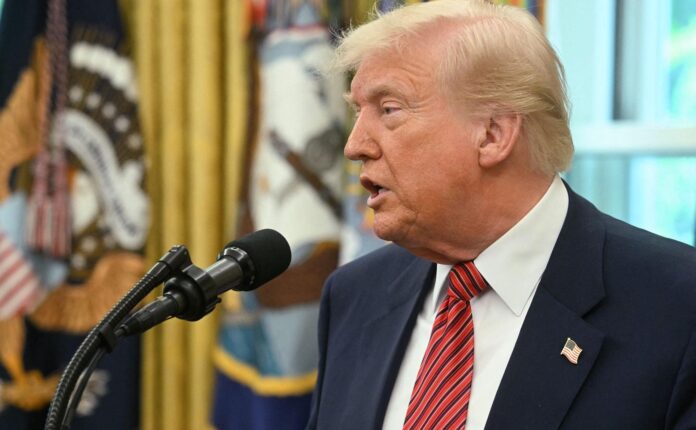
- Donald Trump speaking at the White House.
- Symbolic image of sealed government files opening.
Who Was Jeffrey Epstein?
Jeffrey Epstein was a financier whose wealth, elite connections, and private lifestyle concealed one of the most disturbing criminal enterprises in recent American history.
He cultivated relationships with politicians, billionaires, celebrities, and academics. Behind the scenes, prosecutors found that he sexually abused underage girls and operated a trafficking network spanning multiple states and countries.
His 2019 arrest shocked the world.
His death in a Manhattan jail cell intensified public suspicion.
And the unanswered questions surrounding his associates continue to haunt global politics.
Epstein became more than a criminal case. He became a symbol of how wealth and influence can shield wrongdoing for years.
Trump and Epstein: A Friendship That Later Collapsed
Donald Trump and Jeffrey Epstein were known to socialize in the 1980s and 1990s.
Photographs and videos show them together at parties and events, including at Trump’s Mar-a-Lago estate in Palm Beach, Florida.
Trump has acknowledged knowing Epstein but has repeatedly said they had a falling out in the early 2000s.
According to Trump, he banned Epstein from Mar-a-Lago after a dispute.
Over the years, Trump has consistently denied any wrongdoing involving Epstein or Epstein’s victims.
Importantly, despite years of investigations, Trump has not been criminally charged in connection with Epstein.
That distinction remains central to understanding the newly released files.
What the Newly Released Files Actually Contain
The Justice Department released three FBI memoranda summarizing interviews conducted in 2019 with an unnamed woman.
In those interviews, the woman made allegations that she was introduced to Trump by Epstein when she was a teenager and that both men sexually assaulted her between the ages of 13 and 15.
These allegations are serious.
But they remain unsubstantiated.
The records indicate:
- The allegations were reported to the FBI.
- Agents interviewed the woman multiple times.
- Investigators did not publicly corroborate her claims.
- The woman was not further contacted after the interviews.
- No charges were filed based on these allegations.
This means the documents confirm that allegations were made—not that they were proven.
That distinction is legally and ethically crucial.
Why These Files Were Withheld
The Department of Justice stated that the documents were omitted during an earlier release because they were mistakenly coded as “duplicative.”
Critics were unconvinced.
Democratic lawmakers accused the DOJ of withholding politically sensitive records.
Republicans and Trump allies argued that the allegations had already been investigated and lacked credible supporting evidence.
The controversy reflects a broader challenge:
When trust in institutions is fragile, even administrative errors can trigger accusations of cover-ups.
The White House Response
The White House strongly rejected the allegations.
Press Secretary Karoline Leavitt described them as:
“Completely baseless” and “backed by zero credible evidence.”
She further argued that previous administrations had ample opportunity to investigate the claims and did not bring charges because there was no evidence of criminal conduct by Trump.
This response reinforces the administration’s position:
The existence of allegations does not equal guilt.
The Importance of Due Process
In democratic societies, allegations must be treated seriously.
But justice requires more than accusation.
It requires:
- Evidence
- Corroboration
- Investigation
- Legal standards
- Due process
This principle protects both accusers and the accused.
It ensures victims are heard. It ensures innocent people are not condemned without proof.
The Epstein case evokes intense emotion because the underlying crimes were real and horrific.
Yet each allegation must still be evaluated individually and fairly.
What the Files Do—and Do Not—Prove
What the files show:
- An individual made allegations to the FBI.
- Agents documented those allegations.
- The documents were initially withheld and later released.
What the files do not show:
- Independent evidence confirming the allegations.
- Criminal charges against Trump.
- Findings that Trump committed a crime.
- Any judicial determination of guilt.
This is why careful language matters.
The release is significant. But it is not proof of wrongdoing.
Why the Story Matters Politically
Donald Trump remains one of the most polarizing figures in modern American history.
Any document linking his name to Jeffrey Epstein attracts enormous attention.
For critics, the release raises questions about transparency and accountability.
For supporters, it reinforces their belief that old allegations are repeatedly used to damage Trump politically.
For independent observers, the key issue is institutional trust.
Did the government release everything it was legally required to release?
Was the omission truly accidental?
And can the public trust officials to handle politically sensitive records impartially?
The Role of Congress
The controversy intensified when the House Oversight Committee voted to subpoena Attorney General Pam Bondi.
Notably, some Republicans joined Democrats in supporting the subpoena.
This bipartisan move signaled that concerns about transparency crossed party lines.
Congress’s role is not to determine guilt.
Its role is to ensure that executive agencies follow the law and provide complete disclosures.
In a democracy, oversight is not a partisan weapon.
It is a constitutional responsibility.
Ghislaine Maxwell and the Broader Investigation
The interviews were reportedly conducted during the FBI’s investigation into Ghislaine Maxwell, Epstein’s longtime associate.
Maxwell was convicted in 2021 and sentenced in 2022 for sex trafficking.
Her conviction established that Epstein did not act alone.
It validated years of testimony from survivors who had long demanded justice.
The newly released records are part of the broader effort to document the full scope of Epstein’s network.
Why Public Interest Remains So Intense
The Epstein scandal touches a deep nerve in society.
Many people fear that the wealthy and powerful operate by different rules.
The public wants answers to difficult questions:
- Who knew what?
- Who participated?
- Who enabled the abuse?
- Who escaped accountability?
These questions transcend party politics.
They reflect a universal desire for justice.
The Media’s Responsibility
Journalists face a delicate task.
They must report serious allegations responsibly.
They must avoid sensationalism.
They must distinguish between accusation and verified fact.
And they must provide context that allows readers to understand what documents actually show.
When handled carefully, transparency strengthens democracy.
When handled recklessly, it can spread misinformation and erode trust.