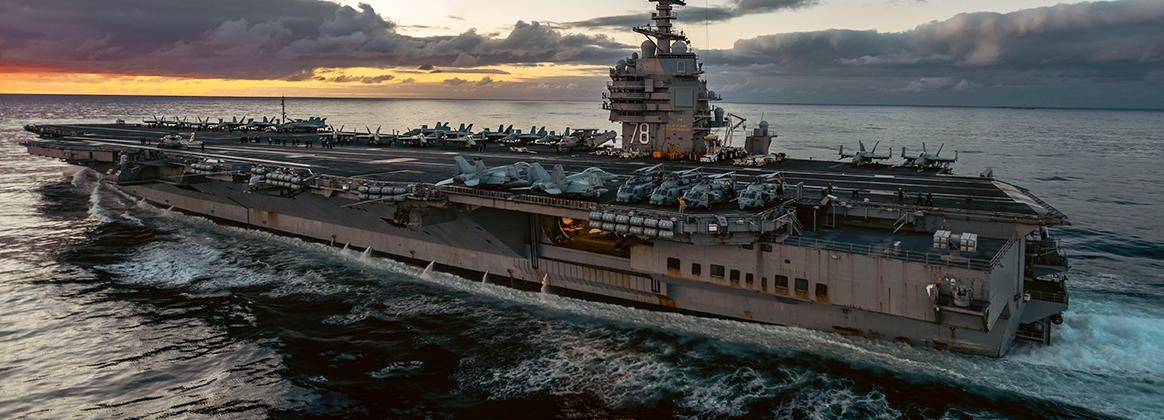
For more than a century, the United States Navy has projected American power across the world’s oceans. From the beaches of Normandy to the waters of the Pacific, aircraft carriers have served as floating air bases, symbols of deterrence, and reminders that the United States can respond to crises anywhere on Earth.
Among these giants, none is more ambitious than the USS Gerald R. Ford (CVN-78).
At over 1,100 feet long and displacing roughly 100,000 tons, the Ford is the largest and most expensive warship ever built. Its construction cost exceeded $13 billion, and its design introduced revolutionary technologies intended to define naval aviation for the next half-century.
But even the most advanced machines face moments of truth.
You May Also Like
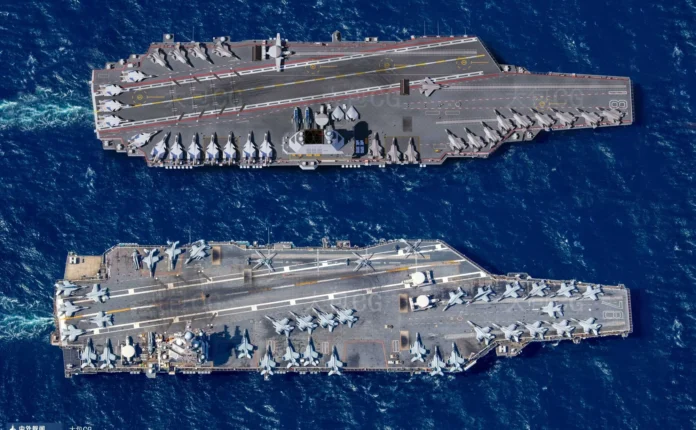
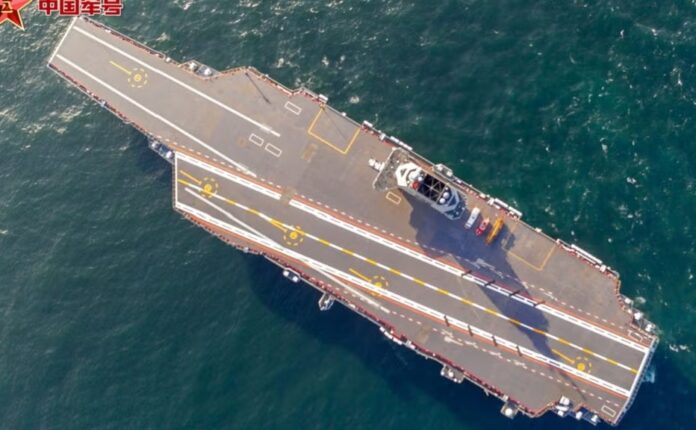
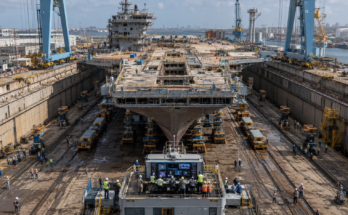
Recent reporting based on Pentagon testing assessments and media coverage has renewed scrutiny of the carrier’s reliability, especially after a non-combat fire, maintenance challenges, and questions about the long-term performance of key systems. At the same time, the U.S. Navy emphasizes that the ship has completed major deployments and remains a central part of American naval power. (DID PRESS AGENCY)
The story of the USS Gerald R. Ford is not simply about technical problems.
It is a story about innovation, pressure, resilience, and the reality that greatness is rarely achieved without setbacks.
Part I — The Birth of a New Supercarrier
A Carrier Designed for the Future
The Ford-class was conceived to replace the legendary Nimitz-class carriers.
Engineers sought to build a ship that would:
- Launch more aircraft sorties per day.
- Operate with a smaller crew.
- Generate more electrical power.
- Support future weapons such as lasers and advanced sensors.
- Reduce long-term operating costs.
To accomplish this, the Ford introduced several major innovations:
- Electromagnetic Aircraft Launch System (EMALS).
- Advanced Arresting Gear (AAG).
- Dual Band Radar and advanced sensors.
- Advanced Weapons Elevators.
- New nuclear reactors producing far greater electrical output.
Each technology promised transformational capability.
Each also introduced technical risk.
Why the USS Gerald R. Ford Matters
Aircraft carriers are more than ships.
They are mobile sovereign airfields.
They can:
- Launch strike aircraft.
- Enforce no-fly zones.
- Conduct intelligence missions.
- Support humanitarian operations.
- Deter adversaries.
The Gerald R. Ford represents the next generation of that capability.
Its success matters not only to the U.S. Navy, but to the broader strategic balance of power.
Part II — The Challenges Beneath the Surface
Innovation Comes With Growing Pains
History shows that groundbreaking military systems often experience years of refinement.
The Ford has been no exception.
Pentagon testing offices have repeatedly highlighted concerns about the reliability and maturity of some systems, including EMALS, AAG, radar components, and weapons elevators. These issues have been documented over several years, even as the Navy has reported steady improvements. (Bloomberg)
This is not unusual for a platform that incorporates so many new technologies at once.
But it does underscore how difficult it is to transform a design concept into dependable operational capability.
The Laundry Fire That Drew Attention
During a 2026 deployment, a fire broke out in the ship’s laundry area.
Public reporting indicates that two sailors were injured, and some berthing spaces were damaged by smoke. Additional sailors reportedly received treatment for smoke exposure. The incident forced repairs and added to the strain of an already lengthy deployment. (The Guardian)
The fire was not combat-related.
But it became a symbol of how even routine shipboard systems can affect morale and operations.
Life at Sea: The Human Side of the Story
A carrier is a small city at sea.
More than 4,000 sailors and aviators live and work aboard the Ford.
They endure:
- Long deployments.
- Intense operational tempos.
- Tight living quarters.
- Continuous maintenance demands.
- Separation from family.
Reports of plumbing issues and damaged berthing spaces highlighted the reality that morale depends not only on combat systems, but on basic living conditions. (The Guardian)
Behind every aircraft launch is a crew that must remain focused, rested, and resilient.
EMALS: Replacing Steam With Electromagnetism
One of the Ford’s signature technologies is the Electromagnetic Aircraft Launch System.
Instead of using steam, EMALS accelerates aircraft using electromagnetic force.
Advantages include:
- Smoother launches.
- Reduced mechanical stress.
- More precise control.
- Ability to launch a wider range of aircraft.
But early reliability issues drew scrutiny.
The same is true for the Advanced Arresting Gear used to recover aircraft.
These systems are revolutionary—but revolutionary technologies must prove themselves over time.
Weapons Elevators: The Hidden Backbone of Sortie Generation
Weapons elevators move bombs and missiles from magazines deep within the ship to the flight deck.
If elevators are unreliable, the carrier’s sortie generation rate suffers.
Early difficulties with these elevators became one of the most visible challenges in the Ford program.
Though many issues have been resolved, the system became a reminder that even unseen components are mission critical.
Can the Ford Defend Itself?
Some Pentagon assessments have noted insufficient operational data to fully evaluate the performance and reliability of certain systems under realistic combat conditions. That does not mean the ship is defenseless; rather, it reflects the need for more testing and evidence to validate expected performance. (DID PRESS AGENCY)
This distinction is important.
Engineering confidence is built through testing, deployment, and continuous improvement.
Part III — The Strategic Meaning of the Ford
The Price of Pioneering
The Ford is often criticized because of its cost.
But every major leap in military technology carries a price.
The first nuclear submarines, stealth aircraft, and space systems were all expensive and technically challenging.
The question is not whether innovation encounters setbacks.
The question is whether those setbacks are overcome.
A Ship That Has Already Proven Much
Despite its challenges, the Gerald R. Ford has completed demanding deployments and supported real-world operations.
The ship has demonstrated:
- Sustained flight operations.
- Long-range deployments.
- Integration with strike groups.
- Global presence and deterrence.
These achievements reflect both the ship’s growing maturity and the dedication of its crew.
The Sailors Who Carry the Mission
Machines do not make history by themselves.
People do.
The sailors aboard the Ford endured operational pressure, maintenance demands, and intense scrutiny.
Their professionalism is a reminder that the true strength of the U.S. Navy lies not only in steel and electronics, but in the men and women who serve.
Why Adversaries Still Respect American Carriers
Critics may focus on technical problems, but no nation can ignore what a U.S. carrier strike group represents.
It combines:
- Carrier-based fighters.
- Guided missile destroyers.
- Attack submarines.
- Air and missile defense.
- Global logistics and intelligence.
The Ford is one component of an integrated combat system of enormous power.
Part IV — Lessons From the World’s Most Advanced Warship
Innovation Is Never Easy
The Gerald R. Ford teaches an enduring lesson:
Breakthrough technologies rarely emerge fully perfected.
They evolve through setbacks, redesigns, and persistence.
What matters most is the ability to learn and improve.
Transparency as a Strength
Public discussion of the Ford’s problems is not a sign of weakness.
It reflects a system in which oversight offices, Congress, and the media examine major defense programs openly.
That scrutiny can be uncomfortable, but it also drives accountability.
The Long View
Aircraft carriers are built to serve for decades.
Temporary reliability issues, while significant, are addressed over years of upgrades and operational experience.
The Ford’s ultimate legacy will be judged over the course of its service life—not by a single deployment.
Final Thoughts: Steel, Struggle, and American Resolve
The USS Gerald R. Ford (CVN-78) is more than a warship.
It is a bold attempt to redefine what a carrier can be.
Its story includes technical challenges, human hardship, and intense public scrutiny.
But it also reflects something deeply American.
The willingness to attempt what has never been done before.
The courage to confront problems openly.
And the determination to improve until the mission is accomplished.
The Ford may be the most expensive warship ever built, but its true value lies in what it represents.
A nation that continues to innovate.
A Navy that continues to adapt.
And thousands of sailors who continue to serve with discipline and pride, even when conditions are difficult.
In the end, great machines are not defined by whether they face adversity.
They are defined by whether they emerge stronger.
And like the nation whose flag it carries across the world’s oceans, the USS Gerald R. Ford is still proving that resilience is the ultimate measure of power.