THIRTY-SEVEN HOURS IN THE DARK
A Three-Part Debate Story Between Two Scientists and Professors
Main Characters
Professor Dr. Elias Varen
A world-renowned aerospace scientist. He has spent his life studying stealth aircraft, long-range flight, radar physics, propulsion, and military logistics. He believes technology can prevent wars when used with discipline.
Professor Dr. Mira Sen
A professor of ethics, psychology, and human decision-making. She studies fatigue, war, political power, and the emotional distance created by advanced weapons. She believes that every powerful invention must be judged not only by what it can do, but by what it makes easier for humans to do.
PART I — THE MACHINE THAT CROSSED THE WORLD
The debate hall at Northbridge Institute was filled before sunset.
Students stood in the aisles. Professors leaned against the back wall. Reporters waited with cameras raised. On the giant screen behind the stage, a black aircraft silhouette floated against a deep blue sky.
You May Also Like
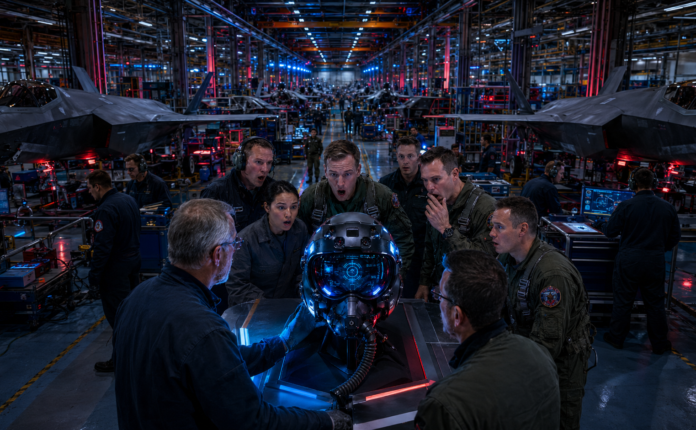
It looked less like a machine and more like a shadow.
The words above it read:
THE FUTURE OF WAR: SCIENCE, POWER, AND CONSCIENCE
Professor Elias Varen entered first.
He was calm, elegant, and exact. The kind of man who could explain the mathematics of radar reflection without raising his voice. He wore a dark suit and carried no paper.
Then Professor Mira Sen walked in.
She carried a folder packed with notes, photographs, highlighted passages, and handwritten questions. Her eyes were intense. She was not there to perform. She was there to challenge.
The moderator stood between them.
“Tonight,” he said, “we ask a difficult question. When humanity builds a machine that can fly across the world, strike a target, and return home in darkness, should we call that progress?”
Professor Varen leaned toward his microphone.
“Yes,” he said. “But not only progress.”
Mira smiled slightly.
“That is a careful beginning, Elias.”
“It is a necessary one.”
“Necessary because you know admiration alone is dangerous?”
“Necessary because condemnation alone is also dangerous.”
The audience quieted.
Mira opened her folder.
“Then let us begin with the mission. Seven B-2 Spirit stealth bombers. Fourteen airmen. Taking off from Missouri. Flying east across the Atlantic and Mediterranean. Striking nuclear sites in Iran. Returning across the world. Thirty-seven hours. Dozens of aerial refuelings. A mission so long that ordinary language almost fails to describe it.”
Varen nodded.
“Operation Midnight Hammer was an extraordinary demonstration of global reach.”
Mira looked at him sharply.
“Global reach. That phrase sounds clean. Almost beautiful.”
“It is accurate.”
“So is this: two human beings sat inside a cramped aircraft for more than a day and a half, carrying weapons powerful enough to alter history.”
“That is also accurate.”
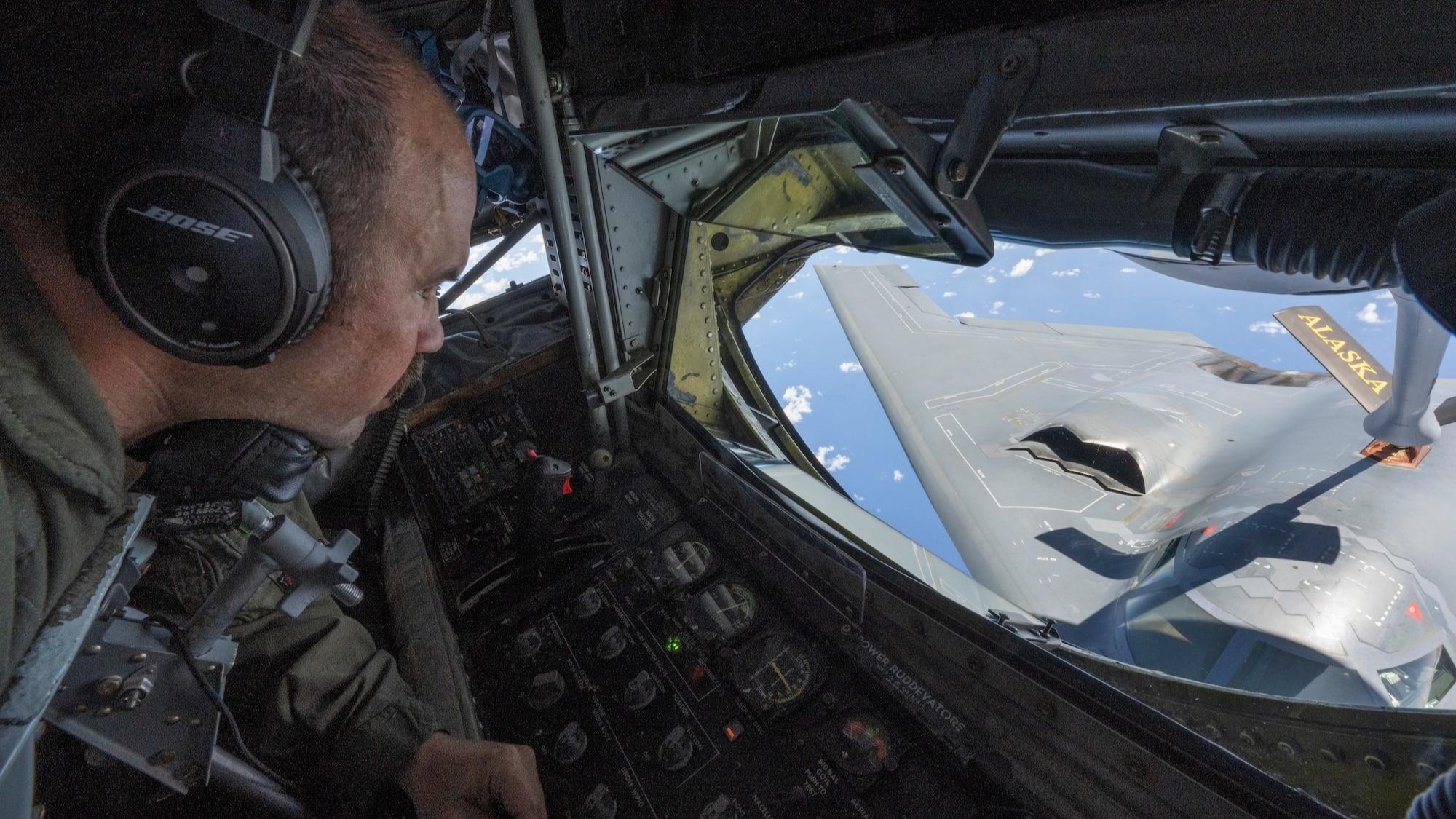
“And this: the world watched the result, but almost no one imagined the thirst, the exhaustion, the tiny toilet, the piddle packs, the boredom, the fear, the calculations, the strange comedy of human biology inside one of the most advanced warplanes ever built.”
Varen paused.
“That is accurate too.”
The hall was silent now.
Mira turned to the audience.
“That is why tonight matters. We are not here to say the aircraft is impressive. Everyone already knows it is impressive. We are here to ask whether impressive is enough.”
Varen stood.
“No serious scientist believes impressive is enough.”
“Do they not?”
“No. The real scientist asks: How does it work? Why was it built? What risks does it reduce? What risks does it create? What decisions does it enable? What failures might it prevent?”
Mira leaned back.
“And what moral habits does it weaken?”
Varen looked at her.
“Yes. That too.”
The screen behind them changed to an image of a B-2 Spirit seen from above. Its flying-wing shape looked almost unreal.
Varen walked toward the screen.
“The B-2 Spirit is one of the most remarkable aircraft ever made. Its shape reduces radar reflection. Its materials absorb and scatter signals. Its range, when supported by tankers, allows it to travel across oceans. Its payload allows it to carry heavy precision weapons. Its mission is not simply to fly. Its mission is to arrive where it is not expected, survive where other aircraft may not, and deliver force with precision.”
Mira interrupted.
“You make it sound like a miracle.”
“No. A miracle requires no maintenance. This aircraft requires enormous maintenance.”
Some students laughed.
Varen smiled.
“And that is my point. People imagine stealth as magic. It is not magic. It is mathematics, materials science, aerodynamics, fuel planning, radar discipline, weather analysis, communication security, and thousands of hours of labor by people who will never appear in the heroic photograph.”
Mira nodded slowly.
“That is the first thing you have said tonight that I fully support.”
“Only the first?”
“We are early.”
The audience laughed again.
Varen continued.
“In missions like these, missing one aerial refueling can end everything. The pilots are not simply flying toward a target. They are moving from tanker to tanker, timing point to timing point, calculation to calculation. A global strike is not one dramatic moment. It is hundreds of ordinary moments that must not fail.”
Mira stepped forward.
“That is beautifully said. But let me ask: does the beauty of coordination make the act itself better?”
“No.”
“Does engineering brilliance purify political violence?”
“No.”
“Does precision remove moral burden?”
“No.”
“Then why do nations speak as if it does?”
Varen hesitated.
“Because nations prefer simple stories.”
Mira’s eyes sharpened.
“And scientists?”
“Scientists should not.”
“Yet many do.”
“Yes,” Varen said quietly. “Many do.”
That answer surprised the room.
Mira closed her folder halfway.
“Then perhaps we are not enemies tonight.”
“No,” Varen said. “We are two people standing on opposite sides of the same dangerous machine.”
The First Question

Mira raised one sheet of paper.
“Professor Varen, let me ask you the question many people are afraid to ask plainly. What kind of civilization needs a bomber that can leave one continent, strike another, and return home before the public fully understands what happened?”
Varen did not answer immediately.
Then he said, “A civilization that lives in a world where threats are not always close, where oceans no longer protect absolutely, where underground facilities exist, where missiles travel faster than diplomacy, and where deterrence sometimes depends on proving capability.”
Mira replied, “That is a defense of fear.”
“No,” Varen said. “It is an acknowledgment of fear.”
“Is there a difference?”
“A great one. A defense of fear worships it. An acknowledgment of fear tries to manage it.”
Mira paced slowly.
“Then what does this aircraft manage? Fear of attack? Fear of nuclear weapons? Fear of losing dominance? Fear of appearing weak?”
“All of those may exist.”
“And which one is noble?”
“None by itself.”
“Then what makes the mission defensible?”
Varen looked at the students.
“Restraint. Legality. Necessity. Proportionality. Accuracy. Oversight. And the serious belief that the alternative would be worse.”
Mira’s voice softened but grew more dangerous.
“Serious belief has justified many terrible things.”
“Yes.”
“Then belief is not enough.”
“No. Evidence is required.”
“And who sees the evidence?”
Varen looked back at her.
“Usually not the public.”
“Then the public is asked to trust the same institutions that possess the machine.”
“Yes.”
“Do you see the danger?”
“Yes.”
“And yet you defend the machine?”
“I defend understanding it. That is different.”
The Second Question
A student stood.
“Professor Sen, if the aircraft is so dangerous morally, should we simply not build it?”
Mira looked at the student kindly.
“That is the innocent question. And it deserves a serious answer.”
She turned toward the room.
“If one nation refuses to build powerful weapons while others build them, the refusing nation may become vulnerable. If every nation builds them, the world becomes more dangerous. That is the trap of technological civilization.”
Varen nodded.
“The security dilemma.”
“Yes,” Mira said. “Each side claims defense. Each side creates fear. Each side points to the other side’s fear as proof that it was right.”
The student asked, “So what is the answer?”
Mira smiled sadly.
“The answer is not simple. But the beginning of the answer is this: never allow admiration for capability to replace judgment. Never let engineers speak without ethicists. Never let politicians speak without scientists. Never let soldiers carry the whole burden of decisions made far above them.”
Varen added, “And never let citizens remain ignorant of what is done in their name.”
The hall became still.
Mira looked at him.
“That may be the most democratic sentence you have ever spoken.”
“I have my moments.”
PART II — THE HUMAN INSIDE THE WEAPON

After a short pause, the lights dimmed.
The screen showed not a bomber in flight, but a cockpit.
Small. Crowded. Dimly lit.
Two seats. Controls. Displays. Little room to move.
Mira spoke first.
“This is where the myth becomes human.”
Varen sat silently.
Mira continued.
“We love the grand image: the black bomber above clouds, the global map, the arrows across oceans, the statement of power. But the real drama is inside this small space. Two pilots. One mission. Thirty-seven hours. Or forty-four hours, as in the earlier Afghanistan sortie. One person resting badly behind the seats while the other remains awake. Both needed during refueling. Both responsible during critical moments.”
She turned to Varen.
“Tell them what air refueling means in such a mission.”
Varen leaned forward.
“It is one of the most demanding tasks in aviation. You are flying close to another aircraft, often at night, sometimes in poor weather, while managing speed, alignment, turbulence, fuel transfer, communication, and timing. In a long-range mission, refueling is not a convenience. It is survival.”
“Could they miss one?”
“They cannot afford to.”
“And if they do?”
“The mission may fail. The aircraft may have to divert. In extreme circumstances, survival becomes the question.”
Mira faced the audience.
“Think about that. A mission discussed later in political language—success, deterrence, power projection—may depend at one moment on two exhausted people meeting a tanker in the sky.”
Varen said, “And on the tanker crew being there.”
“Yes. The invisible lifeline.”
Varen nodded.
“Without tankers, global reach collapses.”
Mira pointed to the screen.
“So when we say ‘the bomber struck the target,’ we are simplifying. The bomber did not act alone. A chain acted. Pilots, tankers, maintainers, planners, meteorologists, intelligence analysts, commanders, satellite operators, communications teams, weapons crews, and political leaders.”
“And families,” Varen added.
Mira turned.
“Families?”
“Yes. Every person in that chain belongs to someone. A pilot’s spouse. A maintainer’s child. A tanker crew’s parents. People at home waiting without knowing every detail. War is never only at the target.”
Mira studied him.
“You are more human tonight than your reputation suggests.”
“My reputation was written by people who think equations have no emotions.”
“Do they?”
“Equations do not. People who write them do.”
Fatigue
Mira walked to the edge of the stage.
“Let us talk about sleep.”
The audience shifted.
“Sleep is not weakness. Sleep is not laziness. Sleep is a biological requirement. Take enough of it away, and the human mind begins to betray itself.”
Varen nodded.
“Reaction time slows. Working memory degrades. Attention narrows. Mood changes. Risk evaluation becomes unstable.”
Mira looked surprised.
“You know the psychology.”
“I design around it.”
“Then answer this. Should a person who has been awake for more than thirty hours be part of a mission involving weapons of strategic consequence?”
Varen replied, “Not without systems around them.”
“That is not the same as no.”
“No, it is not.”
“So your answer is yes?”
“My answer is: under some conditions, with training, procedures, rest cycles, monitoring, and necessity, yes.”
Mira shook her head.
“You sound like every institution that has ever normalized the extreme.”
“And you sound like every moral philosopher who has never had to choose among bad options.”
The room reacted sharply.
Mira’s eyes flashed.
“Careful, Elias.”
“I mean it respectfully.”
“No, you mean it accurately. But accuracy can still wound.”
Varen lowered his voice.
“Then let me say it differently. You are right to fear normalization. I am right to fear helplessness.”
Mira did not answer immediately.
Then she said, “That is better.”
Varen continued.
“Imagine a world where an urgent threat exists and the only options are invasion, missile attack, cyber sabotage of uncertain effect, diplomatic delay, or a precision strike by aircraft. None is clean. None is morally pure. The question becomes: which contains the least future suffering?”
Mira replied, “And who calculates suffering?”
“Leaders.”
“That should frighten us.”
“It does.”
“Not enough.”
The Tiny Toilet Problem

A student near the front raised a hesitant hand.
“This may sound strange, but Professor Sen mentioned the toilet. Why does that matter?”
Mira smiled.
“It matters because it destroys the myth of perfect machinery.”
Varen laughed softly.
“She is right.”
Mira said, “A retired B-2 pilot described the challenge of a tiny onboard toilet during a mission over forty hours long. The crew used piddle packs. They even calculated how much solidified urine they would have to remove after landing. Around one hundred pounds.”
The audience laughed, but this time the laughter was thoughtful.
Mira continued.
“That detail is funny. But it is also profound. It reminds us that every advanced weapon contains ordinary human vulnerability. A body that sweats. A body that thirsts. A body that must urinate. A body that becomes tired. A body that wants sunlight, movement, and sleep.”
Varen added, “And a body that still must perform.”
Mira nodded.
“Yes. That is the tragedy and greatness of it.”
“Greatness?”
“Human beings endure. That can be inspiring. But institutions often exploit endurance. That can be tragic.”
Varen looked at her carefully.
“You fear that courage becomes fuel.”
“Yes,” she said. “Exactly. We praise people for surviving conditions we should be trying to reduce.”
Varen responded, “The military is trying to reduce them. Sleep pods. wearable monitors. reflex testing. fatigue management. Better crew-rest science.”
“Good,” Mira said. “But every improvement creates another question: if we make humans able to fight longer, do we also make wars easier to sustain?”
Varen exhaled slowly.
“That is the cruel paradox.”
Go Pills and the Price of Alertness
Mira lifted another page.
“Let us discuss chemical alertness.”
Varen’s expression became serious.
“Go pills.”
“Yes. Amphetamines or stimulant medications used in some military aviation contexts to keep crews alert during long missions.”
“They are controlled, prescribed, and regulated.”
“Still powerful.”
“Yes.”
Mira moved closer.
“If a mission requires chemicals to keep humans awake, should that make us question the mission?”
“Yes,” Varen said.
The answer came faster than expected.
Mira paused.
“It should?”
“Yes. It should not automatically cancel the mission, but it should raise the threshold. Chemical fatigue management is not candy. It is a sign that the human system is being pushed to the edge.”
Mira nodded slowly.
“Then we agree again.”
“Do not look so disappointed.”
“I am not disappointed. I am suspicious.”
The audience laughed.
Varen smiled.
“Good. Suspicion is healthy in ethics.”
“And in engineering?”
“Essential. A good engineer is professionally paranoid.”
Mira laughed for the first time.
“Professionally paranoid. I like that.”
“Every system fails somewhere. The job is to find the failure before reality does.”
Mira’s laughter faded.
“And my job is to ask whether the system should exist even if it works.”
Varen said, “That is why this conversation matters.”
Mid-Flight Changes
The screen changed again: a digital mission display, red lines crossing a map.
Varen spoke.
“In the 2001 long sortie to Afghanistan, many targets reportedly changed mid-flight. That meant pilots had to review new target folders, reprogram weapons, recalculate timing, and continue fuel planning. This is not like driving to a destination and changing exits. This is like solving a high-stakes equation while crossing the ocean in a sealed room.”
Mira asked, “What does that tell us?”
“That adaptability matters.”
“What else?”
“That uncertainty survives even inside highly planned military operations.”
“What else?”
Varen looked at her.
“That the myth of perfect control is false.”
Mira smiled.
“There it is.”
Varen said, “I never believed in perfect control.”
“But the public often does. Precision-guided weapons. Stealth aircraft. Real-time intelligence. The words create an illusion that war has become clean mathematics.”
Varen answered, “War is never clean mathematics. It is probability under pressure.”
“And death under bureaucracy.”
The room fell silent.
Varen looked down for a moment.
“Yes,” he said. “Sometimes.”
Mira’s voice softened.
“I do not say that to insult soldiers. I say it because institutions can turn death into language. Target package. Payload. Platform. Sortie. Collateral estimate. Effects.”
Varen nodded.
“Language protects people from emotional overload.”
“It also protects them from moral clarity.”
“Both can be true.”
“Then scientists must be careful with language.”
“So must ethicists.”
Mira smiled. “Touché.”
PART III — THE ETHICS OF DISTANCE

The final part began with the auditorium darker than before.
The screen showed Earth from orbit.
A thin blue line curved across the planet.
Then another.
Then another.
Routes. Bases. Tankers. Targets. Return paths.
Mira stood in the center of the stage.
“Distance used to protect us from imagination. If something happened far away, it felt far away. Now machines collapse distance. A decision in one capital becomes an explosion in another region. A runway in Missouri becomes connected to underground chambers in Iran. A pilot’s fatigue becomes part of nuclear strategy.”
Varen stood beside her.
“Distance has always shaped war. The spear extended the arm. The bow extended the spear. Artillery extended the bow. Aircraft extended artillery. Missiles extended aircraft. Stealth bombers are one step in a long human pattern.”
Mira replied, “And every step allowed someone to harm from farther away.”
“Also to protect from farther away.”
“Also to dominate from farther away.”
“Also to deter from farther away.”
“Also to misunderstand from farther away.”
Varen smiled slightly.
“This is why debates need two people.”
“No,” Mira said. “This is why civilization needs conscience.”
The Question of Deterrence
Varen turned to the audience.
“Deterrence is an ugly word, but important. It means convincing an adversary that aggression will fail or cost too much. A weapon that never fires may still shape behavior.”
Mira answered, “Or provoke behavior.”
“Yes.”
“Or create arms races.”
“Yes.”
“Or convince leaders they are invincible.”
“Yes.”
Mira crossed her arms.
“You are agreeing with all my warnings.”
“Because they are valid warnings.”
“Then why are you still defending deterrence?”
“Because the failure of deterrence can be catastrophic.”
Mira took a step closer.
“And the success of deterrence can be invisible.”
“Exactly.”
“That makes it dangerously hard to prove.”
“Yes. Deterrence is like a bridge that may have prevented people from falling, but no one knows because they crossed safely.”
Mira said, “Or like a loaded gun on a table that keeps everyone nervous forever.”
Varen replied, “Sometimes nervous people avoid foolish moves.”
“Sometimes nervous people shoot first.”
The audience murmured.
Varen nodded.
“That is the nightmare.”
The President’s Order
Mira lowered her voice.
“Let us talk about responsibility.”
The hall became completely still.
“These missions do not happen because pilots wake up and decide to fly across the world. They happen because political leaders authorize them. A president orders. Commanders plan. Crews execute.”
Varen said, “Civilian control of the military is central to democracy.”
“Yes. But democracy also requires public accountability.”
“Some information cannot be public in real time.”
“True. But secrecy cannot become a blank check.”
“No serious person believes it should.”
Mira turned sharply.
“Many serious people behave as if it should.”
Varen did not answer.
Mira continued.
“A strike may be described as limited. Precise. Necessary. Successful. But citizens must ask: What was the objective? Was it achieved? What comes next? What if retaliation follows? What if the target was damaged but not destroyed? What if the strike delays danger but deepens hatred?”
Varen said, “Those are strategic questions.”
“They are moral questions.”
“They are both.”
“Good,” Mira said. “Then we should never separate strategy from morality.”
Varen replied, “Nor morality from reality.”
Mira smiled.
“There you are again, bringing us back to the hard ground.”
“Someone has to land the plane.”
The Maintainers

Varen walked to the screen.
A new image appeared: a hangar. Bright lights. A B-2 Spirit surrounded by maintainers.
“This,” he said, “is the part almost no one romanticizes enough.”
Mira nodded.
“The maintainers.”
“Yes. The B-2 fleet is aging. Keeping these aircraft ready is a monumental task. Every panel, coating, system, seal, sensor, and component matters. A stealth aircraft is not simply parked, fueled, and flown. Its skin is part of its survival. Its maintenance is part of its mission.”
He looked at the students.
“When people praise global strike, they often imagine the pilot. But the pilot is the visible tip of a human mountain.”
Mira said, “And the mountain carries stress.”
“Yes.”
“Long shifts. Pressure. Secrecy. Responsibility. If one mistake happens, someone may die.”
“Yes.”
“Then perhaps the moral burden is distributed across people who never chose the policy.”
Varen replied, “They chose service.”
“That is not the same as choosing every use of the machine.”
“No.”
Mira looked at him.
“Does that trouble you?”
“Yes.”
“Good.”
Varen sighed.
“You enjoy making me say that.”
“I enjoy honesty.”
The Most Difficult Exchange
The moderator stepped forward.
“For the final section, each professor may ask the other three questions. Direct answers only.”
Mira looked pleased.
Varen looked resigned.
The audience leaned forward.
Varen’s First Question
“Mira,” he said, “do you believe military technology can ever be morally good?”
Mira answered, “Yes. If it prevents greater harm, protects the vulnerable, reduces indiscriminate violence, or strengthens deterrence without encouraging reckless action.”
Varen nodded.
“So you are not anti-technology.”
“I am anti-worship.”
Varen’s Second Question
“If a stealth bomber can destroy a hardened military facility while avoiding a ground invasion that would kill thousands, would you support its use?”
Mira replied, “Possibly. But only after exhausting diplomatic alternatives, verifying intelligence, assessing civilian risk, considering retaliation, and defining what success means after the strike.”
Varen said, “That is not a simple yes.”
“War does not deserve simple yes.”
Varen’s Third Question
“Do you believe scientists who design defense systems are morally guilty for how those systems are used?”
Mira took a breath.
“Not automatically. But they are morally responsible for asking what they are enabling, warning about misuse, refusing deception, and resisting the comfort of saying, ‘I only built the tool.’”
Varen was silent.
Then he said, “That is fair.”
Now Mira turned to him.
Mira’s First Question
“Elias, do you believe a successful mission can still be a moral failure?”
Varen answered immediately.
“Yes.”
The audience stirred.
“A mission can hit every target and still fail strategically, legally, or morally.”
Mira nodded.
Mira’s Second Question
“Do you believe distance makes violence easier to approve?”
Varen paused.
“Yes. Distance can reduce emotional friction. That is why institutions need oversight and moral language strong enough to cross distance.”
Mira watched him carefully.
Mira’s Third Question
“If you discovered that your research made war easier to start, would you regret it?”
Varen looked at the floor.
The silence lasted long enough to become uncomfortable.
Finally, he said:
“I would regret not having asked sooner how it might be used.”
Mira’s expression softened.
“That may be the most honest answer tonight.”
PART IV — THE Conversation After the Debate
The official debate ended, but the story did not.
After the applause faded, after the journalists packed their cameras, after most students left in clusters of intense conversation, Mira found Elias standing alone near the dark stage.
The screen still showed the B-2 silhouette.
Mira approached.
“You looked troubled at the end.”
“I was.”
“By my question?”
“By my answer.”
She stood beside him.
“That means the answer was alive.”
He smiled faintly.
“You always speak like a poet when you are trying not to comfort someone.”
“And you always speak like an engineer when you are trying not to confess something.”
He laughed quietly.
For a moment, they simply looked at the aircraft on the screen.
Mira said, “When you first saw one, what did you feel?”
“The B-2?”
“Yes.”
Varen folded his arms.
“Awe.”
“Only awe?”
“No. Also fear.”
“Good.”
“I was young. I understood enough physics to appreciate the design, but not enough life to understand the consequence.”
Mira looked at him.
“And now?”
“Now I feel awe, fear, respect, and suspicion.”
“That is healthier.”
“What did you feel when you first studied military ethics?” he asked.
Mira looked away.
“Anger.”
“Only anger?”
“At first.”
“And now?”
“Grief. Responsibility. Sometimes admiration.”
“Admiration?”
“For people who carry impossible burdens and still try to act with honor.”
Varen nodded.
“That is not often said by critics.”
“Then critics should say it more. Criticism without respect becomes cruelty.”
“And admiration without criticism becomes propaganda.”
Mira smiled.
“Maybe we should co-teach.”
“Half the university would enroll.”
“The other half would complain.”
“That is how we would know it was working.”
The Student Who Stayed
A young student approached them nervously.
“Professors?”
They turned.
She looked about nineteen, maybe twenty. She held a notebook against her chest.
“I’m sorry to interrupt. I just wanted to ask something.”
Mira said, “Go ahead.”
The student looked at the B-2 image.
“I came here thinking one of you would be right and one would be wrong. But now I feel like both of you are right, and that is harder.”
Varen smiled gently.
“That is education.”
The student frowned.
“It feels uncomfortable.”
Mira said, “Truth often does before it becomes useful.”
The student looked at Varen.
“I study aerospace engineering. I love aircraft. I love design. I love solving impossible problems. But now I wonder whether building powerful things makes me responsible for everything they do.”
Varen answered, “Not everything. But more than nothing.”
Mira added, “Responsibility is not meant to paralyze you. It is meant to wake you up.”
The student wrote that down.
“Then how do I become a good scientist?”
Varen said, “Learn deeply.”
Mira said, “Question honestly.”
Varen said, “Design carefully.”
Mira said, “Listen to people unlike you.”
Varen said, “Do not hide behind technical language.”
Mira said, “Do not confuse doubt with weakness.”
Varen said, “Do not confuse confidence with wisdom.”
The student looked between them.
“And if I work on something that could be used for harm?”
Mira replied, “Ask who benefits, who is endangered, who decides, who profits, who is silenced, and who carries the consequences.”
Varen added, “And ask whether the system has safeguards, accountability, review, and meaningful limits.”
The student nodded slowly.
“I thought science was about answers.”
Varen smiled.
“The best science begins with better questions.”
Mira said, “And the best humanity begins when we are brave enough to keep asking them.”
PART V — FINAL STAGE SPEECH
The next morning, a video clip from the debate went viral.
Not the argument about stealth.
Not the discussion of bombs.
Not even the exchange about go pills or the tiny toilet.
The clip that spread everywhere was the final statement Mira and Elias recorded after the debate for the university archive.
They stood side by side in the empty auditorium.
Varen spoke first.
“We live in an age when machines can cross the world in darkness. They can hide from radar, meet tankers above oceans, carry weapons into defended airspace, and return before sunrise in the country that launched them. To understand such machines only as weapons is incomplete. They are also expressions of mathematics, labor, discipline, courage, and national will.”
Then Mira spoke.
“But to understand them only as achievements is dangerous. Inside every machine is a human story. A tired pilot. A maintainer under pressure. A family waiting. A leader deciding. A target chosen. A future changed. Technology does not remove morality. It magnifies it.”
Varen continued.
“The answer is not ignorance. Citizens must understand the tools their nations possess.”
Mira continued.
“The answer is not worship. Citizens must question the tools their nations use.”
Varen said, “Science without conscience becomes machinery.”
Mira said, “Conscience without knowledge becomes noise.”
Together, they said:
“Humanity needs both.”
Then Mira gave the final words.
“When a bomber crosses the world, the question is not only where it goes. The question is what follows it. Fear? Security? Retaliation? Restraint? Pride? Regret? Wisdom?”
Varen looked into the camera.
“And when it returns home, the mission is not over. The real mission begins in the minds of those who ask what should happen next.”
Mira nodded.
“Because the future is not built only by those who design powerful machines.”
Varen added:
“It is built by those who decide how power should be used.”
The screen faded to black.
And beneath the video, the university placed one sentence: