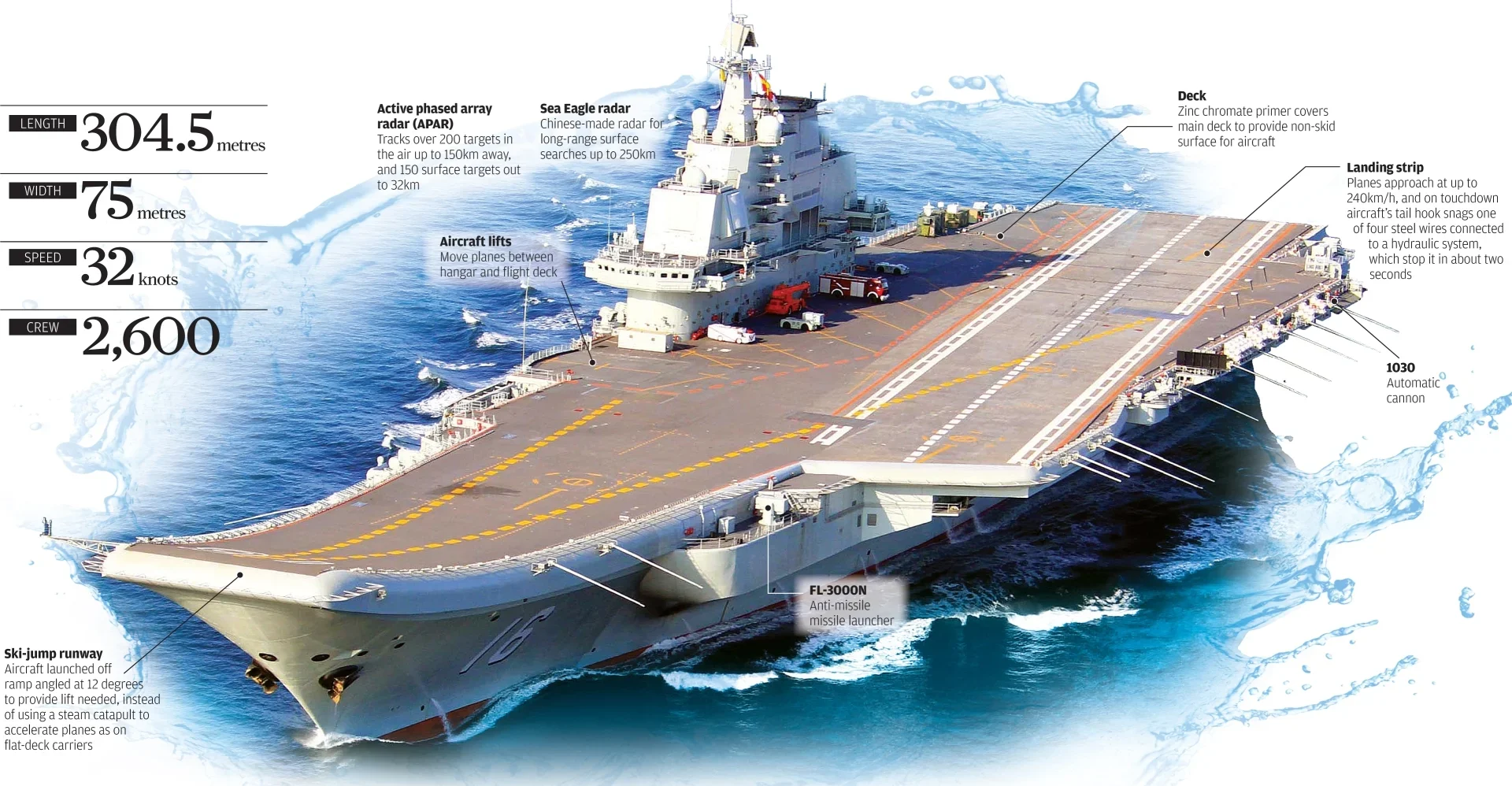
China’s first aircraft carrier, Liaoning, is not the world’s biggest, fastest, or most advanced carrier. It does not match the overwhelming power of America’s nuclear-powered supercarriers, and it still carries the limitations of its Soviet-era design. Yet its importance is much larger than its technical specifications.
The Liaoning represents something historic: China’s first real step into carrier aviation. It gave the People’s Liberation Army Navy, or PLAN, the experience it needed to learn one of the most difficult military skills in the world: launching, recovering, maintaining, and commanding fighter aircraft from a moving ship at sea.
In that sense, the Liaoning is more than a warship. It is a classroom, a symbol, and a warning. It shows how China has moved from a coastal-defense navy toward a navy that wants to operate farther from home, shape events in the Western Pacific, and eventually project power on a global scale.
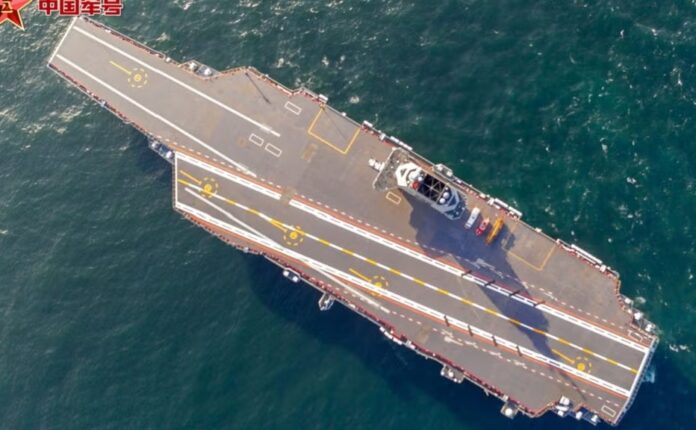
Suggested image for this section: A wide image of the Liaoning sailing at sea, ideally with J-15 fighters visible on deck.
Caption: The Liaoning marked the beginning of China’s aircraft-carrier era.
You May Also Like
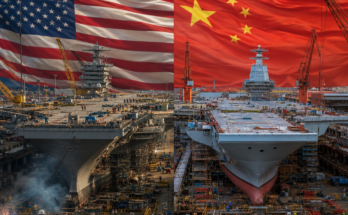
From Soviet Relic to Chinese Flagship
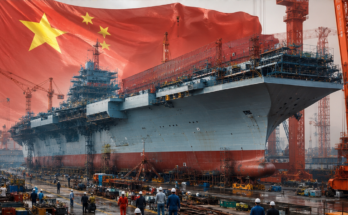
The Liaoning began life not as a Chinese ship, but as a Soviet one. It was originally laid down as the Riga, later renamed Varyag, and designed as a Soviet “heavy aircraft-carrying cruiser.” After the Soviet Union collapsed, the unfinished hull was left in Ukraine. China eventually acquired it, brought it to Chinese shipyards, and spent years rebuilding and modernizing it.
The ship was commissioned into the PLAN in September 2012, becoming China’s first aircraft carrier. Soon after, China conducted its first carrier-based takeoffs and landings with the J-15 fighter, a milestone that marked the birth of Chinese fixed-wing carrier aviation. (GlobalMilitary.net)
This transformation—from an unfinished Soviet hull into the foundation of China’s carrier program—is one of the most important naval stories of the 21st century. It shows China’s long-term strategy clearly: learn first, improve steadily, and then build more advanced ships.
Suggested image for this section: A before-and-after style graphic: Soviet Varyag hull on one side, modern Liaoning on the other.
Caption: The Liaoning’s journey from unfinished Soviet carrier to Chinese naval symbol reflects Beijing’s long-term military modernization.
How Powerful Is the Liaoning?

The Liaoning is a large carrier, but it is not a supercarrier. It is commonly assessed at around 60,000 tons full-load displacement and about 306 meters long, placing it below the U.S. Navy’s Nimitz- and Ford-class carriers, which displace around or above 100,000 tons and exceed 330 meters in length. (Army Recognition)
The ship’s biggest limitation is not its size. It is its launch system. The Liaoning uses a ski-jump deck, not a catapult. That means its J-15 fighters must take off under their own power, climbing from the curved ramp at the bow. This works, but it limits how much fuel and weaponry the aircraft can carry compared with catapult-launched aircraft. (ChinaPower Project)
By contrast, the U.S. Navy’s Gerald R. Ford-class uses the Electromagnetic Aircraft Launch System, or EMALS, which is designed for the Ford-class and future U.S. carriers. EMALS allows more flexible and efficient aircraft launches than older systems. (Naval Air Systems Command)
So the Liaoning is powerful, but limited. It can train pilots, conduct regional operations, show the flag, and support China’s growing maritime presence. But it is not designed to match the sustained global combat power of a U.S. nuclear-powered carrier strike group.
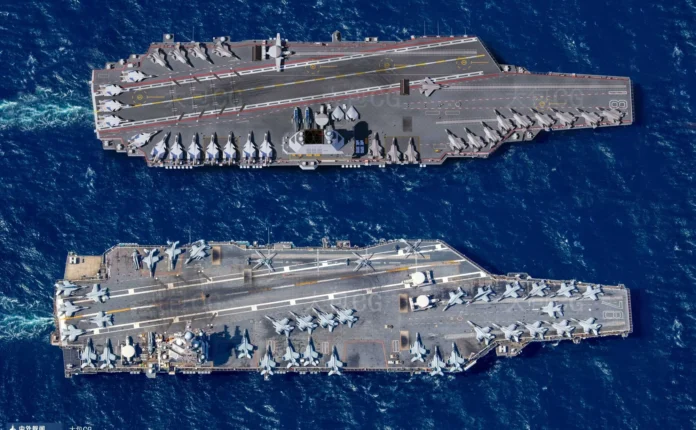
Suggested image for this section: A comparison graphic showing Liaoning, USS Ronald Reagan, and USS Gerald R. Ford by size.
Caption: The Liaoning is large, but U.S. supercarriers remain significantly bigger and more capable.
The J-15: China’s First Carrier Fighter
The Liaoning’s main combat aircraft is the Shenyang J-15, a Chinese carrier-based fighter derived from the Russian Su-33 design. The J-15 gave China an essential capability: fixed-wing fighter operations from a carrier deck.
But the J-15 faces the same problem as the ship itself: the ski-jump launch. Because it cannot be catapulted from the Liaoning, it may need to take off with less fuel or fewer weapons than it could carry from a catapult-equipped carrier. This reduces its range, payload, and flexibility. (ChinaPower Project)
The Liaoning also lacks the full range of carrier-based support aircraft found on U.S. carriers, especially large fixed-wing airborne early-warning aircraft. That matters because modern carrier warfare depends not just on fighters, but on surveillance, command, control, electronic warfare, refueling, and logistics.
In simple terms: the Liaoning can launch fighters, but a carrier’s real power comes from the entire system around those fighters. That system takes decades to master.
Suggested image for this section: A J-15 fighter taking off from the Liaoning’s ski-jump ramp.
Caption: The J-15 gave China carrier aviation experience, but ski-jump launches limit payload and range.
Why Carrier Aviation Is So Difficult

Building a carrier is hard. Operating one is harder.
A carrier is not just a ship with aircraft. It is a floating airport, maintenance base, command center, weapons platform, and logistics hub—all moving through rough seas. Pilots must land on a short deck that is pitching and rolling. Deck crews must move aircraft, weapons, fuel, and equipment in a dangerous, crowded environment. Commanders must coordinate aircraft, escorts, submarines, satellites, and land-based support.
This is why the Liaoning matters so much. Its greatest contribution may not be combat power today, but experience. Every takeoff, landing, drill, deployment, and maintenance cycle teaches the PLAN how to operate carriers more safely and effectively.
That experience helped China move from Liaoning to Shandong, its first domestically built carrier, and then to Fujian, its first catapult-equipped carrier. China officially commissioned Fujian in November 2025, marking the beginning of its three-carrier era and a major leap because Fujian uses electromagnetic catapult launch technology. (Ministry of National Defense of China)
Suggested image for this section: Flight deck crew directing aircraft during carrier operations.
Caption: The hardest part of carrier power is not building the ship—it is mastering the people, systems, and discipline required to operate it.
Liaoning vs. U.S. Supercarriers
Compared with U.S. carriers, the Liaoning is still far behind in endurance, power generation, air-wing size, launch systems, and operational experience.
U.S. Nimitz- and Ford-class carriers are nuclear-powered, allowing them to operate for long periods without refueling. The USS Gerald R. Ford is listed by the U.S. Navy at around 100,000 long tons full load, 1,106 feet in length, and 30-plus knots in speed. (Airlant) The Ford also completed a major 262-day deployment ending in January 2024, showing that the class has moved beyond testing into real operational service. (dote.osd.mil)
The Liaoning, by contrast, is conventionally powered and uses older design concepts. Its air wing is smaller, and its ski-jump system limits aircraft performance. It is best understood not as China’s answer to a U.S. supercarrier, but as the ship that taught China how to begin competing in the carrier age.
That distinction is important. The Liaoning is not the final form of Chinese carrier power. It is the foundation.
Suggested image for this section: Side-by-side image of Liaoning and USS Gerald R. Ford or USS Ronald Reagan.
Caption: The Liaoning cannot match U.S. supercarriers, but it gave China the experience needed to build toward them.
What Missions Can the Liaoning Perform?
The Liaoning is most useful for missions below the level of major war. These include:
Training and pilot qualification
The ship helps China develop carrier pilots, deck crews, commanders, and maintenance teams.
Naval diplomacy
A carrier visit or deployment sends a strong political message. Even when it does not fight, it signals national power.
Regional presence
The Liaoning can support operations in the Western Pacific, East China Sea, and South China Sea, especially when backed by land-based aircraft and missiles.
Humanitarian assistance and evacuation missions
With helicopters and command facilities, the carrier could support disaster relief or noncombatant evacuation operations.
Military signaling
The Liaoning’s deployments show neighboring countries that China’s navy is becoming more active and confident.
Recent Chinese carrier activity also shows that Liaoning is no longer just a symbolic ship. In 2025, Chinese sources and regional reporting described Liaoning and Shandong operating in the Western Pacific, including coordinated training activity—evidence that China is practicing more complex carrier operations beyond its near seas. (Army Recognition)
Suggested image for this section: Liaoning sailing with escort ships in formation.
Caption: A carrier is most powerful when it operates as part of a protected strike group.
The Real Message of the Liaoning
The Liaoning’s greatest power is psychological and strategic.
It tells China’s public that the country has entered the ranks of major naval powers. It tells the region that China intends to defend its maritime claims more confidently. It tells the United States and its allies that China is learning quickly. And it tells Chinese shipbuilders, pilots, and naval commanders that the carrier program is no longer a dream—it is a growing reality.
Still, the Liaoning should not be exaggerated. It is not a match for the U.S. Navy’s carrier force. It is not optimized for high-intensity global combat. It does not have the launch systems, air-wing depth, nuclear endurance, or operational experience of American supercarriers.
But it does not need to be a supercarrier to matter.
The Liaoning matters because it changed China’s naval trajectory. It turned carrier aviation from an ambition into a practical skill. It gave China the confidence and experience to build Shandong and Fujian. And it helped push Asia into a new era in which aircraft carriers, once dominated by the United States, are becoming central to China’s vision of maritime power.
Suggested image for this section: Dramatic sunset image of the Liaoning at sea.
Caption: The Liaoning is not the peak of Chinese naval power—it is the beginning of it.
Conclusion: Not the Strongest Carrier, but One of the Most Important
The Liaoning is not the most powerful aircraft carrier in the world. It is not even China’s most advanced carrier anymore. That title now belongs to Fujian, with its electromagnetic catapult system and larger displacement. (Ministry of National Defense of China)
But history will remember the Liaoning as the ship that opened the door.
It gave China its first carrier pilots, its first carrier deck crews, its first operational lessons, and its first taste of blue-water naval prestige. It showed that China was no longer satisfied with defending its coastline. It wanted a navy that could sail farther, stay longer, and influence events beyond its shores.
The Liaoning may have begun as an unfinished Soviet hull, but in Chinese service it became something far more powerful: a symbol of ambition, a school for future carriers, and the first step in China’s rise as a carrier navy.