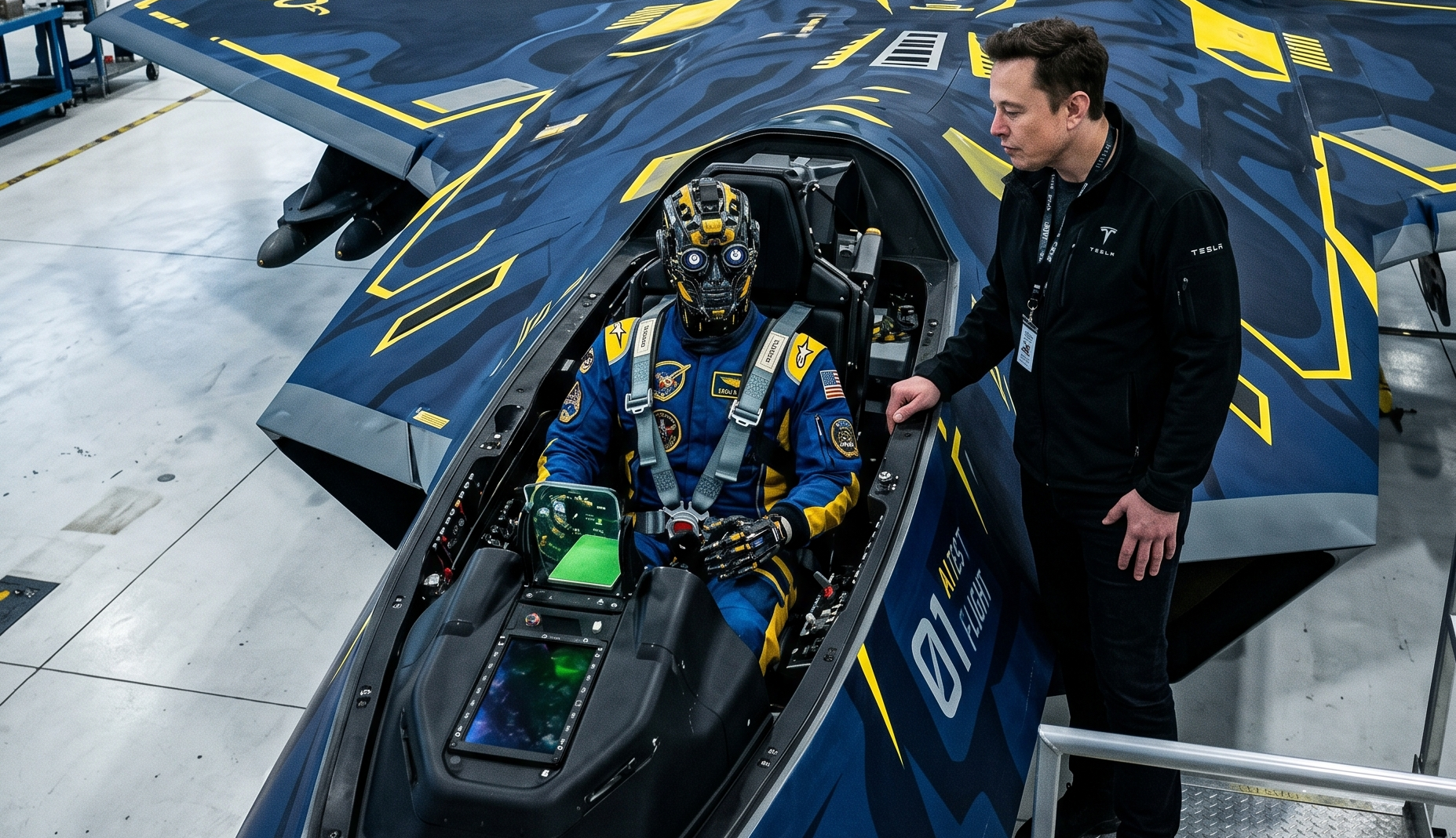
The future of air warfare is entering one of the most intense debates in modern military history.
On one side stands Elon Musk — billionaire innovator, tech disruptor, and outspoken advocate for autonomous warfare.
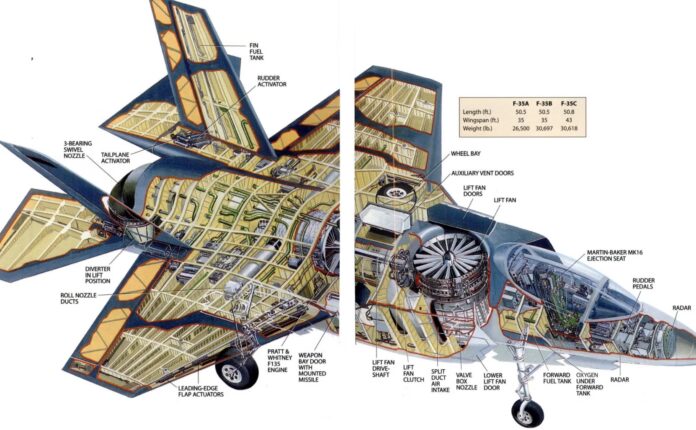
On the other side stands the F-35 Lightning II — the most advanced and expensive fighter aircraft ever built, considered by many military leaders to be the backbone of Western airpower for decades to come.
Musk’s message was direct and explosive:
You May Also Like

“Human-piloted fighter jets are obsolete in the age of drones.”
The statement triggered fierce reactions across the defense world. Some called it visionary. Others called it dangerously premature.
But one thing became clear:
The war of the future may not look anything like the wars of the past.

Why Musk Believes the F-35 Era Is Ending
Musk has long argued that autonomous systems will eventually outperform human pilots in combat.
His reasoning is rooted in technology, speed, and economics.
Modern fighter jets like the F-35 cost enormous amounts of money. The overall lifetime cost of the program is projected to exceed trillions of dollars. Each aircraft is packed with stealth systems, sensors, electronic warfare tools, and advanced networking capabilities.
But Musk believes future wars will reward something different:
- Massive numbers of cheap autonomous drones
- AI-powered combat coordination
- Faster production cycles
- Reduced risk to human pilots
- Overwhelming enemy defenses through swarming tactics
In Musk’s view, sending human pilots into increasingly dangerous airspace filled with drones, advanced missiles, and AI-guided weapons could become both inefficient and deadly.
His argument gained attention partly because of lessons emerging from the war in Ukraine, where drones have transformed the battlefield.
The Drone Revolution Is Real


Modern drones are changing warfare faster than many experts predicted.
Cheap unmanned aircraft are now used for:
- Reconnaissance missions
- Precision strikes
- Artillery targeting
- Electronic warfare
- Kamikaze attacks
- Battlefield surveillance
In Ukraine and other conflicts, small drones have destroyed tanks, attacked troop positions, and provided real-time intelligence directly to frontline forces.
This has convinced many technology leaders that autonomous systems represent the future of warfare.
Former Eric Schmidt even argued that traditional tanks are becoming less useful in an era dominated by drones.
But air combat is far more complicated than battlefield reconnaissance.
And that is where the debate becomes far more serious.
Why Drones Still Cannot Fully Replace Fighter Jets


Military analysts and former fighter pilots say Musk is right about one thing:
Drones are transforming warfare.
But they also warn that today’s drone technology still cannot fully replace advanced crewed aircraft like the F-35.
Experts point to several critical limitations:
Range
Small drones often lack the long-range capability needed for major conflicts across massive regions like the Indo-Pacific.
Survivability
Most low-cost drones are vulnerable to electronic warfare, jamming, and advanced air defense systems.
Payload
Fighter jets carry far more fuel, sensors, missiles, and precision weapons than most drones.
Flexibility
Human pilots can adapt instantly in unpredictable situations where AI systems may fail or hesitate.
According to defense analysts, future wars against powerful adversaries like China would require aircraft capable of operating deep inside contested airspace while carrying advanced weapons and processing enormous amounts of battlefield data in real time.
That remains incredibly difficult for current unmanned systems.
The Real Strength of the F-35
The F-35 is not simply a fighter jet.
It is one of the most advanced military information systems ever built.


Built by Lockheed Martin, the F-35 combines multiple battlefield roles into one aircraft:
- Air superiority fighter
- Precision strike bomber
- Surveillance platform
- Electronic warfare aircraft
- Flying command-and-control node
- Battlefield communications hub
Military leaders often describe the jet as a “quarterback” in modern warfare because it connects forces across land, sea, air, and space.
No autonomous drone system today can fully replicate all of those functions together.
And perhaps most importantly, the F-35 is already operational and combat-ready today — while fully autonomous AI air combat remains largely experimental.
The Future May Belong to Both Humans and Machines
Despite the arguments, even critics of Musk admit he may be pointing toward the long-term future.
The Pentagon is already investing heavily in:
- AI-controlled combat aircraft
- Autonomous drone wingmen
- Pilotless F-16 experiments
- Collaborative combat aircraft programs
- Advanced manned-unmanned teaming systems


Future fighter pilots may eventually command entire fleets of autonomous drones from inside stealth aircraft.
Instead of replacing human pilots entirely, the military increasingly sees AI systems as force multipliers that enhance human decision-making.
Experts say the true future of airpower is likely not manned versus unmanned.
It is manned and unmanned working together.
The Biggest Challenge Is Not Technology — It’s Trust
One of the largest obstacles to fully autonomous warfare is not engineering.
It is trust.
Can nations trust AI systems to make life-and-death decisions in chaotic combat environments?
Can machines correctly interpret uncertain battlefield conditions?
Can autonomous systems avoid catastrophic mistakes?
Human pilots bring judgment, intuition, and adaptability that machines still struggle to replicate.
That human element remains one of the strongest arguments for keeping pilots in the cockpit — at least for now.
Conclusion: The Future of Air Warfare Has Already Changed
Elon Musk may not be entirely right today.
But he may not be entirely wrong about tomorrow.
Drone warfare, artificial intelligence, and autonomous systems are reshaping military strategy faster than almost anyone predicted.
At the same time, aircraft like the F-35 remain essential because no drone system yet matches their flexibility, survivability, and combat capability.
The future of air combat will likely belong to a powerful combination of both:
Human pilots and intelligent machines fighting together in highly connected battle networks.
The age of drones has arrived.
But the age of fighter pilots is not over yet.